If you’ve ever stared at a bare window in a rental and thought, I want curtains, but I’m not drilling into anything, you’re not alone. I’ve styled plenty of apartments, dorm rooms, and small homes where the rules were strict and the walls were off-limits. A tension rod setup is one of the most practical ways to soften a space without leaving holes behind.
Done well, it doesn’t look temporary. It looks intentional, neat, and easy to live with. The key is choosing the right rod strength, using the right fabric, and placing everything with purpose.
Snippet-ready definition:
Curtains on a tension rod are a no-drill window covering setup where a spring or twist rod presses inside a frame. It’s ideal for rentals, quick privacy, and light control when matched with the right fabric and rod strength.
Mission Statement:
Dwellify Home helps renters and homeowners create comfortable, stylish spaces with practical, low-damage solutions. We focus on simple steps, honest guidance, and design choices that work in real life.
What a Tension Rod Is (and How It Differs From a Standard Curtain Rod)
A tension curtain rod works by pressing outward against two surfaces, usually the inside of a window frame. That pressure is what holds it in place. Most designs are spring-loaded or twist-to-expand. You set the length, lock it in, and the rubber ends grip the frame.
A standard curtain rod relies on brackets that are screwed into the wall or trim. That makes it stronger and better for heavy, wide installations, but it’s not always renter-friendly.
In real homes, tension rods shine when you need a clean, no-drill solution. But they have limits. They don’t love very heavy curtains, and they can slip if the surface is dusty, glossy, or slightly uneven. When you understand those tradeoffs, the setup becomes reliable instead of frustrating.
Quick Guide Table: What to Buy and Where It Works Best
| Your goal | Rod to choose | Curtain to choose | Best spot | Notes |
| Soft light + daytime privacy | Standard tension rod | Sheer or lightweight panel | Inside window frame | Easiest setup, least slipping risk |
| Strong privacy + light blocking | Heavy-duty rod | Blackout or lined, lighter weight if possible | Bedroom window | Heavier fabric needs higher weight rating |
| French door or sidelight (no flapping) | Two tension rods (top and bottom) | Rod-pocket door panel | Doors and sidelights | Most stable, tidy look |
| Wide opening (84–120 inches) | Heavy-duty long rod or split into two | Lightweight panels | Wide windows | Long spans can sag, consider two rods |
Tip from real installs: longer rods are more likely to bow and slip, so a sturdier rod and lighter fabric usually works better than forcing thick blackout panels on a long span.
Step-by-step: Use a Tension Rod for Curtains (Fast and Reliable)
- Measure the inside width where the rod will sit
- Measure top, middle, bottom, then use the smallest number.
- Pick the correct size range
- Example: 48–84 tension rod for many standard windows, 84–120 inch tension rod for wider spans.
- Clean the contact points
- Wipe the frame where the rubber ends will grip. Dry fully.
- Set tension correctly
- Extend the rod slightly past your measured width so it compresses firmly.
- Lock or twist until stable, but don’t overtighten and stress the trim.
- Hang the curtain and test
- Gently tug down once, then slide the curtain open and closed.
- If it creeps down, tighten a bit or reduce fabric weight.
Best Places to Use Curtains on a Tension Rod
In my experience, tension rods work best in spots where the frame gives you a solid, flat surface to press against. The most reliable place is an inside-mount window, where the rod sits inside the frame and feels tucked in rather than stuck on.
They’re also great in bathrooms, especially on small windows where you want privacy but don’t want a big hardware moment. I often pair a simple rod-pocket panel with moisture-friendly fabric, then keep the rod high inside the frame so it stays out of splash range.
French doors and sidelights are another sweet spot, especially when you use the top-and-bottom method to keep fabric from flapping. I’ve used this in apartments with drafty doors and it makes a noticeable difference in comfort.
And don’t forget the non-window uses. A tension rod can hold curtains to hide open shelving, create a soft closet cover, or break up a studio space without installing anything permanent. In tiny rooms, that’s sometimes the difference between feeling cluttered and feeling calm.
Measure Like a Pro So the Rod Doesn’t Slip
A slipping rod usually isn’t a bad rod, it’s a measurement problem or a tension problem. The goal is to choose a size range that fits your window without forcing the rod to sit at the very end of its extension. That’s when it feels unstable.
Start by measuring the inside width of the window frame where the rod will sit. Measure at the top, middle, and bottom. Many frames aren’t perfectly square, and it’s better to know that before you install anything.
Then, clean the contact points. A quick wipe with a damp cloth and dry towel helps more than people expect. Dust and residue make rubber ends slide, especially on painted trim.
Choosing the correct size range (common search sizes)
A 48–84 tension rod is common for average windows and many closet openings. It works well when your window width falls comfortably in the middle of that range. If your window is 50 inches wide, that’s usually a good match because you’re not maxing out the rod.
An 84–120 inch tension rod is where things get tricky. Long spans are more likely to sag, especially with anything heavier than a sheer. If you need this size, look for thicker rods, better end caps, and a higher weight rating. Even then, for wide windows, I often recommend splitting into two sections with two rods if the frame allows it.
One practical tip that works: extend the rod slightly past your measured width before locking it in. That extra bit of compression is what keeps it stable. Just don’t crank so hard that you stress the trim.
Pick the Right Rod Strength (This Decides Whether It Holds)
If you want a setup that stays put, treat the rod like the foundation. In rental styling, most problems come from trying to use a lightweight rod with heavyweight fabric.
A heavy duty tension rod for curtains matters when you’re hanging lined panels, thermal fabric, or anything close to blackout weight. A thicker diameter rod usually resists bending better, and better end caps grip the frame more securely.
Look at three details when you’re choosing:
- Weight capacity that matches your curtain type
- Rubber or non-slip ends that feel soft but grippy
- A lock or twist mechanism that holds tension without slowly loosening
Also pay attention to where you’re installing. Smooth glossy paint can be slippery. Textured trim can be uneven. Tile and metal frames can work well, but only if the end caps sit flat.
If a rod keeps popping down, don’t keep tightening it harder and harder. That can damage paint or trim. Instead, switch to a sturdier rod, reduce curtain weight, or change the placement to a more stable part of the frame.
Best Curtains for Tension Rods (Fabric + Header Style That Actually Works)
When clients ask me for the best curtains for tension rods, I usually start with one rule: lighter fabric is easier to live with. It slides more smoothly, it’s less likely to pull the rod down, and it still looks polished when you choose the right fullness.
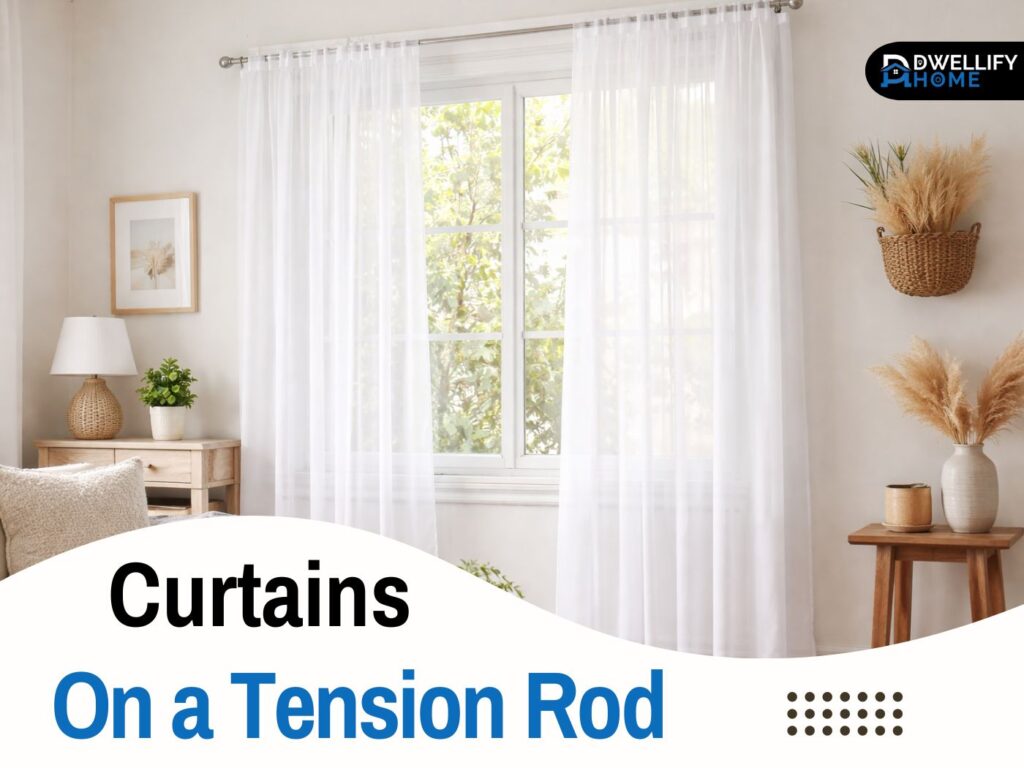
Sheer curtains for tension rods are the most forgiving option. They’re lightweight, they hang nicely in small windows, and they soften harsh light without making a room feel smaller. In studios and dorm rooms, sheers can make the space feel calmer without adding visual weight.
Blackout curtains for tension rods can work, but you have to be more intentional. Look for blackout panels designed for smaller windows, or use a lighter blackout liner rather than a thick, heavy curtain. If you need true darkness, consider pairing a blackout shade with a lighter curtain on the rod. That splits the job between two layers and keeps the rod from taking all the strain.
Curtain top style matters more than people think:
- Rod pocket curtains are my go-to for tension rods because they distribute weight evenly and look neat inside a frame.
- Tabs can work, but they sometimes pull unevenly, especially if the panel is heavy.
- Grommets slide easily, but they can tug the rod forward and make slipping more likely in tight frames.
A simple approach that looks good in real homes is a rod-pocket panel with enough width to gather softly. If your window is 30 inches wide, a panel around 50 to 60 inches wide tends to look fuller without feeling bulky.
Step-by-Step: How to Hang Curtains on a Tension Rod (No Drill)
This is the method I use when I want the curtain to look tidy, stay in place, and not drive anyone crazy later.
First, decide the placement. For inside-mount windows, I usually place the rod a couple inches below the top of the frame if I want a clean tailored look. If privacy is the priority, go higher. If you want more light, go a little lower and use a cafe curtain style.
Next, clean the contact points on the frame. Let them dry completely. If the surface is even slightly damp, the rod can slide.
Now set the rod length. Extend it to the window width, then add a little more so it compresses firmly when you twist it into place. Press one end into the frame, then compress and position the other end. Once it’s in, twist or lock it until it feels stable.
Before you hang the fabric, do a quick test. Give the rod a gentle downward tug. If it shifts, reposition and increase tension slightly.
Then add your curtain panel. If it’s a rod pocket, feed the rod through the pocket before you install it, not after. That prevents awkward pushing and loosening.
A couple quick style tips that make a big difference:
- If there’s an annoying gap at the top, raise the rod or choose a panel with a deeper rod pocket.
- If the curtain looks skimpy, add more width, not more layers. Fullness is what makes it look finished.
Curtains With Tension Rods at Top and Bottom (Clean Look + Less Flapping)
This is one of my favorite tricks for French doors and tall sidelights because it solves a real-life problem. Doors move. Air moves. Curtains flap, twist, and get caught.
Using tension rods at the top and bottom keeps the panel close to the door, so it stays tidy. It also helps with draft control, especially if you choose a slightly heavier fabric or a thermal lining.
For this setup, rod pocket panels are usually the easiest because the fabric sits flat at both ends. You install the top rod first, then the bottom rod, making sure the curtain is straight but not stretched tight like a drum. A little natural drape looks better and puts less stress on the rod.
If you’re doing this in a rental, it’s also a safer, calmer option. Kids and pets are less likely to pull the fabric down when it’s secured at two points.
Styling Ideas That Don’t Look Temporary
A tension rod setup can look surprisingly polished when you style it like part of the room, not an afterthought. The biggest shift is placement. When the rod sits neatly inside the frame, it feels intentional. When it’s crooked or too low, it can look improvised.
One easy upgrade is layering. In small bedrooms and living rooms, I often do a light sheer panel for softness, then rely on blinds or a shade for true privacy. That keeps the curtain weight low while still giving you that cozy finished look.
For French doors, an hourglass style can look beautiful. You use simple tie-backs or a soft ribbon at the center so the curtain stays shaped. It’s practical, too, because it keeps the handle area clear.
Color and length matter in small spaces. If the curtain ends exactly at the sill inside the frame, it looks tidy. If it’s too long, it bunches and feels messy. If it’s too short, it can look accidental. When in doubt, a clean hem that kisses the bottom of the glass area tends to look balanced.
Common Problems (and Quick Fixes That Work)
If the rod slips down, it’s usually one of three things: not enough tension, a slippery surface, or curtains that are too heavy. Tighten slightly, clean the surface, and consider switching to a lighter panel. Adding grip pads can help, but they’re not a substitute for proper tension.
If the rod sags in the middle, it’s often a span issue. This shows up most with wider sizes like an 84–120 inch tension rod. In real rooms, the fix is usually to reduce the span with two rods or to move to a standard curtain rod with brackets.
If blackout fabric keeps pulling the rod down, lighten the load. Use a blackout liner instead of a thick blackout curtain, or combine a blackout shade with a lighter curtain. That gives you darkness without asking the rod to do everything.
If the curtains don’t slide smoothly, check the top style. Rod pockets can bunch if they’re too tight. Grommets slide better but can tug. A small adjustment like choosing a slightly wider rod pocket or a smoother fabric can make daily use easier.
If the hem looks uneven or drags inside the frame, don’t fight it. Many ready-made curtains need a quick hem tape adjustment. I’ve fixed plenty of “almost perfect” panels in ten minutes with hem tape and an iron.
Safety, Damage-Free Tips, and When to Choose Another Option
Tension rods are great, but they’re not the right choice for every situation. High-traffic doors where people brush past the fabric all day can knock the rod loose. Very heavy curtains can slowly work the rod down. And old, fragile trim doesn’t always handle strong compression well.
If kids or pets are in the home, keep the setup secure and avoid long panels that can be tugged. The top-and-bottom rod method is often safer on doors.
If you need an alternative that still avoids drilling, here are options I’ve used successfully:
- No-drill curtain brackets that clamp onto the frame
- Twist-and-fit curtain rod systems designed for renters
- Magnetic curtain rods for metal frames
These can be better when the frame shape makes tension rods unreliable, or when you need more stability without committing to screws.
Quick Buying Checklist (So You Don’t Regret the Purchase)
When you’re choosing a rod and curtains, this quick checklist saves a lot of trial and error:
- Choose the correct size range so your rod isn’t maxed out
- Check weight capacity and pick heavier-duty options for lined panels
- Look for rubber, non-slip end caps
- Match curtain fabric to the rod strength
- Pick a header style that behaves well for your use case
If your plan includes blackout or thermal fabric, prioritize a sturdier rod and lighter panel choices. If you want an airy look, sheers are easy, forgiving, and usually hold well on standard tension rods.
FAQs
Can you put curtains on a tension rod?
Yes. It works best inside a window frame or between two solid surfaces. Lightweight curtains are the easiest, and rod-pocket headers tend to hold and hang neatly.
How to use a tension rod for curtains?
Measure the inside width, choose the right rod range, clean the frame, extend the rod slightly past the width for firm compression, lock it in place, then hang the curtain and test for slipping.
Will a tension rod hold a door curtain?
Often, yes, especially for French doors and sidelights. The most stable method is using curtains with tension rods at top and bottom so the fabric stays in place and doesn’t flap when the door moves.
How much weight will a tension rod hold?
It depends on the rod. Many common tension rods are rated around 12–15 lb, while some heavy-duty models claim much higher ratings. Always check the manufacturer’s limit and stay below it for daily use.
What are the best curtains for tension rods?
Sheers and medium-weight rod-pocket panels are the most reliable. Blackout curtains for tension rods can work when the rod is truly heavy duty and the span isn’t too wide
Conclusion
A tension rod setup is one of those small upgrades that can make a rental feel more like home, as long as you treat it like a real design choice and not a quick fix. Measure carefully, choose a rod that matches the curtain weight, and keep the fabric and placement practical for how you live day to day.
If you want the cleanest result, start light. Use sheers for softness, reserve heavier fabrics for places where the frame can truly support them, and consider top-and-bottom rods on doors to keep everything calm and tidy. Once it’s installed well, it blends into the room and does its job quietly, which is exactly what good home styling should do.
Disclaimer:
This article shares general home styling and installation tips based on real-world use. Always follow your product’s instructions, confirm weight limits, and use extra caution on fragile trim, high-traffic doors, and around children or pets.

I’m Bilal Hassan, the founder of Dwellify Home. With 6 years of practical experience in home remodeling, interior design, and décor consulting, I help people transform their spaces with simple, effective, and affordable ideas. I specialize in offering real-world tips, step-by-step guides, and product recommendations that make home improvement easier and more enjoyable. My mission is to empower homeowners and renters to create functional, beautiful spaces—one thoughtful update at a time.