A good accent wall can change the whole feel of a room without turning the project into a full renovation. I’ve seen plain bedrooms feel more settled, living rooms look more finished, and awkward corners suddenly make sense just by giving one wall a little more thought than the others.
The part that trips people up is not the idea itself. It’s choosing the right wall, picking a style that fits the room, and knowing how much work the project really takes. The best results usually come from keeping the design in step with the house instead of trying to force a trend into a space that doesn’t want it.
Snippet-Ready Definition
A diy accent wall is a single wall updated with paint, paneling, wallpaper, or texture to create a focal point, add depth, and give a room more character without redoing the whole space.
Mission Statement
Dwellify Home helps homeowners make practical, stylish, and informed decor decisions with clear guidance they can actually use.
How to Choose the Right DIY Accent Wall for Your Space
The wall should feel intentional. In most rooms, that means working with the natural focal point instead of fighting it. In a bedroom, that’s usually the wall behind the bed. In a living room, it may be behind the sofa, fireplace, or TV.
It also helps to be honest about what the room needs. Some spaces need warmth. Others need depth. Some just need a stronger anchor so the furniture doesn’t feel like it’s floating around. That’s why color, paneling, molding, and wallpaper all work differently.
Skill level matters too. Paint is forgiving. Trim work is less forgiving. Wallpaper sits somewhere in the middle. A lot of people choose a design because it looks simple in a photo, then get halfway in and realize the measuring is where the real work starts.
Key Benefits
- Adds character without a full remodel
- Helps anchor the room’s focal point
- Works with paint, molding, panels, or wallpaper
- Can suit different budgets and skill levels
- Makes bedrooms and living rooms feel more finished
10 DIY Accent Wall Ideas That Add Character to Any Room
1. Painted color-block accent wall
This is one of the easiest ways to make a room feel more designed without spending much. A painted arch behind a bed, a rectangle framing a desk, or a wide block of color behind a console table can all work well.
This kind of accent wall is especially useful in smaller rooms because it adds shape without adding physical depth. It’s also a good choice if you want something clean and modern but don’t want to install panels or trim.
Soft, earthy colors usually hold up better over time than very sharp contrast. Deep green, warm beige, muted blue, and clay tones tend to age well.
2. Geometric paint accent wall
Geometric paint designs work best when the rest of the room is fairly quiet. Once the furniture, rug, and styling already have a lot going on, a geometric wall can start to feel busy.
The cleanest version is usually the one with the fewest lines. I’d rather see a simple diagonal split or a strong stripe pattern than a complicated taped design that looks off once you step back. The tape lines need patience. That’s the difference between a wall that looks crisp and one that looks homemade in the wrong way.
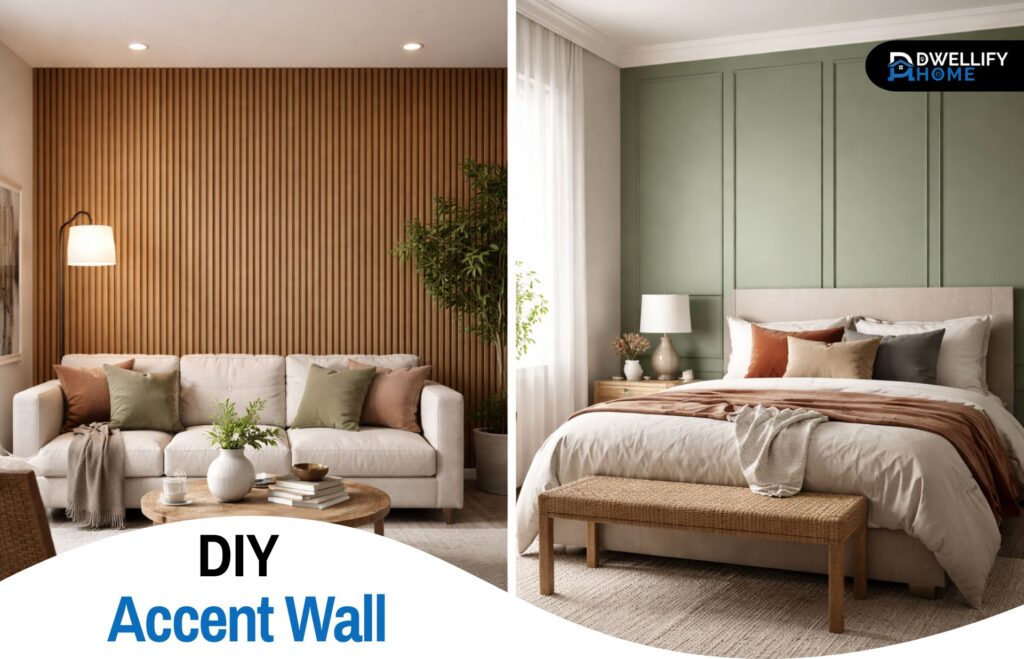
3. Board and batten accent wall
Board and batten is one of the most reliable accent wall ideas because it adds structure without looking flashy. It gives the room some architecture, which is helpful in newer homes where walls can feel flat and plain.
It works particularly well in bedrooms, dining areas, hallways, and entry spaces. The trick is getting the spacing right. Narrow, uneven sections make the wall feel crowded. Wider spacing usually looks calmer and more expensive.
Painting the whole wall one color after installation helps blend everything together and gives it that built-in look.
4. DIY accent wall molding
Wall molding has a more polished feel than basic battens. It suits traditional, transitional, and slightly dressier spaces, especially if the room already has some classic elements like tailored curtains, framed art, or a formal light fixture.
The biggest mistake here is overcomplicating the pattern. A simple box layout is usually enough. Once the wall turns into a grid of tiny shapes, it can start to feel forced.
For bedrooms and living rooms, I usually lean toward larger rectangles with even spacing. That keeps the design readable from across the room.
5. Vertical wood slat accent wall
A wood slat wall adds warmth in a way paint can’t. It also helps draw the eye upward, which makes it a smart option in rooms with average ceiling height.
This style works well in modern and Scandinavian-inspired spaces, but it can also soften a room that has a lot of hard finishes. Natural wood gives a more relaxed look. Painted slats feel cleaner and more graphic.
Spacing matters here more than people expect. Too tight and the wall can feel heavy. Too wide and it loses rhythm. Before attaching anything, it’s worth laying out a small test section on the floor so you can see how it feels.
6. Shiplap or simple wall paneling
Shiplap and other simple paneling styles are useful when you want texture without a complicated pattern. They’re a good fit for farmhouse, coastal, cottage, and classic interiors, but they can still work in more updated homes if you keep the lines clean and the color restrained.
One thing I’ve learned is that paneling looks better when the room doesn’t try too hard around it. Let the wall do its job and keep the rest of the space grounded.
A soft white, warm gray, or muted color often works better than a very bright finish, especially where natural light is limited.
7. Peel-and-stick wallpaper accent wall
Wallpaper is one of the fastest ways to bring in pattern, but scale is everything. A pattern that looks charming on a sample can feel overwhelming across an entire wall.
This option works well in powder rooms, bedrooms, reading corners, and small feature areas where you want more personality. It’s also helpful for people who want accent wall ideas without getting into saws, nail guns, or trim layouts.
For a cleaner look, repeat one color from the wallpaper elsewhere in the room through pillows, art, or bedding. That makes the wall feel connected instead of random.
8. Stenciled or mural-style accent wall
This one gives you more freedom than wallpaper, and in the right room it feels more personal. A stencil can create soft pattern without the cost of designer paper. A mural-style wall can add movement, especially in kids’ rooms, offices, or creative spaces.
The key is restraint. A hand-painted wall doesn’t need to prove how artistic it is. Even something as simple as layered brushwork, tonal shapes, or a faded landscape effect can add a lot without taking over the room.
This style tends to work best when the furniture is simple and the color palette is controlled.
9. Faux brick, stone, or textured panel accent wall
Texture changes how a room feels more than people expect. Faux brick, stone panels, or fluted accent wall panels can bring weight and contrast to a room that feels too smooth or flat.
This approach works best when there’s enough visual breathing room around it. In a cramped space, heavy texture can close the room in. In a larger room, it can make the space feel grounded.
I’d be careful with very rustic finishes unless they truly suit the home. Cleaner textures usually give you more flexibility down the road.
10. Furniture-framed accent wall for bedrooms and living rooms
Sometimes the smartest accent wall design is the one built around what’s already there. A wall behind the bed might call for molding or paint. Behind a sofa, a darker tone or panel treatment may help anchor the room. Around a fireplace or TV wall, texture can make the whole setup feel more deliberate.
This approach works because it solves a design problem. It helps the furniture feel placed instead of parked. For a diy accent wall bedroom project, this is usually the safest starting point because the room already tells you where the focus should be.
Best Accent Wall Ideas by Room
Bedrooms usually benefit from softer contrast and more texture. Molding, paint, wallpaper, and upholstered-looking panel effects all work well there.
Living rooms can handle stronger structure. Accent wall ideas living room readers often save include slat walls, deeper paint colors, and fireplace or TV feature walls. These tend to work because the furniture already creates a visual center.
Small rooms need more restraint. A subtle paint treatment or narrow panel design often works better than bold pattern or dark heavy texture.
Which DIY Accent Wall Ideas Are Easiest for Beginners?
Paint is the easiest place to start. Color blocking, arches, and simple shapes give you a lot of impact without requiring much equipment.
Peel-and-stick wallpaper is manageable too, but lining up seams takes more patience than people expect. Board and batten is doable for a beginner with careful measuring. Slat walls and molding are better once you’re comfortable planning layout and using cutting tools.
The easiest project is not always the one with the fewest steps. It’s the one with the most room for small mistakes.
Materials, Tools, and Prep Tips Before You Start
Before starting, check the wall itself. Uneven texture, patched areas, and poor paint adhesion can all show through more once you add detail.
For most projects, you’ll need a tape measure, level, painter’s tape, caulk, filler, and decent paint supplies. For trim or paneling, add a saw, adhesive, nailer, and sanding materials.
Dry layout is the step people skip too often. Whether you’re doing molding, slats, or geometric paint, mark everything first and live with it for a few minutes. That pause saves a lot of regret.
Common DIY Accent Wall Mistakes to Avoid
The wrong wall is the biggest mistake. An accent wall should support the room, not compete with windows, doors, or awkward furniture placement.
The next issue is scale. Large pattern in a small room can feel crowded. Tiny molding boxes on a big wall can look fussy. Contrast matters too. A dramatic idea doesn’t always improve the room.
Another common mistake is treating the wall like a standalone project. It still needs to make sense with the flooring, furniture, lighting, and overall style of the house.
How to Make an Accent Wall Look More Custom
The difference usually comes down to finish and proportion. Clean caulk lines, even spacing, and thoughtful paint color do more than complicated design ever will.
It also helps to repeat one element from the wall somewhere else in the room. That could be wood tone, paint color, black hardware, or a shape echoed in art or furniture lines. That’s what makes the wall feel integrated.
Budget Tips for a DIY Accent Wall That Looks More Expensive
Spend money where the eye goes first. Good paint, straight trim, and cleaner finishing details usually matter more than buying the most expensive material.
Simple designs also tend to look more refined. A well-painted wall with balanced proportions often looks better than a more ambitious project with uneven cuts and rushed finishing.
If the budget is tight, focus on one strong move and do it well. That’s usually enough.
Do Accent Walls Still Work in Modern Homes?
Yes, but the style has changed. The walls that still feel current are the ones that add shape, texture, or warmth without trying too hard to be trendy.
That’s why wood slats, molding, soft color blocking, and clean paneling still work. They give the room some identity while leaving space for the rest of the design to breathe.
Trend-heavy ideas can date faster, especially when the pattern is very specific or the contrast is too sharp. A calmer design usually lasts longer.
FAQs
What is the cheapest way to do an accent wall?
Paint is usually the cheapest option. A simple color block, arch, stripe, or geometric design can change the room without the cost of trim, panels, or wallpaper.
Are accent walls out of style in 2026?
No. They still work well when the design feels intentional. Softer paint treatments, wood slats, simple molding, and clean paneling tend to feel more current than overly dramatic feature walls.
Does an accent wall make a room look larger or smaller?
It can do either. A subtle design can add depth and make the room feel more defined, while a very dark or busy wall in a small space can make it feel tighter.
What material is used for an accent wall?
Common materials include paint, MDF trim, wood slats, wall panels, peel-and-stick wallpaper, faux brick, and textured stone-look panels.
Which wall should be the accent wall in a room?
Usually the wall that already makes the most sense visually, like the one behind the bed, sofa, fireplace, or TV. The goal is to support the room’s focal point, not compete with it.
Conclusion
A well-planned accent wall can do a lot with a relatively small amount of work. It can anchor furniture, add depth, warm up a plain room, or give the space a more finished shape.
The best results come from choosing a design that fits the room, the house, and your actual skill level. Keep the layout simple, pay attention to scale, and don’t rush the prep. A diy accent wall works best when it feels like it belongs there, not like it was added just to make a statement.
Disclaimer
Design results can vary by room size, lighting, wall condition, and installation quality. Always measure carefully and follow product and tool safety instructions.

I’m Bilal Hassan, the founder of Dwellify Home. With 6 years of practical experience in home remodeling, interior design, and décor consulting, I help people transform their spaces with simple, effective, and affordable ideas. I specialize in offering real-world tips, step-by-step guides, and product recommendations that make home improvement easier and more enjoyable. My mission is to empower homeowners and renters to create functional, beautiful spaces—one thoughtful update at a time.