A home rarely feels finished because of one expensive purchase. It comes together through a series of smaller decisions that make the space easier to live in and better to look at. The rooms that feel most comfortable usually have a clear sense of direction, a few useful pieces that do a lot of work, and enough personality to avoid looking flat or copied from a catalog.
That’s where the idea of home decor and more becomes useful. It’s not just about decorative accents. It includes furniture, lighting, textiles, storage, layout, and the practical details that make a room feel settled. A good-looking space should still work for real life, whether that means kids walking through the living room, guests using the dining area, or a bedroom that needs to feel calm at the end of a long day.
Snippet-Ready Definition
Home decor and more refers to the combination of furniture, decorative accents, lighting, textiles, and functional home accessories used to create a comfortable, stylish, and well-balanced living space.
Mission Statement
Dwellify Home exists to help homeowners make practical, stylish, and well-informed decorating decisions through clear guidance, realistic advice, and thoughtful home design ideas.
Understanding What “Home Decor and More” Includes
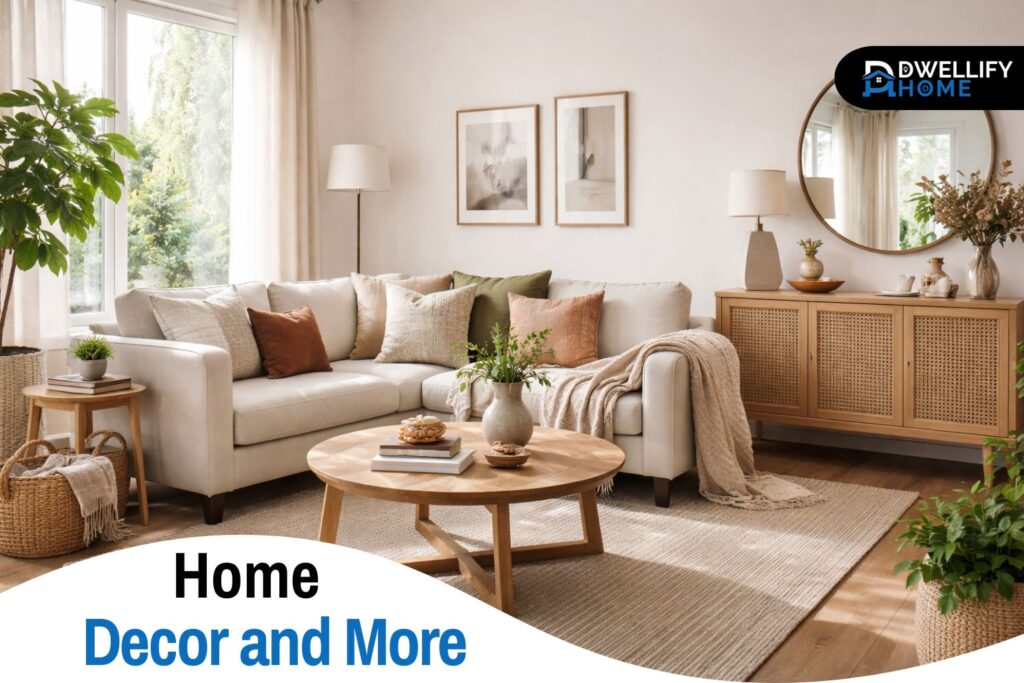
Decor is often treated like the finishing touch, but in real homes, it starts much earlier than that. The sofa, the rug, the lamp beside a chair, the mirror in the hallway, and the curtains that soften a room all work together. A space usually feels incomplete when one of those layers is missing, not because it lacks more objects.
It also helps to separate decorative pieces from useful ones. Furniture gives the room structure. Textiles add softness and warmth. Wall decor and accessories bring personality. Functional items such as baskets, side tables, and lamps often bridge the gap between style and daily use. Once you see those categories clearly, decorating gets easier because you stop buying random pieces and start building a room with purpose.
Key Benefits of a Thoughtful Home Decor Approach
- Creates a comfortable and welcoming atmosphere
- Helps rooms feel organized and visually balanced
- Combines furniture, lighting, and décor into one cohesive style
- Improves both functionality and appearance of everyday spaces
- Makes it easier to personalize your home without clutter
1. Start With the Mood You Want the Room to Have
Before choosing colors or shopping for new pieces, decide how the room should feel. Calm and airy rooms need different choices than warm, layered, cozy ones. That one decision shapes everything else, from the fabric on the sofa to the kind of lighting that will feel right in the evening.
This step saves people from a common mistake: buying attractive items that don’t belong together. A sleek metal floor lamp may look great on its own, but it can feel out of place in a room built around soft textures, warm wood, and quiet tones. Once the mood is clear, your choices become more consistent and the room starts to feel intentional.
2. Choose a Color Palette That Connects the Whole Room
A simple palette keeps a room from feeling scattered. In most homes, the easiest approach is to start with one or two base colors and then add a few supporting tones through pillows, art, rugs, or smaller accents. That gives the eye a pattern to follow, which makes the room feel more settled.
You don’t need a strict formula, but you do need some repetition. A color that appears in the rug can show up again in a throw, a vase, or a piece of wall art. This is one of the quiet details beginners often miss. Without that connection, even good furniture and decor can feel unrelated.
3. Use Furniture as the Foundation of the Room
Furniture does more than fill space. It sets the scale, anchors the layout, and tells you how much room you have left for everything else. In practical terms, home decor and more furniture choices often matter more than small accessories because they establish the room’s shape and function first.
A room with a well-sized sofa, a coffee table that fits the traffic flow, and seating that feels balanced already has a strong base. Once that’s in place, decorating becomes much easier. Without that foundation, people often keep adding smaller items to fix a problem that actually started with the wrong furniture size or placement.
4. Pick a Sofa That Balances Comfort and Design
The sofa usually becomes the visual center of a living room, so it needs to work hard. It should fit the room, support how the space is used, and still look right with the surrounding decor. Oversized sectionals can make a moderate room feel cramped, while small sofas can leave larger rooms looking underfurnished.
When comparing home decor and more sofas, look beyond the showroom appearance. Pay attention to seat depth, arm width, fabric texture, and how the color will behave with daily use. Lighter fabrics can look clean and relaxed, but they may not suit homes with children or pets. Darker tones hide more wear, though they can also make a room feel heavier if the rest of the palette is dark as well.
5. Layer Different Textures to Add Warmth and Depth
A room with good color but no texture often feels flat. Texture is what makes a space feel lived in. It can come from a woven rug, linen curtains, a wooden side table, ceramic lamps, a soft throw, or even the finish on a painted wall. The goal is contrast that feels natural, not crowded.
One of the easiest ways to improve a plain room is to combine smooth and tactile materials. A leather chair next to a soft rug, or a clean-lined sofa paired with textured cushions, adds depth without adding clutter. This is especially helpful in neutral rooms, where texture carries more of the visual work.
6. Add Meaningful Decor Pieces That Show Personality
The pieces that matter most are usually the ones that tell you something about the people living there. A stack of well-used books, framed travel photos, handmade pottery, or a mirror that suits the house can do more for a room than a shelf full of generic objects bought all at once.
That doesn’t mean every item needs a backstory. It just means surfaces should be edited with care. Shelves, coffee tables, and consoles look better when they hold fewer items with more presence. Group pieces in small arrangements, leave some open space, and avoid covering every visible surface. Rooms breathe better when everything has a reason to be there.
7. Turn Functional Items Into Stylish Decor
Some of the best decorating choices are the ones that solve a problem at the same time. A storage bench in an entryway, a basket that hides throws in the living room, or a lamp that improves task lighting while softening a corner all add value beyond appearance.
Functional decor tends to age better because it earns its place. In smaller homes, this matters even more. A narrow console with drawers, a side table with storage, or a tray that keeps everyday items organized can make a space feel calmer and more polished without needing more square footage.
8. Style One Area at a Time Instead of Decorating Everything at Once
Trying to finish an entire room in one shopping trip often leads to rushed decisions. A better approach is to work in layers and focus on one area first. Start with the sofa zone, the bed wall, the dining table, or the entryway. Once that section feels right, the next part becomes easier to judge.
This method also protects your budget. It gives you time to live with the room, notice what’s missing, and avoid buying filler pieces. Some rooms need less than people think. After the core elements are in place, you may find that the space needs one floor lamp and a better rug, not six new accessories.
9. Mix Timeless Pieces With Modern Trends
Trends can keep a room from feeling stale, but they work best in smaller doses. Large furniture pieces usually last longer visually when they’re simple, well-made, and easy to pair with changing accessories. Trend-led choices are safer in cushions, artwork, table decor, or seasonal updates.
A room feels more grounded when timeless elements do most of the work. Then a new color, a patterned throw, or a fresh lamp shape can update the space without making it feel temporary. That balance is usually what creates a home that feels current without needing constant replacement.
10. Use Reviews and Research Before Buying New Decor
Decor can be disappointing when it looks one way online and another way in a real room. That’s why home decor and more reviews matter, especially for larger purchases such as sofas, accent chairs, rugs, and storage pieces. Look for details about comfort, fabric durability, color accuracy, assembly, and how the item holds up after regular use.
It also helps to read reviews with a practical eye. A low rating caused by shipping damage tells you something different than repeated complaints about weak frames or poor cushioning. Product photos from buyers are often more useful than polished studio images because they show how a piece looks in normal lighting and everyday spaces.
How to Pull the Whole Room Together
Most balanced rooms follow a simple pattern: one anchor piece, a few supporting furniture items, soft layers, lighting, and a small number of personal accents. Once those elements are in place, the room usually starts to feel complete. That’s often a better target than trying to make it look full.
There’s also value in knowing when to stop. A room that still feels unfinished may need a larger rug, better lighting, or stronger wall presence. A room that feels busy usually needs the opposite. Removing two unnecessary accessories can sometimes improve a space more than buying something new.
Room-by-Room Ideas for Using Home Decor and More
In the living room, focus on comfort, lighting, and conversation flow. The bedroom should feel quieter, with softer textures and less visual noise. Entryways benefit from simple pieces that create order right away, such as a mirror, a bench, or a small table with a tray for keys.
Dining areas often improve with one strong central feature, like a pendant light or a well-scaled centerpiece, rather than lots of small decor. In apartments or smaller homes, choose pieces that serve more than one purpose and keep walkways clear. Small spaces feel better when every item has both visual and practical value.
Budget-Friendly Ways to Refresh Your Home
A room doesn’t always need replacing. Rearranging furniture can improve flow. Swapping pillow covers, changing curtains, updating a lampshade, or adding a mirror can shift the feel of a room without much expense. These changes work because they affect proportion, light, and texture, not just color.
Secondhand pieces can also help, especially with side tables, mirrors, wooden chairs, or storage furniture. Older pieces often bring character that newer rooms sometimes lack. A modest budget usually goes further when it’s spent on one or two upgrades with real impact instead of several small things that don’t change much.
Expert Styling Tips for a Home That Feels Natural
Visual flow matters more than perfect matching. Repeating tones, wood finishes, or materials from room to room makes a home feel connected. Odd-number groupings often work well on shelves or tabletops because they look less rigid. And every main room benefits from a focal point, whether that’s a sofa wall, a bed, a fireplace, or a dining table.
Comfort should always be part of the design decision. A chair that looks good but never gets used doesn’t improve the room. The homes that feel best usually respect both appearance and habit. They support how people actually move, sit, store, gather, and relax.
Common Mistakes That Make Home Decor Feel Unbalanced
The most common mistake is decorating before understanding the room. That leads to poor scale, mixed styles, and surfaces filled with items that don’t help the space. Another issue is relying too heavily on small accessories while ignoring the larger problems of layout, lighting, or furniture size.
Matching everything too closely can also flatten a room. Spaces tend to look more natural when they mix shapes, textures, and finishes in a controlled way. A little variation creates interest. Too much sameness can make the room feel staged instead of lived in.
Frequently Asked Questions
What does home decor and more usually include?
It typically includes furniture, decorative accessories, lighting, rugs, wall art, textiles, and practical home items that contribute to both the style and functionality of a living space.
How do I choose decor that matches my furniture?
Start by repeating colors, textures, or materials already present in the furniture. Matching tones and finishes helps create a consistent and balanced look throughout the room.
Are sofas considered part of home decor?
Yes. Sofas are often the main visual anchor of a living room. Their size, color, and material influence the rest of the décor choices such as rugs, pillows, lighting, and wall art.
How can I improve my home décor without buying many new items?
Rearranging furniture, updating textiles, adding lighting, and simplifying clutter can refresh a room without major purchases.
Why are product reviews helpful when buying décor or furniture?
Reviews provide insight into real-world comfort, durability, and quality. They often reveal details about size accuracy, fabric feel, and long-term use that product descriptions may not mention.
Conclusion
A comfortable home isn’t built by adding more things. It comes together through better choices, clearer direction, and a mix of style and usefulness that fits everyday life. That’s the real value behind home decor and more. It gives you room to think beyond surface styling and create spaces that actually work.
Start with the mood, build with the right furniture, add texture, and choose decor that supports the way you live. Small, thoughtful changes usually last longer than rushed overhauls, and they almost always make a home feel more personal in the end.
Disclaimer
This content is intended for general home styling guidance and informational purposes. Individual décor choices may vary based on personal preference, space size, and lifestyle needs.

I’m Bilal, the founder of Dwellify Home. With 6 years of practical experience in home remodeling, interior design, and décor consulting, I help people transform their spaces with simple, effective, and affordable ideas. I specialize in offering real-world tips, step-by-step guides, and product recommendations that make home improvement easier and more enjoyable. My mission is to empower homeowners and renters to create functional, beautiful spaces—one thoughtful update at a time.