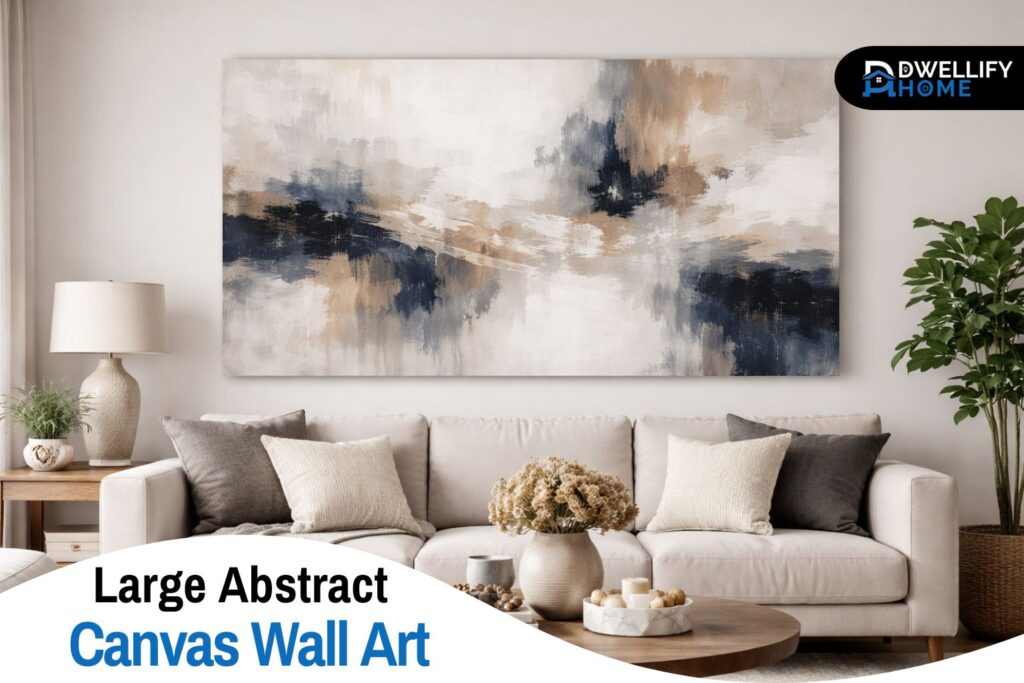
Blank walls can make a room feel unfinished even when everything else is in place. I’ve seen spaces with good furniture, decent lighting, and the right rug still look flat because the wall behind the sofa or bed had no real visual weight. That’s where large abstract canvas wall art tends to work so well. It fills space, sets the tone, and gives the room something solid to gather around.
The nice thing about abstract art is that it doesn’t lock you into one theme. A landscape painting often pushes a room in a clear direction. Abstract pieces leave more room to shape the space your own way. That makes them especially useful in living rooms, bedrooms, dining areas, and entryways where you want impact without making the room feel too literal.
Snippet-Ready Definition
Large abstract canvas wall art refers to oversized non-representational artwork printed or painted on canvas, used to fill wide wall spaces and create a visual focal point in living rooms, bedrooms, dining areas, and entryways.
Mission Statement
Dwellify Home exists to help homeowners create comfortable, thoughtful interiors through practical design ideas, clear guidance, and realistic decorating advice.
1. Use one oversized abstract canvas as the main focal point
One large piece can do more for a room than several smaller ones that never quite connect. On a wide wall, especially behind a sofa or console, a single oversized canvas gives the room a center of gravity. It helps the furniture feel anchored instead of scattered.
This works best when the wall already has enough breathing room around it. A strong abstract piece with clear movement or broad color fields can hold attention without adding clutter. In homes with open-plan living areas, one oversized canvas often does a better job than a gallery wall because it keeps the space calmer.
2. Choose soft neutral abstract wall art for a calm, modern look
Neutral abstract art has a way of finishing a room without overpowering it. Shades like cream, sand, taupe, beige, warm gray, and soft brown blend easily with wood tones, linen fabrics, and simple modern furniture. That’s why it works so well in homes leaning toward organic modern or quiet minimal style.
It also ages well. Brighter art can be fun, but neutrals are easier to live with long term. In real rooms, especially ones with patterned rugs or mixed materials, softer modern abstract canvas art usually gives you more flexibility when you change pillows, throws, or accent decor later.
3. Hang extra large abstract wall art above a sofa for better balance
Above the sofa is one of the most common places where scale goes wrong. Art that’s too small makes the whole wall look awkward. A good rule is to choose a piece that covers roughly two-thirds to three-quarters of the sofa width. That usually creates the balance people are trying to achieve without realizing it.
Extra large abstract wall art works especially well here because the sofa naturally acts as a base. The art doesn’t feel like it’s floating. Horizontal pieces are often the easiest fit, though square canvases can also work when the sofa is compact and the wall has enough side space.
4. Add bold color-block abstract art to bring energy into a neutral room
Some rooms need contrast more than they need more texture. In a space filled with white walls, beige upholstery, and oak finishes, bold color-block art can keep the room from feeling too safe. A canvas with deep blue, terracotta, rust, olive, or even muted black can wake up the wall without making the room chaotic.
The key is to repeat at least one of those colors somewhere else in the room. That might be a cushion, a ceramic vase, or part of the rug pattern. Once there’s a connection, the piece starts to feel intentional instead of random.
5. Try black and white abstract canvas wall art for a clean, modern finish
Black and white abstract wall art is often the easiest choice for modern interiors because it creates structure. It sharpens a room. In spaces with simple lines, black metal, white walls, or darker woods, this style usually looks clean and settled right away.
It’s also a practical option for rooms that already have enough color. I’ve used monochrome pieces in living rooms with patterned textiles and in home offices where too many tones on the wall would’ve made the room feel busy. Black and white gives contrast without competing for attention.
6. Use textured abstract canvas wall art to add depth without clutter
Texture matters more than people expect. A flat printed canvas can look fine online but feel a bit thin once it’s on a big empty wall. Textured abstract wall art, especially pieces with layered paint, plaster-like finishes, or visible brushwork, brings a softer kind of depth.
This is one of the best choices for neutral homes because the interest comes from the surface rather than loud color. In person, textured art tends to read as more substantial. It catches light differently through the day, which keeps the wall from looking static.
7. Choose a diptych or triptych for large walls that need better visual flow
Sometimes one canvas feels too heavy, especially on very wide walls. That’s where a diptych or triptych makes more sense. Split-panel artwork can stretch visually across a space while still feeling lighter than one solid block.
This format works well in dining rooms, long hallways, and living rooms with sectionals. The spacing between the panels gives the eye a break. It’s also helpful when you want large canvas wall art for a living room but don’t want one oversized piece to dominate everything around it.
8. Pick geometric modern abstract canvas art for a more structured style
Geometric abstract art feels more ordered than loose painterly work. Clean lines, blocks, arcs, and repeated shapes pair well with modern, contemporary, and mid-century furniture. In a room with strong architecture or sharper silhouettes, geometric art often looks more natural than softer flowing forms.
It’s a good choice for people who like abstract art but still want some sense of control in the composition. In home offices, dining spaces, or black-and-white interiors, this style tends to feel crisp and deliberate.
9. Use moody abstract wall art to create a richer, more dramatic atmosphere
Not every room should feel airy. Bedrooms, dining rooms, and snug living spaces often benefit from darker, moodier tones. Deep charcoal, olive, navy, rust, or brown-based abstract art can make a room feel more grounded and intimate.
The mistake is going too dark without enough contrast elsewhere. Moody art looks best when the room still has some relief through lighter upholstery, a pale rug, warm wood, or soft lighting. That balance keeps the space rich rather than heavy.
10. Hang vertical large abstract canvas wall art on tall, narrow walls
Tall narrow walls are often left blank because standard art sizes don’t sit right there. Vertical abstract canvases solve that problem neatly. They work well in entryways, beside fireplaces, on stair landings, or between windows where width is limited.
A vertical piece can also help draw the eye upward in rooms with good ceiling height. That’s useful in spaces that feel narrow but not small. It changes the proportions of the wall in a subtle way.
11. Choose modern abstract art that pulls colors from your furniture and decor
The most successful wall art usually doesn’t match the room exactly, but it does relate to it. A canvas might pick up the warm brown in the coffee table, the gray in the sofa, or the muted green from a plant-heavy corner. That kind of connection helps the room feel thought through.
This is one of the easiest ways to choose modern abstract art for the living room without overthinking it. Start with the colors already present in the space, then look for a piece that echoes two or three of them. The result tends to feel much more settled than picking art in isolation.
12. Use inexpensive large wall art in a way that still looks refined
Budget pieces can look good. The trick is to be picky about what makes them look cheap. Overly glossy finishes, muddy color palettes, and fussy details tend to give the game away faster than price itself. Simpler abstract designs often hold up better.
Placement helps too. Hang the piece at the right height, leave enough breathing room around it, and don’t crowd it with too many small decor items. Even large abstract canvas wall art cheap options can look more polished when the styling around them is restrained.
Key Benefits of Large Abstract Canvas Wall Art
- Fills wide or empty walls without needing multiple pieces
• Creates a clear focal point in living rooms and open spaces
• Works with many interior styles from modern to organic decor
• Adds color, texture, or contrast without making a room feel crowded
• Helps balance large furniture such as sofas, beds, and consoles
How to choose the right size for large abstract canvas wall art
Size is where most mistakes happen. Above a sofa or console, the artwork should feel connected to the furniture below it. Too narrow, and it looks lost. Too big, and it starts to crush the arrangement. Think about width first, then shape. Horizontal pieces suit wide furniture, vertical pieces suit narrow walls, and square canvases work best when there’s equal visual space around them.
This is also where you decide between one canvas and multiple panels. One large piece feels quieter and more direct. A diptych or triptych gives more movement. Neither is better by default. The wall shape should make that decision for you.
Where large abstract wall art looks best in the home
Living rooms are the obvious place, especially above sofas, consoles, or sideboards. Bedrooms also benefit from oversized abstract art, usually above the bed or opposite it, where the piece can soften the room without crowding it.
Dining rooms, entryways, hallways, and home offices are often overlooked, but they’re some of the best places for abstract wall art for large walls. These areas usually don’t need deeply personal imagery. They just need visual weight and atmosphere, which abstract art provides well.
How to match abstract canvas wall art to your interior style
Minimalist spaces usually suit neutral, black-and-white, or geometric work. Warmer interiors with wood, linen, and earthy finishes often look better with textured canvases, layered neutrals, or softer flowing compositions. Mid-century rooms can handle bolder shapes and stronger contrast.
The easiest way to stay on track is to look at the room’s lines and materials. Sharp lines and metal finishes often suit structured art. Softer furniture, natural fabrics, and warm finishes usually work better with looser abstract forms.
Textured vs printed abstract canvas wall art: what feels right for your space
Textured art tends to feel more grounded and tactile. It’s often the better choice when you want the wall to feel finished without relying on strong color. Printed canvas art, on the other hand, gives cleaner edges and usually more color variety at a lower price.
Neither is automatically better. In a formal or layered room, texture often wins. In a bright modern room where you want cleaner shapes and a lighter price point, printed canvas wall art abstract styles can make more sense.
Framed vs unframed abstract canvas art: what changes the final look
A frame adds structure. It can make a piece feel more finished and a little more architectural. Thin wood or black frames work well in modern homes and can help a simple print feel more substantial.
Unframed canvas keeps things softer. It’s often the better fit in casual, airy, or organic interiors where a hard edge would feel too rigid. This choice matters more than people think because it changes how the whole room reads.
How to make cheap large abstract wall art look more high-end
Keep the surrounding decor simple. Let the art breathe. One well-placed piece with enough empty wall around it almost always looks better than art squeezed between shelves, sconces, and clutter.
Also pay attention to lighting. A nearby lamp, natural side light, or even just the right wall color can make inexpensive large wall art feel more intentional. Presentation does a lot of the work.
Common mistakes that make large abstract wall art look out of place
The most common mistake is choosing art that’s too small. Right behind that is hanging it too high. Both problems break the connection between the artwork and the room. Another issue is choosing colors that fight the existing palette instead of supporting it.
Oversized art can also overwhelm a small room when there’s no visual balance around it. The goal isn’t just to fill the wall. It’s to make the wall feel right in relation to the furniture, the ceiling height, and the rest of the room.
Conclusion
Good wall art doesn’t just decorate a room. It helps the room make sense. The best large abstract canvas wall art fills blank space, supports the furniture below it, and adds mood without making the room feel crowded. Once the size, color direction, and placement are right, the wall stops feeling empty and starts feeling finished.
Disclaimer
Content on Dwellify Home is for informational and inspirational purposes only. Always consider your space, measurements, and personal style before making décor decisions.

I’m Bilal, the founder of Dwellify Home. With 6 years of practical experience in home remodeling, interior design, and décor consulting, I help people transform their spaces with simple, effective, and affordable ideas. I specialize in offering real-world tips, step-by-step guides, and product recommendations that make home improvement easier and more enjoyable. My mission is to empower homeowners and renters to create functional, beautiful spaces—one thoughtful update at a time.