Some styles ask for attention. This one earns it quietly.
I’ve seen plenty of homes where the room looked well furnished but still felt off. In many cases, the issue wasn’t budget or square footage. It was a lack of clarity. Mid-century modern design tends to work because it solves that problem well. It gives a space structure, warmth, and breathing room without making it feel cold or staged.
That balance is a big reason the style has lasted. It’s clean without being severe, practical without feeling plain, and polished without asking you to fill every corner with decor. Once you understand what actually defines it, it becomes much easier to use it well in a real home.
Snippet-Ready Definition
Mid-century modern design is an interior style from the mid-1900s known for clean lines, functional furniture, warm wood tones, and open spaces. People choose it for its balanced look that combines simplicity, comfort, and timeless appeal.Mission Statement
Dwellify Home helps homeowners make practical, stylish, and informed home design decisions through clear guidance, realistic ideas, and trustworthy advice.
What Is Mid-Century Modern Design?
At its core, mid-century modern design is a style shaped by simplicity, function, and clean form. It grew out of the mid-1900s and is usually linked to the period from the 1940s through the 1960s. The look is easy to recognize once you know what to watch for: streamlined furniture, tapered legs, warm wood tones, open space, and a mix of straight lines with softer curves.
What makes it different from a lot of other design styles is that it was built around daily living. Furniture wasn’t just meant to look good in a photograph. It was meant to be used comfortably and fit naturally into the home. That practical side is still part of its appeal now.
Key Elements of Mid-Century Modern Design
- Clean lines with minimal ornamentation
- Low-profile furniture with tapered legs
- Warm woods like walnut and teak
- Simple color palettes with bold accents
- Open layouts with strong natural light
The Origins of Mid-Century Modern Design
The style took shape after World War II, when housing needs changed and people wanted homes that felt more open, efficient, and optimistic. Designers began leaning into modern materials, simpler forms, and layouts that supported everyday life instead of formal, heavy interiors.
That shift matters because it explains why the style still feels current. It wasn’t built around decoration first. It was built around function, space, and livability. Even now, those priorities line up with how most people want their homes to feel.
The Key Features of Mid-Century Modern Design
Clean lines are one of the clearest signals. You’ll usually see furniture with simple silhouettes, very little ornament, and a shape that feels intentional from every angle. There’s also a strong sense of openness. Rooms aren’t packed. Pieces have space around them.
Another defining feature is contrast. You get geometric structure, but also organic shapes. A rectangular walnut sideboard might sit near a curved lounge chair or a rounded lamp. That mix keeps the room from feeling rigid. Good mid century modern interior design also pays close attention to proportion. Pieces often sit lower to the ground, which helps the room feel calm and grounded.
Materials Commonly Used in Mid-Century Modern Design
Wood plays a major role, especially walnut, teak, and oak. These warmer wood tones help balance the cleaner shapes and keep the space from feeling stark. In well-done rooms, the wood usually does a lot of the visual heavy lifting.
You’ll also see glass, metal, leather, and molded materials used alongside it. The key is restraint. A room feels stronger when the materials are layered with purpose instead of competing for attention. One of the easiest mistakes is adding too many statement finishes at once. A walnut console, leather chair, and simple metal light fixture often do more than a room full of trendy surfaces.
The Mid-Century Modern Color Palette
The palette usually starts with warm neutrals and earthy tones. Think soft white, beige, taupe, olive, rust, mustard, and muted blue. These shades support the furniture instead of fighting it.
Accent color works best when it’s controlled. One burnt orange pillow, one olive accent chair, or a piece of abstract art can do enough. The rooms that miss the mark often lean too hard into retro color combinations and start to feel themed rather than lived in. A better approach is to keep the base grounded and let smaller details bring in personality.
Mid-Century Modern Design Furniture
Furniture is often where people first connect with the style. Tapered legs, low profiles, simple lines, and practical forms are all common. A lot of classic mid century modern design furniture looks light on its feet, even when the piece itself is substantial.
The most successful spaces don’t rely on matching sets. In fact, they usually feel better when they don’t. A vintage-inspired sofa can sit comfortably with a newer coffee table, as long as the scale and lines work together. That’s a detail beginners often miss. Style matters, but proportion matters more. A room can have the right furniture style and still feel wrong if the pieces are too bulky or too small for the space.
Mid-Century Modern Architecture and Home Layout
This style has a strong architectural side too. Large windows, easy room flow, and a connection between indoors and outdoors are all part of the language. Homes influenced by this period often feel bright and open without needing a huge footprint.
That’s why modern mid century home design still works so well today. Even in updated homes, the principles hold up: let in natural light, keep the layout easy to move through, and avoid unnecessary visual clutter. Architecture and furniture should support each other, not compete.
Mid-Century Modern Interior Design by Room
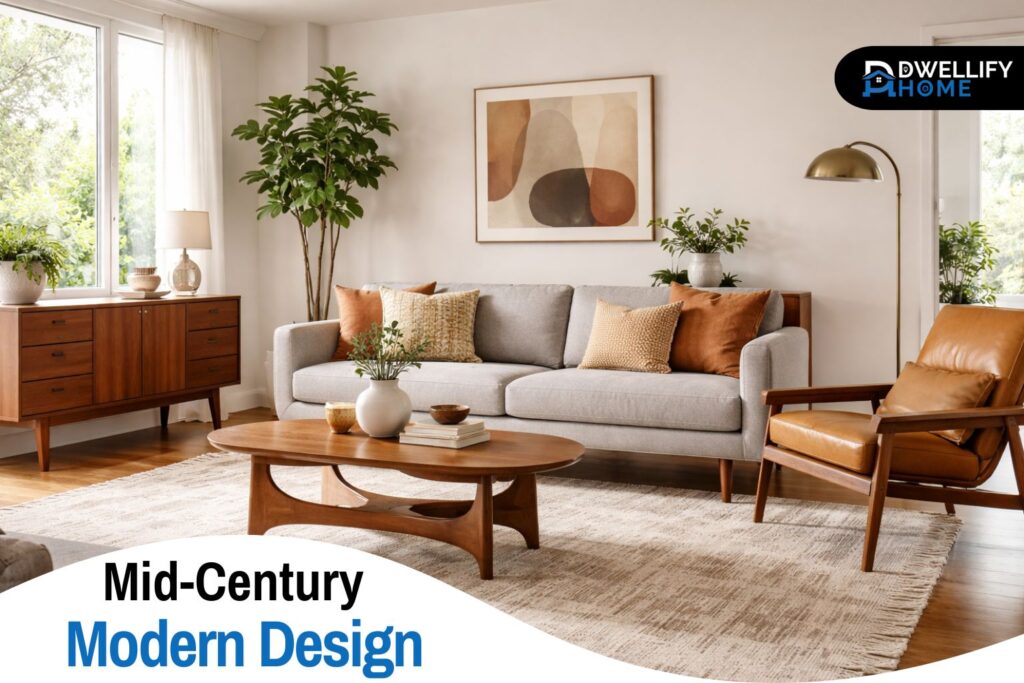
In a living room, this style usually works best when the furniture layout feels clean and intentional. A sofa with a simple profile, a wood media unit, a well-scaled rug, and a few carefully chosen accents often create a better result than adding more decor. Mid century modern design living room ideas tend to work best when the room has negative space and a clear focal point.
In bedrooms, the same logic applies. A platform bed, warm wood nightstands, simple lighting, and bedding with texture rather than busy pattern usually give the room the right mood. Mid century modern design bedroom spaces should feel calm and uncluttered. In dining areas, look for clean-lined tables, sculptural chairs, and lighting that adds shape without stealing all the attention.
Mid-Century Modern Design Examples
A good living room example usually includes a low sofa, a walnut coffee table, one accent chair, soft natural light, and a few pieces of art that add color without overcrowding the walls. Nothing feels random, but nothing feels overworked either.
A bedroom example might include a wood bed frame, globe lighting, neutral bedding, and one strong dresser with tapered legs. In smaller homes, the style can still work beautifully because the furniture often has lighter visual weight. That’s one reason so many mid century modern design examples feel comfortable rather than crowded.
How to Bring Mid-Century Modern Design Into Your Home
Start with the bigger decisions first. Choose furniture shape and room layout before you worry about decor. People often do this backward, and it leads to a room full of accessories trying to save a weak foundation.
Then narrow your materials and colors. Pick one or two wood tones, keep your palette steady, and use lighting, rugs, and art to reinforce the look. Mid century modern design ideas usually land best when they’re edited. The room should feel thoughtful, not busy.
Common Mistakes to Avoid
The most common mistake is treating the style like a costume. That usually shows up in rooms filled with retro replicas, bold colors everywhere, and decorative pieces that feel more nostalgic than useful. The result can look flat very quickly.
Another issue is poor spacing. This style depends on proportion and breathing room. Too much furniture, oversized decor, or heavy visual clutter can undo the whole effect. It’s also easy to confuse this look with Scandinavian, minimalist, or general contemporary design. They can overlap, but they aren’t the same. Mid-century rooms usually feel warmer, more sculptural, and more rooted in wood and form.
How It Works in Modern Homes
One reason this style keeps showing up is that it adapts well. You can bring in its principles without turning your house into a period piece. Clean silhouettes, natural materials, open space, and functional furniture still make sense in everyday living.
The best updated versions soften the look a bit. They mix classic shapes with more comfortable upholstery, quieter palettes, and practical storage. That keeps the room feeling current while still respecting the original design language.
Is It Still in Style and Who Does It Suit?
Yes, but not because it’s trendy. It stays relevant because it solves real design problems. It helps rooms feel organized, balanced, and welcoming. That kind of value doesn’t expire.
It tends to suit people who like clean spaces but still want warmth. Homes with good natural light, open layouts, or a mix of old and new pieces usually wear it well. It also works for anyone who wants a home to feel designed without feeling fussy.
Expert Tips for Making the Style Feel Authentic
Use fewer pieces, but choose them carefully. One well-shaped chair will usually do more for a room than three average ones. Let furniture placement guide the room before you add decor.
Also, don’t chase perfection. Real homes need comfort. The strongest spaces in this style mix structure with ease. Keep the lines clean, the palette grounded, and the layout practical. That’s usually where the room starts to feel right.
FAQs
What design style is mid-century modern?
Mid-century modern is a design style that developed between the 1940s and 1960s. It focuses on functional furniture, clean lines, organic shapes, and natural materials like wood, glass, and metal.
What are 5 key elements of MCM decor?
Five defining elements include simple furniture silhouettes, tapered legs, warm wood tones, minimal ornamentation, and a balanced mix of geometric and organic shapes.
What is the 2/3 rule for living rooms?
The 2/3 rule suggests that a sofa or main furniture piece should be about two-thirds the width of the wall or rug behind it. This helps maintain proper visual balance in the room layout.
What are the basics of mid-century modern design?
The basics include functional furniture, uncluttered spaces, natural materials, simple color palettes, and layouts that allow light and movement through the room.
Why is mid-century modern design still popular?
The style remains popular because it blends practicality with timeless visual simplicity. Its furniture shapes, natural materials, and open layouts fit well with modern lifestyles.
Conclusion
Mid-century modern design has held its place for a reason. It brings together function, warmth, simplicity, and strong visual form in a way that still fits how people live now. It doesn’t ask for excess, and it doesn’t depend on trend cycles to feel useful.
Done well, it gives a home clarity. The furniture feels intentional, the rooms feel open, and the overall look stays comfortable rather than forced. That’s what makes it one of the most dependable styles to work with, especially when the goal is a home that feels both thoughtful and easy to live in.
Disclaimer
Content on Dwellify Home is for educational and informational purposes only and should not replace professional interior design consultation when needed.

I’m Bilal, the founder of Dwellify Home. With 6 years of practical experience in home remodeling, interior design, and décor consulting, I help people transform their spaces with simple, effective, and affordable ideas. I specialize in offering real-world tips, step-by-step guides, and product recommendations that make home improvement easier and more enjoyable. My mission is to empower homeowners and renters to create functional, beautiful spaces—one thoughtful update at a time.