Modern Mexican interiors have a way of feeling relaxed and full of character at the same time. The rooms don’t look sterile, yet they’re not overloaded either. There’s warmth in the wood, depth in the plaster, texture in the textiles, and usually one or two details that feel personal rather than mass-produced. That balance is what makes the style so easy to live with.
A lot of people get drawn to this look because it feels welcoming. The challenge is getting that warmth without turning the room into a theme. The strongest spaces usually don’t rely on loud color everywhere. They use a calm base, natural materials, and a few handcrafted elements that carry the personality of the room.
Snippet-Ready Definition
Modern mexican home décor combines traditional Mexican craftsmanship with contemporary design. It uses natural materials, warm colors, handmade accents, and clean furniture to create interiors that feel relaxed, textured, and culturally inspired.
Mission Statement
At Dwellify Home, our goal is to help homeowners make practical, stylish, and informed décor decisions by sharing realistic design guidance rooted in comfort, functionality, and timeless aesthetics.
What Defines Modern Mexican Home Décor
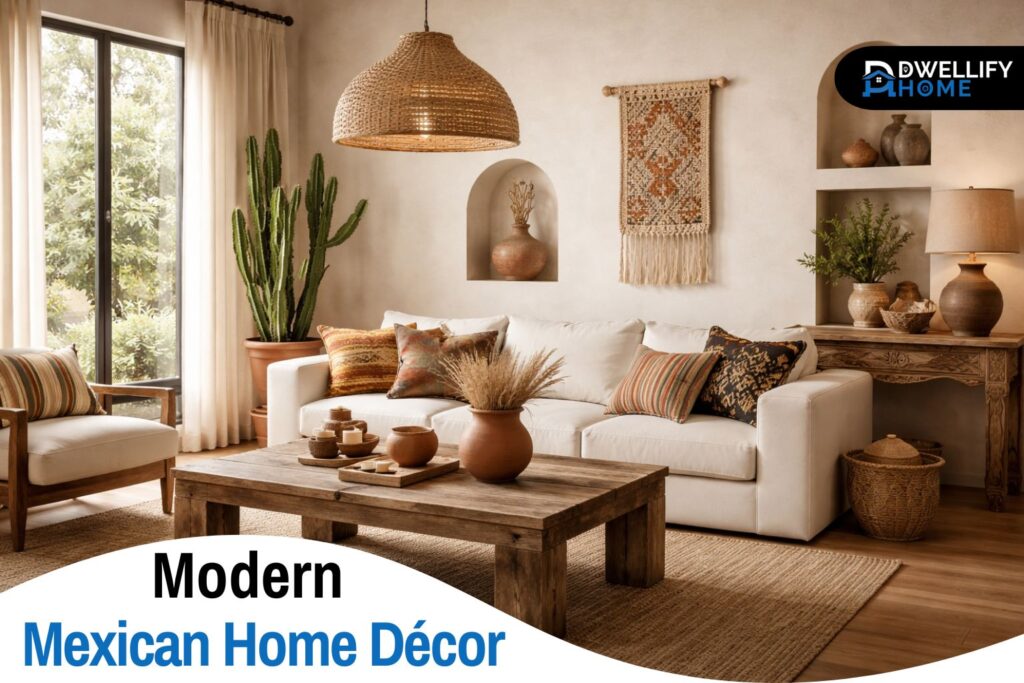
At its core, modern Mexican home décor blends traditional craft with a cleaner, more edited approach. You’ll still see handmade pottery, woven textures, carved wood, terracotta, and patterned tile, but they’re used with more restraint. Instead of filling every surface, the room gives those details space to stand out.
That’s the part many people miss. Traditional Mexican decor often celebrates richness, color, and layering. A more modern version keeps the soul of that style but simplifies how it’s used. The result feels grounded and warm rather than busy. In a well-designed room, you can usually point to a few strong elements doing most of the work instead of dozens of small decorative pieces competing for attention.
Key Benefits of Modern Mexican Interior Style
- Creates a warm and welcoming living environment
- Blends handcrafted character with modern simplicity
- Works well in both large homes and smaller spaces
- Emphasizes natural materials that age well
- Allows personal expression through artisan décor and textiles
The Difference Between Traditional and Modern Mexican Décor
Traditional mexican home decor often leans into bolder color, denser pattern, ornate furniture, and a more collected look. It can be beautiful and deeply expressive, especially in homes that already have architectural details to support it. Thick wood beams, colorful tile, ironwork, and painted ceramics all fit naturally there.
A modern Mexican house interior usually takes those same influences and pares them back. The walls may stay soft white or warm beige. The sofa might be simple and clean-lined. The handmade parts still matter, but they’re placed more intentionally. That’s why this style works so well for newer homes and apartments too. You don’t need a hacienda-style house to bring it in. You just need to be selective.
A Warm, Natural Color Palette
The best starting point is usually the background. Soft white, sand, clay, taupe, warm gray, and muted terracotta give the room an easy base to build on. These colors let the texture show up better, which matters a lot in this style. Flat, cold white often feels too sharp here. A warmer wall tone usually makes everything else sit better.
Bright color still has a place. Cobalt blue, ochre, rust, coral, mustard, and deep green can all work. The difference is how they’re introduced. Instead of painting every wall or using color in every piece of furniture, it often works better through pottery, a textile, artwork, or tile. That keeps the room lively without making it feel crowded.
Natural Materials That Define the Style
Modern mexican interior design depends heavily on materials that age well and feel honest. Wood, clay, stone, leather, linen, wool, jute, and woven fibers all help create that relaxed depth people respond to. Even a simple room starts to feel more layered when those materials are combined thoughtfully.
This is also where cheaper rooms usually give themselves away. A space can copy the colors of mexican home decor ideas, but if every surface is glossy, synthetic, or flat, it won’t feel right. One solid wood coffee table, a few clay vessels, or a textured woven shade can do more than a dozen decorative accessories. Good material choice tends to look better over time too, which makes the style feel less trend-driven.
Texture as a Key Design Layer
Texture does a lot of the heavy lifting in this look. A woven throw, matte plaster wall, slightly rustic wood finish, stone countertop, or handwoven rug can bring warmth without adding visual noise. That matters in homes where people want character but don’t want a room that feels overly styled.
One practical rule helps here: vary the texture, but repeat the mood. For example, a room with linen curtains, leather dining chairs, a wood bench, and clay planters feels connected because all the materials are tactile and grounded. They aren’t identical, but they belong together. That’s usually more effective than chasing perfect color matches.
The Role of Artisan Craftsmanship
Handmade details are what keep this style from feeling generic. Talavera tile, Mexican pottery, woven baskets, artisan lighting, hand-loomed textiles, and carved wood furniture all bring a sense of place. Even one or two pieces can shift the room from standard to memorable.
The key is choosing pieces that feel genuine, not touristy. A handcrafted ceramic lamp on a clean-lined console feels collected. Ten small novelty items on a shelf usually don’t. The strongest rooms use artisan work as a focal point or accent, not as clutter. That’s one of the easiest ways to keep the look respectful and timeless.
10 Ideas for a Warm and Stylish Interior
- Pair clean-lined furniture with artisan accents. A simple sofa or dining table gives the room structure, while handmade pieces soften it. This contrast is where the style often works best.
- Use terracotta and clay to ground the space. Planters, bowls, vases, and rustic vessels add earthy warmth quickly. They look especially good against light walls and natural wood.
- Introduce Talavera tile in small statement areas. A backsplash, stair riser, side table top, or niche can bring pattern without taking over the room. Small tile moments are often easier to live with long term.
- Add woven lighting for warm ambient texture. Rattan, palm, or natural fiber pendants cast softer light and help the room feel less polished in a good way. They also bridge rustic and contemporary pieces well.
- Choose warm wood furniture with character. Slight grain, matte finishes, and natural variation usually feel better here than ultra-sleek lacquered surfaces. A room with too many glossy finishes loses the softness this style needs.
- Style with Mexican-inspired textiles. Throws, pillows, and rugs are one of the safest ways to bring in color and pattern. They’re easy to layer and easier to update than larger items.
- Use art that reflects craft and culture. Folk-inspired paintings, woven wall pieces, ceramic wall accents, or framed textile panels can add depth without relying on generic wall décor.
- Bring nature indoors. Cactus, agave, olive branches, and leafy plants work well because they reinforce the earthy, indoor-outdoor feeling often seen in modern mexican home exterior design too.
- Mix vintage and contemporary pieces. A newer sofa beside an older wood chest or handcrafted stool usually feels richer than buying everything from one collection. Rooms with a little age variation tend to feel more lived-in.
- Keep the palette balanced and intentional. Not every piece needs to announce itself. One patterned rug, two clay vessels, and a warm wood table can say more than a room full of accents.
Applying the Style in Different Rooms
In the living room, comfort should lead. Use a neutral sofa, then build with texture through pillows, a rug, pottery, and a wooden coffee table. This is often the easiest room to get right because you can introduce the style slowly without committing to permanent finishes.
Kitchens and bathrooms benefit from restraint. Handmade ceramics on open shelves, a tile backsplash, aged brass hardware, or a plaster-like wall finish can be enough. In bedrooms, woven lighting, soft bedding, and a warm bench at the foot of the bed usually create the mood without much effort. The point isn’t to redesign every room in the same way. It’s to carry the same material language through the home.
How to Blend Traditional Mexican Home Decor With Modern Interiors
Start by choosing what matters most. In one home, it may be the tile. In another, it may be textiles or pottery. Once you know the strongest traditional element you want to use, keep the surrounding pieces simpler. That gives the room contrast and keeps it from becoming visually heavy.
This is especially important in newer homes. Clean walls and modern furniture can actually help traditional mexican decor stand out better. A carved wood bench or patterned textile has more presence when it isn’t competing with five other statement pieces. Editing is what makes the look feel modern.
Common Mistakes to Avoid
The biggest mistake is trying to include every recognizable element at once. Bright tile, bold textiles, carved wood, iron accents, rustic furniture, pottery, and color-heavy walls can quickly become too much. Each item might be attractive on its own, but together they can make the room feel tight and distracted.
Another common issue is choosing imitation pieces that flatten the style. Machine-made accessories that mimic handcrafted work often lose the warmth that makes this look appealing in the first place. It’s better to buy fewer things and choose pieces with texture, weight, and natural variation. That’s usually what gives the room credibility.
Sourcing Authentic Mexican-Inspired Décor
A good way to shop is to focus on categories rather than trying to buy a full room set. Look for handmade pottery, artisan textiles, wood furniture, woven lighting, and tile accents. These are the elements that add the most personality without forcing the room in one direction.
Also pay attention to finish and proportion. A beautiful clay vase that’s too small for the console won’t have much impact. A woven pendant that fits the dining table scale properly can change the whole room. Good sourcing isn’t only about where something comes from. It’s also about whether it belongs in the space you’re putting it in.
Extending the Style Beyond the Interior
A lot of what works indoors can carry outside too. Earth-tone walls, natural stone, clay pots, wood gates, textured finishes, and planted courtyards all connect well with the interior version of the style. That indoor-outdoor link is one reason this aesthetic feels so natural and settled.
Even a small patio or entry can support the look. A bench, a large terracotta planter, a textured wall finish, and warm lighting are often enough. You don’t need a full courtyard to echo the mood of a modern mexican home exterior. A few consistent materials can do the job.
Making the Style Work in Small Spaces
Small rooms actually benefit from this approach when it’s handled carefully. Keep the walls light, use texture more than color, and choose a few pieces with presence rather than many tiny accents. A compact apartment can still carry mexican inspired interior details beautifully if the room stays open and edited.
This is also where vertical choices help. A taller plant, a statement pendant, or a single piece of wall art can bring character without taking up floor space. In smaller homes, restraint isn’t a limitation. It’s usually what makes the style feel calm instead of crowded.
How to Keep It Timeless
What ages best in this style is usually the least forced part of it. Natural materials, handmade pieces, warm wood, earthy tones, and simple furniture tend to stay relevant because they don’t rely on novelty. They feel rooted, and that gives the room staying power.
Trends can still be used, but they should stay in the background. Swap a pillow, add a new textile, or change a lamp. Let the core of the room come from material, proportion, and craftsmanship. That’s the difference between a space that still feels good in five years and one that starts to feel dated as soon as the trend cycle moves on.
FAQs
What is modern Mexican home décor?
Modern Mexican home décor is a design style that mixes traditional Mexican materials and craftsmanship with simplified modern interiors. It focuses on natural textures, earthy colors, and carefully chosen handcrafted pieces.
How is modern Mexican décor different from traditional Mexican décor?
Traditional Mexican decor often uses bold colors and dense patterns. The modern approach simplifies those elements, keeping artisan pieces but pairing them with neutral walls, clean furniture, and more open space.
What colors work best in a modern Mexican interior?
Warm neutrals such as sand, clay, terracotta, and soft white are common base colors. Accent colors like cobalt blue, mustard, rust, or deep green are usually introduced through textiles, pottery, or tile.
Can modern Mexican décor work in small homes or apartments?
Yes. The style works well in smaller spaces when you focus on texture rather than heavy color. A few handcrafted accents, natural materials, and a calm color palette help keep rooms open and comfortable.
What materials are commonly used in this design style?
Common materials include wood, clay, terracotta, woven fibers, stone, linen, leather, and handmade ceramics. These materials add warmth and depth while keeping the space natural and relaxed.
Conclusion
Modern mexican home décor works best when it feels lived in, not staged. The warmth comes from texture, the character comes from craftsmanship, and the balance comes from knowing when to stop. A calm base, a few strong materials, and thoughtfully chosen artisan details usually go further than a room full of decoration.
The most satisfying spaces are rarely the ones trying hardest. They’re the ones that mix natural finishes, useful furniture, and meaningful pieces in a way that feels steady and comfortable. Start with one room, keep the palette grounded, and let each choice add real depth. That’s how this style becomes personal rather than performative.
Disclaimer
The information on Dwellify Home is provided for general home design inspiration and educational purposes. Individual design choices may vary depending on personal preferences, home layout, and budget.

I’m Bilal, the founder of Dwellify Home. With 6 years of practical experience in home remodeling, interior design, and décor consulting, I help people transform their spaces with simple, effective, and affordable ideas. I specialize in offering real-world tips, step-by-step guides, and product recommendations that make home improvement easier and more enjoyable. My mission is to empower homeowners and renters to create functional, beautiful spaces—one thoughtful update at a time.