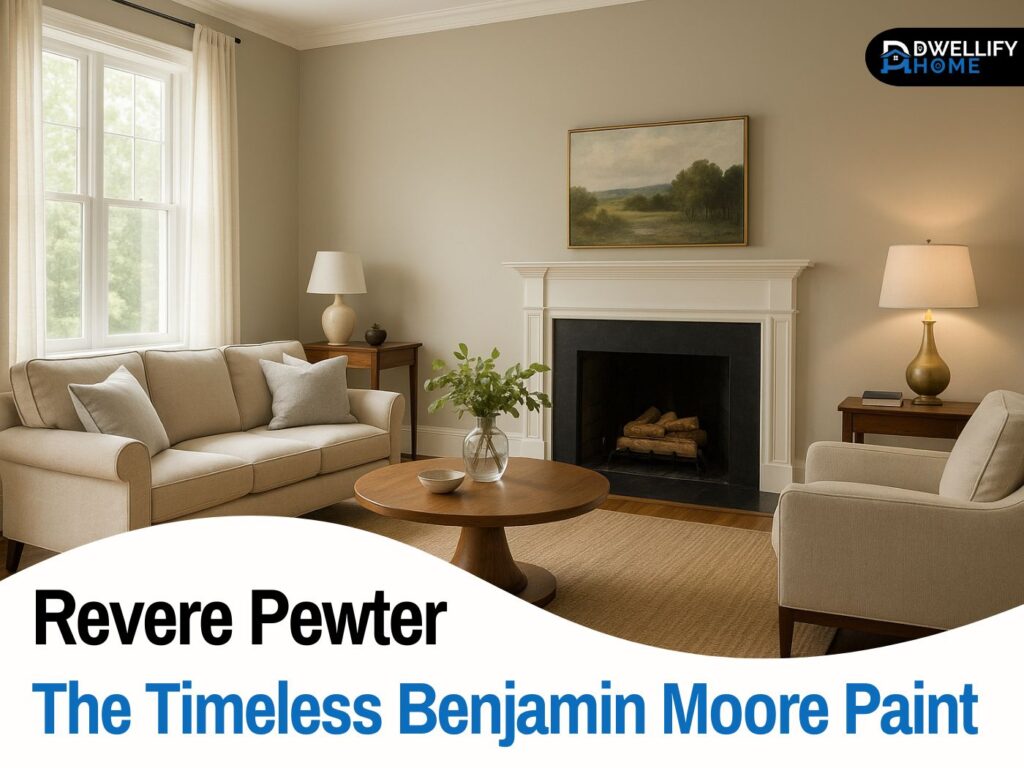

Painting your walls gray can feel like a safe choice. It’s neutral, it works with a lot of styles, and it can make a home feel calm and pulled together. But gray is also the color I see homeowners struggle with the most, because it changes constantly depending on light, flooring, and even what’s sitting across the room.
In my work as a color consultant, I’ve helped hundreds of clients choose interior gray paint colors for walls that look great in real life, not just on a paint chip. If you want gray walls that feel intentional and easy to live with, the key is understanding undertones, testing properly, and matching your finishes.
Snippet-ready definition:
Paint gray walls means using gray or greige paint as a neutral backdrop that can feel modern, cozy, or classic. People use it because it pairs easily with décor, trim, and wood tones when undertones and lighting are chosen well.
Mission Statement:
At Dwellify Home, our mission is to help you make confident, practical design choices with clear, experience-based guidance, so your home looks polished, comfortable, and truly yours.
Why Painting Gray Walls Is Harder Than It Looks (And Why Some Grays “Go Weird”)
Gray is rarely just gray. Most gray paints carry a hidden tint that shows up once the paint is on a large surface. That’s why one gray can read warm and cozy in a store, then look greenish at home, or suddenly feel icy and blue at night.
Light is the other reason gray feels unpredictable. Morning sun, afternoon glare, cloudy days, and warm LED bulbs all pull different tones forward. I’ve walked into the same house at 9 a.m. and again at 7 p.m. and watched the walls look like two different colors. That’s normal behavior for gray, not a mistake on your part.
A real example from a client: she picked a popular light gray that looked perfect in the sample pot. Once it was on her walls, it looked slightly purple. The issue wasn’t the paint being “wrong.” It was her cool white trim, north-facing light, and a soft beige carpet that pushed the gray toward a mauve cast. Once we adjusted the trim white and moved to a slightly warmer gray, the room settled instantly.
Quick Guide Table: Choose the Right Gray Fast
| Your room situation | Best gray direction | What to avoid | Quick tip |
| North-facing, low light | Warm gray or greige | Icy cool grays | Test at night under your actual bulbs |
| South-facing, lots of sun | Medium gray, balanced undertone | Very pale grays that wash out | Go one shade deeper than you think |
| Open concept space | Greige or neutral-leaning gray | Strong blue/green undertones | Keep undertone consistent across rooms |
| Warm wood floors (oak/walnut) | Warm gray or greige | Cool blue grays | Match to the wood’s warmth, not the sofa |
| Cool tile or modern finishes | Neutral to cool gray | Muddy warm grays | Pair with crisp trim for a clean look |
| Exterior in strong sunlight | Slightly deeper gray | Light grays that look “almost white” | Sample on multiple sides of the house |
Step-by-step mini guide (simple and clean)
- Decide undertone: warm, cool, or greige.
- Pick depth: light for airy, medium for flexible, dark for cozy drama.
- Test properly: big samples, two walls, day and night.
- Match fixed elements: floors, trim, counters, tile.
- Choose a sheen: eggshell for most walls, satin for busy rooms.
Step 1 — Choose Your Gray Undertone (Warm, Cool, or Greige)
Before you fall in love with any shade, decide what family you need. This is the part that saves you from most regrets.
Warm grays usually have hints of beige, taupe, or a soft brown base. They tend to feel welcoming and they pair well with warm woods and creamy whites. Cool grays lean toward blue, green, or violet, and they can feel crisp and modern, especially with bright white trim and cooler finishes.
Greige sits between gray and beige. It’s one of my most-used options because it behaves better in mixed lighting and it’s forgiving with many flooring types. If your home has warm wood, beige stone, or soft off-white trim, greige often looks more natural than a pure cool gray.
Warm gray vs cool gray vs greige (easy cheat sheet)
Here’s a quick way I explain it to homeowners during consults:
- If your home has lots of warm materials like oak floors, brass hardware, beige tiles, or cream trim, lean warm gray or greige.
- If your home has cooler materials like gray tile, black accents, bright white trim, or stainless finishes, a cooler gray can work well.
- If you have a mix of warm and cool elements, greige is usually the easiest bridge color.
To spot undertones, place your paint chip against a sheet of plain white paper. If it suddenly looks greenish, bluish, or purple next to true white, that undertone is already there. It’s just waiting for the right lighting to show up.
Step 2 — Pick the Right Depth (Light Grey Paint Walls vs Medium or Dark Gray)
Depth matters more than most people expect. Light grey paint walls can make a space feel open and bright, but only if the undertone works in that room. A light gray with a cool base in a north-facing room can feel chilly and flat. Meanwhile, a soft warm gray in the same space can feel calm and balanced.
Medium grays are often the most livable choice for open layouts. They hide scuffs better than very light shades and they usually feel more grounded. In living rooms, a medium gray can look intentional without taking over the space, especially when paired with warm textiles and layered lighting.
Dark gray is beautiful, but it needs planning. It can make a big room feel cozy, and it can make a small room feel heavy if there’s not enough light. I like dark gray on one feature wall, in a dining room, or in a bedroom where you want a quieter mood. If you love dark gray, balance it with lighter trim, good lighting, and warm accents like wood and linen.
A note about the question, what is the most popular light gray interior paint. In practice, the “popular” ones tend to be the shades that sit in the middle of the road. They aren’t too blue, too green, or too beige, and they have enough softness to work in many homes. Popular does not mean perfect for every room, so treat it as a starting point, not a shortcut.
Step 3 — Test Like a Pro (Sampling Method That Prevents Costly Mistakes)
If you take one thing from this guide, let it be this: don’t decide from a tiny chip. Gray needs space. A two-inch square can hide undertones that become obvious on a full wall.
I recommend testing two to three candidates at a time. Paint large swatches directly on the wall or use sample boards you can move around. Check them in morning light, afternoon light, and at night with your lamps on. Also check the shade in shadow, because many homes have both bright zones and darker corners in the same room.
Here’s the simple testing routine I give clients:
- Test on at least two walls, especially if one wall faces a window.
- View it next to your trim and flooring, not in isolation.
- Check it under your real bulbs. Warm bulbs can make gray look warmer or slightly muddy, while cooler bulbs can pull out blue and green.
- Give it 24 to 48 hours before choosing. Your eyes adjust, and quick decisions are where regret starts.
Step 4 — Match Gray to Your Home’s Fixed Elements
Paint is the flexible element. Your floors, counters, and trim usually stay. So instead of forcing gray to work, choose a gray that already makes sense with what you have.
Start with your flooring. Warm wood floors often look best with warm gray or greige. Cool-toned floors can handle cooler grays, but even then, you want to avoid a gray that’s too icy unless the room gets strong sun.
Next, look at countertops and tile. White and gray marble-style surfaces can pull a gray cooler. Beige stone can pull it warmer. If your backsplash has a green cast, even a tiny one, a cool gray might suddenly look more green than you intended.
Trim is a big deal. Bright white trim makes wall color look deeper and cooler. Creamy trim makes wall color look warmer. If you have existing trim you’re not changing, pick your wall gray to suit it. I’ve seen people repaint entire rooms when the real issue was the trim white fighting the wall undertone.
Best Interior Gray Paint Colors for Walls (Shortlists by Room and Feel)
Instead of giving you a long list that feels overwhelming, here’s how I guide homeowners to the right choice by room behavior. This approach works whether you’re choosing paint gray walls from Benjamin Moore, Sherwin-Williams, Behr, or another brand.
Grey paint colors for living room (most searched use-case)
Living rooms usually have mixed lighting and lots of visual elements, so choose a gray that can handle change. If you have an open concept space, avoid grays that are too extreme in undertone. A balanced warm gray or greige is often the safest pick because it plays nicely with both warm and cool decor.
If your living room gets strong sunlight, many grays will look lighter and sometimes slightly washed out. In that case, you might go one step deeper than you think. If your living room is darker or north-facing, avoid cold grays that can feel steel-like. Look for a warmer gray that stays soft in shadow.
Bedrooms, hallways, and kitchens (quick-fit guidance)
In bedrooms, softness matters. I lean toward gentle warm grays or light greiges so the room feels restful. Cooler grays can work, but they need warmer lighting and textiles to keep the space from feeling stark.
In hallways, light matters. Choose a higher LRV option, basically a lighter paint that reflects more light. Hallways often have fewer windows, so a mid-gray that looks perfect in a bright room can feel heavy here.
In kitchens, gray has to cooperate with cabinets and counters. If you have white cabinets and cool stone, a cool gray can look clean. If you have warm wood cabinets or creamy counters, warm gray or greige usually looks more natural.
Brand note: Paint gray walls Benjamin Moore (and similar brands)
Many homeowners like to start with well-known collections, and that’s fine. Just remember that two grays that look similar on a fan deck can behave very differently on your wall. Use brand names as a shortlist tool, then let your testing process make the final call.
Grey Wall Paint Combinations That Always Look Intentional
The best grey wall paint combinations are the ones that repeat the same temperature. Warm gray works best with warm whites, warm woods, and cozy fabrics. Cool gray works best with crisp whites, clean lines, and cooler finishes.
Here are combinations I’ve used again and again because they hold up:
- Gray walls with crisp white trim for a clean, classic look
- Gray walls with warm white trim for a softer, cozier feel
- Gray walls with natural wood furniture and woven textures to add warmth
- Gray walls with black accents for modern contrast
- Gray walls with muted green or dusty blue accents for a calm palette
A quick tip from real projects: if your gray walls feel flat, don’t rush to repaint. Often the fix is contrast. Add a warmer rug, bring in wood tones, or switch to softer lighting. Gray needs partners, not perfection.
The Sheen and Finish Guide (So Your Gray Doesn’t Look Patchy or Cheap)
Sheen changes how gray looks. Higher sheen reflects more light, which can make undertones pop and highlight wall imperfections. Lower sheen hides flaws, but it may not clean as easily.
For most homes, eggshell is the sweet spot for walls. It’s washable, it has a gentle glow, and it doesn’t exaggerate texture. Matte can look beautiful in low-traffic rooms like bedrooms, but it can show marks more easily. Satin is fine for kitchens and kids’ rooms, but on large walls it can sometimes look a bit shiny and emphasize bumps.
Also, remember that cutting corners on prep shows more with gray than with beige. Gray makes patchy repairs and uneven sheen stand out. If your walls have a lot of texture issues, a matte or eggshell finish can be your best friend.
Common Problems After Painting Gray Walls (And Fast Fixes That Actually Work)
If your gray looks wrong after it’s up, don’t panic. There are several fixes before you reach for a roller again.
If it looks too blue, add warmth in the room. Warmer bulbs, wood tones, beige or tan textiles, and creamy whites can balance it. If it looks too green, check what’s reflecting onto it. Green landscaping outside windows, a green rug, or even a nearby painted room can influence it.
If it looks purple, that often happens when a gray has a violet base and the room is cool or shaded. Warmer lighting can help, but sometimes the best fix is switching to a gray with less violet in the undertone.
Here’s a simple way to troubleshoot, based on what I see most:
- Change bulbs to a warmer white if the room feels cold at night
- Add warm neutrals in rugs, curtains, and art
- Adjust trim color if it’s too stark and is pushing the wall color cooler
- If repainting, shift undertone, not just lightness or darkness
Paint Gray Walls Exterior (What Changes Outside)
Exterior gray behaves differently than interior gray, mostly because sunlight is stronger and more direct. A gray that feels perfect indoors can look much lighter and sometimes cooler outside. Landscaping also matters. Green trees and lawns can cast a soft green reflection on exterior walls, which is why some grays end up looking slightly sage outdoors.
When choosing paint gray walls exterior, I usually recommend testing in multiple spots around the house. The front may get different sun than the side or back. Also look at your roof color, stone, brick, and driveway, because those materials influence how the gray reads.
For grey colour paint house outside, these combinations tend to look balanced:
- Gray exterior with white trim for clean contrast
- Gray exterior with black windows or black shutters for a modern edge
- Gray exterior with a natural wood door for warmth
Exterior sheen matters too. Many exterior paints are in satin or low-luster finishes for durability. That slight sheen can make undertones more noticeable, so sampling is just as important outside.
Quick Checklist Before You Commit (1-Minute Decision Tool)
Before you buy gallons, run through this quick list:
- Undertone makes sense with your floors and trim
- Depth fits the room’s light level and size
- You tested in day and night lighting
- You checked it next to fixed elements like counters and tile
- Sheen matches the room’s use and wall condition
- Your gray works with your planned grey wall paint combinations
If you can check most of these boxes, you’re in a good place.
FAQs
1) Is gray a good color to paint walls?
Yes, if you choose the right undertone for your lighting and finishes. Gray is a flexible neutral, but it can shift blue, green, or purple, so sampling and matching trim and flooring matters.
2) What color is replacing gray in 2026?
Many homeowners are moving toward warmer neutrals like greige, creamy off-whites, soft taupes, and muted earthy tones. Gray is still used, but often in warmer, softer versions instead of icy cool grays.
3) What is the most popular grey wall color?
The most popular options are usually light-to-medium grays or greiges that stay balanced in mixed lighting. Popular picks vary by brand, but the “winner” is typically the one that suits your room exposure and trim color.
4) What colors look best with grey walls?
Great pairings include crisp white or warm white trim, natural wood tones, black accents for contrast, muted greens, dusty blues, and warm neutrals like tan and camel. The best match depends on whether your gray is warm or cool.
5) Why do gray walls look different at night?
Artificial lighting changes how undertones show up. Warm bulbs can make gray look warmer or slightly muddy, while cool bulbs can pull out blue and green. That’s why you should always test samples after dark.
Conclusion
Choosing gray is not about finding the one “perfect” shade. It’s about choosing a shade that behaves well in your lighting, matches your fixed finishes, and supports the mood you want in the room. When you take the time to identify undertones, test properly, and plan your combinations, gray stops feeling risky and starts feeling easy.
If you’re deciding between two similar grays, pick the one that looks better in the worst lighting in your home, usually the dim corner or the evening lamp light. That’s the version you’ll live with most often, and it’s where good decisions show up.
Disclaimer:
This article shares general design guidance based on real-world color consulting experience. Paint results can vary by lighting, sheen, surface texture, and brand formulas, so always test samples in your space before committing.

I’m Bilal Hassan, the founder of Dwellify Home. With 6 years of practical experience in home remodeling, interior design, and décor consulting, I help people transform their spaces with simple, effective, and affordable ideas. I specialize in offering real-world tips, step-by-step guides, and product recommendations that make home improvement easier and more enjoyable. My mission is to empower homeowners and renters to create functional, beautiful spaces—one thoughtful update at a time.