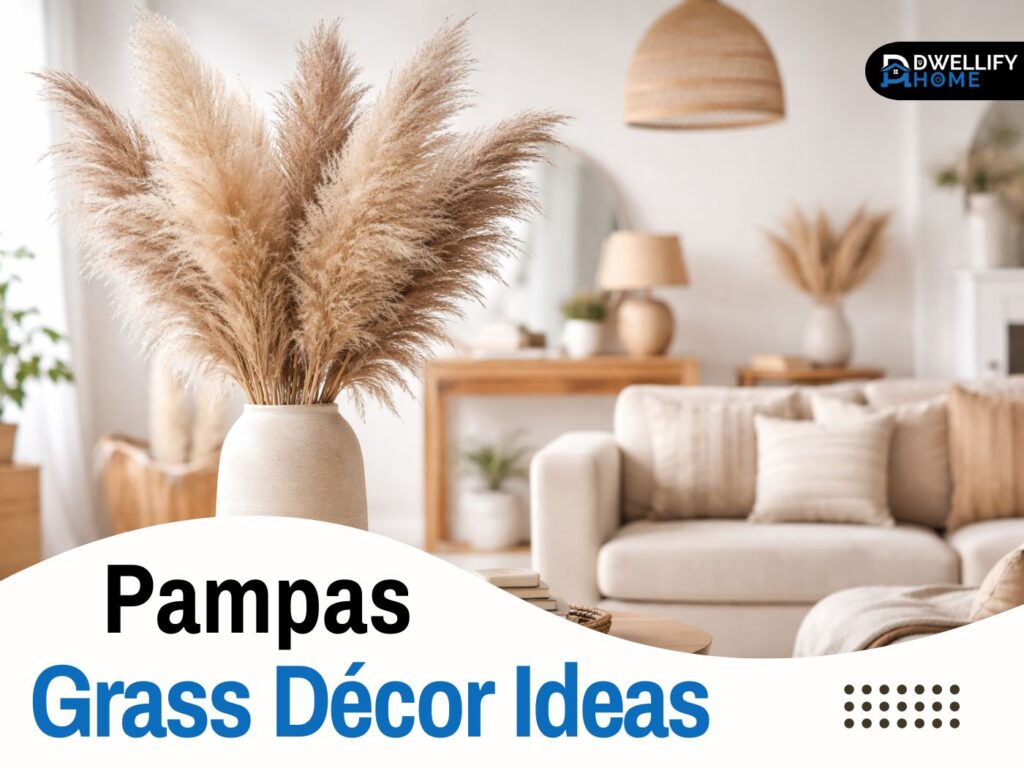
Pampas grass décor has a way of making a room feel softer and more finished without adding visual clutter. I’ve used it in small apartments, open-plan living rooms, and even formal entryways where people assume it took a lot of effort. Most of the time, it didn’t. It just needed the right scale, the right vase, and a little restraint.
In this guide, I’ll walk you through what actually works, what tends to look messy, and how to keep the look clean over time. I’ll also cover wedding styling, safety concerns, and how to buy good stems so you don’t end up with a box of flat, shedding fluff.
Snippet-ready definition:
Pampas grass décor uses dried or faux pampas plumes to add height and soft texture to a space. It’s most often styled in vases, arches, or wall pieces for a calm, modern, boho look.
Mission Statement:
At Dwellify Home, our mission is to make home styling feel simple and doable, with practical design guidance that helps you create calm, comfortable spaces using timeless textures and thoughtful details.
What Pampas Grass Décor Is (and Why It Instantly Looks “Designer”)
Pampas is a tall ornamental grass with feathery plumes that dry beautifully. In interiors, it adds height, movement, and a soft texture that plays well with modern, boho, minimalist, and luxury spaces. The neutral tones, usually cream, beige, tan, and deeper browns, work like a “texture neutral,” meaning it adds interest without fighting your color palette.
The reason it reads designer is simple: it creates vertical balance. Many rooms feel heavy at furniture height, sofas, consoles, beds. Pampas pulls the eye up, which makes the space feel taller and more layered. That’s also why it works so well in photos for weddings and events.
One quick professional tip: pampas looks best when it has breathing room. If you cram it into a crowded shelf or place it next to busy wall art, it can look like a dust mop. Give it space and it looks intentional.
Quick Guide Table (Fast decisions, no overthinking)
| Goal | Best Choice | Quick Setup | Pro Tip |
| Tall, airy living room look | Dried pampas | Floor vase in a quiet corner | Keep space around it so it doesn’t look messy |
| Low-shed, family-friendly option | Faux pampas | Medium vase on console | Choose thicker stems so it looks real from a distance |
| Pampas grass decor in vase that looks expensive | Dried or faux | Layer heights, angle a few outward | Use one accent tone only, like mocha or muted blush |
| Wedding arch impact | Mostly dried, some faux | Pampas base + flower clusters | Cluster flowers in groups, not evenly everywhere |
| Minimal maintenance | Faux | Tall vase, fixed shape | Best for humid rooms and near vents |
Step-by-step mini guide: Vase styling that works every time
- Pick the vase first
For a floor vase arrangement, choose a heavy base and a vase that feels proportionate to the stems. - Fluff outside
Shake stems gently, separate the plumes with your fingers, then let them sit in the vase for 24 to 48 hours. - Build your shape
Tall stems in back, medium in the middle, shorter in front. Keep the silhouette soft, not stiff. - Lock it in
Light hairspray helps short-term. For longer hold, use a clear matte sealer and keep it away from vents. - Style the area, not just the vase
Pair with one or two simple textures nearby like ceramic, wood, linen. Too many accessories makes pampas look dusty.
Dried vs Artificial Pampas Grass — Choose the Right Type for Your Space
Dried pampas grass decor is the classic choice, and it’s popular for a reason. The texture is airy, the plumes catch light in a soft way, and it brings a natural feel that faux options sometimes miss. If your home is fairly low-humidity and you don’t have strong air vents blasting nearby, dried stems can last a long time with basic care.
Artificial pampas grass can be the better fit in a few very real situations. If you have allergies, pets that like to investigate everything, or a room that’s humid like a bathroom, faux stems stay consistent and low-shed. They’re also great if you want a fuller look immediately, since dried stems often need fluffing and time to expand.
If you’re not sure, here’s the approach I use with clients:
- Choose dried for living rooms, bedrooms, entryways, and low-traffic corners
- Choose faux for bathrooms, kids’ rooms, tight hallways, and homes where shedding would be a constant annoyance
Pampas Grass Décor for Living Room (The Most Popular, High-Impact Setups)
For a living room, the easiest win is a floor vase arrangement in an underused corner. Think beside a media console, next to a sofa arm, or near a window where the light hits the plumes. Scale matters more than people expect. A short vase with tall pampas can feel top-heavy, while a tall vase with too few stems can look sparse.
Console tables and entryways are another natural spot. I often style a console with one strong vertical element and keep everything else low and simple. Pampas does that job perfectly. It also creates a welcoming look without taking up surface space you need for keys, bags, or a lamp.
For coffee tables and side tables, keep it smaller. A tiny bundle in a short vase can look sweet, but only if it doesn’t block sightlines. If people have to lean around it to see each other, it’s not décor anymore, it’s an obstacle.
Mantels and shelves can work too, but I’d keep pampas minimal there. A small bundle next to a candle or a ceramic piece is enough. Too much and it starts to read dusty instead of styled.
Pampas Grass Decor in a Vase (A Foolproof Arrangement Formula)
Step 1 — Pick the right vase (height, mouth size, weight)
If you want a clean, high-end look, start with the vase. For floor styling, I like a vase that’s about one-third to one-half the height of the stems. The base needs weight, especially if you have kids or pets, because pampas stems can act like a sail when someone brushes past.
Pay attention to the opening. A narrow mouth keeps stems upright and tidy. A wide mouth creates a looser, more relaxed shape, but it’s easier for the arrangement to go messy. If you only have a wide-mouth vase, you can stabilize stems with floral foam, crumpled kraft paper, or a taped grid across the opening.
Step 2 — Prep and fluff your stems (for that full, airy look)
Most stems arrive compressed. I usually take them outside, gently shake each stem downward, and then use my fingers to separate the plumes. After that, I place them in the vase and let them sit for a day or two. They naturally expand and look softer once they’ve had time to breathe.
If you’re working with shedding, a light mist of hairspray can help hold fibers in place. For longer-term results, a clear matte spray sealer is often better, especially if the arrangement sits near airflow. Just spray lightly and evenly, and let it dry fully.
Step 3 — Arrange like a stylist (layering techniques that look expensive)
Layering techniques are what separate a quick vase fill from an arrangement that looks curated. I start with the tallest stems at the back, then medium heights in the middle, and shorter pieces at the front. I also angle a few stems outward to create movement, but I keep the overall shape controlled.
Color layering matters too. Cream and beige as a base is safe and elegant. If you want more depth, add a few mocha or deeper brown plumes toward the center. It creates a shadow effect and makes the arrangement look fuller without adding more stems.
A practical question I get a lot is how many stems you need. As a rough guide:
- Small tabletop vase: 5 to 10 stems
- Medium vase: 10 to 20 stems
- Floor vase statement: 20 to 35 stems depending on fullness
Step 4 — Finish the styling (how to make it look intentional)
Once the stems are in, step back and look at the silhouette. If it looks like a broom shape, you need variation in height and angle. If it looks chaotic, you need to pull a few stems out and simplify.
Finish by pairing it with the right supporting textures. Neutral ceramics, wood, linen, and stone all make pampas feel purposeful. Too many shiny, glossy items nearby can make it feel out of place.
Pampas Grass Décor Ideas Beyond the Basics (Unique, Uncommon, Expert-Level Looks)
If you want a modern look, go darker. Deep brown pampas in a matte black or warm clay vase looks sophisticated and slightly moody, especially in rooms with clean lines and minimal clutter. I’ve used this in luxury-style living rooms where clients wanted softness without leaning overly boho.
Mix and match textures for a more layered finish. Pampas pairs beautifully with bunny tails, dried palms, eucalyptus, and even subtle branches. The key is to keep everything in the same tone family. A neutral palette with mixed textures reads calm and intentional.
Seasonal styling can be subtle. In winter, I’ll add a small pine element nearby, not inside the pampas. In warmer months, I might pair the vase with a woven tray or lighter linen textiles. The arrangement stays the same, but the supporting décor shifts the vibe.
DIY Pampas Décor You Can Actually Do (Clean, Modern Results)
DIY pampas can look chic if you keep the shape simple. For wall art, a chicken wire base works well because you can tuck stems in and adjust the pattern. I usually suggest creating one main focal cluster with a few shorter stems fading outward. It feels modern and not overly craft-heavy.
A pampas wreath is another good option, especially if you like soft texture but don’t want a big floor arrangement. Keep it airy, not dense. The negative space is what makes it feel current.
Garlands can work along a mantel or stair rail, but don’t overdo it. A light garland with a few stems and greenery looks refined. A thick garland tends to shed and overwhelm the space.
If you want something more sculptural, try a hanging cloud or teardrop swag. These look great in a corner, near a reading chair, or as part of an event backdrop. Just make sure it’s placed away from vents, otherwise you’ll constantly deal with shedding and flyaways.
Framed pampas stems are a minimalist alternative. A few stems pressed behind glass can look surprisingly modern, especially in simple black frames.
Pampas Grass Wedding Décor (Trendy Boho Styling That Photographs Beautifully)
For weddings, pampas works because it fills space without looking heavy. Arches are the most popular application. The best arches use pampas as the texture base, then add focal flowers in clusters. If you distribute flowers evenly across the arch, it can look flat. Clustering creates depth in photos.
Aisle markers and entry statements are a great use too. Keep them low enough that guests can move comfortably, but tall enough to read as intentional. For centerpieces, pampas can be used in tall arrangements for drama or in low, wide clusters for a softer look. I tend to prefer low to medium height on dining tables so guests can actually see each other.
Photo backdrops and floral wall moments are another natural fit. Pampas adds volume, and you can control the palette easily with creams and warm neutrals.
Pampas grass wedding bouquet (how to make it elegant, not messy)
A pampas grass wedding bouquet looks best when pampas is used as an accent, not the whole bouquet. I like it as a soft halo around structured flowers like roses, with eucalyptus or palm accents for shape. Keep plumes shorter and tighter than you would in a vase, otherwise it can feel bulky in hand.
One tip from real events: bouquets travel and get handled constantly. Faux pampas can be a smarter option here because it holds shape and sheds less, especially during outdoor ceremonies.
Care & Maintenance (Stop Shedding, Keep It Fluffy, Make It Last)
Shedding is normal, especially early on. Most of the shedding happens when the stems are first unpacked and shaken. After that, the right setup makes a big difference.
To reduce shedding, fluff gently outside, then seal lightly. Hairspray works in a pinch, but a clear matte spray sealer tends to last longer and looks more natural. Placement matters too. If your arrangement is near an AC vent, a fan, or a busy walkway, you’ll notice shedding more often.
For upkeep, I suggest a quick routine:
- Every few weeks, gently dust around the vase area
- Avoid touching the plumes daily, it breaks fibers
- If it starts to flatten, a light shake and a bit of finger fluffing usually brings it back
Also, keep it dry. Dried stems don’t want water. Moisture can cause drooping or mildew, especially in humid rooms.
Why Is Pampas Grass Bad? (The Honest Safety + Environmental Section)
There are a few reasons people raise concerns. Outdoors, pampas grass can be invasive in certain regions and may spread aggressively. If you’re considering planting it, check local guidance and consider native ornamental grasses instead. For indoor décor using dried stems, this concern is mostly about responsible sourcing, not what happens in your vase.
There’s also the practical safety side. The leaves of pampas grass plants can be sharp, and dried plumes can irritate sensitive noses. If you have small kids or pets that like to chew décor, place arrangements out of reach or choose faux stems.
If you love the look outdoors, a better approach is using native grasses suited to your area, or keeping pampas as a controlled indoor element only.
Where to Buy Pampas Grass Décor (Smart Shopping Checklist)
Quality varies a lot, so it helps to shop with a checklist in mind. Look for:
- Stem count and stem height listed clearly
- Photos that show real texture, not overly edited images
- Reviews that mention fullness and shedding
- Packaging notes, since crushed plumes are the most common complaint
For pampas grass décor Amazon listings, I’d focus on sellers that show multiple real-life photos and provide a clear measurement chart. If the listing only shows styled photos with no detail on stem count or height, it’s a gamble.
Hobby Lobby pampas grass can be convenient because you can inspect it in person. You can check color tone, fullness, and whether the stems feel fragile. That quick visual check saves a lot of disappointment.
If you’re styling events often, pampas grass décor wholesale options can be cost-effective. Wholesale makes sense for event planners, studios, and anyone creating large installations like arches, aisle markers, or repeated centerpieces.
Where to buy in Pakistan (quick, practical guide)
For Pakistan, many people buy through Daraz-style marketplaces or local craft sellers. The key is to confirm stem length, ask for real photos, and check whether the product is dyed. Dyed stems can sometimes transfer color, especially in humid conditions. A quick quality check is also to look for sturdy stems and plumes that aren’t overly brittle.
Quick Styling Cheat Sheet (So You Don’t Overthink It)
Here’s the simplified version I share with clients:
- Best rooms: living room corners, entryways, bedrooms, home offices
- Humid areas: go faux for bathrooms or laundry areas
- Vase rule: the vase should feel grounded and not “tiny” next to tall stems
- Easy color combos:
- Cream plus beige for a soft neutral look
- Beige plus mocha for depth in modern spaces
- Cream plus muted blush for a warm, romantic feel
- Common mistake: using too many stems in a small vase and creating a stiff, crowded look
FAQs
Is pampas grass good for decor?
Yes, it’s great for décor because it adds height and soft texture without needing water or daily upkeep. It works especially well in living rooms, entryways, and bedrooms when it’s given a little breathing room.
What are the downsides of pampas grass?
The main downsides are shedding, irritation for sensitive noses, and placement issues near vents or high-traffic areas. Outdoors, pampas grass can be invasive in some regions, so planting requires local guidance.
Is pampas grass out of style in 2025?
It’s still used, but the style has shifted. The current look is more intentional: fewer stems, better vase choice, and muted tones. Overstuffed arrangements and overly dyed colors tend to feel dated.
How long does pampas grass last as decor?
With basic care, dried stems can look good for months and often longer. Keep them dry, away from humidity and airflow, and seal lightly if shedding is a problem.
How do you stop pampas grass from shedding?
Fluff it outdoors first, then apply a light seal like hairspray or clear matte spray. After that, keep it away from fans, vents, and constant brushing as people walk by.
Conclusion
The reason pampas works so well is that it adds height and softness without competing with your furniture or your color palette. When you choose the right type, use a vase that matches the scale, and layer stems with intention, it looks calm and finished instead of messy.
If you want one simple starting point, do this: pick a sturdy floor vase, build a layered arrangement with mixed heights, and place it where it has space to breathe. Add light sealing and smart placement and you’ll have a look that holds up in real life, not just in photos.
Disclaimer:
This article is for general home décor guidance and styling education. Always follow product instructions and use extra care around kids, pets, allergies, and indoor airflow. For outdoor planting, check local rules and invasive species guidance in your area.

I’m Bilal, the founder of Dwellify Home. With 6 years of practical experience in home remodeling, interior design, and décor consulting, I help people transform their spaces with simple, effective, and affordable ideas. I specialize in offering real-world tips, step-by-step guides, and product recommendations that make home improvement easier and more enjoyable. My mission is to empower homeowners and renters to create functional, beautiful spaces—one thoughtful update at a time.