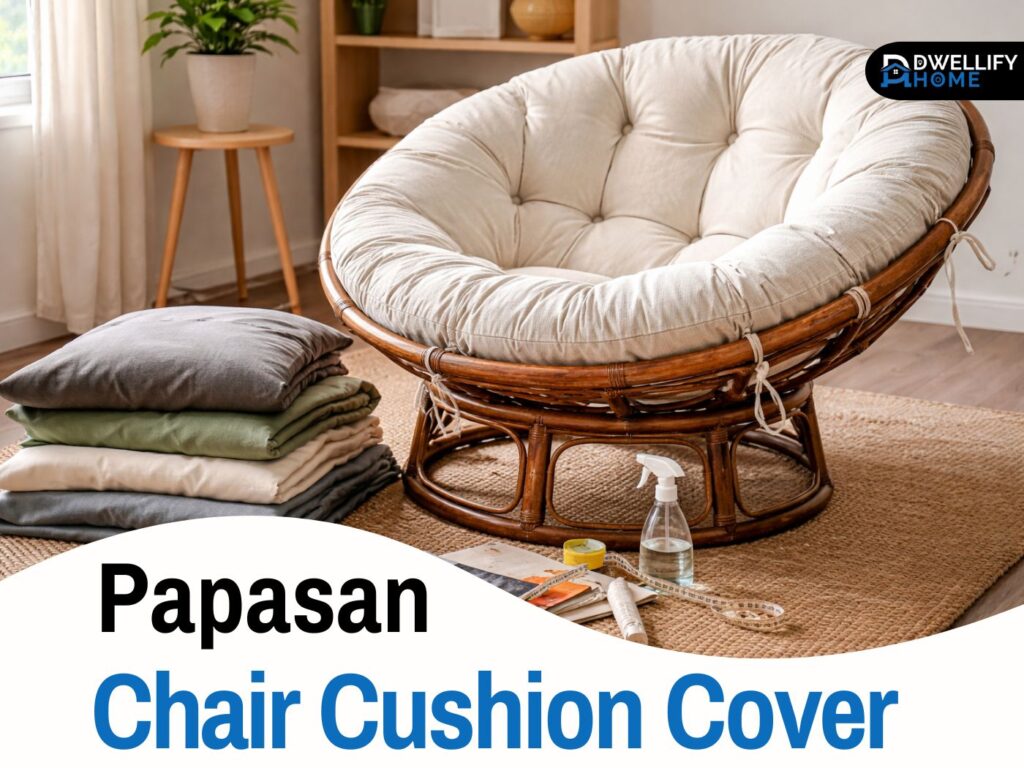
A papasan chair is one of those pieces people fall in love with fast. It’s big, soft, and it turns into everyone’s favorite spot. The problem is the cushion cover takes the first hit from daily life. Spills, sweaty summer afternoons, pet hair, and plain old wear show up quickly on a round cushion.
A good cover keeps the cushion cleaner, feels better against your skin, and makes the whole chair look fresh again without replacing the entire cushion. I’ve fitted and re-covered a lot of papasan cushions in real homes, and most frustrations come down to two things: wrong measurements and the wrong fabric for the way the chair is used.
Snippet-ready definition:
A papasan chair cushion cover is a removable slipcover that protects and refreshes a round papasan cushion. The best ones match your cushion diameter and thickness, use sturdy seams, and include a zipper and ties for easy cleaning.
Mission Statement:
Our mission is to help homeowners choose comfortable, long-lasting home products with practical, experience-based guidance, so every space feels easier to live in and care for.
Papasan Chair Cushion Cover Basics (Before You Shop)
First, make sure you know what you’re buying. Many listings are “cover only.” That means you’re getting a slipcover that goes over your existing cushion, not a replacement cushion. If your cushion is flat, lumpy, or smells musty even after cleaning, a new cover won’t fix the comfort. It will only improve the look and hygiene.
The shape matters too. A papasan cushion isn’t a perfect flat circle like a tablecloth. It has loft and folds, and it compresses differently depending on the fill. That’s why covers with smart closures and good anchoring behave better over time.
In real use, the features that tend to matter most are:
- A zipper that lets you remove the cover for washing
- Tie straps or a way to keep the cover from rotating and bunching
- Fabric that matches how the chair is used, indoor lounging is different from balcony seating
Quick Guide Table (Comparison and Checklist)
| What to Decide | Best Choice | Why it Matters | Common Mistake |
| Size | Measure diameter + thickness | Prevents tight fit, bunching, zipper strain | Guessing size from “standard” labels |
| Closure | Long side zipper | Easier to install and remove for washing | Tiny opening zipper that’s hard to use |
| Staying in place | Tie straps or anchor points | Stops sliding and twisting | Buying a cover with no ties |
| Fabric for indoor | Microfiber, twill, cotton blend | Comfortable, durable, easier to clean | Choosing rough canvas for a lounging chair |
| Fabric for outdoor | Performance fabric, UV and water-resistant | Handles sun and light moisture better | Leaving any cushion wet for long periods |
| Waterproof vs water-resistant | Choose based on spills vs rain | Waterproof blocks more water, less breathable | Expecting water-resistant to handle heavy rain |
| Fluffy style | Dense plush with strong backing | Cozy, looks fuller | Cheap faux fur that mats quickly |
| Replacement vs cover | Replace cushion if it’s flat | A cover can’t restore loft | Hoping a new cover fixes comfort |
Step-by-step buying checklist (fast and practical)
- Measure cushion diameter and thickness.
- Pick fabric based on use: indoor lounging, pets, or outdoor seating.
- Confirm zipper length and placement (side zipper is usually easiest).
- Confirm ties or straps to stop sliding and bunching.
- Check care: machine-washable vs wipe-clean, and drying rules.
- Confirm it’s cover only (if you already have a cushion).
- Check return policy for sizing mistakes.
Measure First: The 1 Step for a Perfect Fit
If you want a cover that looks neat and stays in place, measure before you order. I’ve seen people buy two or three covers before getting it right, and it almost always comes back to guessing size.
Here’s the simple way I measure at home:
- Measure the cushion diameter straight across the widest point, edge to edge
- Measure thickness by placing a ruler at the side and checking the height of the loft
A cover can fit a diameter range like 50 to 55 inches, but thickness is the hidden detail. A thick cushion needs extra fabric volume. If the cover is sized only for diameter, it may zip up but look tight, pull at seams, and feel stiff.
Now, a quick note on double sizing. A double papasan chair cushion cover is not just “a little bigger.” Double cushions tend to be wider and heavier, and they shift more when someone flops down. If you’re covering a double, look for stronger stitching, more ties, and a zipper that isn’t tiny. Otherwise, it’s the kind of cover that looks fine on day one, then creeps and wrinkles after a week.
Choose the Right Fabric (Comfort, Climate, Pets, Outdoor Use)
Fabric choice is where you either fall in love with your chair again, or you end up annoyed every time you sit down. I always ask homeowners one question: what’s your real life like with this chair?
For indoor lounging, comfort is king. Soft microfiber, brushed cotton blends, and plush textures feel cozy and don’t get cold. If you sit in shorts a lot, scratchy canvas can feel rough. If you like to nap in your papasan, something softer is worth it.
For everyday durability, twill and heavier polyester blends handle friction well. This is important if you have kids who climb on the chair or you tend to sit in the same spot daily. These fabrics usually hold their shape better and don’t pill as quickly as cheaper fleece.
Outdoor use is different. Sun and moisture are the enemies. If the chair sits near an open window, patio door, or balcony, a fabric labeled outdoor or performance tends to resist fading and mildew better. Even then, I still recommend bringing the cushion inside during heavy rain. No cover can protect the inside stuffing forever if it stays damp.
When a Papasan Cushion Cover Waterproof (or Water-Resistant) Makes Sense
A papasan cushion cover waterproof sounds perfect, but it’s important to understand the wording. Many covers are water-resistant, not fully waterproof. Water-resistant means light spills bead up and wipe off. Waterproof usually means there’s a backing layer that blocks water from soaking through.
If you have pets, kids, or snacks near the chair, water-resistant is often enough. If the chair sits outside and gets rained on, a true waterproof-backed cover can help, but you’ll still want airflow to prevent trapped moisture from causing odor.
A practical tip from real use: if the cover has a waterproof backing, it can feel warmer and slightly less breathable. That’s fine for outdoor seating, but indoors it can feel a bit sticky in summer.
Features That Actually Matter (Skip the Marketing Traps)
You don’t need a fancy description to judge a cover. You need a few practical details that show up in daily use.
Zipper placement matters more than most people think. A side zipper is usually easier for thick cushions because you can “roll” the cushion into the cover and zip gradually. A tiny zipper opening on the back can turn into a wrestling match.
Tie straps are another big deal. Papasan cushions shift. If your cover has no ties or anchoring, it will rotate, bunch, and look sloppy fast. If the chair frame has places to tie, use them. If it doesn’t, you can still add ties or use a grippy underlayer to reduce sliding.
I also look at seams and stitching. A papasan cushion is heavy, and the cover takes tension at the edges when someone sits down. Double stitching around stress points lasts longer. Thin, loose stitching is one of the first signs a cover won’t survive regular use.
Washability is your long-term win. A zippered cover you can remove and wash is the easiest to live with. Wipe-clean covers are handy, but they can hold body oils over time, so you’ll still want a way to deep clean occasionally.
Style and Comfort Upgrades (Make It Look Brand New)
A new cover can change the whole mood of the room, but I’m not going to give you generic decor tips. This is about how style connects to real comfort and maintenance.
Darker solids and small patterns hide everyday marks better. If your chair is a high-traffic seat, a light cream cover looks beautiful for a week, then shows every smudge. In a quiet bedroom nook, light colors can work great because the cushion stays cleaner.
Texture also affects how the chair feels. Smooth microfiber is easy to brush off and sits nicely under a throw blanket. Chunky fabrics look cozy but can trap crumbs and pet hair. If you have a shedding cat or dog, a tight weave is usually easier to maintain than fluffy textures.
Choosing a Papasan Chair Cushion Cover Fluffy (Without Looking Cheap)
A papasan chair cushion cover fluffy can feel like a warm hug, especially in winter. But fluffy covers also show wear in a specific way. The pile can flatten where you sit most, and cheaper faux fur can mat over time.
If you love the fluffy look, I suggest choosing one with a denser pile and a strong backing. Then keep a simple routine: shake it out, brush it lightly, and rotate the cushion if possible so the same spot isn’t always compressed. Indoors it can be great. Outdoors it’s usually a headache.
Where to Buy: Best Places to Find the Right Cover
Buying the right cover is less about the store and more about checking the details. Still, the shopping experience is different depending on where you buy.
On big marketplaces, a papasan chair cushion cover amazon option can be convenient because there are many sizes and fabrics. The downside is inconsistent sizing language. I always tell people to rely on the size chart and customer photos, not just the title. Look for mentions of ties, zipper length, and whether it’s cover-only.
If you want something quick and local, papasan chair cushion cover near me usually means checking home stores, cushion shops, or upholstery businesses. A local upholstery shop can be a lifesaver if your cushion is an odd size or very thick. They can also add a zipper or ties if your cover doesn’t have them.
For a papasan chair cushion cover replacement, decide whether you truly need only the cover. If the cushion has lost its loft, you may be happier replacing the cushion itself and then using a removable cover to protect it going forward. I’ve watched homeowners chase comfort problems with new covers, when the real issue was compressed filling.
Papasan Cushion Cover IKEA: Smart Alternatives (If You Can’t Find a Perfect Match)
People often ask about papasan cushion cover ikea options. IKEA usually offers a lot of cushion covers, but papasan cushions are a special shape and size. That said, you can still use IKEA textiles as an alternative if you’re careful.
What works best is using large, durable, washable covers or fabric panels to create a custom slipcover. Look for:
- Heavy fabric with a tight weave
- Washable materials that won’t shrink badly
- Enough size to wrap around the cushion thickness
You may still need to add ties or a zipper to make it practical, but it can be a good route for a custom look without hunting for a perfect papasan-specific listing.
DIY Option: Make Your Own Cover (Simple, Beginner-Friendly)
If you can’t find the right fit or you want a specific fabric, DIY can be a smart choice. I’ve helped homeowners do this with basic sewing skills, and the results can look clean if you measure carefully.
A simple DIY cover usually needs:
- Fabric that’s wide enough for the cushion diameter plus thickness
- Strong thread, pins or clips, and a sewing machine
- Optional zipper if you want easy removal for washing
The basic flow is straightforward. You trace a circle slightly larger than the cushion, sew most of the edge, insert the cushion, then close it. The reason DIY works well for papasan is that you can build in extra volume for thick cushions, and you can position the opening where it’s easiest to handle.
Papasan Chair Cushion Cover Pattern Tips (So It Fits Like a Pro)
Here’s what makes the difference between a cover that fits and one that feels tight and awkward.
First, add seam allowance and plan for loft. A papasan cushion compresses, but you don’t want the cover stretched like a drum. I’ve seen seams pop simply because the fabric had no room to breathe.
Second, consider adding a zipper panel instead of sewing the cover shut. If you want to wash the cover regularly, a zipper is worth the effort. A longer zipper also makes it much easier to insert thick cushions.
Third, don’t skip anchoring. Even a DIY cover benefits from ties. A few simple fabric straps can stop the cover from twisting on the cushion after daily use.
Care and Cleaning (Keep It Fresh and Longer-Lasting)
Most covers fail early because they’re washed the wrong way. If the fabric is plush or has a backing layer, harsh washing can change the feel fast.
Start with spot cleaning. A mild soap and warm water can handle most small stains without shrinking the fabric. If you do machine wash, use a gentle cycle and avoid high heat drying unless the label clearly allows it. Heat is what shrinks cotton blends and damages some waterproof backings.
For outdoor setups, moisture control is everything. Even a water-resistant cover needs airflow. If the cushion ever gets damp, dry it fully before placing it back on the chair. That simple habit prevents the stale smell that’s hard to remove later.
One of the easiest routines I recommend is having two covers. You can wash one and keep the other on the chair. It sounds small, but it makes upkeep much more realistic.
Troubleshooting: Fix Common Fit and Comfort Problems Fast
If the cover keeps sliding, check for ties first. If your cover has ties, use them. If it doesn’t, adding ties or using a non-slip rug pad under the cover can help. I’ve used a thin grippy layer under the cushion itself too, and it reduces shifting a lot.
If the cover bunches, it’s usually a sizing mismatch. Either the diameter is too large and fabric pools, or the cover is tight and rides up when you sit down. In homes with thicker cushions, I often see the second problem. A cover that fits diameter but ignores thickness will pull and wrinkle.
If the cushion feels flat, be honest about what the cover can do. A new cover can improve the feel slightly if the old fabric was stiff or scratchy, but it won’t bring back loft. If comfort is the goal, consider refilling the cushion or replacing it, then protect it with a removable cover.
If the cover feels too tight, don’t force it. Straining a zipper or seams shortens the life fast. This is where sizing up and checking thickness specs saves money and frustration.
FAQs
1) What is the difference between Mamasan and papasan chairs?
A papasan is usually a single-seat round bowl chair. A mamasan is a larger version designed for two people, so it needs a wider cushion or a double papasan chair cushion cover.
2) What size cushion do I need for a Papasan chair?
Measure your cushion’s diameter across the widest point and its thickness. Many covers fit a range like 50–55 inches, but thickness matters for a clean fit and smooth zipper use.
3) How do I make my Papasan chair more comfortable?
If the cushion is flat, a new cover won’t fix comfort. Add loft by refilling, adding batting, or replacing the cushion. Then use a soft, breathable cover with ties so it stays centered and doesn’t bunch.
4) Can you buy replacement sofa cushion covers?
Yes. Many stores sell “cover only” cushion covers for sofas, chairs, and specialty seating. The key is matching measurements and choosing a zipper style that makes washing practical.
5) Is a waterproof papasan cushion cover worth it?
It’s worth it for pets, kids, snack spills, or semi-outdoor spots. Just know many covers are water-resistant rather than fully waterproof, and waterproof-backed fabric can feel less breathable.
Conclusion
A papasan chair cushion cover is one of those upgrades that feels small until you live with it. The right one makes the chair more comfortable, easier to keep clean, and better-looking day to day.
If you remember just a few things, you’ll avoid most mistakes. Measure both diameter and thickness, choose fabric based on real use, and prioritize practical features like a solid zipper and ties. If you can’t find a perfect match, a DIY cover or a smart alternative route can still get you a clean fit.
Once you get the fit and fabric right, the chair becomes what it should be, a soft spot you actually enjoy using, without constantly fixing a sliding, wrinkled cover.
Disclaimer:
This article shares general upholstery and fabric care guidance based on hands-on experience. Always follow the care label on your specific cushion cover, and confirm measurements and materials with the seller before purchasing.

I’m Bilal Hassan, the founder of Dwellify Home. With 6 years of practical experience in home remodeling, interior design, and décor consulting, I help people transform their spaces with simple, effective, and affordable ideas. I specialize in offering real-world tips, step-by-step guides, and product recommendations that make home improvement easier and more enjoyable. My mission is to empower homeowners and renters to create functional, beautiful spaces—one thoughtful update at a time.