A pink Himalayan salt lamp can be a lovely little change in a room. It adds soft light, warms up a corner, and makes the space feel calmer without doing much else. That’s why I’ve kept one in my own bedroom for years, and I’ve tested others in living rooms, offices, and meditation spaces.
At the same time, there’s a lot of confusion around what these lamps can and can’t do. Some claims get repeated like facts, even when the evidence is thin. In this guide, I’ll walk you through what I’ve seen in real homes, what’s realistic to expect, how to use one safely, and how to avoid common buying mistakes.
Snippet-ready definition:
A pink Himalayan salt lamp is a decorative light carved from natural rock salt, known for its warm amber glow. People use it for cozy ambience, while most health claims remain unproven and should be viewed cautiously.
Mission Statement:
Dwellify Home helps homeowners build calm, comfortable spaces with practical guidance on decor, lighting, and everyday wellness, using honest advice that fits real life.
What Is a Pink Himalayan Salt Lamp?
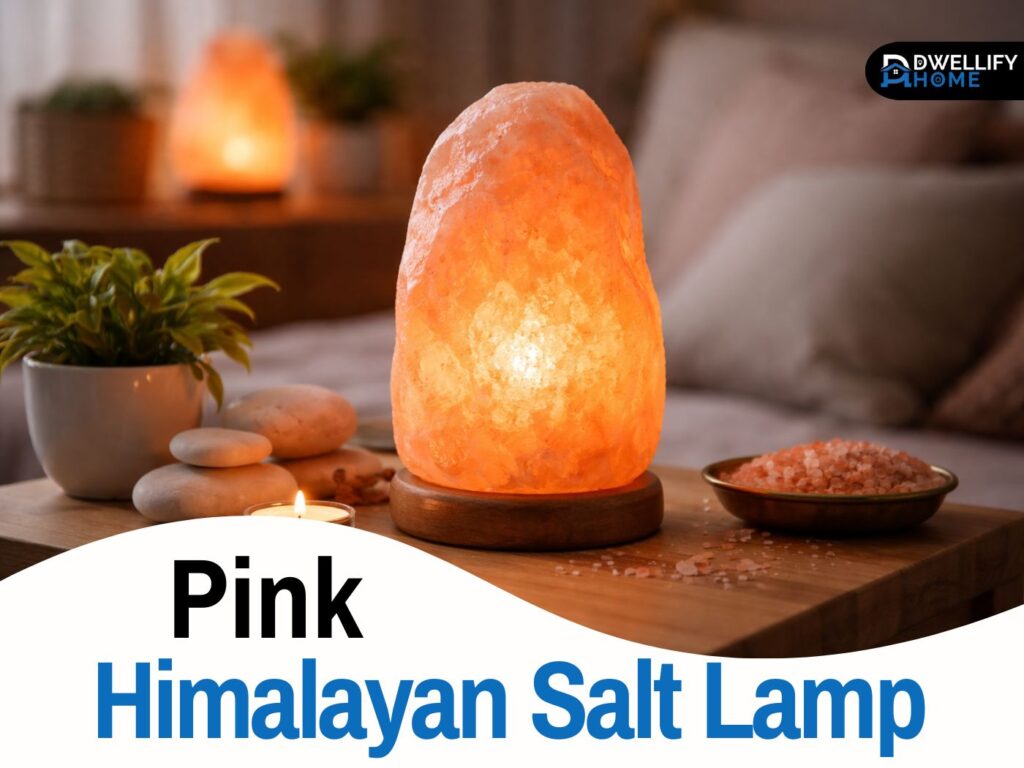
A Himalayan salt lamp is a decorative light carved from a solid chunk of natural rock salt. The salt is typically sourced from Pakistan’s salt region, commonly linked to the Khewra area. Each lamp is hand-shaped, so no two look exactly the same.
The “pink” color is natural. It comes from trace minerals in the salt, which can shift the shade from pale blush to deeper orange. When the bulb warms the salt from inside, you get that familiar amber glow that feels softer than most regular lamps.
Quick Guide Table (comparison + practical picks)
| What you need | Best choice | Why it matters | Quick tip |
| Bedroom nightstand | Small to medium lamp + dimmer | Soft light helps evening wind-down | Keep it across from your pillow, not right beside your face |
| Living room corner | Medium to large lamp | Small lamps get “lost” in big rooms | Place on a stable side table with a coaster |
| Humid home | Any size, but place carefully | Salt attracts moisture and may “sweat” | Avoid bathrooms, add a tray, run it regularly |
| Homes with pets | High placement or skip | Licking can be dangerous | Treat it like chocolate: keep out of reach |
| Want cleaner air | Use HEPA purifier, not a lamp | Air cleaning claims are not strongly supported | Combine cleaning, ventilation, and filtration |
Real vs Fake: 7 fast checks (bullet list)
- Glow test: real salt usually gives a warm, slightly uneven glow, not a harsh bright light.
- Chips and texture: real salt can scratch or chip; plastic-hard “stone” feel is a red flag.
- Sweating behavior: in humid air, real salt may attract moisture and feel damp.
- Weight: real lamps are heavy for their size.
- Base and build: quality socket, firm bulb fit, sturdy base.
- Seller trust: clear returns or warranty is a good sign.
- Price realism: extremely cheap “huge” lamps are often questionable.
Why People Buy Pink Himalayan Salt Lamps
Most people buy these lamps for atmosphere. In my experience, that’s the best reason to get one. The glow is warm, low, and comforting, especially in rooms where overhead lighting feels harsh.
They also work as a gentle visual cue that it’s time to slow down. I’ve seen this in bedrooms and evening routines. When the salt lamp goes on, people naturally lower their voice, put their phone down sooner, and ease into calmer activities like reading or stretching.
Good spots that usually work well:
- A nightstand where you want low light before sleep
- A living room corner where you want warmth without brightness
- A desk where you want softer evening lighting
- A meditation space where you want a steady, calm glow
Himalayan Salt Lamps Benefits: Claims vs Reality (EEAT-safe)
It’s normal to hear big claims about Himalayan salt lamps benefits. I prefer to separate what’s realistic from what’s not proven. That keeps expectations healthy and helps you decide based on the right reasons.
In real homes, the most consistent benefit is the mood effect of warm ambient lighting. The lamp can make a space feel cozier and less stressful at the end of the day. That’s not “magic,” it’s basic lighting psychology. Warm, dim lighting tends to feel safer and more restful than bright, cool lighting.
The realistic benefit: warm ambient light for relaxation
In bedrooms, I’ve found the lamp works best as part of a wind-down routine. If you switch it on an hour before bed and keep other lights low, it helps signal “night mode” to your brain. It’s similar to using a bedside lamp, just softer and more decorative.
One practical example: I worked with a client who kept bright ceiling lights on until bedtime and struggled to fall asleep. We didn’t change anything dramatic. We added a warm lamp near the bed, reduced overhead lighting after dinner, and the bedtime routine became smoother within a week. The salt lamp wasn’t a cure, but it supported the environment.
Air-purifying and negative ion claims: what’s unproven
You’ll often hear that salt lamps release negative ions and “clean the air.” The honest view is this: strong scientific proof for meaningful air-cleaning effects in a normal room isn’t there. If you want better air quality, the reliable tools are ventilation, cleaning, and a good HEPA filter.
That said, a salt lamp can still be part of a wellness space, just for the right reason. It can help you create a calmer environment that encourages better habits. It’s a mood and lighting tool, not a medical device.
Himalayan Salt Lamp Warning: Safety Risks You Should Know
This is the part many people skip, but it matters. A Himalayan salt lamp warning is not about fear, it’s about using an electrical item made from a heavy chunk of salt in a real home with pets, kids, cords, and humidity.
Electrical and overheating risks (Himalayan salt lamp dangers)
Most problems I’ve seen come from low-quality wiring or cheap dimmers. A safe lamp should have a solid cord, a stable socket, and the correct bulb wattage for the fixture. Overheating risk increases when the lamp is poorly made or used with the wrong bulb.
Practical safety habits that I follow:
- Use the recommended bulb wattage and don’t “upgrade” to a hotter bulb
- Keep cords out from under rugs and away from tight bends
- Don’t leave it on for days if the cord or dimmer feels warm
- Replace cracked sockets or loose fittings instead of ignoring them
Pet danger and salt toxicity
This is one of the biggest Himalayan salt lamp dangers in real homes. Cats, in particular, may lick it. If they consume enough salt, it can lead to salt toxicity, which is serious. I always advise keeping it in a spot pets can’t reach, or skipping it entirely if you have a curious pet.
If you’ve got pets, safer placement ideas include:
- High shelves that aren’t easy to jump onto
- A room that stays closed at night
- A lamp enclosed inside a display cabinet with airflow
Tip-over and break risk
These lamps can be heavy, and many sit on a small base. If you have kids, pets, or narrow tables, stability becomes a priority. A fall can crack the salt and also create a safety hazard with the bulb and wiring.
A simple rule: if the lamp wobbles when you tap the table, it’s in the wrong spot.
Moisture sweating, leaks, and surface damage
Salt is hygroscopic, meaning it attracts moisture from the air. In humid spaces, the lamp can “sweat” and leave salty water on the surface below. I’ve seen this cause marks on wood and corrosion on metal.
If your home gets humid, a coaster or small tray under the lamp isn’t optional. It’s a must.
Side Effects of Himalayan Salt Lamps (What People Mean by This)
When people talk about side effects of Himalayan salt lamps, they usually mean practical issues, not health symptoms. The most common one is sweating, where the lamp feels damp or leaves moisture on furniture.
Another issue is salt residue. If the lamp sits in a humid room, a thin salty film can build up on the base or table. It’s not dangerous, but it’s annoying if you don’t expect it.
The third “side effect” is disappointment. Some people expect allergy relief or air purification, then feel let down. That’s why I always frame it as a decor and mood-lighting piece first. If you enjoy the glow, you’ll be happy. If you expect it to replace an air purifier, you won’t.
How to Choose the Best Pink Himalayan Salt Lamp (Buying Guide)
If you want the best pink himalayan salt lamp for your space, focus on size, build quality, and seller reliability. The nicest-looking lamp isn’t always the safest one.
Size matters (match lamp size to room)
Small lamps work well on a nightstand or desk. For a living room, you’ll usually want a larger lamp so the glow doesn’t look lost in the space. Think of it like candles. One small candle gets swallowed up in a big room. Same idea.
Quick sizing guidance that works in most homes:
- Small spaces and desks: smaller lamp
- Bedrooms and reading corners: medium lamp
- Larger living rooms: larger lamp with a stable base
Key features worth paying for
A dimmer switch is one of the best upgrades. It lets you adjust the glow based on the time of day. A stable base also matters more than people think.
A solid checklist:
- Stable base that doesn’t wobble
- Quality cord with good strain relief
- A dimmer that feels smooth, not scratchy
- A socket that holds the bulb firmly
It’s also smart to look at the overall build, not just the salt. A beautiful crystal with weak wiring is not a good deal.
What a good glow looks like
Authentic salt tends to give a warm, slightly uneven glow. It’s cozy, not bright. If a lamp looks extremely bright and uniform, that can be a sign of a different material or an overly powerful bulb.
Where to buy (trust and sourcing)
I’m careful about sellers. Whether it’s a Himalayan shop salt lamp listing or a brand like Himalayan Glow salt lamp, what matters is transparency, returns, and basic safety quality. A clear warranty and return policy often tells you more than fancy photos.
Real Himalayan Salt Lamp vs Fake: How to Tell Quickly
A real himalayan salt lamp has a few recognizable traits. You don’t need special tools, just a little observation.
Texture and fragility check
Real salt is brittle. It can chip, scratch, and shed a little salt dust. If the lamp feels strangely tough and plastic-like, it’s worth questioning.
Glow and light behavior test
Real lamps tend to glow warm and slightly irregular, especially around thicker parts of the crystal. Perfectly uniform brightness can be suspicious.
Moisture test (the sweating clue)
In humid environments, authentic salt often attracts moisture. A lamp that never shows any moisture in a very humid home may be made from something else. On the flip side, too much sweating can also mean your space is overly humid or the lamp isn’t being used regularly.
Pricing, origin, and seller signals
Fakes often show up with very low prices, vague sourcing, and no returns. A trustworthy seller usually states origin clearly and provides support if the lamp arrives damaged.
Best Placement for Maximum Enjoyment (Without the Problems)
Placement is where most people get it wrong. The lamp looks cute in a bathroom, but bathrooms are humid, and that’s exactly where sweating gets worse.
Better places are dry, ventilated rooms. I like corners where the lamp can glow without being bumped, and where it won’t sit directly on delicate wood.
Avoid these spots:
- Bathrooms
- Next to humidifiers
- Directly beside open windows in rainy seasons
- On metal surfaces that can corrode
Maintenance and Care (Keep It Dry, Clean, and Working)
Salt lamps are easy to maintain if you follow one rule: keep water away from them. Don’t rinse them, don’t wipe with a wet cloth, and don’t use spray cleaners nearby.
Use a dry microfiber cloth. If the lamp gets damp, wipe it gently and turn it on for a few hours to help it dry out. Regular use often reduces sweating because gentle warmth discourages moisture from settling on the surface.
For furniture protection, use a tray or coaster. I’ve seen simple ceramic plates work really well, especially in humid climates.
Troubleshooting: Common Problems and Quick Fixes
If your lamp starts acting strange, it’s usually one of these issues.
- My salt lamp is wet
This is humidity. Move it to a drier spot, wipe it dry, and run it regularly. Add a tray underneath. - It’s not glowing much
Check the bulb and socket connection. Also check the dimmer setting. Sometimes the bulb wattage is too low for the lamp size. - There’s salt dust on the table
That can happen as the salt naturally sheds a little. Wipe the base and use a coaster or tray. - The color looks uneven
That’s normal. Natural salt has variations.
Who Should Avoid Using a Pink Himalayan Salt Lamp?
I usually recommend skipping it if pets are likely to lick it. That risk isn’t worth it. It’s also not a great match for very humid homes unless you’re willing to manage sweating and protect surfaces.
And if your main goal is medical-grade air cleaning, this isn’t the tool. You’ll get better results from proper ventilation, regular cleaning, and a HEPA air purifier.
FAQ
1) What is the benefit of a Himalayan salt lamp?
The most reliable benefit is ambient lighting. The warm glow can make a room feel calmer and cozier, which supports relaxation routines. Big air-cleaning claims are not strongly proven.
2) What are the disadvantages of Himalayan salt lamps?
Main downsides include sweating in humid rooms, possible surface damage if placed directly on wood or metal, pet risk if licked, and electrical risk if the cord or dimmer is low quality.
3) Is it good to sleep with a Himalayan salt lamp on?
It can be fine if the lamp is stable, uses the recommended bulb wattage, and has a safe-quality cord/dimmer. If anything feels warm, flickers, or looks damaged, don’t leave it on overnight.
4) How do I know if my Himalayan salt lamp is real?
Look for a warm, uneven glow, a brittle salt texture, and typical salt behavior like minor sweating in humidity. Buy from sellers with clear origin details and returns.
5) Why is my salt lamp wet or leaking?
That’s usually humidity. Move it to a drier spot, wipe it with a dry cloth, run it regularly, and place it on a tray or coaster to protect furniture.
Conclusion
A pink himalayan salt lamp is best viewed as a comfort piece for your home, not a health device. In my own spaces, it’s been most valuable as soft evening lighting that helps the room feel calmer and more welcoming.
If you choose one with safe wiring, a stable base, and a dimmer, you’ll enjoy it more and worry less. Place it in a dry spot, protect your furniture from sweating, and keep it away from pets that like to lick things.
If you treat it like a simple part of your home’s lighting and wellness routine, it can be a small, steady source of warmth that you actually use, not a decorative item that ends up in a closet.
Disclaimer:
This article is for general home and wellness education. Pink Himalayan salt lamps are decorative lighting items, not medical devices. Health-related claims are not guaranteed, and safety depends on proper product quality, placement, and use.

I’m Bilal Hassan, the founder of Dwellify Home. With 6 years of practical experience in home remodeling, interior design, and décor consulting, I help people transform their spaces with simple, effective, and affordable ideas. I specialize in offering real-world tips, step-by-step guides, and product recommendations that make home improvement easier and more enjoyable. My mission is to empower homeowners and renters to create functional, beautiful spaces—one thoughtful update at a time.