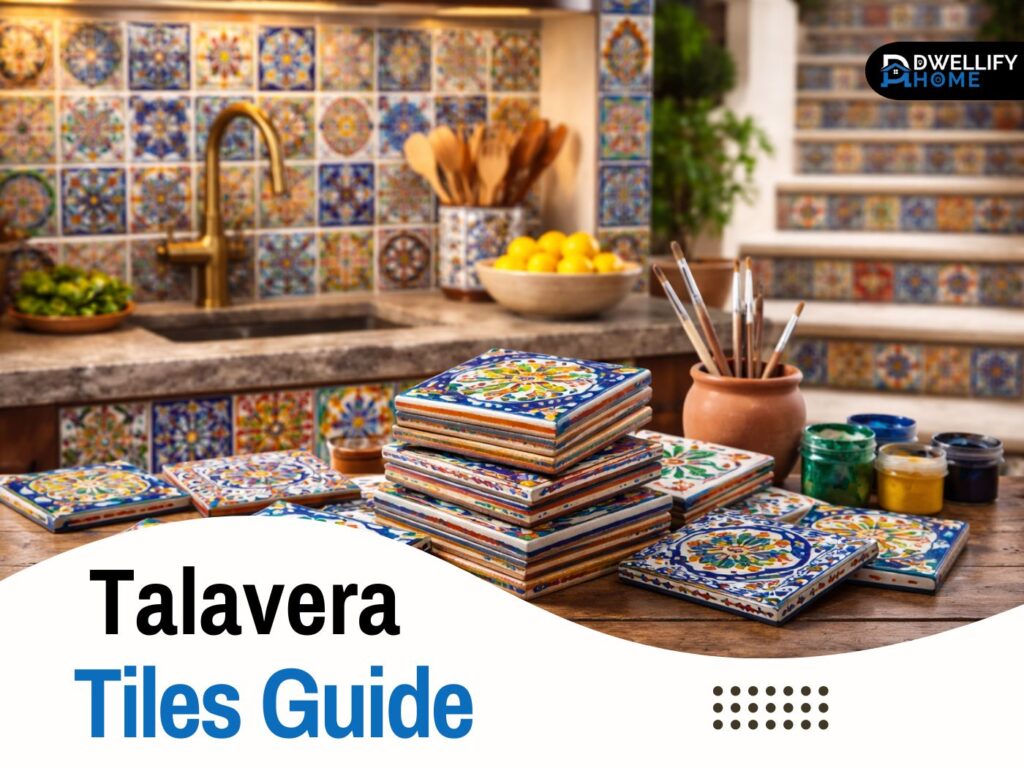
If you’ve ever walked into a kitchen or courtyard and felt like the walls had personality, there’s a good chance you were looking at Talavera. These tiles bring color and history, but they also come with a few realities that don’t show up in dreamy photos.
I’ve worked with handmade Talavera for years in backsplashes, bathrooms, stair risers, and patio walls. When people love it, they really love it. When they regret it, it’s usually because no one explained the basics, like variation, sealing, and where these tiles perform best.
Snippet-ready definition:
Talavera tiles are hand-painted, glazed ceramic tiles with Mexican and Spanish roots. They’re known for vibrant patterns, slight handmade variation, and best use on walls, backsplashes, stair risers, and decorative accents.
Mission Statement:
Our mission is to help homeowners choose materials that look beautiful and work in real life, with clear guidance on quality, installation, and long-term care, so every project feels confident and worth it.
What Are Talavera Tiles?
Talavera is a hand-painted, glazed ceramic tile tradition with deep roots in Mexico, especially around Puebla. The tiles are known for bold patterns, glossy glaze, and small imperfections that prove they’re made by hand, not stamped out by a machine.
In a box of handmade tile, you’ll often see tiny differences in thickness, edge shape, or brushwork. That’s not a defect on its own. It’s part of the charm, and it’s also why Talavera needs a slightly different approach during layout and installation.
Quick Guide Table (comparison style)
| Topic | Best quick answer |
| Best use areas | Kitchen backsplash, bathroom walls, niches, stair risers, patio feature walls |
| Use with caution | Shower walls (only with proper waterproofing and sealing plan) |
| Avoid | High-traffic floors, heavy-impact zones, freeze-thaw exterior installs |
| Common size | Talavera tiles 4×4 is the classic format |
| Why it costs more | Handmade painting, multiple firings, artisan labor, quality glaze |
| Maintenance | Mild soap and water, avoid abrasives, seal as needed |
Practical note: “Authentic” Talavera is handmade, so expect small differences in edge, thickness, and brushwork. That’s normal and part of the look.
Optional step-by-step mini guide: How I choose Talavera for a backsplash
- Pick the role: full backsplash (calmer) or feature panel (bold).
- Order samples and check them in your kitchen lighting (day and night).
- Dry-lay the pattern on a table or floor to balance color and repeats.
- Plan grout lines slightly wider than factory tile, because handmade edges vary.
- Decide on sealing based on porosiy and location (especially splash zones).
Talavera Tiles History (Mexico, Spain, Moorish Influence)
Talavera’s story is a mix of cultures. Techniques and decorative influences traveled from Spain, with noticeable Moorish and Islamic design heritage in the geometry and repeating motifs. Over time, artisans in Mexico developed their own styles, palettes, and local character.
Puebla became the heart of this craft. When you look at older architecture and traditional homes, Talavera appears on facades, fountains, kitchens, and courtyards. That cultural context matters, because it explains why authentic work looks and feels different from modern printed “Talavera-style” tiles.
Where the style comes from (Spanish + Moorish patterns)
If you’ve noticed star shapes, interlocking geometry, and symmetrical florals, you’re seeing design language that has traveled for centuries. It’s one reason Talavera tile designs still feel timeless. Even loud colors can look balanced when the pattern is grounded in traditional geometry.
Why Puebla became the center of Talavera craftsmanship
Puebla developed workshops and standards that shaped what people now call “authentic Talavera.” In practice, this often means established production methods, specific clay bodies, and recognizable glazing and paint techniques. It’s also why authenticity checks often point back to the workshop and its markings.
How Talavera Tiles Are Made (So You Understand the Quality)
Most authentic Talavera starts with a clay body that’s shaped, dried, and fired. Then it gets a base glaze, usually a soft white, followed by hand painting. After that, it’s fired again to set the glaze and color.
That handmade process explains three things you’ll notice right away. One, the surface tends to have depth, not a flat printed look. Two, edges can vary slightly, so grout lines may need to be a touch wider. Three, colors can shift slightly from tile to tile, especially in complex patterns.
Here’s a quick “installer’s eye” tip. When you open the box, spread the tiles out on the floor and look at them from standing height. If the variation looks artistic and intentional, it’s usually a good sign. If the variation looks random in a sloppy way, like poor glazing coverage or messy firing marks, that can be a quality issue.
Talavera Tile Designs: Patterns, Colors, and Style Choices
Talavera tile patterns often fall into a few families: florals, geometrics, border motifs, and multi-tile murals. Some are busy, some are calm, and many are designed to be mixed in small doses, like accent strips or feature panels.
One of the biggest mistakes I see is going too heavy too fast. A full wall of high-contrast pattern can work, but it needs a plan. Most homes look best with a “main field” that’s calmer, plus a focal band or framed area that carries the strongest design.
Talavera tiles green: how to style green without overpowering the space
Green Talavera can look rich and grounded, especially with warm neutrals. I like green paired with creamy whites, natural wood, and warm metals like brass. It’s also excellent with terracotta planters and soft clay tones.
If the green is very saturated, keep the surrounding materials simple. A clean countertop, minimal grout contrast, and a quiet wall color will make the tile feel intentional instead of noisy.
Sizes & Formats: Talavera Tiles 4×4 and Beyond
Talavera tiles 4×4 is the classic format you’ll see most often. It’s versatile, it suits traditional patterns well, and it’s easy to use in backsplashes and stair risers. In older-style kitchens, 4×4 often looks more authentic than larger modern sizes.
That said, larger formats and specialty pieces can be helpful. Borders, trims, corner pieces, and relief tiles can elevate a project. Just remember that handmade tile isn’t always perfectly square, so your layout needs breathing room.
A practical trick is to dry-lay a few rows before committing. This shows you how the pattern repeats, how edges meet, and what grout line width will look natural.
Best Places to Use Talavera Tiles (Where They Shine Most)
Talavera loves vertical surfaces. Walls, backsplashes, stair risers, fireplace surrounds, and decorative panels are where it really performs and stays beautiful long-term.
In my own projects, the happiest homeowners are the ones who use Talavera where it’s seen and appreciated, but not constantly abused by impact or heavy traffic.
Talavera tiles kitchen: backsplash ideas that look high-end
In kitchens, I often recommend one of three approaches:
- A full backsplash in a calmer pattern with a simple border
- A focal area behind the stove or range hood, framed like art
- A thin accent band that ties into other colors in the room
Talavera tiles in the kitchen also benefit from a smart grout choice. A mid-tone grout can hide cooking splashes better than bright white, while still letting the design shine.
Bathrooms: walls, vanity backsplash, niches (smart placements)
Bathrooms are great for Talavera on walls, vanity backsplashes, and shower niches. The niche is a perfect spot for a bold pattern because it’s contained and feels intentional.
For showers, placement matters. Talavera can work in shower areas, but it requires correct waterproofing behind the tile, and sealing becomes more important depending on the tile’s porosity and the grout used.
Where NOT to Use Talavera Tiles (Avoid Costly Mistakes)
I’m careful about Talavera on floors, especially in high-traffic areas. These tiles can chip if something heavy drops, and the glaze can wear over time in busy walkways. Some projects do use them on floors successfully, but it’s not the easiest application.
Outdoor use depends on climate. In freeze-thaw areas, moisture can expand and cause cracking or spalling if the tile body absorbs water. In milder climates, Talavera on a patio wall or exterior accent can be a beautiful choice.
If you want a Talavera look in a harsh environment, it may be safer to use a high-quality porcelain lookalike for the floor, then use authentic handmade tile on the walls where it stays protected.
Talavera Tiles Price: What They Cost and Why
Talavera tiles price depends on how they’re made, how complex the pattern is, and where they’re sourced. Simple solid colors usually cost less than intricate hand-painted designs or raised relief tiles. Shipping and packaging also matter, because breakage risk is real with handmade ceramic.
Budgeting is easier when you think in totals, not just price per tile. A backsplash might use fewer tiles than a floor, but it often requires trims, outlets cuts, and careful layout time.
Budgeting like a pro (hidden costs people forget)
A few cost items I always mention upfront:
- Extra tile for waste and future repairs, usually 10 to 15 percent
- Shipping and the possibility of breakage, especially for specialty pieces
- Sealers and grout sealers, depending on the project
- Labor time for dry layout and pattern balancing
If your project has lots of cuts, like outlets on a backsplash, plan a little extra tile. Handmade tile cuts differently than factory-perfect ceramic.
Authentic Talavera vs Lookalikes: How to Buy With Confidence
There’s nothing wrong with Talavera-inspired tile, but it’s important to know what you’re buying. Authentic handmade Talavera typically shows hand-painted brushwork, glaze depth, and slight variation that looks intentional.
Many workshops mark their pieces, and some authentic Talavera has identification indicators tied to the maker. The exact format varies, so the best approach is to ask the seller direct questions about origin and production.
Quick authenticity checklist (simple, buyer-friendly)
Signs you’re likely looking at authentic handmade work:
- Brushwork that isn’t perfectly identical from tile to tile
- Glaze that has depth and subtle variation in reflection
- Slight differences in edges or thickness that still feel consistent
Red flags:
- Perfectly identical prints with no painter variation
- A surface that looks like a flat decal under a clear coat
- Extremely sharp, uniform edges that feel factory-produced
Talavera Tiles Near Me: Where to Buy (Local + Online)
Buying locally can be great because you can see the tiles in person and check variation. A good tile shop will let you open boxes, compare batches, and recommend suitable grout and setting materials.
Online specialty sellers can also be excellent, especially if they pack well and have clear policies. I look for sellers who understand handmade variation and talk about it honestly, instead of treating it like a flaw.
Sample-first strategy (the safest way to choose)
If you’re deciding between patterns or colors, order samples. Put them against your countertop, your paint color, and your lighting at day and night. Handmade glaze can look warmer or cooler depending on the room.
This is also where you can test how the tile feels to clean. A quick wipe test tells you a lot about the glaze behavior in real use.
Choosing the Right Talavera for Your Project (Decision Guide)
Start with the room’s “quiet materials” first, like countertops, cabinets, and flooring. Then choose Talavera as the color and pattern layer that ties everything together.
If you love bold patterns, contain them. Use them behind the stove, in a framed backsplash panel, or on stair risers. If you want a calmer look, use solid colors or softer patterns, and add a border for detail.
A small note on coordination: Talavera doesn’t need matching. It needs harmony. Pick one or two dominant colors, then let the rest be supporting tones.
Installation Tips (Handmade Tile Needs a Different Approach)
Handmade tile rewards patience. I always do a dry layout, even for small backsplashes. This helps balance color and pattern so one area doesn’t look too heavy.
Because edges can vary, grout lines often need to be slightly wider than you’d use with factory tile. That’s not a downside. It’s what makes the finished surface look right.
Sealing: when you need it (and when you don’t)
Some Talavera is more porous than people expect, especially at the edges and the back. In kitchens and wet areas, I plan for sealing unless the maker clearly states it’s not needed. Even when the glazed face resists staining, grout and unglazed edges still benefit from protection.
A good practice is to test. Put a drop of water on an unglazed edge. If it darkens quickly, sealing is a smart move for splash zones.
Care & Cleaning: Keep Talavera Tiles Bright for Years
For everyday cleaning, keep it simple. Mild soap, warm water, and a soft cloth are usually all you need. Avoid abrasive pads because they can dull the glaze over time.
In kitchens, wipe splashes sooner rather than later, especially around the stove. In bathrooms, a quick squeegee or towel wipe after steamy showers helps reduce mineral buildup on grout lines.
Stains, grout haze, and small chips: what to do
Grout haze should be handled gently. Use the right cleanup timing during installation and avoid aggressive acids that can damage finishes. For mineral deposits, use products that are safe for glazed ceramic and always test in a small spot.
For chips, keep a few spare tiles from the same batch. That’s the most reliable “repair.” If the chip is tiny and on a low-visibility edge, many homeowners simply live with it, because handmade surfaces already have character.
Talavera Tiles Reviews: Real-World Pros, Cons, and Expectations
Most positive talavera tiles reviews mention the same things: color that feels alive, designs that don’t look mass-produced, and a handmade warmth that makes a space feel personal.
The complaints are also predictable. People get surprised by variation, they underestimate installation effort, or they don’t plan for breakage during shipping. None of those are deal-breakers when you go in with clear expectations.
If you want a perfectly uniform surface, Talavera may frustrate you. If you want craftsmanship and personality, it’s one of the best finishes you can put on a wall.
FAQ
1) What is talavera tile?
It’s colorful, glazed, decorative earthenware and tile tradition with Spanish and Spanish-colonial roots, widely associated today with Mexican Talavera craftsmanship and hand-painted ceramic work.
2) What does Talavera mean in Spanish?
“Talavera” is a place-name tied to Talavera de la Reina in Spain, historically known for pottery. The craft name comes from that origin.
3) What is a Spanish style tile called?
“Spanish tile” is an umbrella term. Common Spanish-style tile categories include Saltillo, cement tile, glazed terracotta, and Talavera-style ceramics (depending on region and finish).
4) Why is Talavera expensive?
Because it’s labor-intensive: hand painting, glazing, and multiple firings take time and skill. Historically, certain mineral pigments and traditional production methods also raise costs.
5) Do Talavera tiles need sealing?
Often, yes in real homes, especially for splash zones and wet areas. Even when the glazed face is resistant, grout and porous edges can benefit from sealing to reduce staining and moisture absorption.
Conclusion
Talavera tiles are at their best when you treat them like a handmade finish, not a factory product. Choose a design that fits the room, place it where it won’t get abused, and plan for variation during layout. That’s how you get a result that feels warm and intentional for years.
If you’re deciding between patterns, start with samples and look at them in your lighting. Then plan the installation with wider grout lines, careful dry layout, and sealing where it makes sense. Do that, and you’ll end up with a space that feels personal, not copied, and easy to live with.
Disclaimer:
This guide shares general educational advice based on hands-on tile experience. Always follow your tile maker’s instructions and consult a qualified installer for waterproofing, structural prep, and local building requirements.

I’m Bilal Hassan, the founder of Dwellify Home. With 6 years of practical experience in home remodeling, interior design, and décor consulting, I help people transform their spaces with simple, effective, and affordable ideas. I specialize in offering real-world tips, step-by-step guides, and product recommendations that make home improvement easier and more enjoyable. My mission is to empower homeowners and renters to create functional, beautiful spaces—one thoughtful update at a time.