If you’ve ever bought a shade that looked right online but didn’t fit your lamp in real life, you’re not alone. In my workshop, the most common issue isn’t style, it’s the fitting. Uno lamp shades solve a specific problem: they mount directly to the socket area instead of using a harp and finial.
I’ve fitted these on bridge arm lamps, downbridge floor lamps, older table lamps, and a few odd vintage finds. When you match the right Uno fitter to the right socket, the setup feels clean, stable, and easy to live with. When it’s mismatched, you’ll get wobble, crooked angles, or a shade that just won’t sit safely.
Snippet-ready definition:
Uno lamp shades mount at the lamp socket instead of using a harp and finial. They come in threaded and slip-on styles, and the right fitter size keeps the shade straight, stable, and safe.
Mission Statement:
At Dwellify Home, our mission is to make home decisions feel simple and confident with practical, experience-based guidance that helps you choose products that fit, function well, and look right in real homes.
What Are Uno Lamp Shades? And Why They’re Different
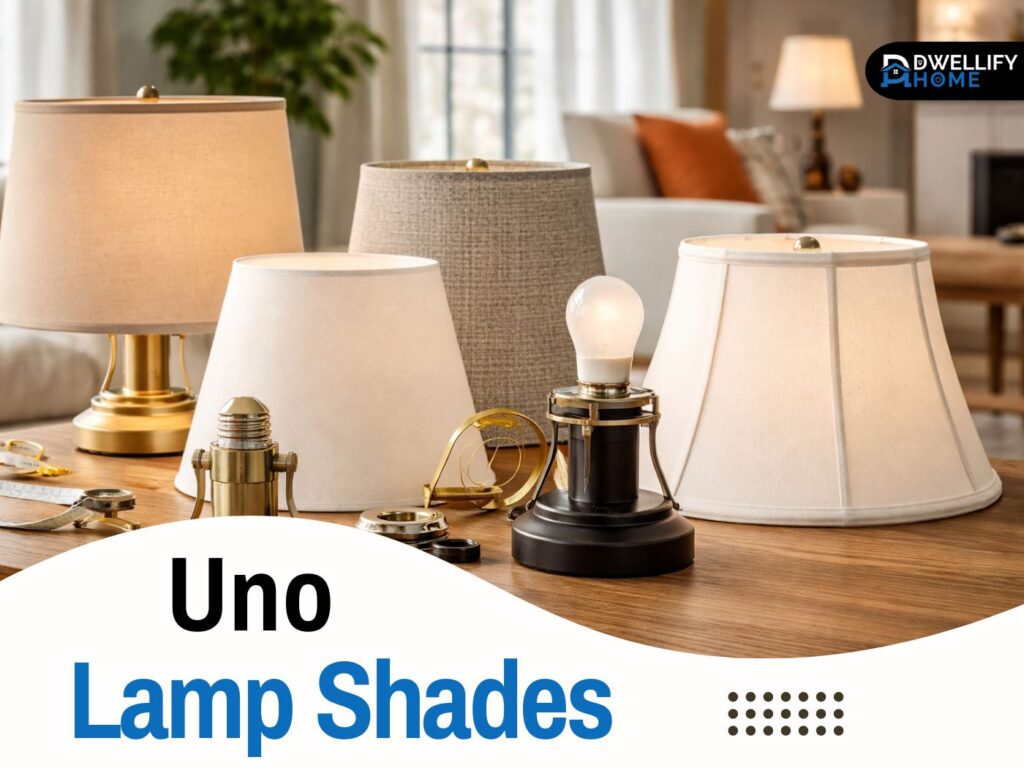
A Uno shade is a socket-mounted shade. Instead of hanging on a harp, the shade connects right at the lamp’s socket, so the shade sits closer to the bulb and feels integrated with the lamp.
This setup is especially common on bridge arm lamps and gooseneck styles where the socket points downward. On those lamps, a regular spider fitter shade often looks awkward or needs extra hardware to behave.
You’ll also hear terms like Uno fitter, Uno ring, retaining ring, or socket ring. Don’t let the words throw you. They all point to the same idea: the shade is supported at the socket, not on a harp.
Quick Guide Table: Uno vs Spider vs Clip-On
| Feature | Uno Fitter Shade | Spider Fitter Shade | Clip-On Shade |
| How it mounts | At the socket under the bulb | On a harp, secured by finial | Clips directly to bulb |
| Best for | Lamps without a harp, bridge arm, downbridge | Most standard table lamps with harp | Small accent shades |
| Common issue | Wobble if slip-on size is off | Wrong harp height looks odd | Heat risk if too close |
| Key sizing detail | Threaded 1 1/4 inch, slip-on 1 3/8 or 1 5/8 | Fitter size is standard, harp height varies | Clip size fits bulb type |
| When I prefer it | When lamp was designed for socket-mounted shades | When you want max style variety | Only for very small lamps |
Sizing note: threaded Uno is commonly 1.25 inches, slip-on Uno often 1 3/8 or 1 5/8 inches.
Step-by-step: Buy the right Uno shade (fast checklist)
- Identify the fitter: threaded or slip-on.
- Measure the fitter opening: confirm 1 1/4, 1 3/8, or 1 5/8 inch.
- Check lamp type: slip-on is common on table and accent lamps, threaded is common on downbridge floor lamps.
- Confirm height and clearance: shade should hide bulb comfortably and leave space for heat.
- Then pick shape and fabric: drum, empire, linen, hardback, and so on.
Uno Fitter Types: Threaded vs Slip-On
This is the make-or-break part. Before you think about fabric or shape, identify the fitter style. I always tell homeowners: match the fitter first, then shop for the look.
Threaded Uno Fitter (1 1 4 inch)
A threaded Uno shade screws onto a threaded socket shell. Once it’s on, it feels locked in. This style is common on downbridge floor lamps and many bridge arm lamps where the shade needs to stay steady even when the lamp gets bumped.
In real installs, threaded Uno is my favorite when a lamp sits in a walkway or near seating, because it resists wobble. It also keeps the shade aligned with the arm, which matters a lot with bridge designs where a crooked shade looks obvious.
If you need a uno lamp shade replacement for a lamp with visible socket threads, threaded Uno is usually the correct direction. Just confirm the thread style matches the socket, because not every old lamp uses the same thread pattern.
Slip-On Uno Fitter (1 3 8 inch to 1 5 8 inch)
A slip-on Uno shade slides over the socket and is held in place by the bulb and a retaining ring. You’ll see this often on table lamps and some vintage pieces where the shade needs quick access for bulb changes.
Slip-on Uno works well, but it’s less forgiving. If the opening is a little too big, the shade can tilt or wobble. If it’s too small, it simply won’t seat.
For uno lamp shades for table lamps, slip-on is common, especially when the lamp was designed to look clean without a harp. If your current shade sits right on the socket and the bulb seems to hold it, you’re likely dealing with slip-on Uno.
Uno vs Euro Fitters: Don’t Buy the Wrong Shade
Uno and Euro fitters get mixed up all the time, especially on marketplace listings. The quickest way to separate them is the direction of the socket and how the ring is designed to sit.
Uno fitters are typically used where the socket points downward or where the shade is meant to sit on top of the socket. Euro fitters are often associated with upward-facing sockets and certain European lamp designs, where the shade rests differently.
If your lamp has a shade that seems to sit inside the shade rather than on top, or the ring position looks unusual, pause and double-check. When someone tells me, “It’s almost right but not quite,” it’s often because it’s Euro hardware being treated like Uno, or the other way around.
Measurements That Matter: The No-Mistake Sizing Method
When I’m standing next to a lamp with a homeowner, I measure in this order, every time. It avoids wasted returns and frustration.
Start with the fitter opening, not the shade diameter. For threaded Uno, the common size is 1 1 4 inch. For slip-on Uno, common openings are 1 3 8 inch and 1 5 8 inch.
A quick way to confirm slip-on sizing is to measure the socket area the shade slides over, not the outside of the decorative parts. If you’re between two sizes, don’t guess. A slightly wrong slip-on opening is the number one cause of wobble.
Then check shade height. Uno shades often sit closer to the bulb, so heat clearance matters. You want space so the fabric or liner never touches the bulb, and the top opening doesn’t trap heat.
Choosing the Right Uno Shade Size for Your Lamp
After the fitter is correct, then we make it look right. For table lamps, the shade should generally cover the socket and give you comfortable light without glare. If it’s too short, you’ll see the bulb and get harsh light at eye level.
For small uno lamp shades, I see two common mistakes. First, people go too narrow, and the lamp looks top-heavy. Second, they go too tall, and the shade overwhelms a short base. A good balance is when the shade width feels slightly wider than the widest part of the base, but not so wide it looks like a hat.
For floor lamps and downbridge styles, the shade width often needs to be a bit larger for visual balance. On a bridge arm lamp, the shade is also a “design focal point” because it’s out in space. A slightly off proportion will be noticeable.
If your lamp base is unusual, take a photo from the side and from standing height. It helps you judge glare and shape, not just aesthetics.
Popular Shapes and Styles: What People Actually Buy
Style matters, but function comes first with Uno. Because the shade sits close to the socket, shape affects both light output and heat flow.
Drum Uno Lamp Shades (Modern and Clean)
A uno fitter lamp shade drum is a common choice for modern rooms because it gives even light and a simple silhouette. I like drum shades on table lamps in living rooms where you want ambient light without strong hotspots.
The trick is height. If the drum is too short, you’ll see the bulb and socket hardware. If it’s too tall, it can feel heavy and block too much light downward.
Empire and tapered shades are more traditional and can be forgiving in smaller spaces. They direct light downward a bit more and often reduce glare near seating.
Materials matter too. Linen and cotton look warm and soften the light. Hardback shades keep their shape longer and feel crisp. Softback shades can look cozy but may show slight waves over time.
Matching Shade to Lamp Type: Real-World Use Cases
Bridge arm and gooseneck lamps are where Uno shines. The socket points downward, and a Uno fitter keeps the shade aligned with the arm. It looks intentional instead of “added on.”
On arc lamps, Uno can work if the socket and hardware support it, but I’m cautious. Arc lamps can sway a little, and a poorly fitted slip-on Uno can shift. If you’re using Uno on an arc lamp, I prefer a stable fitter setup and careful sizing.
For table lamps, Uno is great when you want a clean look without a harp. It also helps in tight spaces, like nightstands, because it reduces the amount of hardware above the shade.
Uno Lamp Shade Replacement: A Simple Buying Checklist
When someone asks me what to do first, I keep it simple. Don’t chase patterns, chase fit.
Here’s the checklist I use on site:
- Identify the fitter type: threaded or slip-on
- Measure the fitter opening precisely
- Confirm shade height so the bulb sits safely inside with clearance
- Choose diameter based on base width and where the lamp sits in the room
- Pick fabric based on how bright you want the light to feel
If you’re buying uno lamp shades Amazon or another marketplace, focus on listings that clearly state the fitter size and type. If a listing only talks about the shade’s top and bottom diameter but not the fitter, that’s a red flag. Fitters are not universal.
Also pay attention to what the lamp needs at the socket. Some lamps require a specific Uno ring or retaining ring to keep everything snug. If your old shade had extra hardware, keep it until the new one is installed and stable.
Uno Lamp Shade Adapters and Conversions: When Things Don’t Match
Sometimes the lamp is Uno, but the shade you love is spider fitter. Or you have a spider fitter lamp and only find a Uno shade in the style you want. Adapters can help, but I treat them as a compromise, not the default plan.
A clip-on adapter can let certain shades work with different setups, but stability and heat clearance must be checked. If the adapter causes the shade to sit too close to the bulb, or it shifts when you change the bulb, it’s not worth it.
If you’re converting an Uno setup to a spider fitter look, be honest about the lamp’s design. Many bridge arm lamps look best when kept Uno because the geometry was built for it.
Troubleshooting Uno Lamp Shades: Quick Fixes
If your Uno shade wobbles or leans, the cause is usually simple: the opening is slightly oversized, the retaining ring isn’t seated, or the socket hardware is worn.
For slip-on Uno wobble, the safest fix is to ensure the correct retaining ring is present and tightened properly, and the bulb is the right shape and sits fully. I’ve also seen cases where the socket shell has loosened over time, making everything above it feel shaky.
If the shade sits crooked on a bridge arm lamp, check two things. First, confirm the socket itself is straight. Second, confirm the fitter isn’t bent. Vintage Uno rings can get slightly deformed, especially if someone forced the wrong size.
If the bulb doesn’t hold the shade firmly, it may be the wrong bulb base length, or the ring is missing. On slip-on Uno, that ring is not optional. It’s part of the system.
Safety and Bulb Heat:
Because Uno shades sit close to the bulb, heat matters more. I always recommend using the bulb type and wattage that the lamp is rated for, and staying conservative if the shade material feels delicate.
A simple check I do after installation is this: turn the lamp on for 20 to 30 minutes, then carefully feel the top of the shade near the fitter area. Warm is normal. Hot is a sign you need better clearance, a lower wattage bulb, or a different shade material.
Also keep fabric away from the bulb. If the bulb touches or almost touches the shade, swap the shade or bulb immediately. That’s not a “maybe,” it’s a safety issue.
Expert Tips: How Pros Make Uno Shades Look Custom
When a lamp looks “just right,” it usually comes down to proportion and light control, not expensive materials.
First, match the shade shape to the base silhouette. A tall, slim base often looks best with a slightly taller tapered shade. A wider base usually pairs better with a drum or a wider empire.
Second, pay attention to lining. A white lining gives brighter, cleaner light. A warmer lining feels softer in the evening. In living rooms, I often choose a lining that reduces glare but still keeps the lamp useful for reading.
Third, don’t ignore the uno lamp base details. If the base has strong curves or a bold finish, a simpler shade lets the lamp look intentional instead of busy. If the base is plain, a textured linen shade can add interest without overdoing it.
FAQ
1) What does uno mean in lampshades?
It refers to a socket-mounted fitting style. Many Uno setups use threads on the outside of the socket shell or a slip-on ring that sits at the socket instead of a harp.
2) What is an uno lamp shade?
It’s a shade designed to attach at the lamp socket (under the bulb area) rather than resting on a harp and finial, which keeps the top of the lamp cleaner and more compact.
3) What is the difference between uno and spider lampshades?
Uno shades mount at the socket. Spider shades mount on a harp and are held by a finial. Spider is the most common setup on standard table lamps with harp hardware.
4) How to convert Uno lamp shade to spider?
You typically use an adapter or converter so a spider fitter shade can work on a Uno lamp base. Make sure the converter stays stable and doesn’t push the shade too close to the bulb.
5) What are the most common Uno fitter sizes?
Threaded Uno is commonly 1 1/4 inch. Slip-on Uno commonly comes in 1 3/8 inch and 1 5/8 inch openings.
Conclusion
A good Uno setup feels simple because everything is doing its job. The fitter matches the socket, the shade sits straight, the bulb has safe clearance, and the lamp gives comfortable light without glare.
If you take only one thing from this, make it this: treat fitter type and opening size as the foundation. Once that’s right, choosing the shape, fabric, and style becomes straightforward, and your uno lamp shades will look balanced and work safely in everyday life.
Disclaimer:
This guide is for general education. Always follow your lamp’s manufacturer instructions and safety labels. If a lamp socket, wiring, or shade fit seems loose, damaged, or unsafe, consult a qualified electrician or lamp repair professional.

I’m Bilal Hassan, the founder of Dwellify Home. With 6 years of practical experience in home remodeling, interior design, and décor consulting, I help people transform their spaces with simple, effective, and affordable ideas. I specialize in offering real-world tips, step-by-step guides, and product recommendations that make home improvement easier and more enjoyable. My mission is to empower homeowners and renters to create functional, beautiful spaces—one thoughtful update at a time.