
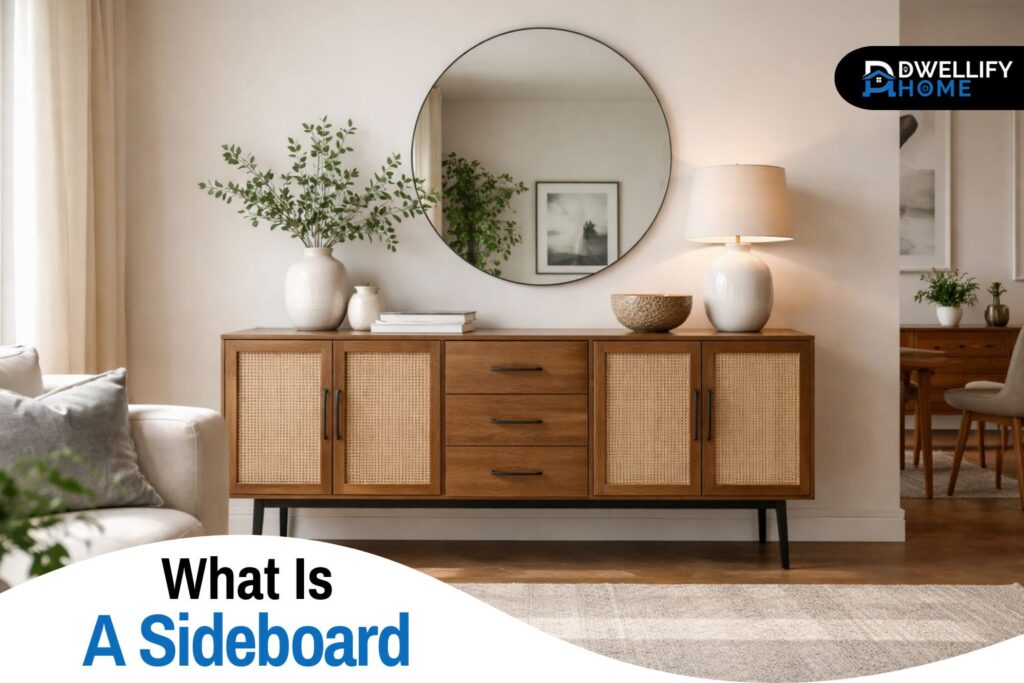
A sideboard is one of those furniture pieces people recognize when they see it, but the name can still throw them off. In real homes, it usually ends up doing more than one job at once. It stores the things you don’t want sitting out, gives you a surface to use or decorate, and helps a room feel more finished without taking over the space.
That’s part of why it has stayed relevant for so long. A sideboard started as a practical dining room piece, but it now shows up in living rooms, entryways, hallways, and even open-plan spaces where one piece needs to work harder. Once you understand what makes it a sideboard, it becomes much easier to tell whether you actually need one and where it makes the most sense.
Snippet-Ready Definition:
A sideboard is a long, low storage cabinet placed against a wall, often used in dining rooms or living spaces. It provides hidden storage for dishes, linens, or household items while offering a surface for serving or display.Mission Statement
Dwellify Home helps homeowners make practical, stylish, and informed decisions about furniture, layout, and home design through clear guidance and real-life insights.
What Is a Sideboard in Furniture?
A sideboard is a long, low storage unit that usually sits against a wall. Most have a mix of cabinets, drawers, or shelves, along with a flat top that can be used for serving, storage, or decor. It’s traditionally linked to the dining room, but that’s no longer its only home.
What separates a sideboard from a general cabinet is its shape and purpose. It tends to be wider than it is tall, and it’s designed to be both useful and visible. It’s not just a storage box. It’s a piece that helps a room function better while still looking intentional.
In everyday use, people also call it a sideboard cabinet, sideboard furniture, or even a sideboard table. Those terms usually point to the same basic idea: a low-profile storage piece that offers both function and display space.
What Makes a Piece of Furniture a Sideboard?
A true sideboard usually has a few clear traits. It has a horizontal shape, sits lower than a standard cabinet, and gives you enclosed storage behind doors or inside drawers. The top surface matters too. That upper area is part of the design, not just an afterthought.
That’s why a sideboard piece of furniture often feels more flexible than a bulky cabinet. It can store practical items below while still giving you room above for serving dishes, a lamp, framed art, or a tray for everyday use.
Key Uses of a Sideboard
- Stores dishes, glassware, linens, and hosting essentials
- Provides extra serving space during meals or gatherings
- Displays lamps, artwork, or decorative items
- Adds functional storage in dining rooms, living rooms, or entryways
- Keeps everyday clutter organized behind closed doors
Why Is It Called a Sideboard?
The name comes from how it was originally used. In older dining spaces, this piece sat at the side of the room and held serving dishes, utensils, linens, and other meal-related items. It was close enough to be useful during meals but off to the side so the main dining table stayed clear.
That original purpose still shows in modern versions. Even when the design looks updated, the idea is the same: keep useful things nearby without crowding the main surface people gather around. The name sounds old-fashioned to some people, but the function is still very current.
What Is a Sideboard Used For?
A sideboard is mainly used for storage, serving, and display. That sounds simple, but in practice it solves a lot of everyday room problems. It gives you a place for items you need often but don’t want out in the open all the time.
In a dining room, it often holds plates, serving bowls, table runners, candles, placemats, and glassware. In a living room, it may store board games, media accessories, chargers, remotes, or extra throws. In an entryway, it can handle mail, keys, shopping bags, and the random things that otherwise pile up fast.
The top also matters more than people expect. During a dinner gathering, it becomes a serving surface. On normal days, it can hold a lamp, artwork, or a tray that makes the room feel settled instead of half-finished. That mix of closed storage and usable surface is what makes a sideboard so practical.
Where Does a Sideboard Go in a Home?
The dining room is still the most traditional spot. That’s where a sideboard buffet makes the most immediate sense because it supports meals, entertaining, and storage in one place. It keeps extra dishes and serving pieces close by without crowding the dining table.
A sideboard in living room setups is also very common now. It can sit under art, behind a sofa, or along a blank wall that needs both storage and visual weight. In smaller homes, it sometimes works better than a media unit because it looks less bulky while still hiding clutter.
Entryways and hallways are another smart fit. A narrow sideboard can hold everyday essentials while giving you a surface for a bowl, lamp, or mirror setup. In these spaces, proportion matters a lot. Too deep, and it blocks movement. Too small, and it looks like it was dropped there without purpose.
Common Features of a Sideboard
Most sideboards include some mix of doors, drawers, and shelves. That combination is useful because not everything needs to be stored the same way. Drawers are better for smaller items like napkins, candles, or cutlery. Cabinets work better for larger pieces like serving platters, baskets, or electronics.
The low profile is another defining feature. A sideboard is meant to sit below eye level so it doesn’t dominate the room. That lower height also makes the top more usable. You can set things down easily, style it without fuss, and keep the room feeling open.
Many people asking what is a sideboard cabinet are really trying to understand this balance. It’s not just a cabinet with a fancy name. It’s a cabinet designed to stay visually light while still being useful.
Typical Sideboard Size and Dimensions
Most sideboards are long and fairly shallow compared with taller storage furniture. Exact sizes vary, but the general idea stays the same: enough length to be useful, enough depth to store real items, and a height low enough to feel grounded rather than bulky.
In real rooms, size mistakes usually happen in two ways. One is choosing a piece that’s too small for the wall, which makes it feel temporary or out of scale. The other is choosing one that’s too deep, especially in a dining room or hallway where people need easy walking clearance.
A good sideboard should feel proportionate to nearby furniture. Near a dining table, it should support the room, not overpower it. In a hallway, it should leave comfortable movement space. In a living room, it should look intentional next to the sofa, rug, and wall decor rather than like extra storage squeezed in at the last minute.
Sideboard vs Other Similar Furniture
This is where people get confused, and honestly, the furniture industry doesn’t help much because retailers often use these labels loosely.
Sideboard vs Buffet
Sideboard vs buffet is the comparison people ask about most. In many cases, the terms are used interchangeably. Traditionally, a buffet is more closely tied to dining and serving food, while a sideboard can have a broader role in different rooms.
In practical home use, the difference is often small. Some people describe buffets as having slightly longer legs or a more dining-focused design, while sideboards may look a bit more versatile. Still, in everyday shopping, you’ll often see the same piece labeled both ways.
Sideboard vs Credenza
A credenza is usually sleeker and often feels more office-friendly or modern. It may sit lower, have cleaner lines, and sometimes less visible hardware. You’ll see credenzas in offices, dining rooms, and media setups.
A sideboard tends to feel a little more rooted in home storage and dining use, even if the categories overlap. If a piece looks refined, low, and built for storage against a wall, the label may depend more on style and marketing than on a hard rule.
Sideboard vs Console Table
What is a sideboard vs console table? This one is easier to answer. A console table is usually narrower and more surface-focused than storage-focused. It may have an open base or just a slim shelf. It works well in entryways or behind sofas when you want a lighter look.
A sideboard is more substantial. It gives you real enclosed storage and usually has more depth, weight, and usefulness. If you need to hide things, a sideboard will usually do the job better than a console table.
What Is a Sideboard Cabinet or Sideboard Table?
These phrases usually describe the same furniture family. A sideboard cabinet emphasizes storage. A sideboard table usually reflects how people see the flat top and overall shape. Neither term changes the core function much.
The same goes for what is a sideboard buffet. That wording often appears in product names because it helps match how different shoppers describe the piece. One person says buffet, another says sideboard, and a retailer tries to cover both.
What Is a Sideboard in a Restaurant?
In a restaurant setting, a sideboard usually refers to a service station or storage unit near the dining area. It may hold cutlery, napkins, dishes, water jugs, or supplies staff need during service.
The purpose is similar to home use: keep essentials close without putting everything out in the open. It’s the same basic idea, just in a more service-driven environment.
How to Know If a Sideboard Is Right for Your Space
A sideboard makes sense when you need storage that doesn’t look purely utilitarian. It’s especially useful when a room needs a little more function but a tall cabinet would feel too heavy.
It’s also a good choice when you entertain, need a landing surface, or want one piece to serve more than one role. In homes where space has to work harder, that flexibility matters. A sideboard can store, display, and support daily routines without looking overly practical.
The biggest mistake is buying one just because you like the look without thinking about what it needs to hold. Start with function. Think about what will go inside, what will sit on top, and how much room you really have around it. That usually leads to a much better choice than focusing on style alone.
Simple Styling Tips for a Sideboard
Styling works best when the top doesn’t feel crammed. A lamp, a stack of books, a tray, a plant, or a piece of art above it is usually enough. You want it to look lived in, not overloaded.
Mirrors and framed artwork work especially well above a sideboard because they give the piece visual context. Without something above it, a long low cabinet can sometimes feel unfinished. With the right wall element, it looks anchored.
It also helps to leave part of the surface clear. That’s one of those small details people overlook. A sideboard looks better when it still seems usable. Once every inch is covered in decor, it loses the calm, practical feel that makes it appealing in the first place.
Quick Recap: What Is a Sideboard?
A sideboard is a long, low storage unit designed to sit against a wall. It usually includes cabinets, drawers, or shelves, along with a flat top for serving or display. It started as dining room furniture, but it now works just as well in living rooms, entryways, and hallways.
So, what is a sideboard used for? In most homes, it’s used to store everyday essentials, support hosting, and give a room a cleaner, more finished look without adding bulky furniture.
FAQs
What is the difference between a sideboard and a buffet?
A sideboard and a buffet are very similar and often used interchangeably. Traditionally, buffets are associated with dining rooms and serving food, while sideboards may be used more broadly throughout the home.
What is a sideboard called in America?
In the United States, the terms sideboard, buffet, and sometimes credenza are used to describe similar low storage cabinets used in dining rooms or living spaces.
What is the purpose of a sideboard?
The purpose of a sideboard is to provide convenient storage and serving space. It helps organize dining items, linens, or household essentials while also offering a surface for decor or entertaining.
What is the difference between a sideboard and a display cabinet?
A sideboard usually has enclosed storage with cabinets or drawers and a low profile. A display cabinet is typically taller and designed to showcase items behind glass doors.
Can a sideboard be used in a living room?
Yes. A sideboard in a living room can store media accessories, books, or everyday items while providing a surface for lamps, artwork, or decorative objects.
Conclusion: What Is a Sideboard and Why Homes Still Use One
A sideboard has lasted because it solves practical problems without feeling purely functional. It stores what you need, hides what you don’t want on display, and gives a room a surface that can adapt from everyday use to special occasions.
Once you understand what is a sideboard, it becomes much easier to see why it still works so well in modern homes. It’s one of those rare furniture pieces that can be useful in almost any room, provided the size, storage, and placement are right.
Disclaimer:
This content is for informational and educational purposes. Furniture styles, terminology, and usage may vary depending on region, manufacturer, and interior design preferences.

I’m Bilal, the founder of Dwellify Home. With 6 years of practical experience in home remodeling, interior design, and décor consulting, I help people transform their spaces with simple, effective, and affordable ideas. I specialize in offering real-world tips, step-by-step guides, and product recommendations that make home improvement easier and more enjoyable. My mission is to empower homeowners and renters to create functional, beautiful spaces—one thoughtful update at a time.