A well-organized home doesn’t usually come from buying a stack of containers and hoping for the best. It comes from paying attention to the places that slow you down every day, then fixing those spots in a way that’s simple enough to keep up. That’s the part people often miss.
The homes that stay manageable aren’t always the biggest or the neatest. They’re the ones with systems that match real habits. Shoes land in one place. Mail doesn’t wander across the counter. Bathroom backups don’t take over every shelf. Good home organization is less about making things look styled and more about making the house easier to live in on an ordinary Tuesday.
Snippet-Ready Definition
Home organization is the process of arranging spaces and everyday items so they’re easier to use, store, and maintain. People choose it to reduce clutter, save time, and make daily routines run more smoothly.Mission Statement
Dwellify Home helps homeowners make practical, stylish, and informed decor decisions that improve how their spaces look and function.
Key Benefits
- Cuts down on visible clutter
- Makes daily routines faster
- Helps you find things more easily
- Improves storage in small spaces
- Makes rooms easier to maintain
Before You Start: Focus on the Areas That Cause the Most Daily Clutter
Start with friction, not with looks.
The best place to begin is the area that annoys you most often. It might be the kitchen counter where papers and snack boxes pile up, the bedroom chair covered in clothes, or the entryway where bags, shoes, and keys seem to spread overnight. Those trouble spots tell you where a better system will make the biggest difference.
It also helps to declutter before adding storage. A lot of people try to organize items they don’t use, don’t like, or forgot they had. That usually leads to buying more bins for things that shouldn’t be taking up space in the first place. Clear out the obvious excess first, then organize what’s left.
1. Create a Simple Drop Zone at the Entryway
The entryway sets the tone for the rest of the house. When there’s no clear place for everyday essentials, they drift into nearby rooms and create clutter fast.
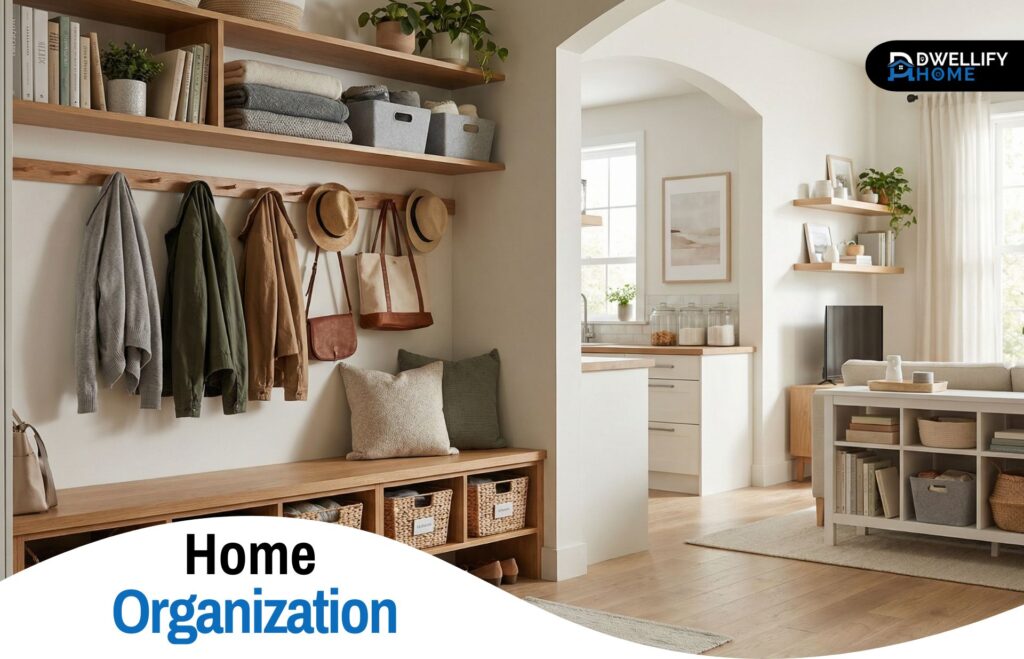
A good drop zone doesn’t need much. A few hooks, a tray for keys, a small basket for loose items, and a shoe spot near the door are usually enough. The goal is to catch things before they spread.
This works especially well for busy households. One person drops a bag, another leaves shoes in the hallway, and someone else puts mail on the nearest surface. With a clear landing zone, those habits have a home instead of becoming a mess.
2. Organize the Kitchen by Daily Use, Not Just by Cabinet
A kitchen becomes easier to manage when items are stored by task instead of by wherever they happen to fit.
Keep breakfast items together. Store lunch prep supplies in one area. Put cooking tools near the stove and everyday dishes near the dishwasher or sink. That way, you’re not crossing the kitchen to make coffee or unpack groceries.
This is one of the most useful shifts in home organization because kitchens collect a little bit of everything. Once zones are based on how the space is actually used, counters usually stay clearer without much effort.
3. Turn Pantry Storage Into Easy, Labeled Zones
Pantries tend to get messy for one simple reason: categories blur. Snacks get mixed with baking supplies, backstock gets shoved in front, and things disappear behind oversized boxes.
Separate the pantry into clear zones such as dry goods, canned foods, snacks, lunch items, and extras. Labels help, especially in shared homes, but the layout matters more than the label itself. A tidy label on a badly planned shelf won’t fix much.
Clear bins can help, but only where they solve a problem. They’re useful for loose packets, snack bars, and small items that tip over. They’re less useful when they make it harder to reach what you need.
4. Use Vertical Storage to Make Bathroom Organization Easier
Bathrooms usually have less storage than they need, so every inch has to work harder.
Vertical storage helps immediately. Wall shelves, shelf risers, cabinet-door organizers, and stackable containers can double the usable space without making the room feel crowded. It’s also smart to separate daily-use items from backup supplies. Toothpaste you use every day shouldn’t compete for space with six unopened bars of soap.
One mistake I see often is storing everything at eye level. That prime space should go to the items you reach for most. Extras can go higher up or farther back.
5. Use Drawer Organizers to Keep Small Items Under Control
Drawers can look tidy on the surface while hiding complete chaos underneath. That’s why drawer organization matters more than people think.
Start with the drawers that frustrate you most. In the kitchen, that might be utensils, wraps, or cooking gadgets. In the bathroom, it could be skincare, hair tools, or first-aid basics. In a desk drawer, it’s usually cords, pens, chargers, and papers.
The trick is to group by purpose, not by size alone. Small compartments are helpful, but they work best when each section has a clear role. That’s what keeps drawers from slowly turning into catch-alls again.
6. Organize Clothes by Category, Season, and Frequency of Use
Closets get crowded when everything is stored as if it’s equally important. It rarely is.
Keep everyday clothes within easy reach. Occasion wear can go farther back. Off-season pieces should be stored separately so they’re not taking up prime closet space. This alone makes daily dressing simpler and helps you see what you actually wear.
Matching hangers, shelf dividers, and a few bins can help, but the real difference comes from reducing visual clutter. Clothes organization works best when categories are easy to scan. You shouldn’t have to dig through three shelves to find one sweater you wear every week.
7. Make Small Spaces Work Harder With Hidden Storage
In smaller homes, storage has to be more intentional. Open surfaces fill up fast, so it helps to use places that often get ignored.
Under-bed boxes, over-the-door organizers, narrow rolling carts, storage benches, and furniture with built-in storage can all make a small space feel calmer. These are some of the most useful home organization ideas for small spaces because they add function without eating up floor area.
The key is to avoid packing every hidden space just because it exists. Hidden storage works best for items you need, but not every day, like extra linens, seasonal clothing, or backup toiletries.
8. Set Up a Paper and Home Office Zone That Is Easy to Manage
Paper clutter has a way of spreading quietly. A receipt lands on the counter, a school form sits by the fridge, and a warranty gets tucked into the wrong drawer. Before long, important documents are mixed with junk mail and old notes.
Create one spot for paperwork, even if you don’t have a full office. Use simple categories: action items, reference papers, and supplies. That’s usually enough. A small file box, folder system, or drawer can handle most homes.
This zone is especially helpful for manuals, receipts, warranties, and other documents that are annoying to hunt for when you actually need them.
9. Use Baskets and Bins to Contain Clutter in Shared Spaces
Shared areas need fast cleanup options. That’s where baskets and bins earn their place.
They work well for blankets in the living room, toys in a family room, pet supplies near the kitchen, or everyday items that don’t belong spread across open surfaces. The goal isn’t to hide clutter carelessly. It’s to give frequent-use items a contained home that’s easy to maintain.
Simple open bins are often better than overly specific organizers in family spaces. People are more likely to use a system that’s obvious and quick than one that requires too much sorting.
10. Try Inexpensive Home Organization Ideas Before Buying New Products
Not every problem needs a shopping trip.
Some of the most effective inexpensive home organization ideas come from using what you already have. Trays can gather loose bathroom items. Jars can hold small supplies. Sturdy boxes can sort pantry goods or closet accessories. Even a leftover basket can become a reliable drop spot.
This approach also helps you test a system before spending money on it. That matters because a solution that looks good in a store doesn’t always work in a real home. Try the layout first. If it proves useful, then upgrade later if needed.
11. Use Modular Storage for Flexible Home Organization
Some storage needs change over time, especially in closets, kids’ rooms, and multipurpose spaces. That’s where modular systems help.
Cube units, adjustable shelf inserts, stackable drawers, and simple closet add-ons let you change the setup without starting over. This is one reason people often look for home organization IKEA ideas. The appeal isn’t just the style. It’s the flexibility.
Modular storage works best when you need room to grow or shift. A child’s toy storage today might become book storage later. A guest room shelf might also need to hold office supplies. Flexible systems handle that better than fixed, highly specific ones.
12. Build a Quick Reset Routine to Keep Your Home Organization Working
A good system should make tidying easier, not create another job.
One of the most useful habits is a five-minute reset at the end of the day. Put shoes back, clear the counter, return loose items to their zones, and straighten the areas that collect clutter fastest. That small habit keeps a decent system from falling apart.
A weekly check-in helps too. Restock what’s running low, return out-of-place items, and fix the one drawer or shelf that’s starting to slip. Most organizing systems fail not because they’re bad, but because no one maintains them in small, regular ways.
Common Home Organization Mistakes to Avoid
A few mistakes show up again and again.
Buying organizers before decluttering is a big one. Another is creating systems that are too complicated for daily life. Color-coded perfection may look nice for a week, but it won’t last if it takes too much effort to maintain.
Another common issue is organizing for appearance instead of habit. A beautiful setup won’t help much if it fights how the household actually functions. The best systems are the ones people use without thinking too hard about them.
What Makes Home Organization Last in Real Homes
Lasting organization usually comes down to three things: simplicity, visibility, and routine.
Simple systems are easier to keep up. Visible categories make it easier to put things back. Regular resets stop small messes from becoming large ones. That’s true whether you’re organizing drawers, clothes, pantry shelves, or shared family spaces.
It also helps to make the system obvious for everyone in the home. People are more likely to follow it when it makes sense at a glance. That’s a small detail, but it matters more than most people expect.
FAQs
What is the average cost of a home organizer?
Professional home organizers often charge by the hour, and rates vary by location, experience, and project scope. For a single room, costs can range from a modest session to a larger multi-visit project, so it’s best to ask whether supplies, labeling, and haul-away help are included.
What is the 1/3/5 decluttering rule?
The 1/3/5 rule is a simple way to make progress without overthinking. You remove 1 large item, 3 medium items, and 5 small items in one session. It works well when decluttering feels too big to start.
What is the 12 12 12 rule for decluttering?
The 12 12 12 rule means finding 12 items to throw away, 12 items to donate, and 12 items to return to their proper place. It gives you a clear target and helps you reset a messy space quickly.
What is the best way to organize my home?
Start with the areas that cause the most daily frustration, declutter first, then create simple zones based on how you actually use the space. The best systems are easy to maintain, not just neat for a day.
Should I buy organizers before I declutter?
Usually no. It’s easier to choose the right bins, shelves, or drawer dividers after you know what you’re keeping. That prevents wasted money and avoids creating storage for things you don’t need.
Conclusion: Home Organization Works Best When It Fits Everyday Life
The most useful organizing ideas are the ones that remove friction from your day. A better entryway, a calmer pantry, neater drawers, or a workable clothes system may not seem dramatic on their own, but together they make a home feel easier to manage.
That’s really what good home organization does. It supports the way you live, helps the house run more smoothly, and makes everyday tasks feel lighter. Start with one trouble spot, keep the system simple, and build from there.
Disclaimer
Content is for general informational purposes and should be used as a practical guide, not as professional design or financial advice.

I’m Bilal Hassan, the founder of Dwellify Home. With 6 years of practical experience in home remodeling, interior design, and décor consulting, I help people transform their spaces with simple, effective, and affordable ideas. I specialize in offering real-world tips, step-by-step guides, and product recommendations that make home improvement easier and more enjoyable. My mission is to empower homeowners and renters to create functional, beautiful spaces—one thoughtful update at a time.