A pantry usually gets messy for the same reason a junk drawer does. Things get placed wherever there’s room, half-used packages disappear behind newer groceries, and small items start floating around without a real home. The fix is not buying a dozen matching bins right away. It’s building a simple system that fits the way your kitchen actually works.
The best pantry setups are rarely the fanciest ones. They’re the ones that make everyday cooking easier, help you see what you already have, and stay manageable even after a busy grocery run. Once the space is organized in a way that matches your routine, it stops feeling like a constant reset project and starts working for you.
Snippet-Ready Definition:
Organizing a pantry means arranging food and kitchen supplies into clear categories and zones so everything is easy to see and access. A well-organized pantry reduces clutter, prevents food waste, and makes everyday cooking more efficient.
Mission Statement:
Dwellify Home helps homeowners create practical, comfortable, and thoughtfully designed living spaces with clear guidance on home organization, décor, and everyday functionality.
Start by Emptying the Pantry and Resetting the Space
The first step is to take everything out. It feels like extra work, but trying to organize around existing clutter usually leads to the same mess being rearranged instead of fixed. A full reset lets you see the shelf space clearly and notice what has been collecting in the back for months.
Once the shelves are empty, wipe everything down properly. Crumbs, sticky bottle rings, spilled flour, and dust build up faster than people realize. Cleaning the space before putting anything back makes the pantry feel fresh, and it also gives you a better chance of keeping it that way.
As you empty it, check expiration dates and separate anything stale, damaged, or never used. There’s no point organizing food you won’t eat. Keep a small pile for items that need to be used soon so they don’t get buried again.
Take Inventory Before You Put Anything Back
Before restocking the shelves, pause and look at what you actually have. This is the moment when duplicates show up. Three half-open pasta boxes, two jars of the same sauce, or five snack bags all shoved into different corners are common signs that the pantry hasn’t been supporting your routine very well.
It also helps to notice your shopping habits. Some households need quick-access breakfast foods and lunch-packing supplies front and center. Others cook from scratch and need a better baking and dry goods zone. Inventory is not just about counting items. It’s about seeing what deserves space and what keeps creating clutter.
This is also the right time to measure shelf depth, shelf height, and any door space. That matters even more in a pantry cabinet or on deep shelves. Organizers only help when they fit the space properly.
Organize Your Pantry by Category First
The easiest way to make a pantry feel under control is to group similar items together. This sounds basic, but it solves a lot. Instead of hunting across four shelves for breadcrumbs, rice, and canned tomatoes, you know roughly where each category lives.
Keep categories broad enough to be practical. Baking, canned goods, grains and pasta, snacks, breakfast foods, oils and sauces, and paper goods usually cover most needs. Over-dividing the pantry into too many tiny groups can make it harder to maintain.
This is also where the idea of organizing your pantry by category becomes more useful than organizing by package size or brand. Categories match how people cook and shop, so the system makes sense naturally.
Set Up Pantry Zones That Match How You Use the Kitchen
Once categories are grouped, turn them into pantry zones. A zone is simply a dedicated area for a type of item or a type of kitchen task. That small shift makes the pantry feel much more intentional.
A simple 7 pantry zones setup works well in most homes: everyday items, baking and dry goods, canned goods, snacks, oils and condiments, backstock, and non-food supplies. You do not need all seven if your pantry is small, but the idea is useful because it gives every shelf a clear purpose.
Good zones reduce visual clutter and decision fatigue. Instead of wondering where to put a new bag of flour or a box of granola bars, you already know. That alone makes the pantry easier to maintain.
Decide What Should Go on Each Shelf
Shelf placement matters more than people think. Eye-level shelves should hold the things you reach for most often. That might be cereal, lunch snacks, coffee, pasta, or everyday canned goods. The easier these are to see and grab, the less likely the pantry is to get disturbed every day.
Heavy items, large containers, and bulk purchases usually belong on lower shelves. It’s safer, easier on the back, and more practical when you’re carrying groceries in. Rarely used baking tools, party supplies, or seasonal ingredients can go on upper shelves.
One small detail that helps a lot is keeping kid-friendly snacks on a lower shelf in one defined area. It saves time, cuts down random grabbing, and stops the whole pantry from being searched every afternoon.
Choose Storage Tools That Make the Pantry Easier to Use
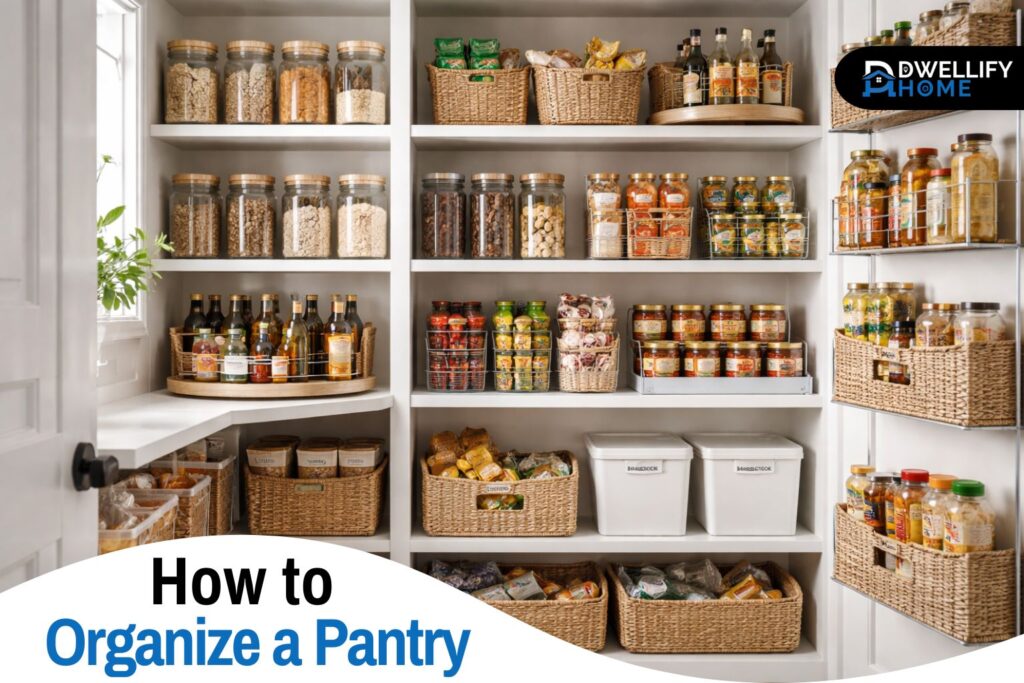
Storage tools should solve a problem, not create a prettier version of clutter. Clear containers are useful for dry goods like flour, sugar, rice, pasta, and cereal because they improve visibility and can help keep food fresher. They also make shelf space more predictable.
Bins and baskets help with loose items that otherwise scatter around, like snack pouches, seasoning packets, instant oatmeal, and baking extras. Shelf risers are especially helpful for cans and jars because they stop shorter items from disappearing behind taller ones. Lazy Susans are great for oils, sauces, and vinegar bottles, especially in corners or on deep shelves.
Door storage can also be worth using, particularly in a pantry cabinet. It works well for spices, wraps, packets, and smaller items that don’t need full shelf space.
How to Organize a Pantry Without Containers
Not every pantry needs rows of matching containers. In many homes, that approach creates more work than it saves. Decanting everything takes time, and some people find it harder to keep up with than simply grouping items well.
A pantry without containers can still look neat and function well. Use original packaging for foods that are already easy to store, and use simple baskets, trays, or even repurposed boxes to keep categories together. The goal is visibility and order, not perfection.
This approach works especially well for busy families, renters, or anyone trying to organize pantry space without buying a lot of new products. A clean layout and smart grouping often matter more than matching storage.
How to Organize a Pantry with Deep Shelves
Deep shelves are one of the biggest pantry trouble spots because things disappear in the back and get forgotten. The front ends up crowded while the rear becomes wasted space.
The easiest fix is to keep everyday items in front and use long bins, risers, or pull-out style organizers to make the back accessible. You can also create front-and-back rows, but only if the back row is still visible and easy to reach. Otherwise, that’s where food goes to expire.
For deep shelves, categories need stronger boundaries. A labeled bin for snacks or baking supplies works better than letting individual packages spread across the whole shelf.
How to Organize a Small Pantry with Deep Shelves
A small pantry with deep shelves needs even more editing. Too much backstock quickly overwhelms the space, so this is where reducing duplicates really helps. Keep enough on hand to be practical, but not so much that you can’t see what you own.
Use vertical space carefully with risers or stackable bins, but don’t stack so high that everyday items become annoying to access. Every shelf should have one clear purpose. Small spaces stay organized longer when the system is simple.
This is also where pantry zones matter a lot. Even a pantry cabinet can work better when one shelf is clearly snacks, another is canned food, and another is baking staples.
How to Organize a Pantry with Wire Shelves
Wire shelves are tricky because small items tip, jars wobble, and packets can slip through gaps. The easiest way to make them more functional is to use flat-bottom bins or trays that create a stable surface.
Shelf liners can help too, especially for smaller pantry items. Baskets are often better than loose products on wire shelving because they turn an awkward shelf into one easy-to-move category.
Try not to overfill wire shelves. They work best when items are grouped and supported rather than piled directly on the rack.
How to Organize a Pantry Cabinet
A pantry cabinet usually needs a slightly different strategy than a walk-in pantry. Space is narrower, shelves may be deeper than they look, and door space becomes more important.
In a pantry cabinet, the middle shelves should usually hold the items you use most. Lower shelves are better for heavy goods and backup stock. The top shelf works for less-used items that don’t need daily access. Door storage can make a big difference here, especially for spices, packets, or small jars.
A pantry cabinet feels more organized when it’s treated like a series of small zones instead of one tall storage column.
Organize Key Pantry Categories in a Smarter Way
Some pantry categories always need a little extra thought. Canned goods should be easy to see, so risers or stepped placement help a lot. Baking supplies are easier to use when they’re kept together instead of spread around between shelves.
Snacks usually create the most visual clutter, so keep them in one basket or one shelf zone. Backstock should be separate from everyday food whenever possible. That way, the main pantry stays neat and you can still keep extras without crowding the front.
This is where most real-life pantry systems succeed or fail. It’s not about making every shelf look styled. It’s about making the common categories easy to manage.
Label the Pantry So Everyone Can Keep It Organized
Labels are helpful because they remove guesswork. They tell people where items belong, and they make it easier to keep categories consistent after shopping trips.
You don’t have to label everything. In some kitchens, labeling bins and a few shelves is enough. In others, it makes sense to label clear containers and add refill or expiration dates for staples like flour and rice.
The best labels are simple and readable. They should support the system, not turn the pantry into a project that feels too fussy to maintain.
Use Simple Habits to Keep the Pantry Organized
The pantry usually stays neat through habits more than through products. A quick reset after grocery shopping helps a lot. So does putting older items in front and newer ones behind them, which is basically a simple first in, first out system.
A short weekly check also prevents bigger cleanups later. Straighten one shelf, toss empty boxes, and move anything misplaced back into its zone. That takes a few minutes and saves a lot of frustration.
Most pantry systems fall apart because they ask too much from everyday life. The better approach is to make maintenance light and realistic.
Common Pantry Organization Mistakes to Avoid
One common mistake is buying organizers before understanding the space. Another is creating too many categories, which makes the system feel harder than it needs to be. Hiding food behind food is another big one, especially on deep shelves.
Overbuying is also a problem. A pantry can’t stay functional if it’s packed beyond what the shelves can comfortably hold. And finally, complicated systems usually don’t last. If every grocery trip requires relabeling, decanting, and rearranging, it probably won’t hold up for long.
A good pantry should reduce friction, not add more steps to daily life.
Real-Life Pantry Tips for Families and Busy Kitchens
Busy kitchens need simple systems. A snack zone that kids can use without tearing through every shelf is worth having. Lunch-packing items stored together save time on school mornings. Meal-prep staples grouped in one place make cooking feel less scattered.
It also helps to organize in a way the whole household can understand. Not everyone will remember a detailed setup, but most people can follow broad categories and clear shelf zones. That’s often the difference between a pantry that looks good for a day and one that keeps working for months.
FAQs
In what order should a pantry be organized?
Start by emptying the pantry completely. Clean the shelves, discard expired items, and group remaining food by category. Then assign zones and place everyday items at eye level.
What are the 7 pantry zones?
A common system includes: everyday items, baking supplies, canned goods, snacks, oils and condiments, backstock or bulk items, and non-food kitchen supplies.
How to organize a pantry so you can see everything?
Group items by category, keep frequently used foods at eye level, use shelf risers or bins for smaller items, and avoid stacking products directly behind each other.
What should not be stored in a pantry?
Foods that require refrigeration, heat-sensitive ingredients like chocolate in warm climates, and strong-smelling items that could affect other foods should usually be stored elsewhere.
Conclusion
Learning how to organize a pantry well is really about building a system that matches your space, your habits, and the way your kitchen runs every day. Clear shelves, simple categories, practical pantry zones, and a few smart storage choices can make a big difference without turning the job into something complicated.
The best pantry setup is the one you can keep up with. Once everything has a sensible place and the space is easy to use, the pantry stops feeling like a source of clutter and starts doing what it should have been doing all along.
Disclaimer
The information provided on Dwellify Home is for general home organization guidance. Individual homes, storage spaces, and household needs may vary.

I’m Bilal, the founder of Dwellify Home. With 6 years of practical experience in home remodeling, interior design, and décor consulting, I help people transform their spaces with simple, effective, and affordable ideas. I specialize in offering real-world tips, step-by-step guides, and product recommendations that make home improvement easier and more enjoyable. My mission is to empower homeowners and renters to create functional, beautiful spaces—one thoughtful update at a time.