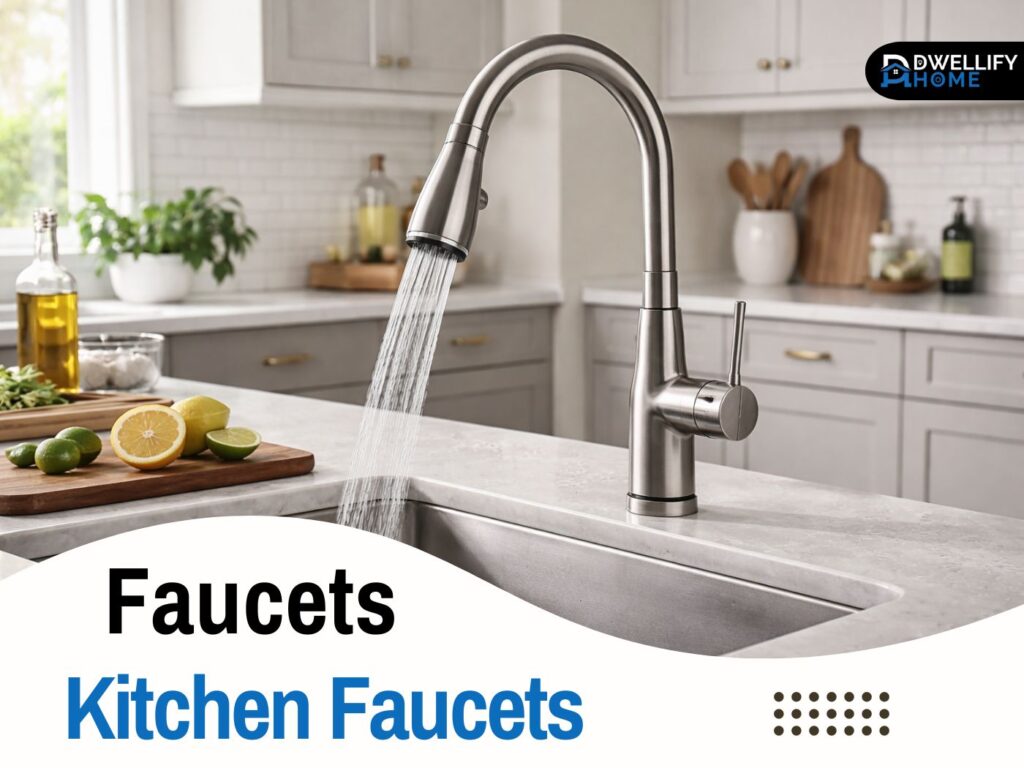
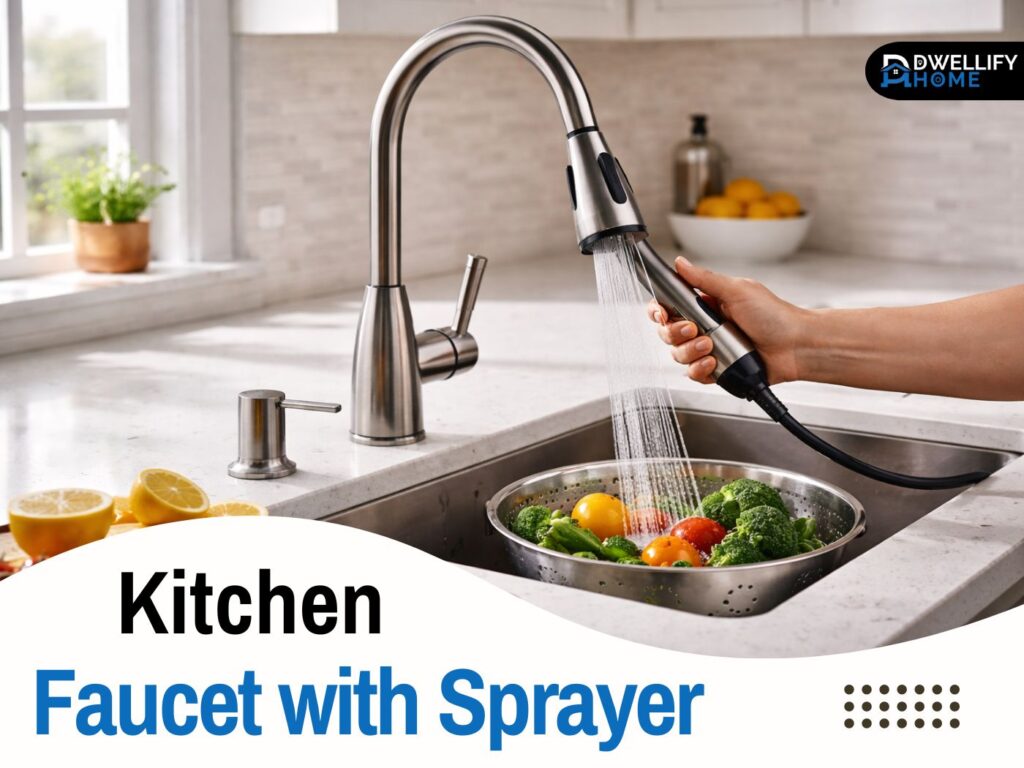
A kitchen faucet with sprayer can make your sink feel like a work station instead of a hassle. Rinsing veggies, blasting off stuck-on food, and cleaning the corners of the sink gets a whole lot easier when you’ve got a sprayer that actually reaches and retracts smoothly.
Here’s the thing: most problems I get called out for aren’t “bad faucets,” they’re bad matches. The faucet didn’t fit the sink holes, the hose weight is installed wrong, or the sprayer head keeps drooping because the docking system is weak. In this guide, I’ll walk you through what works in real kitchens, what usually goes wrong, and how to pick a setup you won’t regret.
Snippet-ready definition:
A kitchen faucet with sprayer is a sink faucet that includes a retractable or separate spray wand, letting you switch from stream to spray for faster rinsing, cleaning, and filling tasks.
Mission Statement:
At Dwellify Home, our mission is to make home upgrades feel simple and doable, with honest, practical guidance that helps you choose products that fit your space and work well in real daily life.
Why a Kitchen Faucet With a Sprayer Is Worth It
In everyday homes, the sprayer is what turns a standard faucet into something genuinely useful. I’ve seen it save time for parents cleaning bottles, for home cooks washing greens, and for anyone dealing with big pots that don’t fit under a short spout.
On top of that, a sprayer helps you clean smarter. Instead of scrubbing the sink basin with a sponge forever, you can rinse debris into the drain fast. And if you’ve got a double-bowl sink, a good sprayer makes it easier to move mess from one side to the other without splashing everything.
A quick practical tip from the field: if you clean a lot of greasy pans, pick a sprayer with a steady stream mode plus a wider spray mode. That combo handles both rinsing and blasting without you fighting the water pattern.
Quick Guide Comparison Table
| Option | Best for | Pros | Watch-outs | Typical sink hole setup |
| Pull-down sprayer | Deep sinks, big pots | Strong downward control, tidy look | Can splash in shallow sinks if too tall | Often 1-hole (can use a deck plate on 3-hole) |
| Pull-out sprayer | Small kitchens, shallow sinks | Flexible reach, easier angle control | Hose must retract smoothly, check weight placement | Often 1-hole (deck plate helps cover extra holes) |
| Side sprayer + main spout | Traditional layouts | Sprayer can be replaced separately | More parts under sink, diverter can wear | Common on 3-hole sinks |
| Faucet + soap dispenser | Cleaner counters | Convenient, less clutter | Needs an extra hole or drilling | Works well with 3-hole, or spare hole setups |
60-second “buy it right” checklist
- Count your sink holes first: 1-hole vs kitchen faucet with sprayer 3 hole matters.
- Match faucet height to sink depth to reduce splashing.
- Pick reliable docking (magnet docking is often steadier).
- Confirm hose length and smooth retraction (weight kit placement matters).
- Check warranty and replacement parts availability before you buy.
Choose the Sprayer Style First (This Affects Everything)
Pull-down vs pull-out spray (what’s the practical difference?)
Most homeowners ask me “pull-down or pull-out?” and I usually say this: the right answer depends on your sink depth and how you move around the sink.
A pull-down sprayer hangs higher and comes straight down into the basin. It’s great for deep single-bowl sinks and big pots because you’re aiming water downward with good control. A pull-out spray, on the other hand, often feels more flexible in smaller kitchens because the hose naturally moves outward toward you. If you’ve got a shallow sink or you often fill containers on the counter beside the sink, the pull-out style can feel easier.
One real example: a client had a small sink with a tall pull-down faucet. The water hit the basin hard and splashed the backsplash daily. We swapped to a slightly lower arc with a pull-out head, and the splash problem basically vanished. Small details like height and reach matter more than people expect.
Also, if you see listings that mention kitchen faucet with sprayer pull out spray, that usually points to a compact, flexible setup. Just make sure the hose retracts smoothly and doesn’t kink under the sink.
Side sprayer vs integrated sprayer (when a separate sprayer still makes sense)
A separate side sprayer is the old-school setup where the sprayer sits in its own little hole beside the main spout. It still makes sense in a few situations.
If you already have a traditional 3-hole sink and you like the feel of a separate wand, a side sprayer can be a comfortable choice. Some people also prefer it because the main spout stays simple and the sprayer can be replaced on its own.
The trade-off is clutter and maintenance. Side sprayers can loosen over time, and the diverter system inside the faucet can wear out, which causes weak spray or dripping. I don’t avoid them, but I’m more picky about quality when a customer chooses this route.
Check Sink Compatibility: Hole Count, Mounting, and Layout
1-hole vs 3-hole sinks (and what to do if you have the “wrong” one)
This is where most headaches start. Before you buy anything, count your sink or countertop holes. A lot of modern faucets are designed for a single-hole mount, but many homes still have three holes from older setups.
If you have a kitchen faucet with sprayer 3 hole sink layout, you’ve got options:
- Use a faucet designed for three holes with a base plate that covers them neatly
- Use a single-hole faucet with a deck plate also called an escutcheon plate to cover extra holes
- Use the extra hole for an accessory like a dispenser or filtered water tap
Here’s a plumber tip: don’t assume a deck plate is included. I’ve opened plenty of boxes where the customer thought it came with the faucet and it didn’t. That turns a simple swap into a return trip to the store.
Also check what’s under the sink. Some older cabinets have braces or tight spaces that make it hard to tighten mounting nuts. If you can, peek underneath with a flashlight before ordering.
Adding extras: soap dispenser and accessories
A soap dispenser sounds like a small thing, but it changes your layout. If you’ve got an extra hole, a kitchen faucet with sprayer and soap dispenser setup can look clean and feel convenient, especially for busy kitchens.
The best part is you can keep your counter uncluttered. No bottles sliding around, no sticky rings on the granite. But make sure you’ll actually use it. I’ve installed dispensers that never get refilled because the bottle under the sink is annoying to access.
If you don’t have an extra hole, you can still add a dispenser, but it often means drilling the countertop. That can be fine on some materials and risky on others. In those cases, I usually recommend keeping it simple unless you’re already doing a remodel.
The Features That Actually Matter in Daily Use
This is where I tell homeowners to slow down and think about real habits. The fanciest faucet isn’t always the happiest faucet.
First, look at spray modes. A basic stream plus a wider spray covers most needs. Some models add a boost mode that increases force for stuck-on mess. That can be useful, but only if your home water pressure is decent.
Next is hose length and reach. If you’ve got a large sink, a short hose feels frustrating fast. If you fill pots on the counter next to the sink, you’ll appreciate a hose that can comfortably reach without pulling hard.
Docking matters more than people think. A good sprayer head should snap back into place and stay there. If it droops, it starts to look cheap and it annoys you every time you walk by. Magnetic docking is often more reliable than friction-based docking, but it still depends on the brand and design.
A quick note on handles: single-handle faucets are practical for most homes because you can adjust temperature and flow with one hand. Two-handle faucets can look classic and give finer temperature control, but they’re slower when your hands are messy.
Touch or touchless features can be nice, but only if you’re okay with batteries and the occasional sensor fuss. In a busy family kitchen, hands-free can be a real win. In a quiet home, it might be more complication than benefit.
Performance and Comfort Details Most Buyers Miss (Uncommon but Important)
Guess what, the problems I see most often come from small sizing mismatches, not “bad products.” Let’s cover a few details that don’t get enough attention.
Faucet height and splash control is a big one. A high-arc faucet looks great, but paired with a shallow sink it can splash like crazy. If your sink isn’t deep, consider a moderate arc and a sprayer head that gives you good control close to the basin.
Spout reach matters too. If the spout doesn’t reach far enough into the sink, water hits near the back and you end up with puddles behind the faucet. If it reaches too far forward, you might splash the front edge and soak your shirt. A balanced reach lands water near the center of the basin.
Sprayer ergonomics is another sneaky factor. Some spray triggers are stiff or placed awkwardly. If you cook a lot and use the sprayer constantly, that gets old fast. When possible, try the sprayer head in person at a store and see how it feels in your hand.
Finally, smooth retraction depends on the weight system under the sink. If the hose weight is too high or too low, the sprayer won’t glide back nicely. I’ve fixed plenty of “defective sprayers” by simply moving the weight to the correct spot and untangling the hose from a water line.
Materials, Finish, and Easy Maintenance (Keep It Looking New)
When it comes to materials, I usually steer homeowners toward solid, well-built faucets with reliable internal parts. The finish is what you see every day, but the cartridge and seals are what keep it working without drips.
For finish, choose what fits your kitchen and your patience for cleaning. Spot-resistant finishes can help if you’ve got hard water or kids who touch everything. Chrome is easy to match and often easy to clean, but it can show water spots depending on your water quality.
Hard water maintenance is simple if you keep up with it. If your sprayer nozzles start to spray sideways or unevenly, it’s often mineral buildup. Soak the spray face in a mild descaling solution or vinegar and gently brush the nozzles. It’s a ten-minute job that can save you from thinking the faucet is failing.
My quick routine suggestion:
- Wipe the faucet down after heavy cooking days
- Once a month, check the spray pattern and clean the nozzle if needed
- If you see a drip developing, don’t ignore it, small leaks become bigger ones
Reliability and Brand Notes
I’ve installed a lot of faucets, and here’s my honest take: reliability usually comes down to internal design and parts availability, not marketing.
Look for a faucet with a good warranty and a brand that actually supports replacement parts. If a cartridge fails five years from now, you don’t want to replace the whole faucet because a small part can’t be found.
People often ask about kitchen faucet with sprayer Moen options because parts tend to be easier to source and the product lines are widely supported. That doesn’t mean every model is perfect, but it’s smart to consider how easy it will be to repair.
If you’re comparing brands, pay attention to:
- Warranty length and what it covers
- Whether cartridges and spray heads can be replaced easily
- How sturdy the handle feels and how smoothly it moves
- Reviews that mention long-term use, not just first impressions
Where to Buy and How to Compare Smartly
Buying in person can be helpful because you can touch the handle, test the spray switch, and get a feel for size. Many homeowners compare a kitchen faucet with sprayer Home Depot selection versus a kitchen faucet with sprayer Lowe’s selection. That’s fine, just focus on fit and features rather than getting lost in shiny displays.
If you prefer local shopping, searching for a kitchen faucet with sprayer nearby can help you check stock and avoid waiting. I’d still do one thing before you head out: measure and take notes.
Bring or note:
- Number of sink holes and spacing
- Sink depth and cabinet clearance
- Whether you need a deck plate
- Condition of shutoff valves under the sink
Also check what’s included. Some kits include supply lines, some don’t. Some include the deck plate, some charge extra. Getting that right saves you an extra trip.
Kitchen Faucet With Sprayer Replacement (Simple DIY Overview)
A kitchen faucet with sprayer replacement can be a solid DIY project if you’re comfortable working under a sink. It’s not hard, but it’s cramped, and being prepared makes it smoother.
Start by checking your shutoff valves. If they turn stiff or leak when you touch them, handle that first. I’ve seen simple faucet swaps turn into bigger jobs because an old valve won’t fully shut off.
Before you start (tools and safety and compatibility)
You’ll usually need:
- Adjustable wrench or two
- Basin wrench for tight spaces
- Bucket and towels
- Flashlight
- Gloves if the cabinet area is rough
Turn off the water at the shutoff valves, then open the faucet to relieve pressure. Keep a bucket under the lines because a little water will spill when you disconnect things.
Step-by-step replacement (easy-to-follow)
- Shut off hot and cold valves under the sink.
- Disconnect the supply lines from the old faucet.
- Disconnect the sprayer hose if it’s separate.
- Remove the mounting nuts and lift the old faucet out.
- Clean the sink surface, old putty and grime cause leaks later.
- Set the new faucet in place, then tighten the mounting hardware evenly.
- Connect supply lines and sprayer hose, following the instructions.
- Install the hose weight in the recommended position so the sprayer retracts smoothly.
- Turn water back on slowly and check for leaks with a dry paper towel.
If you see even a tiny drip, fix it right away. Tighten gently and evenly. Over-tightening can damage seals and cause more leaks.
Troubleshooting After Installation (What People Google Next)
Most post-install problems are simple, but they feel stressful when you’re staring at water under a cabinet. Let’s make this easy.
If the sprayer doesn’t retract smoothly, check the hose routing. Make sure it isn’t looped around a drain pipe or caught on a shutoff valve. Then check the weight placement. Moving it an inch or two can make the difference between smooth and annoying.
If the spray is weak, look for debris in the aerator or spray head. After a replacement, bits of old pipe scale can break loose and clog the small openings. Cleaning the spray face often restores normal flow.
If the spray pattern is messy or spraying sideways, it’s usually mineral buildup. A quick soak and gentle scrub fixes it. If you have hard water, this might be routine maintenance every few months.
Leaks under the sink usually come from a connection that needs a small snug, or a washer that isn’t seated correctly. Dry everything first, then turn water on and watch exactly where the first bead of water forms. That tells you what to tighten or reseat.
If you’re wondering whether to replace only the spray head or the whole faucet, here’s my rule: if the faucet body is solid and the issue is only the sprayer head or hose, a replacement part can be worth it. If the faucet is old and you’ve got drips, stiff handle movement, and weak spray all at once, a full swap is often the cleaner fix.
FAQs
1) What kitchen faucets do plumbers recommend?
Most plumbers recommend faucets that are easy to service long-term: ceramic disc valves, solid build quality, smooth handle action, and a warranty with readily available parts. Brands like Moen and Kohler are commonly chosen because parts and support are typically easier to find, but the specific model matters as much as the brand.
2) How much does a plumber charge to install a faucet?
In the U.S., many sources put kitchen faucet installation around $262 on average, often $162–$364, depending on location and complexity. Hourly rates commonly fall around $45–$200 per hour, and a straightforward swap can take 1–2 hours.
Tip from the field: cost rises if shutoff valves are stuck, supply lines need replacing, or the old faucet is seized in place.
3) Which is better, Kohler or Moen?
Neither is “always better.” Moen is often praised for parts availability and straightforward repairs, while Kohler has many well-built options and strong design variety. The smarter approach is to compare the exact model’s warranty, cartridge type, docking reliability, and whether parts are easy to order locally.
4) How to fix a broken kitchen faucet sprayer?
Try this quick order:
- Spray is weak or uneven: clean mineral buildup on the spray face (soak and gently brush).
- Sprayer won’t retract: untangle the hose under the sink and adjust the weight position.
- Leaks at the sprayer head: replace the O-ring or the spray head.
- Leaks under the sink: re-seat washers and snug connections (don’t over-tighten).
If the diverter (internal valve) is failing, you may need a repair kit or professional help.
5) Can I use a sprayer faucet with a 3-hole sink?
Yes. You can use a faucet made for 3 holes, or a 1-hole faucet with a deck plate to cover the extra holes. Many people use the extra hole for a soap dispenser.
Conclusion
A good kitchen faucet with sprayer should feel easy, not fussy. The best way to choose one is simple: match the sprayer style to how you work, match the faucet to your sink holes, and prioritize reliable docking and smooth hose retraction over flashy extras.
If you remember one thing, remember this: measure first and think about your daily routine. That’s what prevents splash issues, drooping sprayers, and under-sink frustration.
And if you’re replacing an old setup, take your time with the hose routing and leak check. A careful install gives you years of smooth use, and that’s the kind of upgrade you notice every single day.
Disclaimer:
This guide is for general education and may not match every plumbing setup. Local codes, water conditions, and fixture designs vary. If you’re unsure about shutoff valves, leaks, or compatibility, consider hiring a licensed plumber.

I’m Bilal, the founder of Dwellify Home. With 6 years of practical experience in home remodeling, interior design, and décor consulting, I help people transform their spaces with simple, effective, and affordable ideas. I specialize in offering real-world tips, step-by-step guides, and product recommendations that make home improvement easier and more enjoyable. My mission is to empower homeowners and renters to create functional, beautiful spaces—one thoughtful update at a time.