I have spent the last fifteen years helping homeowners balance tradition with modern architecture, and one thing is certain: people are tired of kitchens that look like sterile laboratories. They want warmth. They want a story. The challenge I see most often is the fear that bringing in a mexican kitchen aesthetic will result in a space that feels like a themed restaurant or a dusty antique shop.
That is a common mistake. In my experience, the most successful modern homes don’t try to replicate a 200 year old hacienda from floor to ceiling. Instead, they use specific, high quality elements of Mexican craftsmanship to break up the coldness of contemporary design. This approach, which many are calling Mexican Modernism for 2026, relies on a delicate balance between sleek lines and raw, handmade textures.
It is about being selective. If you choose the right materials and respect the hand of the maker, you can create a kitchen that feels both cutting edge and deeply soulful. Here is how we make that happen without falling into the trap of over-decoration.
Snippet-Ready Definition
A Mexican kitchen is a design aesthetic defined by warm, handcrafted textures, vibrant Talavera tiles, and organic materials like Saltillo and clay. It focuses on balancing traditional artisan craftsmanship with functional layouts to create a welcoming, soulful living space.
Mission Statement:
Dwellify Home is dedicated to helping homeowners make practical, stylish, and informed décor decisions through expert-led design guidance.
Quick Comparison: Traditional vs. Modern Mexican Design
| Feature | Traditional Hacienda | Modern Mexican Kitchen |
| Flooring | Small, high-gloss Saltillo | Large-format, matte Saltillo |
| Backsplash | Wall-to-wall colorful tile | Framed Talavera focal points |
| Countertops | Heavy tile or dark wood | Sleek quartz with Parota accents |
| Color Palette | Multi-tone saturated colors | 80% Neutrals / 20% Bold Pops |
Key Benefits of This Style
- Natural Warmth: Clay and wood textures soften modern architectural angles.
- Artisanal Value: Incorporates high-quality, lead-free handcrafted materials.
- Timeless Appeal: Blends heritage craftsmanship with contemporary durability.
- Unique Character: No two kitchens look identical due to handmade variations.
1. Grounding the Space: Saltillo Tile with a Contemporary Twist
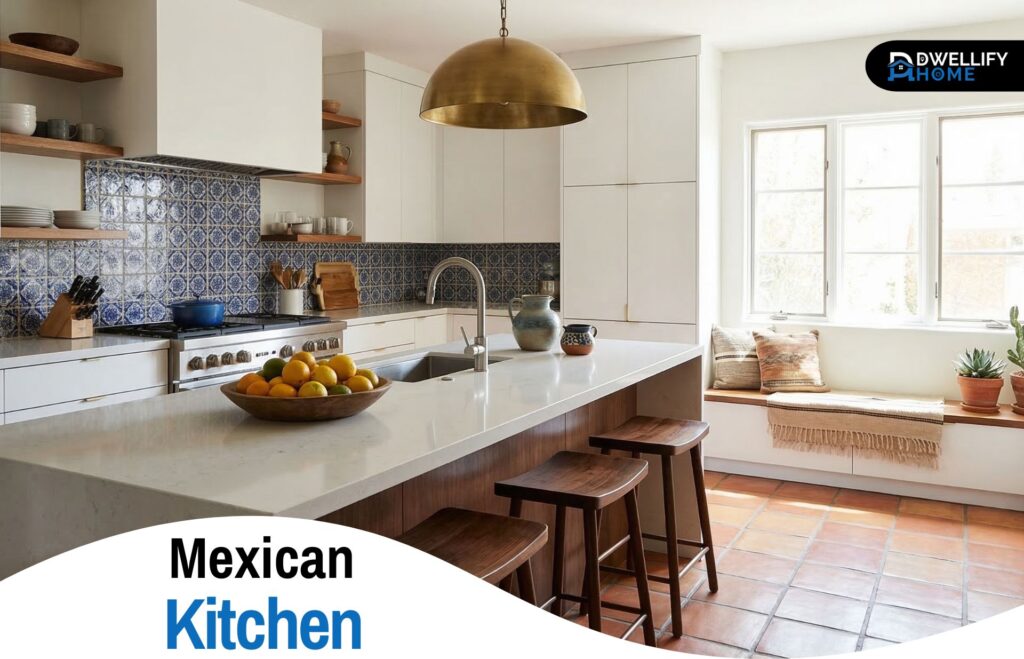
When people think of Saltillo, they often picture those small, busy squares with wide, messy grout lines. In a modern kitchen, that look can feel a bit dated and cluttered. To bring this into 2026, I always suggest moving toward large format tiles. A 12-inch or 16-inch square or even a large hexagon creates fewer visual breaks, which makes a modern open-concept floor plan feel much larger.
The beauty of real Saltillo floor tiles is the natural variation. Because they are sun-dried and kiln-fired in Coahuila, you get colors ranging from pale apricot to deep terracotta. This organic warmth is the perfect visual anchor for high-tech stainless steel appliances or cold marble countertops. It softens the room immediately.
One detail most beginners overlook is the finish. I strongly advise against high-gloss sealers. They look like plastic and hide the soul of the clay. Go with a matte or low-sheen penetrating sealer. It protects the tile from spills while keeping that earthy, velvety look that makes the stone feel authentic.
2. The Focal Backsplash: Curated Talavera Mastery
Talavera tile is iconic, but a little goes a long way in a modern setting. I’ve seen homeowners tile every square inch of their kitchen walls in bright patterns, and while it’s bold, it can quickly become overwhelming. The modern way to handle this is the “less is more” strategy. Use hand-painted Talavera as a framed focal point, perhaps just behind the range or as a single horizontal band.
For the patterns, look for monochromatic or high-contrast geometric designs. A simple blue and white or black and cream pattern feels much more aligned with modern aesthetics than the multi-colored floral styles of the past. It provides that artisan-made touch without clashing with your sleek cabinetry.
Make sure you are getting the real thing. Authentic Talavera is lead-free and has a specific texture where the paint sits slightly raised on the ceramic. It should have a soft, irregular edge that tells you it was made by a human hand, not a machine.
3. Material Contrast: Mixing Parota Wood with High-End Quartz
The most interesting kitchens I have worked on are those that play with contrast. Modern design often leans heavily on engineered surfaces like quartz or porcelain. While these are great for durability, they lack personality. To fix this, I like to introduce Mexican Parota hardwood.
Parota has a distinct, honey-toned grain and a striking dark edge that makes it stand out from typical oak or walnut. I often suggest using a live-edge Parota slab for a kitchen island or a built-in breakfast bar. Pairing this raw, organic wood with a crisp, white antimicrobial quartz countertop creates a look I call the organic-industrial blend.
The wood brings a sense of history and nature into the room, while the quartz keeps the workspace functional and easy to clean. This mix ensures the kitchen doesn’t feel too rustic or too clinical. It sits right in that sweet spot of high-end comfort.
4. Metalwork Elegance: Wrought Iron and Punched Tin Accents
Lighting and hardware are the jewelry of the kitchen. For a modern take on Mexican style, we move away from the heavy, ornate scrolls of the past and look for clean, linear shapes. Hand-forged wrought iron fixtures with a matte black finish look incredible when paired with minimalist cabinetry.
Punched tin is another element that adds a layer of depth most people miss. I love using punched tin pendants over an island. During the day, they look like sculptural metal art. At night, they cast ambient shadow patterns across the room that make the space feel intimate and layered.
This shadow play adds a dimension that standard glass globes can’t touch. It’s a small detail, but it’s one that guests always notice. It gives the room a quiet, sophisticated energy that feels very intentional.
5. The Color Palette: The 80/20 Rule for Vibrant Minimalism
Color is where most people get nervous. They want the vibrancy of Mexico but are afraid of their kitchen looking like a box of crayons. My professional rule of thumb is the 80/20 rule. Keep 80 percent of your space neutral. Use colors like San Miguel White, soft desert sands, or warm greys for your walls and large cabinet runs.
The remaining 20 percent is where you bring in the high-pigment pops. This could be a cobalt blue island, ochre yellow bar stools, or even a splash of Rosa Mexicano inside an open pantry. This approach creates a vibrant minimalism.
By keeping the canvas neutral, the bold colors actually stand out more. They become purposeful accents rather than a chaotic background. It’s a much more liveable way to enjoy a rich color palette in a modern home.
6. Stylized Functionality: Open Shelving and Artisanal Pottery
We are seeing a major shift away from wall-to-wall upper cabinets. People want their kitchens to feel more like living spaces. This is the perfect opportunity to use open shelving made from reclaimed timber. These shelves shouldn’t just be for storage; they should be for a curated display of handcrafted ceramics.
I encourage my clients to use their decor. Instead of buying “display only” pieces, invest in authentic Lebrillos and Cantaritos. These clay bowls and cups have a weight and texture that machine-made dishes lack.
Using a hand-thrown clay pot to hold your wooden spoons or serving dinner in a Oaxacan ceramic bowl adds a level of authenticity that can’t be faked. It tells the story of the “hand of the maker,” which is the heart of the Mexican design philosophy.
7. Architectural Softness: Modernizing the Hacienda Arch
Modern architecture is full of sharp right angles. While that looks clean, it can sometimes feel a bit aggressive. To soften the space, I often look for ways to incorporate the curves of traditional Mexican architecture. You don’t need to rebuild your house to do this.
A simple way is to add a “nichito” or a small, plastered arched niche. This can be built into an existing wall to create a dedicated coffee station or a place to display a single piece of folk art.
The subtle curve of an arch provides a sense of “structural soul.” It mimics the thick, hand-plastered walls of a hacienda without requiring a full renovation. It’s a quiet architectural nod that makes a new build feel like it has some history behind it.
8. Biophilic Integration: Bringing the Courtyard Indoors
The traditional Mexican kitchen was often the heart of a home that opened up to a central courtyard. In a modern setting, we recreate this through biophilic design. This means maximizing your natural light and bringing in sculptural Mexican flora.
I like to use large terracotta pots for plants like Sansevieria or tall Cacti. The earthy orange of the matte terracotta provides a beautiful contrast to the deep greens of the plants. This connection to the outdoors makes the kitchen feel fresh and alive.
If you have a window over the sink, skip the curtains. Let the light hit your wood and tile surfaces. The way sunlight reflects off a hammered copper sink or a hand-painted tile is part of the design itself. It changes throughout the day, making the room feel dynamic.
The Practical Guide: Authenticity, Sourcing, and Durability
When you start sourcing materials, you need to know what you are looking for to ensure you’re getting quality. I always tell people that the most expensive mistake is buying “look-alike” products that don’t have the durability of the real thing.
How to Spot Authentic Artisanship
For tiles, always look for the Denominación de Origen. This is a legal protection that ensures your Talavera was made using traditional methods in a specific region. Genuine pieces are lead-free and use natural pigments.
Sourcing responsibly is also a big part of the 2026 design ethos. Look for fair-trade cooperatives. When you buy directly from Mexican artisans, you aren’t just getting a product; you are supporting a lineage of craft. The quality is noticeably higher, and the items carry a different energy because of the care put into them.
Maintenance for Modern Life
Real materials require specific care. Saltillo and terracotta are porous. You must use a high-quality sealer to prevent staining from oils or acids. However, once sealed correctly, they are incredibly durable and can last for decades.
If you choose a hammered copper sink, remember that copper is a living finish. It will develop a dark patina over time. Many people love this because it shows the history of the home, but if you want it to stay bright and shiny, you will have to polish it regularly. Copper is also naturally antimicrobial, which makes it a very healthy choice for a modern kitchen.
Common Questions About Mexican Kitchens
Is Saltillo tile high maintenance for a kitchen?
While porous, modern penetrating sealers make Saltillo highly resistant to spills. Choosing a matte finish hides dust and wear better than high-gloss options.
How do I use Talavera tile without it looking too busy?
Use the “less is more” approach. Instead of tiling the entire wall, use a monochromatic or geometric Talavera pattern as a single backsplash focal point behind the stove.
Are Mexican copper sinks durable?
Yes, hammered copper is naturally antimicrobial and extremely durable. It will develop a dark patina over time, which adds to the kitchen’s authentic character.
What wood is best for an authentic Mexican look?
Parota wood is the gold standard. It features a striking, honey-toned grain and is a sustainable, fast-growing hardwood native to Mexico.
Conclusion: Creating a Kitchen with Soul
Authentic Mexican style is not about clutter or following a rigid set of rules. It is about celebrating the “hand of the maker” and bringing warmth into the places where we live and eat. My advice is always to start small. You don’t have to change everything at once.
Maybe you start by swapping out your lighting for punched tin pendants or adding a few large Saltillo tiles to your floor. Over time, you can build a sanctuary that feels grounded and full of character. A kitchen should be a place that feels like home the moment you walk in. By blending the best of Mexican tradition with the clean lines of modern design, you create a space that is truly timeless.
Would you like me to look at your current floor plan to see where a Parota island or an arched niche might fit best?
Disclaimer:
This content is for informational purposes. Always consult with a licensed contractor or design professional before beginning a major kitchen renovation.

I’m Bilal, the founder of Dwellify Home. With 6 years of practical experience in home remodeling, interior design, and décor consulting, I help people transform their spaces with simple, effective, and affordable ideas. I specialize in offering real-world tips, step-by-step guides, and product recommendations that make home improvement easier and more enjoyable. My mission is to empower homeowners and renters to create functional, beautiful spaces—one thoughtful update at a time.