
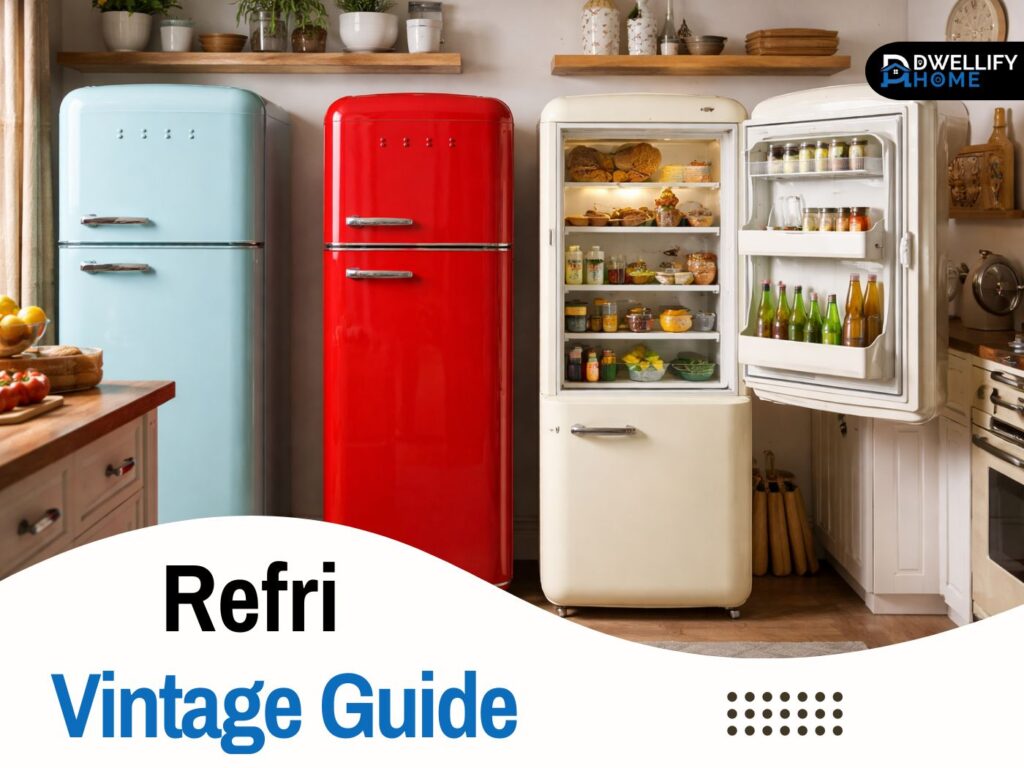
A refri vintage refrigerator can be the heart of a kitchen. I’m talking about that classic curved door, the satisfying handle, and the color that makes the whole room feel warmer and more intentional.
Here’s the thing though. A retro fridge shouldn’t be a “pretty problem” you babysit every day. Over the last decade, I’ve helped homeowners choose, place, and live with vintage-style fridges that look charming and still cool food reliably. This guide will walk you through the practical stuff that matters: size, fit, layout, features, performance, energy use, and how to buy safely.
If you want a fridge that’s fun to look at and easy to live with, you’re in the right place.
Snippet-ready definition:
Refri vintage refers to refrigerators with a classic mid-century look, like curved doors and bold colors, paired with modern cooling. It includes both restored true vintage units and new retro-style models.
Mission Statement:
At Dwellify Home, our mission is to help you choose home pieces that feel personal and practical, blending timeless style with real everyday comfort, so your space looks good and works even better.
What “Refri Vintage” Means Today (True Vintage vs Retro-Style New)
When people say “vintage refrigerator,” they can mean two totally different things.
True vintage usually means an older unit from decades ago, sometimes restored, sometimes not. The look is authentic, and the materials can feel solid in a way modern appliances don’t. But the trade-offs are real: insulation, seals, and cooling systems may not match today’s expectations, and parts can be tricky.
Retro-style new means a modern refrigerator designed to look vintage. This is where most homeowners land, because you get the classic vibe with modern cooling, easier service, and better day-to-day usability. A lot of the best retro refrigerator models today are basically modern fridges wearing a 1950s jacket, and that’s a good thing.
My honest take: if this is your main household fridge, a retro-style new model is usually the smarter choice. True vintage can be amazing, but it’s more like owning a classic car. Fun, special, and sometimes demanding.
Quick Guide Comparison Table
| What you want | Best match | Why it works | Watch-outs |
| Main family fridge | Retro refrigerator full size | Better capacity, more stable cooling | Measure depth and door swing carefully |
| Small kitchen or second fridge | Apartment-size or compact retro | Saves space, keeps the look | Freezer space can be limited |
| Bold statement piece | Unique retro refrigerator full size | Turns the fridge into a design anchor | Fingerprints and finish care matter |
| Ice for guests and daily use | Retro refrigerator with ice maker | Convenience, fewer ice trays | Needs water line or compatible kit |
| Timeless, easy-to-style look | White retro refrigerator | Works with most kitchens | White shows scuffs if neglected |
| Iconic designer vibe | Smeg retro refrigerator | Signature styling and finishes | Higher cost, confirm interior layout suits you |
| Authentic old-school charm | True vintage (restored) | Real history and character | Maintenance, parts, and efficiency can be tougher |
Step-by-step buying checklist (clean and practical)
- Decide the role
Main fridge, second fridge, or beverage-only. This instantly narrows size and layout. - Measure the space the right way
Width, height, depth, plus clearance for door swing and handles. Also confirm ventilation needs. - Choose layout based on your habits
Top freezer for simplicity, bottom freezer for daily comfort, French door for wide access. - Pick the “must-have” features only
Ice maker, frost-free, adjustable shelves, quiet operation. Skip fancy extras you won’t use. - Check real-life usability
Can your tall bottles fit? Can crispers open fully? Do shelves adjust easily? - Confirm service and warranty support
A beautiful fridge is only “easy” if parts and service are available where you live. - Buy from a safe source
Clear return policy, delivery protection, and written warranty details. - Delivery-day inspection
Look for dents, door alignment, seal contact, and stable leveling before the team leaves.
Choose the Right Size First (Retro Refrigerator Full Size vs Compact)
Size is the decision that affects everything else. I’ve seen people fall in love with a color and then realize the capacity doesn’t fit their weekly routine. That’s when regret starts.
A retro refrigerator full size is the right call if you cook often, host family, or keep a stocked freezer. Full-size models also tend to have better temperature stability because there’s more mass inside and the compressor isn’t fighting constant warm air swings from frequent door openings.
Compact and apartment-size retro fridges shine in small kitchens, rentals, offices, or as a second fridge for drinks and overflow. They’re also great if you want the retro look without committing a big chunk of space.
A quick “real life” rule I use with clients:
- If you do one big grocery run a week, go bigger.
- If you shop frequently and cook lighter meals, a smaller footprint can feel just right.
Measure Like a Pro (Fit, Door Swing, Depth, Ventilation)
This is where the pros quietly win. Measuring is not glamorous, but it saves you from the classic mistake: a fridge that technically fits the opening, but feels awkward every day.
Start with the basics: width, height, and depth of the space. Then add what most people forget, clearance. Retro handles often stick out more than modern ones, and that changes how you move around the kitchen.
Door swing matters too. If a fridge door can’t open wide enough, drawers won’t slide out smoothly and shelves become annoying. I’ve watched homeowners realize this after delivery, and it’s painful.
Depth is another big one. Counter-depth models look built-in and tidy, but they often give you less storage than you expect. Standard depth gives you more space, but can protrude into a walkway.
Don’t ignore ventilation. Many retro-style units need breathing room around the sides or back. If you cram it tight, you can raise running temperatures and shorten the life of the compressor. A little space now can mean fewer headaches later.
Pick the Best Layout for Your Lifestyle
Retro fridges now come in more layouts than the old-school top freezer look, and that’s great because your routine should decide this, not nostalgia.
Top freezer is the classic vibe and usually the best value. It’s simple, dependable, and a great match for small-to-medium households.
Bottom freezer works well if you’re in and out of the fresh-food section all day. You’re not bending over constantly, and it feels more natural for modern cooking habits.
French door styles are fantastic for wide access, big platters, and family life. They usually feel the most “modern” in function, even if the exterior styling leans retro.
No-freezer and beverage-style options are perfect as a second fridge. They’re popular in entertainment areas, home offices, and design-forward kitchens where the main fridge is elsewhere.
My advice: choose the layout that makes daily use easier, then pick the retro look within that layout. That keeps the charm without sacrificing comfort.
The Vintage Look That Matters (Colors, Handles, Finishes)
A fridge can be a design anchor, so it’s worth picking a look you won’t get tired of.
A white retro refrigerator is the safest long-term choice. It reads clean, bright, and classic. It also plays nicely with almost any countertop, backsplash, or cabinet color. If you love the vintage vibe but don’t want the room to feel themed, white is your friend.
Bold colors, like red, mint, or pastel blue, can look incredible when the rest of the kitchen supports them. The best part is how they make the space feel joyful. The risk is when everything else is loud too, then the fridge starts to feel like a costume.
Handles and trims matter more than most people expect. A chunky handle, a chrome accent, and a curved door profile are the details that sell the retro story. If those elements feel cheap in person, the whole fridge can look “off,” even if the color is perfect.
A simple way to decide:
- If your kitchen has calm finishes, go bolder on the fridge.
- If your kitchen already has strong patterns or dramatic stone, go neutral on the fridge and let the materials shine.
Storage and Everyday Usability (Shelves, Drawers, and Smart Interior Design)
This is the part people don’t think about until week two. A fridge can look amazing and still annoy you every day if the interior isn’t practical.
What I look for first is adjustable shelving. Being able to fit tall bottles, big salad bowls, or meal prep containers without a puzzle is huge. Crispers that actually hold produce without crushing it, and door bins that feel sturdy, make a big difference over time.
Now, about the vintage fridge with rotating shelves. That feature is a nostalgic favorite because it helped you reach items in the back without unloading half the fridge. You don’t see it often in modern units, but you can get a similar experience by choosing a fridge with:
- Wide shelves that slide forward
- Clear drawers with smooth glides
- Smart organization bins so small items don’t disappear
If you keep sauces, jars, or small containers, plan a zone for them. Otherwise you’ll end up with “lost food” at the back, and that hurts both your budget and your mood.
Must-Have Features People Shop For in Retro Models
Retro style doesn’t mean you have to give up convenience. You just want the right conveniences, not a wall of gimmicks.
A retro refrigerator with ice maker can be wonderful if you entertain or use a lot of ice daily. The key is understanding the setup. Some models have built-in ice makers, others support add-on kits, and some skip ice entirely. If ice is important to you, confirm it clearly before buying, and also check how much freezer space remains once the ice system is installed.
Frost-free is another big comfort feature. Manual defrost can feel charming in theory and annoying in practice, especially in humid climates or busy households. If this is your main fridge, frost-free usually keeps life simpler.
Also pay attention to noise. Retro fridges often sit in more visible, open kitchen layouts. A quiet compressor and stable cooling are not luxury details, they’re quality-of-life details.
Performance and Reliability Checklist (So It’s Not Just Cute)
This is where my “retro appliance specialist” hat really comes on. You want consistent cooling, durable parts, and service support. That’s what turns a stylish purchase into a smart one.
Temperature stability matters because it protects your food and reduces spoilage. In a good fridge, you shouldn’t feel big swings from shelf to shelf. Poor airflow or thin door seals lead to warm spots, and that’s when milk turns faster and produce gets weird.
Here’s a quick reliability checklist I use with clients:
- Door seals feel snug and even all around
- Hinges feel solid, not wobbly
- Shelves sit firmly and don’t flex under normal weight
- Drawers glide smoothly without sticking
- Controls are straightforward and responsive
Warranty and service network are the final piece. If a fridge looks amazing but can’t be serviced locally, you’re taking a risk. It’s not about fear, it’s about making sure you can actually live with the choice long-term.
Energy Use and Running Costs (Retro Look, Modern Efficiency)
Let’s keep this simple. Bigger fridges typically use more energy than smaller ones. Hot kitchens and frequent door openings also raise energy use. That’s normal.
What you can do is compare models in a way that makes sense:
- Look at the annual energy estimate on the label
- Compare similar sizes and layouts, not wildly different categories
- Read a few real owner reviews about temperature consistency and compressor behavior
And here are a few practical ways to reduce running cost that I’ve seen work in real homes:
- Don’t push the fridge tight against a wall if it needs airflow
- Keep the door seals clean so they close tightly
- Let hot food cool before placing it inside
- Avoid stuffing the fridge so full that air can’t circulate
Most households don’t need to obsess over tiny differences. Choose a size that fits your life, then pick the most efficient option within that size class.
Best Retro Refrigerator Options by Buyer Type
Choosing “the best” depends on your kitchen and your habits. The good news is you can narrow it down quickly when you’re honest about your priorities.
Best overall retro-inspired pick tends to be a model with solid cooling, adjustable storage, and a finish that holds up. These are often the “balanced” options, not the flashiest.
Best budget retro look is usually a simpler layout, often top freezer, with fewer extras. You still get style, just fewer premium touches.
Best unique retro refrigerator full size is for the homeowner who wants the fridge to be the room’s centerpiece. These models often prioritize design details, special colors, and statement handles.
Best for ice and entertaining is a model with dependable ice support and a freezer that doesn’t feel cramped once ice hardware is installed.
Best for small kitchens is compact or apartment-size with smart shelf flexibility. In tight spaces, interior design matters more than raw capacity.
If you’re stuck between two options, choose the one with better service support and better interior layout. That’s what you’ll feel every single day.
Brand Spotlight: Smeg Retro Refrigerator (And Comparable Alternatives)
Let’s talk about the elephant in the retro room: the Smeg retro refrigerator. Smeg is often the design benchmark. The finishes, colors, and iconic silhouette are a big reason people fall in love with retro style in the first place.
What you’re paying for is the design identity, the fit and finish, and that recognizable look that feels like it belongs in a curated kitchen. In many homes, it becomes a design feature as much as an appliance.
That said, Smeg isn’t the only path. There are other retro-style brands that offer great value, solid performance, and simpler pricing. If you care more about function and budget than the exact prestige look, you’ll find strong alternatives.
My advice is to compare:
- Interior usability (shelves, bins, freezer practicality)
- Noise level in real homes
- Warranty terms and service access
- Finish durability, especially on bold colors
Pick the brand that fits your priorities, not the one that simply looks best in a photo.
Where to Buy a Vintage Refrigerator for Sale (Safely)
Buying from a trusted retailer is usually the easiest route for retro-style new models. You get delivery options, return policies, and warranty support that actually mean something.
If you’re looking at a vintage refrigerator for sale through a private listing, a marketplace, or a small refurbisher, slow down and ask the right questions. Deals can be great, but uncertainty can be expensive.
Before you pay, confirm:
- Whether it’s new, refurbished, or truly vintage
- Warranty details in writing
- Return window or what happens if it arrives damaged
- Who handles repairs if something fails
On delivery day, check the exterior for dents, the door alignment, and whether the fridge stands level. A quick inspection takes five minutes and can save weeks of frustration.
Buying a True Vintage Refrigerator (Restoration Reality Check)
True vintage can be gorgeous. It can also be a project.
If you’re seriously considering a restored vintage unit, ask specific questions. Has the wiring been updated? Have the seals been replaced? Is the cooling system stable? Are parts available? If a seller can’t answer these comfortably, treat that as a red flag, not a mystery.
Here’s my honest, experience-based view: restoration is worth it when you love the story, the look, and the process. It’s not worth it when you just want a reliable daily fridge with a vintage vibe.
If you do buy true vintage, plan for a little extra patience. Even well-restored units can need occasional attention, and that’s part of the deal.
My Practical “Buyer-Saver” Tips (Human, Experience-Style)
When I’m standing in a kitchen with a homeowner, this is the method I use because it keeps the decision clean.
1) Fit and clearances first. Measure the space, plan door swing, and confirm ventilation needs. This avoids the most painful surprises.
2) Function next. Choose the layout and features you’ll actually use. Don’t sacrifice freezer convenience if you rely on frozen foods.
3) Finish last. Pick the color and hardware that fits your kitchen. If you’re unsure, go white or a soft neutral. If you’re confident, choose a bold tone and build the room around it.
And here’s a small tip that feels silly until it saves you: bring a tape measure and check your most common items, like a tall milk bottle, a big pot, or a wide meal-prep container. If those don’t fit comfortably, that fridge will quietly annoy you.
Conclusion (use the keyword naturally)
A great refri vintage refrigerator should feel like a joy, not a compromise. The sweet spot is classic style on the outside, dependable performance on the inside, and an interior layout that fits your everyday habits.
So here’s your practical finish line: measure carefully, choose the right size and layout, confirm the features that matter, and buy from a source that supports you after delivery. Do that, and you’ll end up with a fridge that looks timeless and works beautifully in a modern home.
If you want, share your kitchen size, preferred color, and whether ice is a must-have, and I’ll help you narrow down the best options for your setup.
Disclaimer:
This guide is for general informational purposes based on hands-on experience with retro and vintage-style refrigerators. Always confirm measurements, installation requirements, and warranty terms with the seller or manufacturer before purchase.

I’m Bilal, the founder of Dwellify Home. With 6 years of practical experience in home remodeling, interior design, and décor consulting, I help people transform their spaces with simple, effective, and affordable ideas. I specialize in offering real-world tips, step-by-step guides, and product recommendations that make home improvement easier and more enjoyable. My mission is to empower homeowners and renters to create functional, beautiful spaces—one thoughtful update at a time.