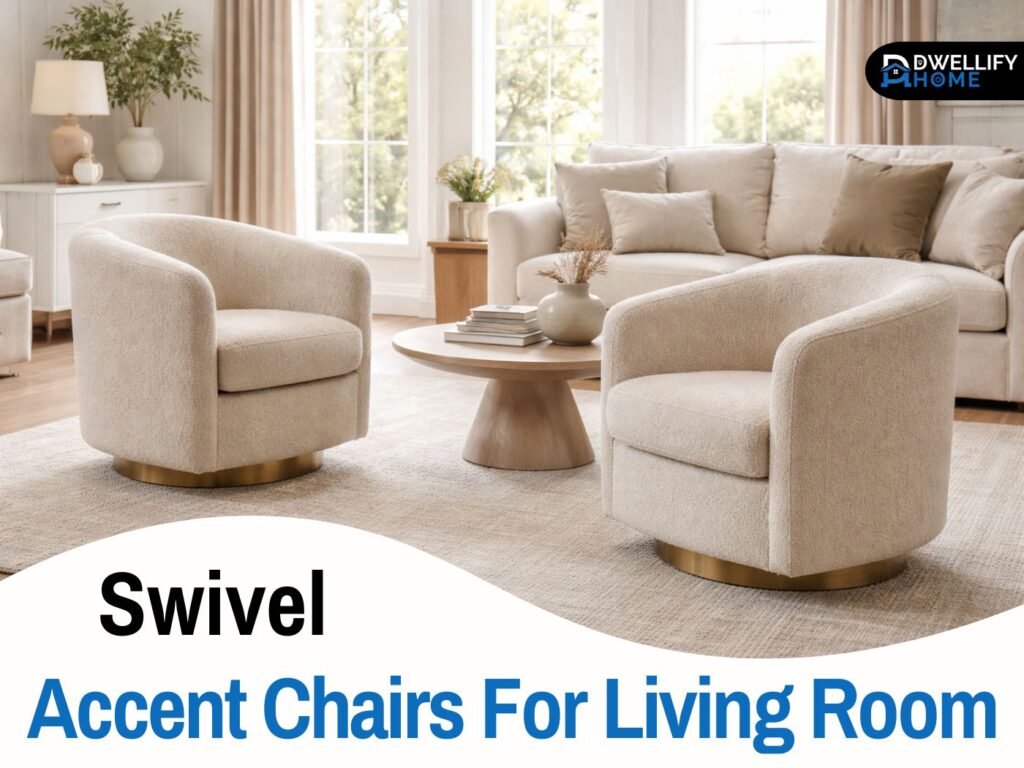
Swivel accent chairs can quietly fix a lot of common living room problems. I’ve used them in real homes where the sofa faced the TV, but people also wanted to chat. I’ve used them in small apartments where every inch mattered. And I’ve used them in big open rooms that felt a little too “floaty” until the seating finally made sense.
Here’s the thing: a swivel chair isn’t just a cute extra seat. It changes how the room moves, how people sit, and how the conversation flows. In this guide, I’ll walk you through what actually matters, what to measure, what to avoid, and how to set them up so they look intentional and feel great.
Snippet-ready definition:
Swivel accent chairs for living room seating are single chairs that rotate 360 degrees, letting you turn from conversation to TV or reading without moving furniture. They add flexible seating and improve traffic flow.
Mission Statement:
At Dwellify Home, our mission is to help you create living spaces that feel comfortable, functional, and easy to live in, with practical design advice you can actually use in everyday homes.
Why Swivel Accent Chairs Make Sense in a Living Room
A normal accent chair points one way. A swivel chair adapts. That’s the magic. In real life, your living room rarely has one single purpose. One minute you’re watching a show, next minute you’re talking to guests, and later someone’s reading near a window.
The best part is that swivel chairs help you do all that without dragging furniture around. You can angle toward the sofa for conversation, then turn toward the TV, then turn toward the fireplace or window. In open concept homes, that flexibility makes the seating feel connected instead of scattered.
They’re also great for awkward layouts. If your doorway, hallway, or dining area cuts into the living room, a swivel chair helps you create a “soft corner” that still feels accessible. You get structure without blocking traffic.
Quick Guide Comparison Table
| Your room or goal | Best chair direction | What to look for | What to avoid |
| Small living room or apartment | Compact swivel barrel chair | Slim arms, smaller footprint, easy swivel clearance | Oversized wide frames that block walkways |
| Need more back support | High-back swivel chair | Supportive back, medium-firm seat, stable base | Tall and bulky chair that overwhelms the room |
| Family room with kids or pets | Performance fabric swivel chair | Stain-resistant fabric, easy spot-cleaning, tight weave | Delicate textures that snag or trap hair |
| Want a timeless, wipeable look | Leather swivel accent chair | Quality leather or durable faux, comfortable seat depth | Very glossy finishes that show scratches easily |
| Building a conversation zone | Swivel accent chairs set of 2 | Matching scale, balanced spacing, side-table access | Chairs too close to tables so they can’t swivel |
| Shopping on a budget | Swivel accent chair under $200 | Stable base, decent cushion support, good return policy | Wobbly base, thin seat padding, weak stitching |
Step-by-step buying checklist (fast, practical)
- Measure your chair zone (width, depth, and swivel clearance).
- Choose seat depth based on how you sit (upright vs lounging).
- Decide on support level (standard back or high back).
- Pick upholstery for real life (leather, performance fabric, textured fabric).
- Check the swivel feel (smooth rotation, no wobble, no squeaks).
- Plan placement (especially for a set of 2 with side tables and rug fit).
Measure First (So It Fits and Still Swivels Comfortably)
If there’s one thing I wish every homeowner did before buying chairs, it’s measuring properly. Swivel chairs need space not just to sit, but to rotate without bumping into anything. When people skip this step, the chair ends up shoved into a corner where the swivel becomes useless.
A quick tip I use on-site: outline the chair footprint with painter’s tape. Then add extra tape around it for swivel clearance. It sounds simple, but it prevents most layout regrets.
The 3 measurements that matter most
First is overall width. This matters a lot if you’re considering a swivel accent chair set of 2. Two chairs that look fine online can feel bulky once they’re side by side in a real room.
Second is seat depth. Deep seats feel loungey, but shorter people may feel like they’re sliding forward. Shallow seats feel upright and neat, but they might not be cozy for long movie nights.
Third is swivel clearance. You want a little breathing space around the chair so it can rotate without hitting a side table, wall, or sofa arm. That clearance is what makes the chair feel smooth and effortless.
Swivel accent chairs for small spaces, what actually helps
In compact rooms, go for chairs with a smaller footprint and lighter visuals. Slim arms, a tighter back, and a simpler base usually work better than oversized silhouettes.
Also, don’t automatically avoid high backs in small spaces. A high back can work if the chair is narrow and the room has enough vertical breathing room. But if the chair is both tall and wide, it can dominate the space quickly.
Choosing the Right Style for Your Space
Most living rooms do best with one of three swivel styles.
Barrel chairs are the cozy, curved option. They tend to feel tucked-in and inviting, which is great for conversation areas.
Club chairs feel more structured, often with a deeper seat and more presence. They work well if you want your swivel chair to feel like a real “main seat” instead of a side seat.
Modern curved chairs are the popular clean-line option. They can look very polished, but comfort depends heavily on the cushioning and seat depth.
Now let’s talk base style, because it matters more than people expect. Some swivel chairs have a visible metal base. Some have a hidden base or a skirted look. If you want the chair to blend into a softer living room style, a hidden base often looks more finished. If your room leans modern, a visible base can look intentional.
One common mistake I see is mixing a very sleek modern swivel chair with a traditional rolled-arm sofa, then wondering why the room feels off. Instead, match the chair’s overall vibe to the sofa’s vibe, even if the colors are different.
Comfort Checklist (What Actually Makes a Swivel Chair Feel Good)
Comfort isn’t just about softness. I’ve sat in chairs that felt plush for 30 seconds, then uncomfortable after 10 minutes because the seat collapsed or the back offered no support.
Start with cushion feel. Soft cushions can be cozy, but they may show wear faster and offer less support. Medium support is often the safest choice for everyday living rooms. Firm cushions can feel structured and supportive, but they’re not everyone’s favorite for lounging.
Seat height matters too. If the chair sits too low, it can feel awkward to get out of, especially for older adults. If it sits too high, your feet might not rest comfortably on the floor.
Arms are personal. Some people love wide arms for lounging. Others prefer slimmer arms to keep the chair from feeling bulky. If the chair is mainly for occasional seating, slimmer arms usually look cleaner.
High back swivel chairs for living room, who should buy them
High back swivel chairs for living room setups are a strong choice if you want real support for reading, relaxing, or long conversations. They help with upper back comfort, especially in rooms where people spend hours.
But here’s the honest tradeoff: a high back can feel visually heavy. If your living room is small, choose a high back that’s narrow and slightly tapered. That way you get the support without the “giant chair” look.
The Swivel Mechanism (Small Detail, Big Difference)
The swivel is the whole point, so it needs to feel right. In showrooms, I always tell clients to rotate slowly and then quickly. A good swivel feels steady at both speeds, without wobbling or squeaking.
Pay attention to what happens when you stop. Some chairs have a return swivel or auto-return feature, meaning they gently rotate back to their starting position. This is great if you like a neat, tidy look. It’s also helpful in staged spaces where you want the room to look “reset” easily.
On top of that, some people find auto-return annoying because they want the chair to stay angled where they left it. If you like to swivel toward the TV and leave it there, you may prefer a chair without that feature.
Also, look at the base design. A very visible base can sometimes make the chair look more casual or less refined. A hidden base often gives a more polished look, especially in traditional or cozy rooms.
Upholstery and Materials (Pick Based on Lifestyle, Not Just Looks)
Fabric choice is where real life shows up. I’ve had clients fall in love with a beautiful texture, then regret it when it turned into a magnet for pet hair or stained easily.
A good rule is to pick your material based on how you live, not how the chair looks in perfect lighting.
Leather swivel accent chairs for living room
Leather swivel accent chairs for living room designs can be a smart choice if you want something wipeable and classic. They’re great for everyday use, and they age nicely when cared for.
But leather has downsides too. It can feel cold in winter and warm in summer. It can scratch, especially with pets. And some cheaper leathers or leather-like materials can peel over time. If you go leather, keep it simple and choose a finish that matches your lifestyle.
Fabric options that are popular right now
Boucle and textured fabrics look cozy and high-end, but they can be harder to clean if you spill something. Velvet looks rich and soft, but it can show marks depending on the pile direction. Slipcovered styles can be great if you want easier cleaning and a more relaxed vibe.
Performance fabric is the quiet hero in many family rooms. It’s often easier to spot clean, and it handles daily life better, especially with kids and pets.
Swivel Accent Chairs for Small Spaces (Smart Choices That Don’t Crowd the Room)
Swivel accent chairs for small spaces work best when they don’t visually block the room. That usually means choosing a chair that’s slightly smaller than what you think you need.
Look for these small-space friendly traits:
- A compact width with a comfortable seat
- Slimmer arms or armless designs
- A chair that sits slightly higher off the floor, if the design allows it
- A shape that feels curved and soft rather than boxy
Placement matters just as much as chair size. I often place one swivel chair near a corner, angled slightly inward toward the sofa. That creates a natural conversation triangle while keeping walkways open.
Also, avoid squeezing a swivel chair tightly between a wall and a side table. It can turn into a chair that never swivels, which defeats the purpose.
Living Room Layout Ideas (Including Set of 2)
This is where swivel chairs really shine. They’re often the missing link between a sofa and the rest of the room.
If you want a balanced, designer-looking setup, two chairs can do it beautifully. But the spacing has to be right, and the room needs to breathe.
Swivel accent chairs for living room set of 2: best placements
The most classic placement is two swivel accent chairs for living room set of 2 styling, placed across from the sofa with a coffee table in the middle. It creates a clean conversation zone that feels welcoming.
Another option is placing the two chairs at an angle, closer to the sofa, especially in smaller rooms. Angling makes the layout feel softer and helps with flow.
You can also flank a fireplace or media wall with chairs, but only if there’s enough swivel clearance. If the chairs constantly bump into tables or the wall, people won’t use them comfortably.
A simple side table rule helps: keep a table within easy reach, but not so close it blocks rotation. If your chairs swivel and your table is too tight, the chair will hit the table edge every time. That gets old fast.
Rugs matter too. If the chair sits half on and half off a rug, the swivel can feel uneven. Ideally, the whole base sits on one surface consistently.
Best Swivel Accent Chairs for Living Room (How to Shop Like a Pro)
You don’t need a fancy method to choose well. You just need a simple process and a little honesty about how your living room is used.
Here’s the decision framework I use with clients:
- Start with size and clearance
- Check comfort and seat depth
- Test swivel quality and stability
- Pick upholstery that fits your lifestyle
- Choose a style that complements your sofa
If you’re choosing the best swivel accent chairs for living room comfort, focus on what your body likes. Do you curl up, sit upright, lean back, or perch? Your habits matter more than trend photos.
Also think about the chair’s job:
- Reading chair: prioritize back support and a side table
- Guest seating: prioritize comfort and easy entry, not ultra-deep seats
- TV plus conversation: prioritize swivel smoothness and placement
- Statement chair: prioritize shape and texture, but don’t ignore comfort
Budget Guide (Including Under $200)
I’m going to be realistic here. There are decent options at lower prices, but you need to know what you’re trading off.
Swivel accent chair under $200: what to expect
A swivel accent chair under $200 can work for light use or small spaces, but you’ll often see compromises. The chair may be smaller, the cushion may be thinner, and the base may be more visible. Some also feel lighter, which can reduce that solid, grounded feel.
At this price, I’d prioritize three things:
- A stable base that doesn’t wobble
- A seat that feels supportive, not hollow
- A good return policy, in case it doesn’t feel right at home
When it’s worth paying more
Paying more often gets you a smoother swivel mechanism, a sturdier frame, and better cushion materials that hold up over time. You also tend to get nicer upholstery options like performance fabric, better leather, or more durable textures.
If the chair is going to be used daily, it’s usually worth stepping up a little in quality.
Brand and Store Comparison Notes (Without Being Salesy)
Different stores describe chairs in different ways, so it helps to compare based on facts, not labels.
When comparing options across retailers, focus on:
- Dimensions and seat depth
- Cushion type and comfort level
- Upholstery content and cleaning instructions
- Base type and swivel style
- Delivery and returns
You might also come across searches like swivel accent chair Ashley Furniture, and that’s fine. The same rules apply there as anywhere else. Check the measurements, verify the material, read the care instructions, and look for honest comfort feedback in reviews.
And one pro tip: if assembly is required, look for clues about stability. A poorly assembled swivel base can wobble, even if the chair itself is nice.
Care, Cleaning and Long-Term Maintenance
A chair can look great on day one and rough by month six if it’s not cared for properly. The good news is that basic routines go a long way.
For fabric chairs, keep a small plan:
- Blot spills quickly, don’t rub hard
- Use a gentle cleaner appropriate for the fabric type
- Vacuum regularly to keep dust from settling into texture
If you choose performance fabric, you’ll usually have an easier time with spot cleaning. For textured fabrics like boucle, be extra careful with spills and consider a fabric protector if it fits your comfort level.
For leather, keep it simple:
- Wipe with a soft cloth
- Avoid harsh cleaners
- Condition occasionally if recommended by the manufacturer
Also, once in a while, check the swivel base. If the chair starts to squeak or feel loose, tightening hardware early can prevent bigger issues later.
Quick FAQ
1) What are the disadvantages of a swivel chair?
They usually need extra clearance to rotate, some bases can show wear or squeak over time, and certain styles look bulky if the room is tight. A low-quality swivel can also feel wobbly.
2) Are swivel chairs good for a living room?
Yes, especially in rooms used for both conversation and TV. They make seating feel more flexible because you can turn without dragging furniture around.
3) Should accent chairs be darker or lighter than sofas?
Either works. A lighter chair can brighten a room and feel airy, while a darker chair can ground the space and hide wear. The safest design move is matching the chair to your room’s overall contrast level.
4) Are swivel accent chairs in style?
Yes. Curved silhouettes, boucle textures, and cleaner modern bases have kept swivel chairs popular because they look good and solve real layout needs.
5) How much space do I need around a swivel accent chair?
Leave enough room so the chair can rotate without hitting walls or tables. A simple rule is to ensure comfortable elbow and knee clearance all around, and double-check with tape on the floor before buying.
Conclusion
A swivel chair can make your living room feel more welcoming and more usable, not just more decorated. It supports real life. People can turn toward each other, turn toward the TV, and shift with the moment without rearranging the whole room.
If you remember one thing, let it be this: measure for fit and swivel clearance first, then choose comfort and fabric based on how you actually live. If you do that, you’ll end up with chairs that don’t just look good in photos, they’ll feel right every day.
And yes, the main keyword fits naturally here too: swivel accent chairs for living room setups work best when they’re planned like part of the layout, not treated as an afterthought.
Disclaimer:
This guide is for general design and furniture-planning advice. Always confirm measurements in your own room, follow the manufacturer’s care and assembly instructions, and check return policies. Prices, features, and availability can change by retailer and region.

I’m Bilal, the founder of Dwellify Home. With 6 years of practical experience in home remodeling, interior design, and décor consulting, I help people transform their spaces with simple, effective, and affordable ideas. I specialize in offering real-world tips, step-by-step guides, and product recommendations that make home improvement easier and more enjoyable. My mission is to empower homeowners and renters to create functional, beautiful spaces—one thoughtful update at a time.