The 30 day declutter challenge works because it asks for 15 minutes a day, not a free weekend: one drawer, one shelf, or one category at a time.
Decluttering a whole home in a weekend sounds good and almost never happens. What works for most people is smaller: one drawer, one shelf, or one category a day, for about fifteen minutes. When you declutter your home this way, the job stops feeling like a project and starts feeling like a habit. This challenge is built that way, with thirty short tasks grouped by week, from the easiest areas to the harder ones. Start on any date. If you miss a day, continue with the next task and do not try to catch up.
What Is the 30-Day Declutter Challenge?
The 30-day declutter challenge is a challenge you set for yourself to declutter your life in 30 days. For each day, you get one suggestion for an area to tackle or a group of things to let go of. The tasks are small on purpose. A junk drawer, a shelf, a bag, a pile of papers. Each one takes 10 to 20 minutes, and each finished task makes the next one easier.
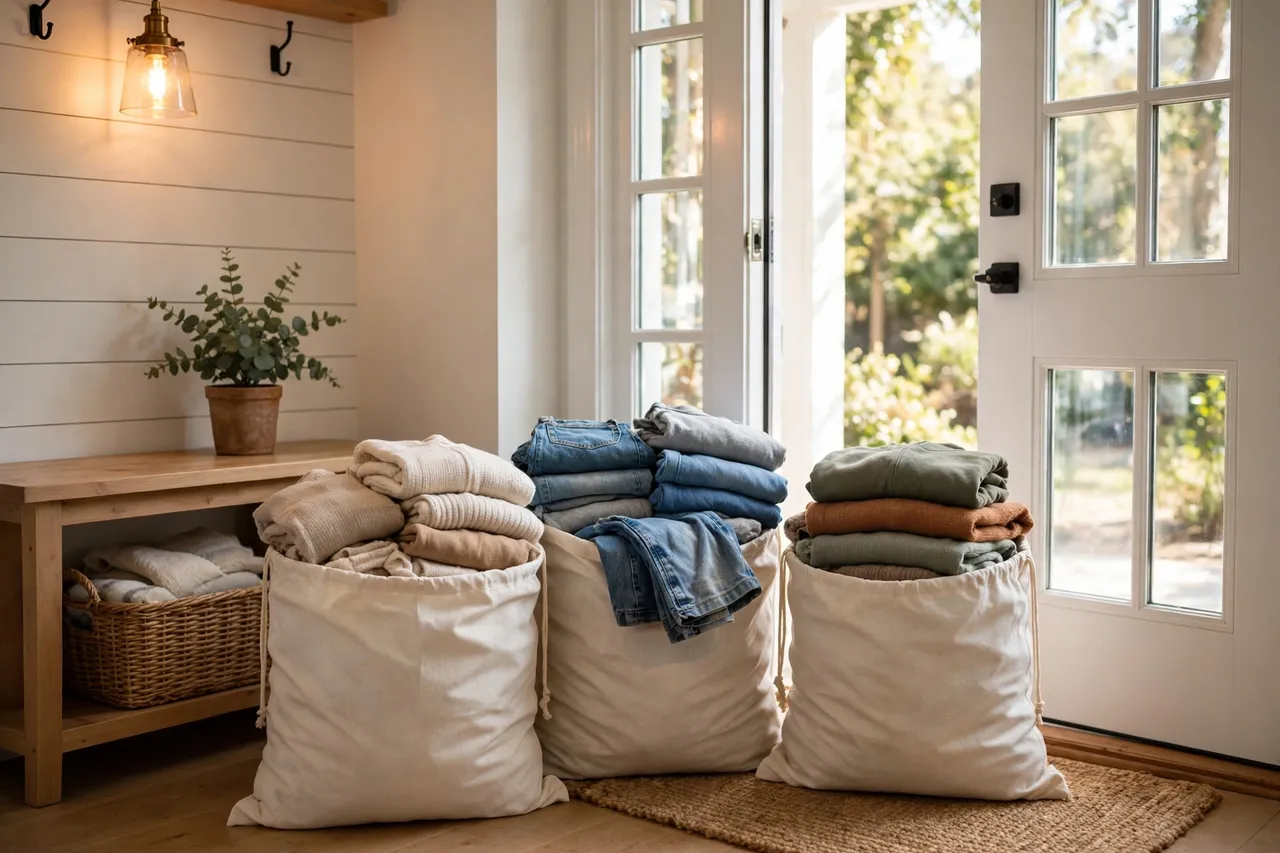
The challenge works because it breaks a daunting job into daily wins. A whole house feels impossible. One drawer feels doable. Thirty doable days add up to a home that looks and feels completely different. Keep three bags ready at all times: one for donations, one for recycling, and one for the bin. When a bag is full, it leaves the house the same day.
The only rule that matters is this: one task, finished completely, every day. Finished means the bag is out of the house, not sitting by the door.
The Three Ground Rules Before Day 1
Three small rules keep this challenge light and stop it from turning into a stressful project. First, set a timer. Work for the time on the timer, and when it rings you are done, even if the drawer is not perfect. Second, do not buy organizers first. Sort and remove before you buy a single bin, or you will end up organizing clutter instead of removing it. Third, do not try to catch up. A missed day is just a missed day. Pick up the next task and keep going.
Set up four boxes before day one and label them: keep, donate, recycle or trash, and belongs elsewhere. The belongs-elsewhere box is the one people forget, and it is the one that saves the most time. Items that live in another room go in the box, and you carry the whole box on one trip at the end of the session instead of wandering the house with one item at a time.
Tell one person you are doing it. A friend, a partner, a family member. A challenge shared is a challenge finished, and a daily text that says “day 12 done” is a small reward that keeps the habit alive.
Week 1: The Easy Wins (Days 1 to 7)
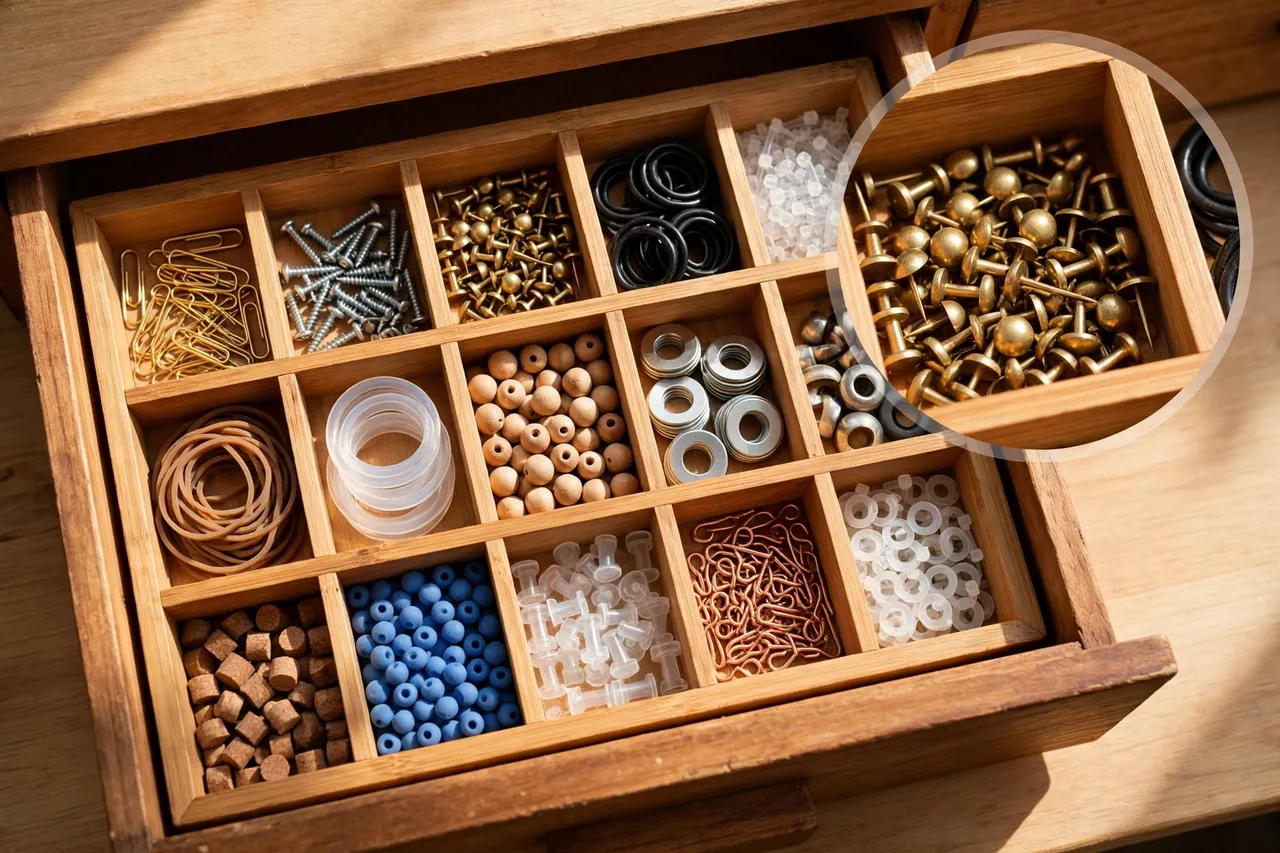
Week one is all easy decisions. Nothing sentimental, nothing hard, just the obvious stuff. Day 1 is the junk drawer: empty it fully, wipe it, and return only what belongs there. Day 2 is the entryway: keep only this season’s items by the door. Day 3 is handbags and tote bags: empty every bag completely. Day 4 is the bathroom cabinet: toss empties and duplicates. Day 5 is makeup: check smell and texture and toss what is off. Day 6 is the medicine cabinet: check expiry dates. Day 7 is the nightstand: leave three things on top.
By the end of week one you have seven finished spaces and a lighter home. That is the point of the easy week. It builds the habit before anything emotional shows up. If you want a gentler on-ramp first, our guide on how to start decluttering when overwhelmed shows how one finished drawer creates momentum for everything after it.
Week 2: Kitchen and Bathroom (Days 8 to 14)
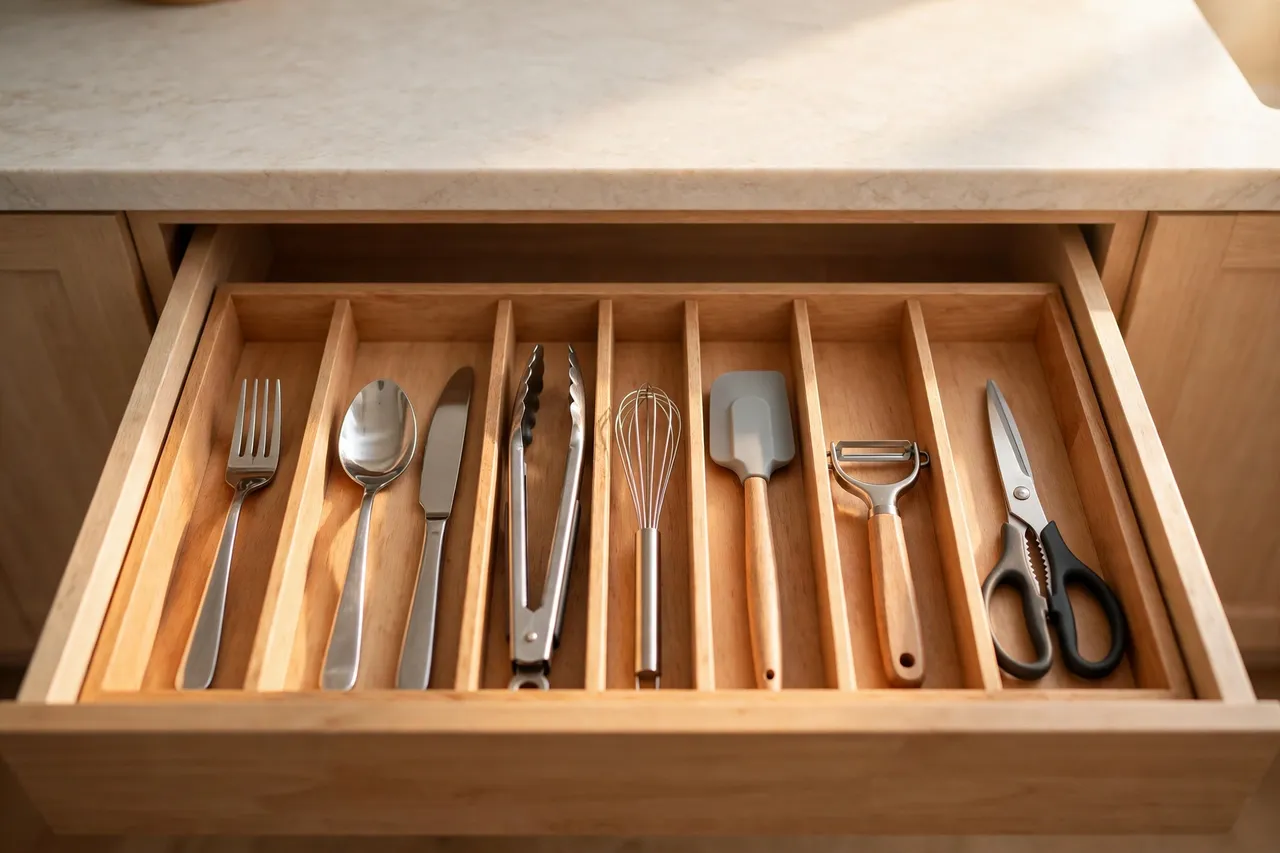
Week two moves into the kitchen and bathroom, where decisions stay practical. Day 8 is the utensils drawer: keep one of each. Day 9 is mugs and water bottles: two per person is enough. Day 10 is food storage containers: match every lid, and recycle the orphans. Day 11 is the spice rack: look at jars, not contents, and toss what is stale. Day 12 is under the kitchen sink: wear gloves and clear the clutter. Day 13 is cleaning supplies: replace worn tools. Day 14 is the linen closet: two sets per bed, no more.
The kitchen is where the 12/12/12 rule shines: find 12 items to throw away, 12 to donate, and 12 to return to their proper home. It turns a vague “sort the kitchen” into a game with a finish line. Our guide to declutter kitchen cabinets goes deeper on the cupboard pass if you want to keep going after day 14.
Week 3: Bedroom and Wardrobe (Days 15 to 21)
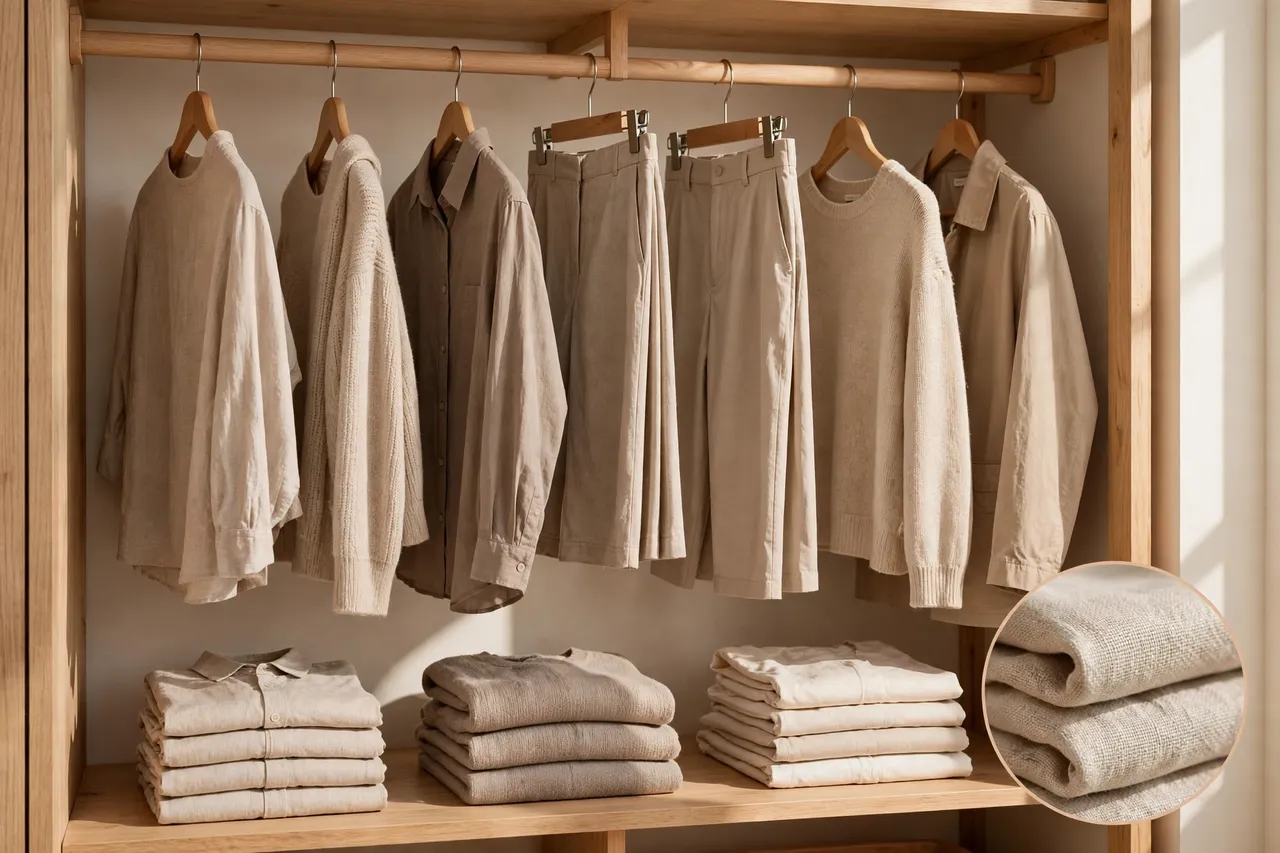
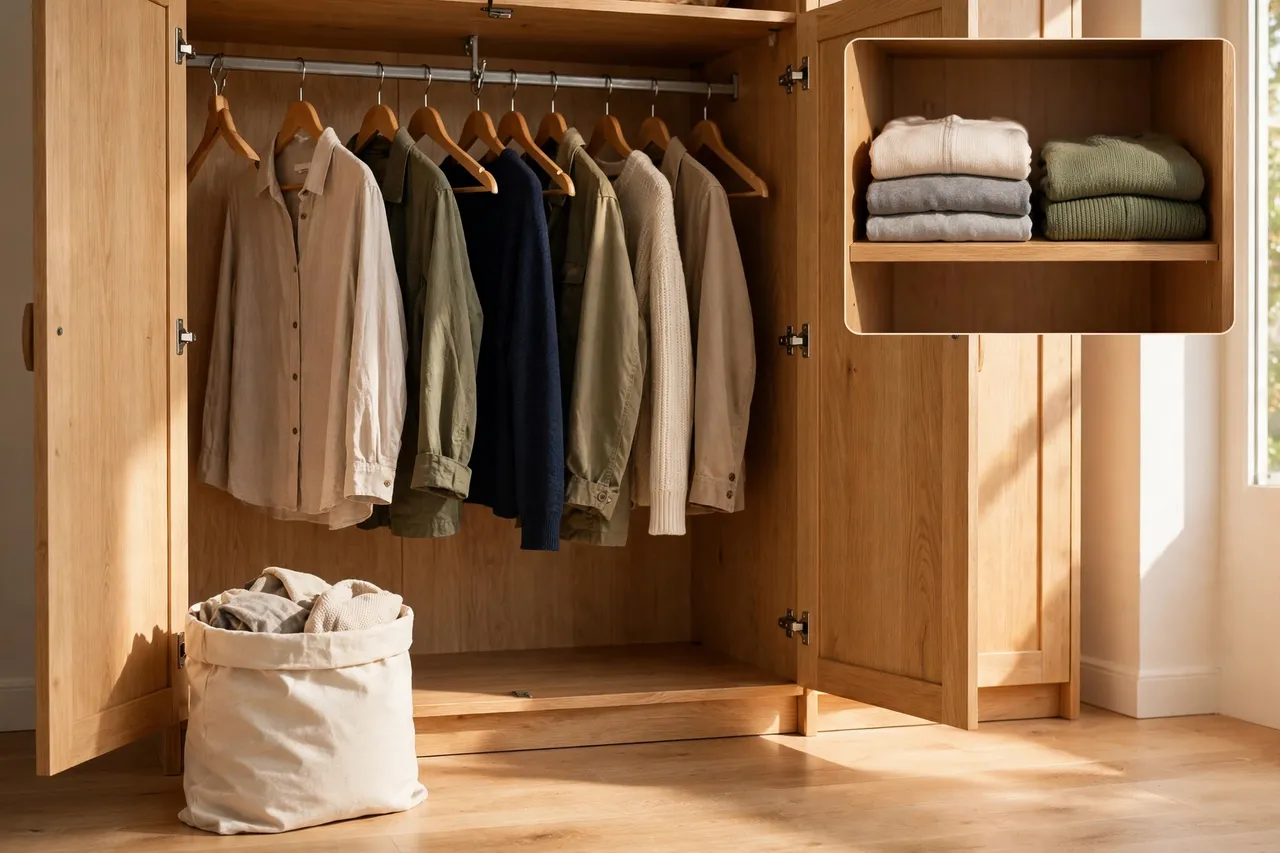
Week three is the bedroom and wardrobe, where decisions get personal. Day 15 is wardrobe tops: turn the hangers backwards and see what you actually wear. Day 16 is bottoms and dresses. Day 17 is shoes: one pair in, one pair out. Day 18 is accessories and bags. Day 19 is the dresser drawers. Day 20 is under the bed: pull everything out and decide. Day 21 is the bedside table and the floordrobe sweep.
For clothes, ask one question: would I buy this again today? If the answer is no, it goes. Try on anything you have not worn in a year, because memory lies about fit. A shirt that felt like a staple may not fit the job you have now. If you want the full wardrobe method, read our guide on how to declutter your wardrobe for the four-question test that decides every piece.
Week 4: Papers, Storage, and the Hard Stuff (Days 22 to 30)
Week four covers papers, books, and the sentimental items you have been saving for last. Day 22 is books: keep the ones you would reread. Day 23 is papers and mail: shred personal information as you go. Day 24 is cables and old electronics. Day 25 is phone photos and apps: delete screenshots first. Day 26 is the email inbox: unsubscribe from five lists. Day 27 is the car. Day 28 is gifts you never used. Day 29 is sentimental items, with a limit of one box. Day 30 is the maybe box and the donation drop-off.
Day 29 deserves a warning: set a timer and a box limit before you start, and stop when either runs out. Sentimental sorting expands to fill all available time. One box, one hour, and whatever does not fit goes to donation or to a photo. Our guide on how to organize paperwork at home helps with day 23, and the decluttering tips from professional organizers at Homes & Gardens explain how to handle keepsakes without stalling the whole challenge.
| Week | Focus | Daily time | Hardest day |
|---|---|---|---|
| Week 1 | Easy wins | 10 to 15 minutes | Day 5, makeup |
| Week 2 | Kitchen and bathroom | 15 minutes | Day 10, containers |
| Week 3 | Bedroom and wardrobe | 20 minutes | Day 15, tops |
| Week 4 | Papers and hard stuff | 15 to 20 minutes | Day 29, sentimental |
What to Do When You Miss a Day
You will miss a day. Life happens, and a challenge that punishes a missed day is a challenge you will quit. The rule is simple: never try to catch up. Doubling up turns a 15-minute habit into a 30-minute chore, and a 30-minute chore is exactly what you were avoiding. Just do the next day’s task and keep moving.
If you miss three days in a row, shrink the task, not the habit. Do a five-minute version: one shelf instead of one cabinet, one drawer instead of one closet. The habit matters more than the task list. A five-minute day keeps the streak alive, and the streak is what carries you to day 30.
After Day 30: Keep It Clear
Day 30 is not the end. It is the start of the maintenance routine that keeps the home clear. Keep one habit from the challenge: a donation bag in a closet and ten minutes on a single drawer every Sunday. When the bag is full, it leaves. When a new item comes in, an old one goes out.
Run the challenge again in six months, but faster. The second time through, the easy weeks take half the time because the easy decisions are already made. The home stays clear not because you decluttered once, but because you built a habit of small daily decisions. If a daily rhythm suits you better than a monthly challenge, our guide to declutter your home in 15 minutes a day turns the same idea into a routine you can keep for years.
Thirty days from now, every room in your home will have been touched, the surfaces you actually live with will be clear, and you will have a simple routine for keeping them that way. Start today. Day 1 is a junk drawer, and you already know which one is the worst.
Related Guides
Keep going with the rest of this series. Our guide to declutter your home in 15 minutes a day turns the challenge into a daily routine, and how to declutter your home fast helps when you need speed instead of patience. For the full method, start with our pillar guide to decluttering, and for the bathroom week, see declutter bathroom.
Frequently Asked Questions
Where do I start decluttering when I feel overwhelmed?
Start with something small that holds no memories, such as a bag, a junk drawer, or expired food. A finished drawer gives you momentum for the next one. Set a timer for 15 minutes, sort into keep, donate, and trash, and stop when the timer rings. Small finished tasks build the confidence for harder rooms.
How do I decide what to keep?
Ask whether you have used it in the past year, whether you would buy it again today, and whether you own something else that does the same job. Two noes mean it can go. For clothes, add one more test: does it fit your body and your life right now, not three years ago or hopefully next year. Honest answers make the decision for you.
How many items do you get rid of in the 30-day declutter challenge?
It all depends on your home and how much you own. Some days you will remove ten items from a closet, and other days you will clear a single drawer with only a handful of things. The challenge counts finished areas, not item totals. What matters is that every room gets touched and every bag leaves the house the same day.
What is the 30-day declutter challenge?
This 30-day declutter challenge is a challenge you set for yourself to declutter your life in 30 days. For each day, you will find a suggestion for an area to tackle or things to get rid of in your home. The tasks are small, about 15 minutes each, and they move from easy wins in week one to sentimental items in week four.
How to declutter your life in 30 days?
Work one small area a day for 30 days, about 15 minutes at a time, and finish each task completely before moving on. Start with easy wins like drawers and bags, move through the kitchen and wardrobe, and save papers and sentimental items for the last week. Keep four sorting boxes ready and take every full bag out of the house the same day.