Most yard projects start the same way. You decide to fix the soggy corner by the fence, or finally put in that patio, and you grab a shovel. An hour later you’re sweating over a hole that’s barely knee deep, wondering if there’s a smarter way to do this.
There is, and it’s usually a rental. Companies like Sniper Rentals make landscaping equipment rental simple enough that a first-timer can book a trencher or a mini excavator for the weekend and actually finish the job. This guide covers how to match a machine to your project, what the work involves, what a rental costs beyond the daily rate, and the point where it’s smarter to call a professional.
Why renting equipment beats buying it
A new mini excavator or skid steer runs well into five figures. Even a plate compactor or a stump grinder costs more than most people want to spend on something they’ll use for one weekend. Then you’ve got storage, fuel, servicing, and the repair bill when a hydraulic hose splits in year three.
Renting avoids all of that. You pay for the days you use, the machine shows up serviced, and the next project can use a completely different tool. There’s another benefit people overlook: attachments. An auger, a grading blade, or a trenching bucket might be exactly what you need for two hours of work, and nobody wants to own those.
Ownership only makes sense if you’ll use a machine every month. For almost everyone else, rental wins.
Start with the project, not the machine
The most common mistake is picking the equipment first. Somebody sees a skid steer, thinks it looks capable, and books it before working out what the job actually needs. Slow down and answer a few plain questions.
What exactly are you doing: digging, leveling, clearing, hauling, or packing down soil? How big is the area, and how deep or high does the work go? What’s the ground like? Sandy soil behaves nothing like heavy clay, and a rocky slope is a different animal than a flat lawn. And how many days can you honestly give it? Most people guess low. Add a day for setup, a day for rain, and a bit of time for cleanup.
Write the answers down. When you call a rental company, those notes turn a vague conversation into a quick, useful one.
Landscaping equipment rental: which machine fits which job
This table covers the projects homeowners ask about most. Treat it as a starting point and confirm specifics with whoever you’re renting from.
| Project | Typical equipment | What to watch for |
| Irrigation, drainage, or utility lines | Trencher | Buried lines, roots, rocky soil |
| Deep holes, footings, small ponds | Mini excavator | Soil type, room for the dirt pile |
| Leveling or regrading a yard | Skid steer or compact track loader | Turf damage on wet ground |
| Fence posts and deck footings | Post hole auger | Rocks that stall the bit |
| Removing tree stumps | Stump grinder | Flying debris, nearby structures |
| Clearing brush and small trees | Brush cutter or wood chipper | Thick growth, uneven footing |
| Patios, walkways, retaining walls | Plate compactor | Skipping the base compaction |
| Moving gravel, mulch, topsoil | Skid steer or dump trailer | Overloading the bucket |
Mini excavator rental
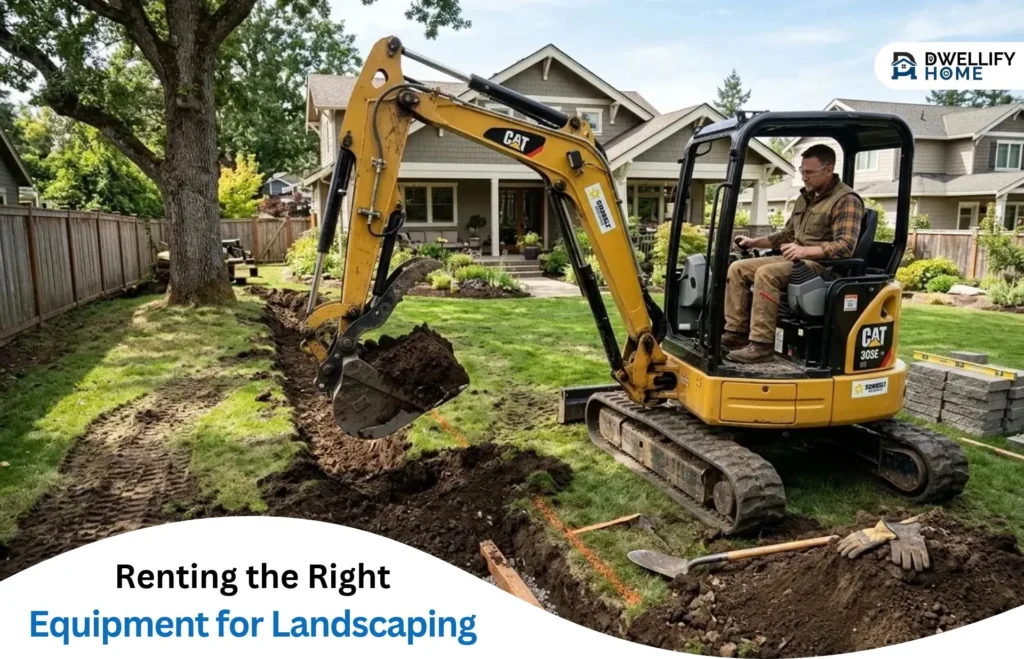
If you could only rent one machine for a property project, this is probably it. A mini excavator digs trenches, footings, drainage channels, and pond basins, and it can lift pipe or boulders with the bucket. Most compact models reach somewhere between six and ten feet deep, which covers nearly everything a homeowner needs. They also fit through a standard gate, which is a real selling point.
Skid steer and compact track loader rental
These are the workhorses for moving material and grading. A skid steer rides on wheels and turns tightly, which is great on firm ground. A compact track loader rides on rubber tracks, spreads its weight out, and treats soft or sloped ground and finished lawns more kindly. If your yard is wet half the year, ask about tracks.
Trencher rental
For long, narrow runs like irrigation lines, low-voltage lighting, or French drains, a trencher is faster and cleaner than an excavator. Walk-behind units handle most residential jobs. The trench comes out at a consistent width and depth, which makes laying pipe much easier.
Stump grinder rental
Pulling a stump by hand is a miserable way to spend a Saturday. A grinder chews the stump down below the surface so you can fill the hole with soil and plant grass over it. A common target is grinding six to twelve inches below grade, though the right depth depends on what you plan to put there afterward. Wear a face shield and keep everyone back, because wood chips fly.
Plate compactor rental
This is the machine people skip, and it’s the reason a lot of patios sink within two seasons. Pavers, flagstone, and retaining walls all sit on a compacted gravel base. You build that base in thin layers and compact each one, rather than dumping four inches in a single pass. Doing it properly is the difference between a patio that stays flat for years and one that looks wavy by next spring.
Post hole auger rental
A one-person or two-person auger turns fence line work into a manageable afternoon. Check for rocks and roots first. Hitting one suddenly can twist the machine, and that’s how people get hurt.
Choosing the right size
Bigger isn’t automatically better. A large machine can be hard to control, might not get through your gate, and can crush irrigation lines or leave deep ruts across the lawn. A machine that’s too small leaves you paying for extra days while it struggles through a job it wasn’t built for.
Before you book, measure your gate width, look for low branches and power lines, and think about the path the machine will take from the trailer to the work area. Tell the rental team all of that. A good one will ask questions back and might talk you into something smaller than you expected, which is usually a sign they’re looking out for you.
Prepare the site before the machine arrives
A rental clock starts when you pick the machine up or it’s delivered, not when you start working. So prep first.
Clear the area of rocks, debris, and anything you don’t want to hit. Mark the work zone with stakes or marking paint. Have your materials ready: gravel, pipe, pavers, or whatever the project needs. Decide where excavated soil will go before you start digging, because one mini excavator can produce a surprisingly large pile.
Then deal with underground utilities. In the United States, calling 811 a few days ahead gets your gas, electric, water, and communication lines marked for free. In other countries, contact your local utility locating service. Skipping this step is the single most expensive mistake a homeowner can make.
Safety for first-time equipment users
Heavy equipment is forgiving until it isn’t. A few habits go a long way.
Ask the rental team for a proper walkthrough of the controls, the emergency shutoff, and any quirks of that specific machine. Wear sturdy boots, gloves, eye protection, and hearing protection. Keep kids, pets, and onlookers well outside the work area. On slopes, drive straight up or down instead of across them, and keep the bucket low when you travel. Never lift more than the machine is rated for, and never let anyone ride on it.
If you feel unsure partway through the job, stop. Switching to a smaller machine, bringing in a helper, or hiring an operator for the hard part costs far less than a mistake.
What equipment rental really costs
The daily rate gets the headline, but it’s rarely the whole bill. Ask about these before you commit:
- Delivery and pickup fees, which can be significant for machines that need a trailer
- Charges for attachments like buckets, augers, and grading blades
- Fuel policy, including whether you return the machine full
- Damage waiver or insurance options and what they cover
- Minimum rental periods, and how late returns are billed
- What happens if rain forces you to pause
Read the rental agreement before you sign, not after something breaks. It takes five minutes and clears up who pays for what.
Timing your rental
Spring and early summer are the busiest seasons for landscaping equipment rentals, so book a week ahead if you can. Weekends fill up first. If your schedule is flexible, a midweek rental can be easier to get and sometimes easier on the budget.
Watch the forecast too. Working a saturated yard with a heavy machine tears up turf and can bog the machine down. If rain is coming, ask whether you can reschedule rather than push through.
Mistakes that cost homeowners time and money
The machine sitting idle is the big one. People rent on Friday and realize on Saturday morning that the gravel hasn’t been ordered. After that came skipped utility checks, optimistic timelines, and delivery access nobody measured. A smaller one that bites a lot of people: doing the work in the wrong order. Clear first, then grade, then compact, then build. Going back to fix something costs a day you didn’t plan for.
When to hire a professional instead
Renting is great for projects you can do safely and legally on your own. It’s the wrong choice for some work. Tall retaining walls, major drainage changes that affect neighboring properties, digging close to a foundation or septic system, and anything that needs permits or engineering should go to a licensed contractor.
You don’t have to choose one or the other, either. Plenty of homeowners do the prep and finishing themselves and bring in a pro for the technical middle.
Frequently asked questions
How much does it cost to rent landscaping equipment? It depends on the machine, the rental period, and your area. Small tools like augers and compactors cost a fraction of what a mini excavator or skid steer does. Always ask for the all-in number, including delivery, fuel, and attachments.
Do I need a license to operate a mini excavator or skid steer on my own property? In many places you don’t need a special license for private residential work, but rules vary by location and rental company. Ask when you book, and expect a safety walkthrough either way.
What’s the best machine for leveling a yard? For most homeowners, a skid steer or compact track loader with a grading attachment does the job. Tracks are easier on soft ground and existing grass.
How far ahead should I reserve equipment? A few days to a week in the busy season. Popular machines like mini excavators and skid steers go first.
Can I rent equipment for just a few hours? Many providers offer half-day, daily, weekly, and monthly rates. Ask which one fits your project so you aren’t paying for time you won’t use.
What should I check before digging on my property? Call your local utility locating service, such as 811 in the US, and wait for the lines to be marked before any ground is broken.
Final thoughts
You don’t need a garage full of heavy machinery to improve your property. You need a clear plan, the right tool for each stage, and a rental partner who answers your questions straight. Define the job, measure your space, put safety first, and compare your options, including landscaping and property equipment rentals from Sniper Rentals, before you commit.
We appreciate your support and want to be transparent about our links. Some may be affiliate or sponsored links, allowing Dwellifyhome.com to earn commissions or receive compensation through qualifying transactions.