A sofa across the window or a chair in the doorway can make a small living room feel cramped. These small-room decorating ideas focus on rearranging what you already own without renovating.
No shopping trip is required. Keep a tape measure and painter’s tape nearby. Before moving anything heavy, choose somewhere safe to put displaced furniture while you compare layouts. This way, testing a different sofa position won’t create a new obstacle outside the living room.
How to make a compact living room look larger without renovating
To make a small living room feel bigger without renovating, keep the main walkway clear. Then move tall furniture out of view from the doorway and connect your seating with a rug that fits beneath its front legs. Move storage upward. Spread light across several heights, with a mirror reflecting daylight rather than a television screen.
Small room decorating ideas that start with the floor plan
Measure the room before moving furniture
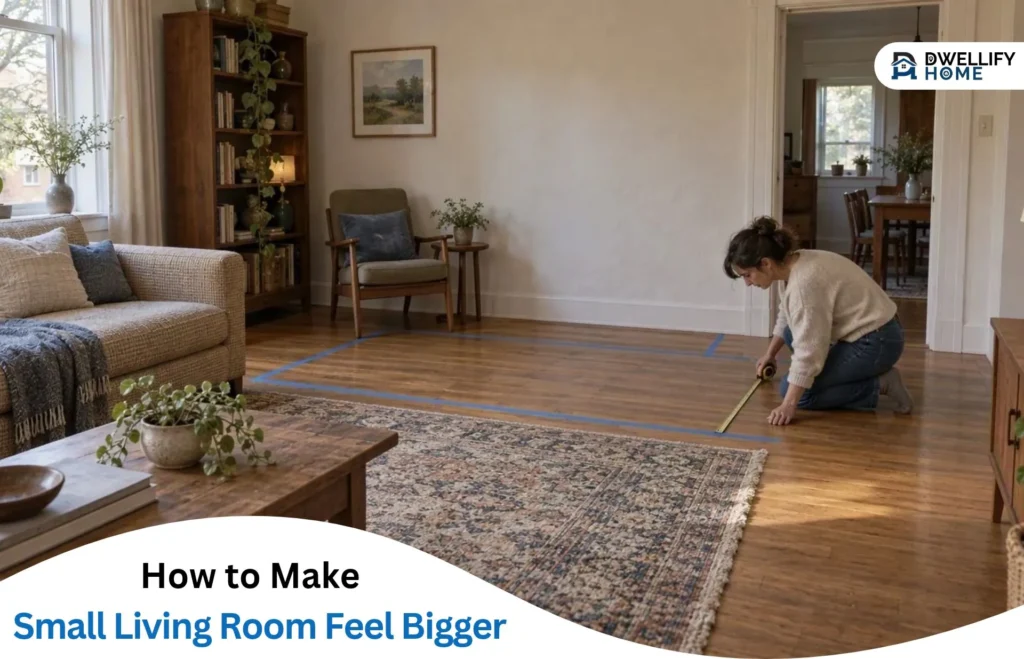
Record wall lengths and ceiling height, then window widths and door swings. Note outlets and fixed features such as radiators. Measure the sofa’s full width and depth, including its arms. Mark proposed footprints with tape before lifting anything.
The National Housing Supply and Affordability Council’s 2024 housing system report records average Australian household size at about 4.5 people in 1911 and approximately 2.5 in 2021. Smaller households make flexible space planning relevant, although these figures do not establish living room dimensions.
Protect the clearest walking route
Trace the route between the entrance and adjoining room, including access to each seat. If furniture forces you to turn sideways, test a narrower coffee table or remove it.
If the sofa fails the taped footprint test, compare slimmer profiles in Dwellify Home’s small living room furniture ideas before rearranging the other pieces.
Clear the longest sightline
Keep the view from the doorway towards a window or far wall clear of tall cabinets. Furniture needn’t hug every wall, but a small gap behind the sofa can waste usable floor space.
| Check | What to measure or test | Adjustment if it fails |
| Main path | Can you cross the room without turning sideways? | Remove a side table or rotate the seating group. |
| Door swing | Does a door strike furniture or require a detour? | Move the obstructing piece beyond the door’s swing. |
| Window | Can daylight enter without passing through a bulky object? | Lower or relocate the furniture in front of it. |
| Seating | Can people reach each seat without crossing the conversation area? | Angle or remove the least-used chair. |
Choose furniture and storage at the right scale
Keep only furniture that earns its footprint
Judge each piece by how often you use it. An armchair used monthly may occupy the path you need every evening. Use these small house decorating ideas to rethink the layout around your existing sofa. Furniture with visible legs can reveal more flooring beneath it.
Use one rug to connect the seating
Select an area rug scaled so the front legs of the couch and key accent chairs rest on top of it, while keeping an exposed perimeter of bare floor around the edges. Restricting a rug solely to the footprint under the coffee table risks making your seating feel disconnected. To confirm the layout before buying, mark the intended dimensions on the floor with painter’s tape.
Move storage upward without crowding every wall
A tall bookcase or wall shelves can replace low storage. Keep daily items within reach and lighter, seldom-used objects higher up. Anchor tall furniture according to the manufacturer’s instructions, especially around children or pets. Renters should check whether they have permission before drilling for anchors.
Apartment Therapy’s 2021 small-space survey of 1,512 residents found that 61% stored clothing or fitness and hobby equipment under their beds, while 42% used suitcases for storage. This illustrates demand for concealed storage, not a universal recommendation to fill suitcases.
Reduce visual clutter, not personality
Hide loose cords and clear crowded surfaces. A restrained palette and some empty shelf space can sit alongside personal objects. Dark paint can stay if circulation and lighting work well around your seating.
Use mirrors and layered light without creating glare
Place a mirror where it reflects a bright view
Position a mirror opposite or near a window to reflect greenery or an uncluttered wall. Check the reflection while seated. Avoid television glare and busy shelves, and secure the mirror with suitable mounting hardware.
A 2023 peer-reviewed home environment study archived in PubMed Central found significant associations between restorative potential and features such as window views and greenery. The finding supports protecting daylight and views, but it doesn’t show that these features physically enlarge a room.
Spread light across more than one height
Combine a ceiling light, a reading lamp, and a wall or shelf light so corners aren’t left dark. Match bulb color temperatures to avoid contrasting patches of yellow and blue.
According to Australian Government energy-efficiency advice, switching from halogens to LED lighting can cut power consumption by roughly 75% while offering a lifespan five to ten times longer. Just ensure the replacement globes match the fittings and base types of your current lamps.
Test the lamps after sunset from your usual seat, checking for reflections on the television screen.
Fix layouts that still feel cramped
Turn an awkward corner into a deliberate zone
An awkward corner doesn’t need a full-size chair. A slim floor lamp can give it a purpose without narrowing the path. For angled walls, align the sofa with the longest straight wall and treat the irregular corner as a secondary space. Avoid wedging anything into the gap.
Unblock a window without losing seating
If the sofa must sit below a window, keep its back below most of the glass and leave curtains free to move. A low bench may replace a tall chair. Choose lighter curtains only if they provide adequate privacy and light control.
Work around furniture that is too large
First, remove side tables and detached footstools. Next, rotate the largest piece and retest the walking route. If the path still fails, relocate or replace that piece rather than squeezing everything else around it. Ask for help with heavy furniture, and don’t drag it across an unprotected floor.
Quick answers for other compact rooms
What belongs in a tiny room?
Keep daily-use furniture and closed storage for necessities, with lighting suited to the room’s tasks. Remove duplicate surfaces that obstruct a door or window.
Can a digital room-planning assistant design the space?
A planning assistant can suggest layouts, but its accuracy depends on your measurements. Check proposed footprints against door swings and actual product dimensions before moving a sofa.
What details can make a home look cheap?
Poorly scaled furniture and tangled cables can make a space look unfinished. Match bulb colors before adding decorations to a crowded shelf.
What are seven practical bedroom design rules?
Use these practical guidelines rather than treating them as a universal code: measure first; protect circulation; place the bed deliberately; layer lighting; provide closed storage; control the palette; and keep windows usable.
How should you decorate a small bedroom?
Prioritize clearance beside the bed and choose compact bedside storage. Mark footprints with tape before moving furniture. Store occasional items under the bed. Keep tall pieces away from the clearest view from the window.
How does the 60/30/10 color rule work in a bedroom?
The optional 60/30/10 rule suggests using roughly 60% dominant color, 30% secondary color, and 10% accent color. Keep the ratios flexible to suit your preferences, the room’s lighting, and its existing finishes.
A more open room starts with what you can measure
A room feels more open when its furniture fits the available space and its arrangement leaves room to move. Clear routes and well-placed lighting matter more than filling every corner. Before buying anything, test your existing pieces by marking the sofa and rug footprints with painter’s tape.
Sources
- The National Housing Supply and Affordability Council published State of the Housing System 2024.
- Apartment Therapy published its small space survey in 2021.
- The 2023 study of home environments examines restorative potential.
- Australian Government household energy guidance covers lighting efficiency.
Some links in this article may generate a commission for Dwellifyhome.com when readers make qualifying purchases. These may include affiliate or sponsored links and help contribute to the continued operation of our website.