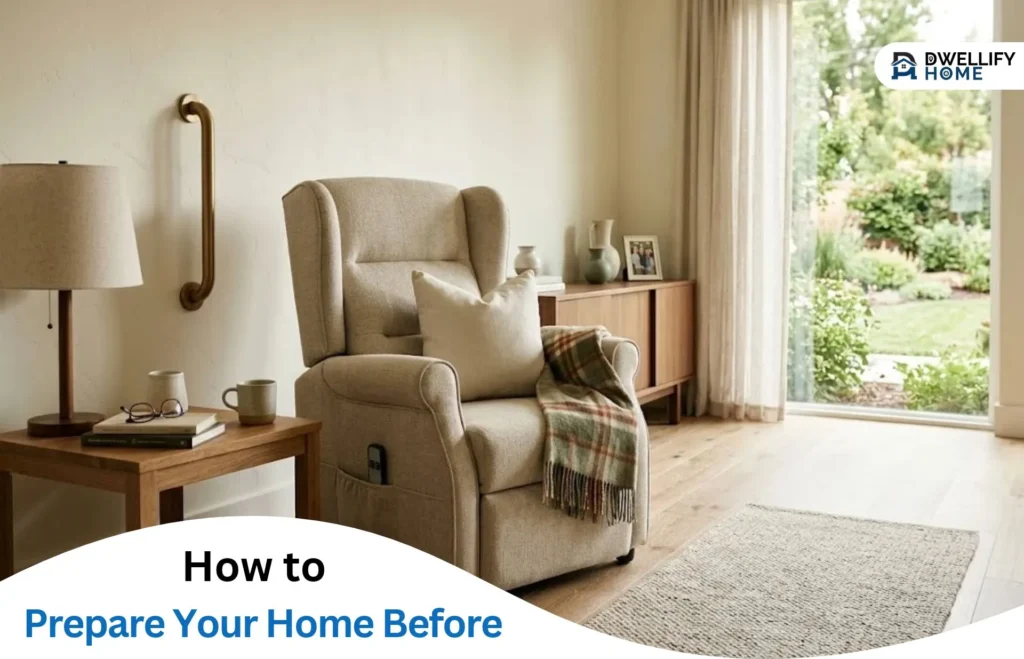
Having an elderly parent move into your home can change how the entire household uses its space.
The goal is not simply to create an extra bedroom. The home should be comfortable, practical, and safe for daily routines while still giving everyone enough privacy.
A few thoughtful changes can make the transition easier. It is also worth planning beyond current needs, since mobility, balance, vision, or stamina may change over time.
Choose the Right Bedroom Location
Bedroom location can have a major impact on day-to-day comfort.
If possible, choose a room on the main floor to reduce the need for frequent stair use. A bedroom close to a bathroom can also make nighttime routines easier.
Consider the route between the bedroom and other commonly used areas, such as the kitchen, living room, and bathroom.
A room that looks convenient on a floor plan may be less practical if it requires navigating narrow hallways, steps, or cluttered areas several times a day.
The bedroom should also have enough space to move comfortably around the bed and other furniture.
Create a Broader Preparation Checklist
Families thinking about how to prepare for an elderly parent moving in with you should look beyond one room and consider how the entire home will function.
A useful checklist can include:
- Bedroom location
- Bathroom access
- Lighting
- Clear walking routes
- Storage
- Furniture placement
- Stair use
- Kitchen accessibility
- Privacy
- Possible future mobility needs
This broader approach makes it easier to spot small problems before they affect daily routines.
Make Bathroom Access Safer
Bathrooms deserve special attention because wet surfaces and limited space can increase fall risk.
Start by checking whether the bathroom is easy to reach from the bedroom.
Simple upgrades may include:
- Adding grab bars near the toilet or shower
- Using a non-slip bath mat
- Improving shower lighting
- Installing a handheld showerhead
- Adding a shower seat when needed
- Keeping towels and toiletries within easy reach
Do not rely on towel bars as support unless they are specifically designed and installed for that purpose.
If mobility becomes more limited later, features such as a walk-in shower or wider doorway may also become useful.
Improve Lighting Throughout the Home
Poor lighting can make otherwise minor obstacles more difficult to see.
Check hallways, stairs, bathrooms, bedrooms, and entrances.
Nighttime lighting is especially important.
Motion-activated lights or plug-in night lights can help illuminate the path between the bedroom and bathroom without requiring someone to search for a switch in the dark.
Make sure light switches are easy to reach and that commonly used rooms do not have dark corners.
Replacing weak bulbs and cleaning light fixtures may also improve visibility without requiring major renovations.
Keep Walkways Clear
Clear walking paths are one of the simplest improvements a household can make.
Remove unnecessary furniture, cords, small tables, decorative objects, and other items from frequently used routes.
Pay attention to:
- Hallways
- Bedroom entrances
- Bathroom routes
- Kitchen walkways
- Stair landings
- Entry areas
Furniture should leave enough room to move comfortably without requiring sharp turns or squeezing through narrow spaces.
This becomes even more important if a cane, walker, or other mobility aid is needed later.
Reduce Common Trip Hazards
Small household items can create problems when balance or vision changes.
Loose rugs are one of the first things to review.
Either remove them or make sure they are secured with appropriate non-slip backing.
Also check for:
- Raised carpet edges
- Loose electrical cords
- Uneven flooring
- Clutter near furniture
- Low decorative items
- Shoes left near walkways
- Door thresholds that are difficult to step over
Repairing these issues early can make the home easier for everyone to navigate.
Reorganize Frequently Used Items
Storage should be arranged so everyday items are easy to reach.
Frequently used clothing, toiletries, dishes, medication organizers, and personal items should not require excessive bending, stretching, or climbing.
In the kitchen, consider moving regularly used items to shelves between waist and shoulder height.
In the bathroom, keep toiletries in accessible drawers or cabinets.
The same principle applies to bedroom storage. Everyday clothing should be easy to reach without needing a stool or repeatedly bending toward the floor.
Think About Future Mobility
A parent may be fully independent when they first move in, but it still makes sense to think ahead.
Ask whether the home could still work if walking becomes more difficult.
For example:
- Could a walker fit through the hallway?
- Is the bathroom doorway wide enough?
- Would stairs become a major obstacle?
- Is there enough room beside the bed for assistance?
- Could furniture be rearranged easily?
You do not need to renovate the entire home in advance.
The goal is to avoid choices that would make future adjustments unnecessarily difficult.
Create a Comfortable Level of Privacy
Multigenerational living works better when everyone has some personal space.
The older adult should have a room where they can rest, make calls, watch television, or spend time alone.
The existing household also needs privacy.
If possible, avoid treating every room as shared space simply because another family member has moved in.
Small changes can help, such as providing a private television, comfortable chair, reading area, or separate storage space.
Clear expectations around routines, visitors, meals, and quiet time can also reduce tension.
Make the Bedroom Comfortable and Practical
The bedroom should feel like a personal living space, not a temporary guest room.
Include familiar furniture, photographs, books, and other personal items where possible.
At the same time, avoid overcrowding.
There should be clear space around the bed and an easy route to the door.
Consider whether the bed height is comfortable for sitting down and standing up.
A bedside lamp, accessible phone charger, water, and frequently used items should also be within easy reach.
Review Entrances and Stairs
The route into and out of the home matters too.
Check whether entrances have:
- Good lighting
- Secure handrails
- Stable steps
- Clear walkways
- Easy-to-open doors
- Minimal changes in floor level
If stairs are unavoidable, make sure handrails are secure and easy to grip.
Using contrasting materials or markings on step edges may also improve visibility.
For some homes, a different entrance may be easier to use than the main front door.
Keep Communication Part of the Process
Home changes should not be based only on what other family members assume is needed.
Ask the parent what would make them feel comfortable and independent.
They may have preferences about furniture, privacy, storage, bathroom routines, or where they spend time during the day.
Involving them in decisions can also help the new space feel like part of their home rather than a room that has simply been assigned to them.
Prepare the Home for Daily Life, Not Just Move-In Day
A successful transition involves more than clearing out a bedroom before moving day.
The best preparation looks at how the home will work every day.
Improving lighting, reducing trip hazards, reorganizing storage, making bathrooms easier to use, and protecting everyone’s privacy can make multigenerational living more comfortable.
Planning for both current and possible future needs also reduces the chance of having to make rushed changes later.
The result should be a home that supports independence, safety, and a workable routine for everyone living there.
Please be aware that certain links featured in this article may be associated with affiliate or sponsored partnerships. These arrangements may provide Dwellifyhome.com with compensation that supports our ongoing publishing activities.