No two buildings face pests the same way. Ants in a home kitchen are an afternoon’s job. In a restaurant or warehouse, though, everything changes — food, stock, staff, customers are all involved, and a small nuisance becomes a real danger to health and safety.
Both sides want the same thing: no infestations, and a fast answer when one appears. The differences are in the details — treatments, checks, safety rules, prevention. Once those are clear, choosing the right service gets easier.
What Is Residential Pest Control?
Home pest control is about where people live — houses, apartments, flats. The common pests are familiar: ants, spiders, cockroaches, rats, mice, wasps, termites.
The main goal of residential pest management is a home that feels clean and comfortable, with far less chance of pests moving back in later.
Common Residential Pest Control Methods
First, the technician looks the home over — where pests are active, how they slip inside. Then they may suggest:
- Putting treatment where insects keep returning.
- Traps to catch rats and mice.
- Checking timber for termite damage.
- Blocking openings around doors and windows.
- Treating around the outside walls.
Between visits, the homeowner can help too — food sealed away, standing water gone, leaks repaired at once, yard kept tidy.
What Is Commercial Pest Control?
Business pest control covers workplaces rather than homes — places like restaurants, hotels, offices, warehouses, and hospitals or clinics.
The scale is different. Business premises are bigger, with more ways in, and people pass through all day. Some trades must follow strict rules on cleanliness, hygiene, and safety.
Cockroaches in a restaurant kitchen put the food itself at risk. Rats in a warehouse chew through boxes and ruin stored goods.
Why Businesses Need Professional Pest Management
Businesses usually need pest prevention planned as a proper system. A professional commercial exterminator can go through the building, pick out risks easy to miss, and work out treatments for that one property.
That service often covers:
- Regular visits to inspect and watch for pests.
- Going over kitchens, storerooms, and loading bays.
- Fitting pest-control gear and checking it.
- Writing down every treatment and inspection.
- Advising how to stop pests coming back.
Regular checks catch problems while they are small, and keep the building cleaner.
Key Differences Between Residential and Commercial Pest Control
The pests are often the same. What differs is the job — and that depends on the building.
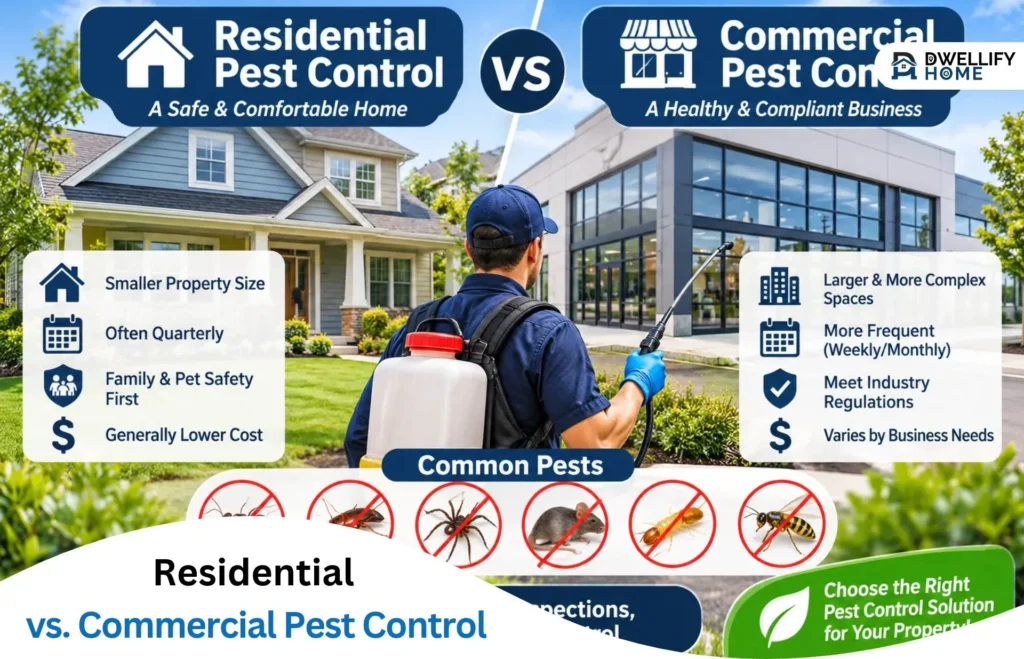
1. Property Size and Layout
A home is small — a few rooms, a few ways in — so an inspection is a simple job. A business site can stretch across warehouses, loading docks, stock rooms, and shared areas, each needing a look.
2. Treatment Frequency
A home is usually fine with a visit every three months, or a call-out when needed. A business runs tighter — monthly or weekly visits are normal, more often in risky trades.
3. Safety and Regulations
At home, safety comes first — the treatment must be safe for family, children, and pets.
Business sites can carry extra rules, especially where food is made or patients are treated. There the work must be planned around staff, customers, and goods.
4. Cost of Services
A home job costs less — smaller space, simpler work. For a business the bill depends on the size of the place, how bad the pests are, how often someone comes, and what the business does, plus monitoring gear and paperwork.
How to Choose the Right Pest Control Service
Which company you pick comes down to your building and the pest trouble you are facing. Before you decide, these are the things worth checking:
- Licensing and Experience: Make sure the workers are licensed and have done this job before.
- Inspection Process: Pick a firm that visits first, then recommends treatment.
- Treatment Methods: Find out which products and approaches they use for your pests.
- Service Reports: For a business, confirm you get written records of inspections and treatments.
- Follow-Up Services: Check what they do if pests turn up again between visits.
The best provider will shape its advice around your building and your problem, instead of offering every customer the same standard package.
The Importance of Pest Prevention
It is far easier to stop an infestation before it starts than to clear one out later. Clean rooms, rubbish dealt with, leaks fixed, and ways in sealed all make it much harder for pests to settle.
Many professionals use Integrated Pest Management, or IPM — inspections, cleanliness, monitoring, keeping pests out, and targeted treatments together.
IPM does not lean on sprays alone. It asks why pests get in at all, then deals with what draws them — food, water, shelter.
Conclusion
The pests may be much the same, but a home and a business need different things. A home needs safety and comfort for the family. A business needs a steady routine — checks on time, watching that never stops, and a written pest plan that is followed.
Once you see these differences, picking the right service gets much easier. Regular checks and sensible prevention keep a home or a business cleaner, safer, and far better protected against pests.
Frequently Asked Questions
Is residential pest control different from commercial pest control?
Yes. A home service protects where people live. A business service is built for workplaces — bigger areas, more people, stricter safety rules.
How often should pest control services be scheduled?
A home often gets by with a visit every few months. Restaurants and similar businesses need someone checking far more often.
Are the same treatments used for homes and businesses?
Some methods are used in both places, but it depends on the pest, the building, and the safety rules.
Why do businesses need regular pest inspections?
Regular checks let a business catch pests early, keep stored goods safe, hold hygiene standards, and stop small problems growing.
How can property owners prevent pest infestations?
Clean rooms, food put away properly, leaks fixed, rubbish handled, and entry points sealed — those everyday habits make a real difference.