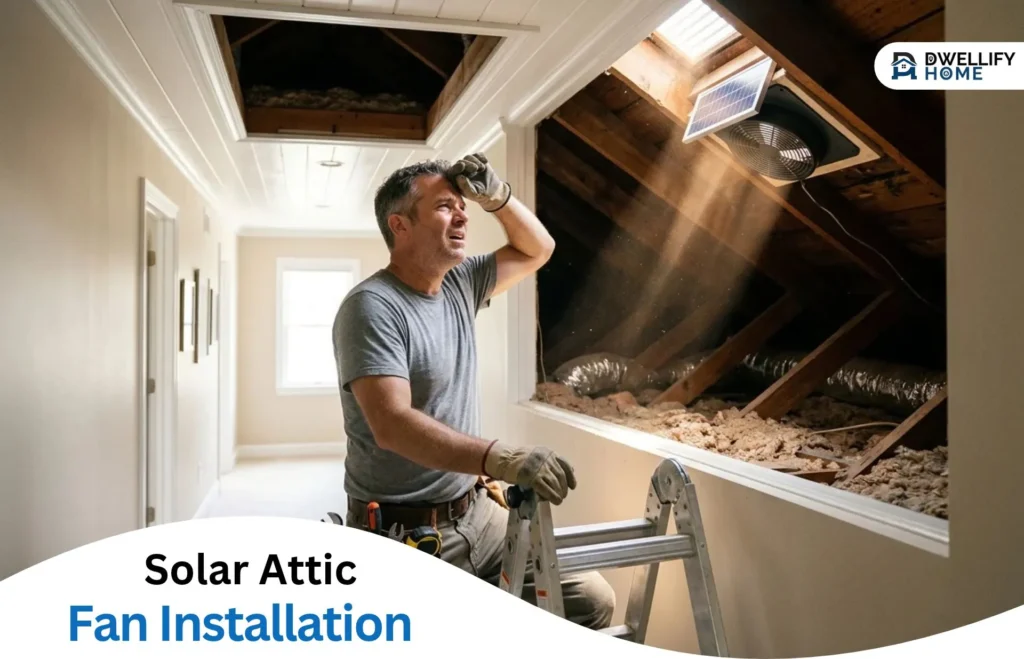
Your attic hit 140 degrees last July. You know this because you opened the hatch once, got a face full of hot air, and closed it fast. That single moment is the whole argument for a solar attic fan, and it’s also why most homeowners wait two more summers before doing anything about it.
Here’s the short version: a solar attic fan runs on daylight instead of your wiring, so it moves hot air out of your attic all day without adding a dime to the electric bill. The panel sits on the roof, the fan spins when the sun hits it, and the attic stays closer to outdoor temperature instead of baking like a parked car. If you’re weighing a pro install against a weekend DIY kit, start by looking at what expert solar attic fan installation near you actually includes, because the difference between a fan that lasts fifteen years and one that leaks in year two comes down to flashing and roof details, not the fan itself.
Below, I’ll walk you through what a solar attic fan installation really involves, where the money goes, and the questions I’d ask before anyone climbs your ladder.
What a solar attic fan actually does to your attic
An attic is a heat trap by design. Sun hits the roof deck, the shingles radiate heat inward, and without a way out, that air just sits there and soaks into the insulation and ceiling drywall below. According to the Department of Energy, proper attic ventilation is one of the standard measures for reducing cooling loads in a home, and that’s the honest framing: a fan helps, it doesn’t magically fix a house with no intake vents.
Solar fans work because they run during the exact hours the attic is hottest. A hardwired fan needs a thermostat, a circuit, and a permit. A solar unit needs sunlight. The tradeoff is that it quits at dusk, so if your attic stays hot well into the evening, you’ll want to pair it with ridge or soffit venting rather than expecting the fan to carry the whole load.
My take: on a shaded or well-vented roof, the fan’s value is modest. On a full-sun roof over a living space, it’s one of the better returns you’ll get for the money.
Where does the installation money actually go?
Homeowners get sticker shock because they compare a $300 fan kit online to a $1,400 installed quote and assume someone’s padding the bill. Fair suspicion, wrong conclusion.
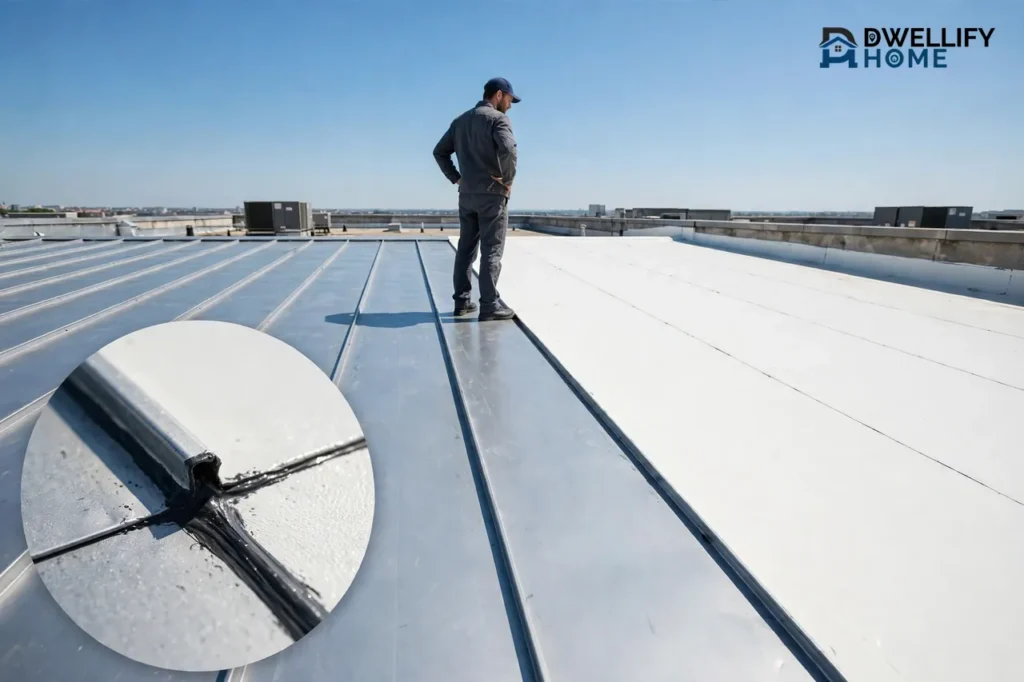
The hardware is the cheap part. The cost lives in the roof work: cutting a clean opening through shingles or tile, building a proper curb, and flashing the unit so water never finds a path inside. Tile roofs and metal roofs complicate this further, and a crew that doesn’t handle that material often is where leaks are born.
Older homes carry another variable. Roof framing varies, attic layouts vary, and the panel location has to catch real sun, not shade from a chimney or a mature oak. Solar panel placement guidance from the General Services Administration makes the same point in institutional terms: orientation and shading decide output, and a fan panel is a small solar array with the same constraints.
| What you’re paying for | Why it matters
|
| Roof opening and curb | Water intrusion happens at the cut, not the fan |
| Flashing and sealant | The difference between a dry attic and a warranty claim |
| Panel mounting and wiring | Shade kills output more than panel size |
| Fan unit and thermostat | Determines runtime and lifespan |
Should you install it yourself?
I’ll be blunt: if your roof is asphalt shingle and you’ve flashed a vent before, a DIY solar attic fan is a reasonable Saturday project. You’ll save real money and the electrical side is minimal because the panel powers the fan directly.
But three situations flip that answer. Tile or metal roofs, because breaking and resealing either material badly is expensive to fix. Two-story homes where getting the panel and fan onto the roof safely becomes its own project. Any attic with existing moisture problems, because adding airflow without addressing the source is just moving wet air around. According to the National Oceanic and Atmospheric Administration, humidity and local climate patterns shape how much moisture a building envelope has to manage, and that’s the variable a generic YouTube tutorial never accounts for.
The vetting checklist I’d run before signing anything
Use this on any contractor, and use it on yourself if you’re going DIY. It’s what separates a fan that quietly works for a decade from a callback in the first rainy season.
- Ask how they flash it. If the answer is “sealant,” keep calling. Proper flashing goes under the shingle course, not over a bead of caulk.
- Check the panel location plan. They should tell you where the panel goes and why before they cut anything.
- Confirm thermostat or controller behavior. A fan that runs constantly in cold weather wastes its own lifespan.
- Ask what happens to intake air. Without soffit or gable intake, the fan pulls air from where it can, which might be your living room.
- Get the roof penetration in writing. Workmanship warranty on the flashing, separate from the fan’s own warranty.
The framing trick: treat this as a roofing job that happens to include a fan, not an appliance install that happens to touch the roof. That single mental shift changes which questions you ask and which quotes look cheap for the right reasons.
What it feels and sounds like after
The month after install is anticlimactic in the best way. There’s a low hum from the attic on a sunny afternoon, barely audible from the living room. Your upstairs bedroom stops holding heat like a brick oven overnight. The AC runs less, and you notice it on the bill before you notice it anywhere else.
It’s the kind of upgrade you forget about. No app, no remote, no filter to swap every ninety days. The sun comes up, the fan spins, and the attic stays a few degrees closer to sane. I like that a lot more than another smart-home gadget that needs a password reset.
Frequently asked, briefly
Will it work in cloudy climates? It’ll spin slower and move less air on overcast days. Pair it with passive venting and expect variable output rather than a guaranteed number.
How long do they last? The panel typically outlasts the fan motor. Ask which component the warranty covers, because a ten-year panel warranty on a three-year motor isn’t the deal it sounds like.
Can the HOA say no? Sometimes. Read the architectural rules first, then have your contractor note the fan’s low profile. Smaller than most satellite dishes usually settles it.
The decision, made simple
If your attic bakes all afternoon, your upstairs stays warm past midnight, and you’re tired of watching the AC fight a losing battle, a solar attic fan is a sensible move. The technology isn’t exotic, the install is a roofing task with a panel attached, and the running cost is effectively zero once the sun does the work. If your attic already vents well or sits in deep shade most of the day, skip it and spend the money on insulation instead, which is where I’d put my dollars first in that case.
One honest question worth sitting with: when did you last stick your head into your attic? If the answer is never, that’s the real starting point. Go look this weekend, feel the heat, then decide whether a solar fan and a careful roofer deserve a spot on this summer’s list.
At Dwellifyhome.com, transparency is important when discussing our business relationships. Certain links may be affiliate or sponsored links that provide commissions or other compensation to our website.