
You do not need a house full of antiques or a strict decorating formula. Often, the most useful starting point is a room you already own, with one awkward combination you want to improve.
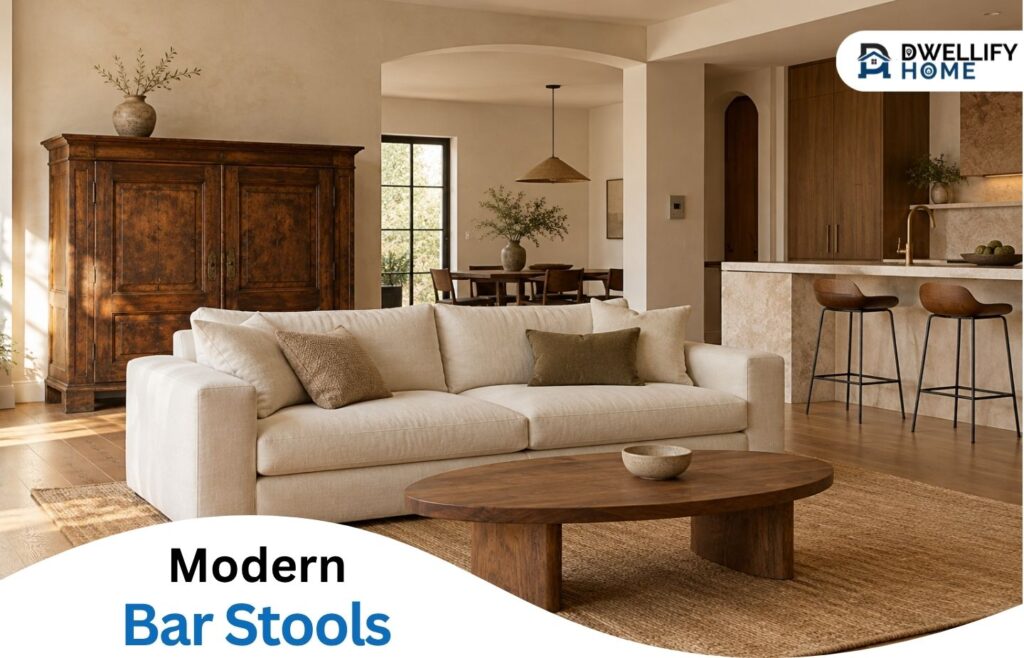
Warm wood, olive upholstery, and simple shapes connect the furniture. AI-generated interior illustration.
Start With What the Room Must Do
Before deciding whether two styles match, decide what belongs in the room. A living room used for reading and conversation needs a different arrangement from one that also handles homework, toys, and evening meals.
List the essential jobs first. You might need comfortable seating, a surface for drinks, somewhere to store chargers, and a clear route to the garden door. Furniture earns its place by helping with those jobs.
This can change how you use an older piece. A vintage sideboard may be more valuable as closed storage than as a display surface. A small inherited table might work beside an armchair instead of being squeezed into the center of the room.
Measure furniture before moving or buying it, including its depth. Mark a potential purchase on the floor with painter’s tape, if suitable for your flooring. Check drawer openings and the space needed to pull out chairs. A beautiful combination still feels messy when you have to shuffle sideways through it.
Choose One Piece to Set the Direction
Pick an existing piece you genuinely want to keep. This could be a walnut cabinet, a comfortable modern sofa, or a dining table that fits the household perfectly. Use it as a reference when choosing what goes nearby.
Look beyond its style label. Notice the wood color, the thickness of its legs, its shape, and how much attention it attracts. These details give you more useful clues than simply calling it vintage or contemporary.
For example, a dark cabinet with decorative handles already brings plenty of detail. A plain upholstered sofa and a quiet rug can give that cabinet room to stand out. Adding an equally ornate coffee table may make the same corner feel crowded, even if everything technically fits.
There is no need to calculate an exact percentage of old and new. Let one overall feeling lead, then use contrasting pieces where they add something you enjoy.
Connect Different Styles Through Color
Color is a practical way to make unrelated furniture feel comfortable together. Start with a background color, a main furniture tone, and an accent you would be happy to see more than once.
Imagine warm white walls, brown wood, and muted blue. The blue could appear in a vintage chair’s upholstery and a cushion on a modern sofa. Those pieces do not need matching legs or identical fabric because the repeated color already creates a connection.
Use this approach with the home you have. If you rent and cannot change the walls, choose a rug, curtains, or removable cushion covers that work with them. Avoid buying a large piece solely because it matches one small accessory; replacing the accessory is usually the easier adjustment.
Check samples beside your existing furniture during the day and under your evening lighting. A beige that looks neutral online may appear pink or yellow at home. A small sample can save you from trying to fix an uncomfortable color combination with more purchases.
Mix Materials With Some Restraint
Wood, metal, fabric, and glass can sit together comfortably, but each new finish adds another detail for the eye to process. Give the room a few recurring materials before introducing more.
If your main pieces combine wood and black metal, you could repeat black in a lamp base or picture frame. A glass side table might add variety without needing another large block of wood. You do not need every material to appear equally often.
Pay attention to surface character as well as color. A glossy cabinet, shiny metal chairs, and a polished table can feel quite different from the same arrangement with a woven rug and soft upholstery. Use texture to create the level of warmth or crispness you prefer.
For a small room, start by editing accessories rather than replacing furniture. Removing several competing metallic ornaments may be enough to make existing pieces feel more settled.
Let Different Wood Finishes Look Different
Trying to match a new table exactly to an old cabinet can be frustrating. Even similar woods can look different because of their finish, grain, and age. A deliberate difference often looks more convincing than an almost-match.
Place samples or photographs together and look for a relationship you like. Honey-colored wood and deeper brown furniture might share a warmth, while a pale table can provide contrast beside a dark sideboard. Treat these as starting points, not rules that forbid other combinations.
Spread the finishes through the room when possible. If all the dark furniture sits against one wall, that side may feel much heavier than the rest. Moving a smaller dark piece across the room can help balance the arrangement without adding anything.
A rug also gives wooden furniture a separate background from the floor. This can be helpful when a table seems to disappear against similar flooring or when several wood grains feel too busy together.
Use Coffee Table Shape to Balance the Living Room
Coffee table shape affects both the look of a mixed-style room and how people move through it. Choose it in relation to your seating and walking routes, rather than treating it as an isolated statement piece.
A round table can introduce a softer shape between a straight sofa and a rectangular vintage cabinet. It may suit a compact seating group, provided everyone can reach it. Remember that a wide round table still takes up substantial floor space; curved edges do not automatically make furniture compact.
An oval table gives you a longer surface with curved ends. Try this shape when a long sofa needs a useful tabletop but the route around either end feels awkward with a rectangle.
A rectangular table can work well along a sofa, particularly when the room’s layout is narrow. Check its corners against the route people actually take. A square table may suit a broad seating arrangement but feel intrusive in a slim room.
Before buying, test the footprint and reach from every seat. Then consider appearance. Slim legs can keep the center visually open, while a solid base gives it more weight. Either can work; the useful choice depends on what already surrounds it.
Pair Retro Seating With a Modern Table That Fits
A simple modern table can make an effective partner for retro bar stools, especially when the seats bring curved backs, warm wood, or an interesting upholstery color. However, the seating height must suit the table before the combination works in daily life.
Bar stools generally belong with a bar-height surface, while counter stools serve lower counter-height surfaces. Neither should be assumed to fit a standard dining table. Check the individual product dimensions, the table’s underside, and the manufacturer’s seating recommendations before choosing a pair.
For a practical example, picture a modern bar-height dining table with a plain black frame and a pair of retro-style stools with brown seats. The simple table lets the seating provide the character. Repeating the brown elsewhere, perhaps in nearby shelving, connects the dining corner to the rest of the room.
If you already own a standard-height dining table, use dining chairs with the retro details you like. You can still repeat the shapes or colors of stools at a nearby kitchen island without trying to use the same seats at both surfaces.
Check foot support, back support, seat width, and whether arms fit underneath. Leave room to sit down and get up without hitting a wall or neighboring furniture. Matching the mood is only half the job; the seats must be comfortable for the people using them.
Reduce Clutter Where It Actually Collects
Mixed styles often get blamed for a room that really has a storage problem. Look at what lands on your surfaces during an ordinary week: letters, headphones, toys, remote controls, or bags.
Give those items a home close to where they are used. A drawer beside the sofa can be more effective than a decorative basket across the room. An older cabinet with doors might handle games and paperwork while a modern side table keeps drinks within reach.
Keep some surfaces partly empty. If a vintage cabinet has a strongly patterned grain or decorative front, its top may need only a lamp and one object you like. Filling every available spot can hide the furniture that made the room interesting in the first place.
Also consider how easily you can clean. A crowded arrangement of small tables and baskets creates more things to move when vacuuming. One useful storage piece may serve you better than several small accessories bought to make a corner feel finished.
Keep the Character Without Taking On Every Repair
An older piece does not need to look new to belong beside modern furniture. Minor wear may be part of what you enjoy about it. Decide which marks you can comfortably live with and which problems affect its usefulness.
Before buying, check whether doors and drawers work, whether the piece sits steadily, and whether upholstery needs attention. Ask about materials and previous repairs rather than assuming every wooden-looking surface is solid wood.
Allow for delivery, cleaning, and any professional repairs when comparing costs. A low purchase price becomes less appealing if the piece needs work you cannot reasonably take on. For valuable furniture or unfamiliar finishes, seek specialist advice before sanding, painting, or using strong cleaning products.
New retro-style furniture can offer the visual character you want when sourcing an older piece is impractical. Just distinguish the look from the history: a recently made item with vintage-inspired curves is not necessarily vintage furniture.
Test the Room Before Adding More
Once the main furniture is in place, live with the arrangement before shopping for finishing touches. Notice where you put your coffee, where bags accumulate, and which seat nobody chooses.
Take a photograph from the doorway. It can help you spot a crowded corner or a large piece that dominates the view. Then make one change at a time so you can tell what actually improves the room.
Before adding anything else, ask:
Can people move through the room while others are seated?
Does each large piece serve a useful purpose?
Is there a color, shape, or material connecting the older and newer furniture?
Can everyday items be put away without rearranging the room?
Would removing one accessory improve the view?
Sometimes the missing element is a lamp or a useful side table. Sometimes the room needs nothing more. Give yourself permission to stop when it works.
The most convincing mix of vintage and modern furniture usually reflects the household using it. Keep the pieces that suit your routines, connect them through a few details, and leave space to enjoy them. A room can feel collected over time without becoming a collection you have to navigate around.
To keep our content transparent, we want to let you know that some links may be affiliate or sponsored links. These links may provide Dwellifyhome.com with a small commission from qualifying purchases, helping us continue creating and publishing helpful content.