
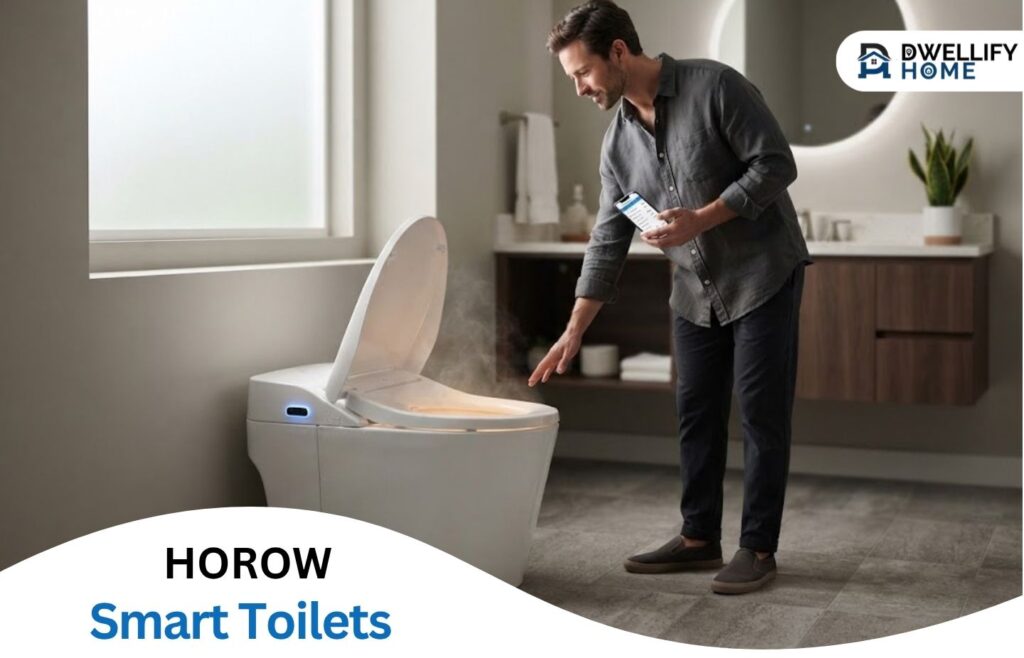
“Smart toilet” used to mean a five-figure investment reserved for luxury remodels. HOROW changed that math by packing tankless heating, a heated seat, auto flush, and auto open-close into models priced under $1,000, and independent reviewers now use it as the default comparison point whenever a shopper asks whether a premium brand is actually worth the price gap. That reference-point status didn’t happen by accident.
This guide covers:
• The actual price gap between HOROW and premium brands like TOTO
• What features HOROW includes at each price point, and how that compares
• How HOROW solves the water pressure problem without a premium price tag
• Where the real differences between value and premium brands actually show up
At a Glance
| Takeaway | Detail |
| The price gap is substantial | HOROW’s full-featured electric models run $559 to $1,699; comparable TOTO models start around $3,000 and run past $10,000. |
| Feature density is HOROW’s core value proposition | Tankless heating, heated seat, auto flush, and auto open-close come standard even on entry models. |
| Built-in tank and pump solve a common tankless problem | Low water pressure homes often struggle with tankless smart toilets; HOROW’s hybrid design sidesteps that. |
| Independent reviewers consistently frame HOROW as the value option | Sources ranging from Consumer Reports to independent review sites use similar language comparing HOROW to premium brands. |
| The gap isn’t purely marketing | Material quality, ceramic coating technology, and brand longevity genuinely differ between value and premium tiers. |
| ADA-compliant options exist at both tiers | HOROW’s T38P and similar models meet accessibility height requirements without the premium price tag. |
| Brand prestige is a real, separate factor from function | TOTO’s decades of reputation and proprietary glazing technology carry weight a newer brand hasn’t built yet. |
| Choosing between tiers depends on priorities, not just budget | Feature access vs. material longevity and brand history are different things to optimize for. |
The Price Gap That Started the Comparison
The comparison between HOROW and premium smart toilet brands exists because the price gap is large enough to notice immediately. HOROW’s full-featured electric lineup runs roughly $559 to $1,699 depending on the model, while comparable integrated smart toilets from TOTO, the brand HOROW gets compared to most often, start around $3,000 and run well past $10,000 for top-tier models.
That gap isn’t a case of a stripped-down budget product against a flagship. HOROW’s mid-tier models include the same core feature set buyers associate with premium smart toilets: instant tankless water heating, a heated seat, a warm air dryer, automatic flush, and an auto-opening lid. The price difference is large enough that shoppers researching a first smart toilet purchase almost always encounter both brands in the same search, which is part of how HOROW became the default reference point for what a value-tier smart toilet should include.
Feature Density: What’s Actually Included at HOROW’s Price Point
Feature density, how many premium-feeling functions come standard at a given price, is where HOROW’s value case is strongest. A HOROW model in the $1,000 to $1,600 range typically includes tankless heating, a heated seat with adjustable temperature, a warm air dryer, automatic flush and lid operation, a wireless remote, a built-in deodorizer, and a nightlight. That’s close to the full feature checklist a shopper would expect from a premium integrated toilet, just without the premium brand name attached.
This is the specific comparison independent reviewers keep making: not “is HOROW as good as TOTO” in the abstract, but “does this specific feature list, at this specific price, deliver comparable day-to-day function.” The answer, across multiple independent reviews, tends to be a qualified yes: the features work as advertised for standard residential use, even if the underlying materials and long-term durability haven’t been tested over the same multi-year timeline as an established premium brand.
| Feature | HOROW (Typical $999-$1,599 Models) | Premium Tier (e.g., TOTO Integrated) |
| Tankless or built-in tank heating | Standard | Standard |
| Heated seat | Standard | Standard |
| Auto flush and auto lid | Standard | Standard |
| Proprietary ceramic glazing | Not typically included | Often included |
| Brand history and track record | Newer to the US market | Decades of established reputation |
| Starting price | Roughly $559-$1,699 | Roughly $3,000-$11,000+ |
Solving the Water Pressure Problem Without a Premium Price Tag
Tankless smart toilets rely on incoming water pressure to deliver a strong flush, which becomes a real problem in homes with inconsistent or low water pressure, an issue reviewers and testers flag across the smart toilet category generally. HOROW addresses this with a hybrid design on several models: a built-in water tank and electric booster pump housed inside a unit that still looks and installs like a tankless toilet.
That internal reservoir means flush performance doesn’t depend entirely on whatever pressure happens to be coming through the home’s plumbing at that moment, which matters specifically for older homes or households on the lower end of typical residential water pressure. It’s a comparatively simple engineering solution to a problem that otherwise pushes buyers toward either accepting inconsistent flush performance or paying more for a premium system engineered around the same issue.
Where the Difference Actually Shows Up
The honest version of this comparison includes where premium brands still separate themselves, and it isn’t nothing. Proprietary ceramic glazing technology, the coatings that keep a bowl’s surface resistant to staining and buildup over years of use, is generally more advanced in established premium brands than in newer value-tier manufacturers. Brand longevity is a separate, real factor too: a company with decades of production history and an established service network carries a track record that a newer brand, however well-reviewed today, hasn’t had time to build.
None of that erases HOROW’s value proposition; it just clarifies what the price difference is actually paying for. For buyers weighing the trade-off directly, shop the HOROW smart toilet range at Majestic Flush to compare specific models against the feature set and price point that matters most for a given bathroom.
Choosing Based on What You’re Actually Optimizing For
Deciding between a value-tier smart toilet and a premium one comes down to which factor matters more in a given decision: immediate feature access at a lower price, or the longer track record and proprietary materials that come with an established premium brand. Neither answer is wrong; they’re optimizing for different things.
For buyers who haven’t settled on a tier yet, it’s worth looking at the full range side by side before deciding. Compare smart toilet brands at Majestic Flush to see feature sets, pricing, and specifications across both value and premium options in one place.
A Benchmark Earned, Not Assumed
HOROW became a value benchmark because the price gap to premium brands was large enough to notice, and the feature list at HOROW’s price point was close enough to premium tier to make the comparison genuinely useful rather than academic. That’s a specific, earned position rather than a marketing claim.
Key Takeaways
• The price gap between HOROW and premium brands like TOTO is substantial, roughly $559 to $1,699 versus $3,000 to $11,000+
• Feature density (tankless heating, heated seat, auto flush) is close to comparable at both tiers; ceramic technology and brand longevity are where premium brands still separate
• A built-in tank and pump on several HOROW models solves the low water pressure problem common to tankless smart toilets generally
The honest comparison isn’t which brand is better in the abstract, but which specific factors, features, price, materials, or track record, matter most for a given bathroom and budget.
Frequently Asked Questions
Is HOROW actually comparable to TOTO in features?
For core function, largely yes. HOROW’s $1,000 to $1,600 range models include tankless heating, a heated seat, auto flush, and auto lid operation, which matches the core feature checklist of premium integrated toilets. The differences show up more in ceramic glazing technology and brand track record than in day-to-day feature access.
Why is TOTO so much more expensive than HOROW?
The price difference reflects material quality, proprietary ceramic glazing technology, and decades of brand history and R&D investment rather than a simple feature gap. Independent reviews consistently note that HOROW delivers comparable everyday function while TOTO’s premium pricing reflects longer-term material engineering and established reputation.
Does HOROW work well in homes with low water pressure?
Several HOROW models address this directly with a built-in water tank and electric booster pump, which sidesteps the flush performance issues that affect some tankless smart toilets in low-pressure homes. This hybrid design still looks and installs like a tankless unit while avoiding pressure dependency.
Is a HOROW smart toilet a good long-term investment?
For most standard residential use, reviewers describe it as reliable within a mid-range pricing tier rather than premium-grade longevity. It’s a reasonable choice for buyers prioritizing feature access and lower upfront cost over the multi-decade track record established premium brands have built.
What’s the actual price difference between HOROW and TOTO?
HOROW’s full-featured electric models generally run $559 to $1,699. Comparable integrated smart toilets from TOTO start around $3,000 and can exceed $10,000 for top-tier models, a difference substantial enough that most first-time smart toilet shoppers encounter both brands in the same search.
Are HOROW toilets ADA compliant?
Several models are. The T38P, for example, includes a comfort-height seat that meets ADA accessibility height standards, roughly 17 to 19 inches from floor to seat, offering that option at a lower price point than many ADA-compliant premium alternatives on the market.
Disclosure: Our website may receive a small commission from qualifying purchases made through certain affiliate or sponsored links featured in this article. These partnerships help support Dwellifyhome.com and our continued publishing efforts.