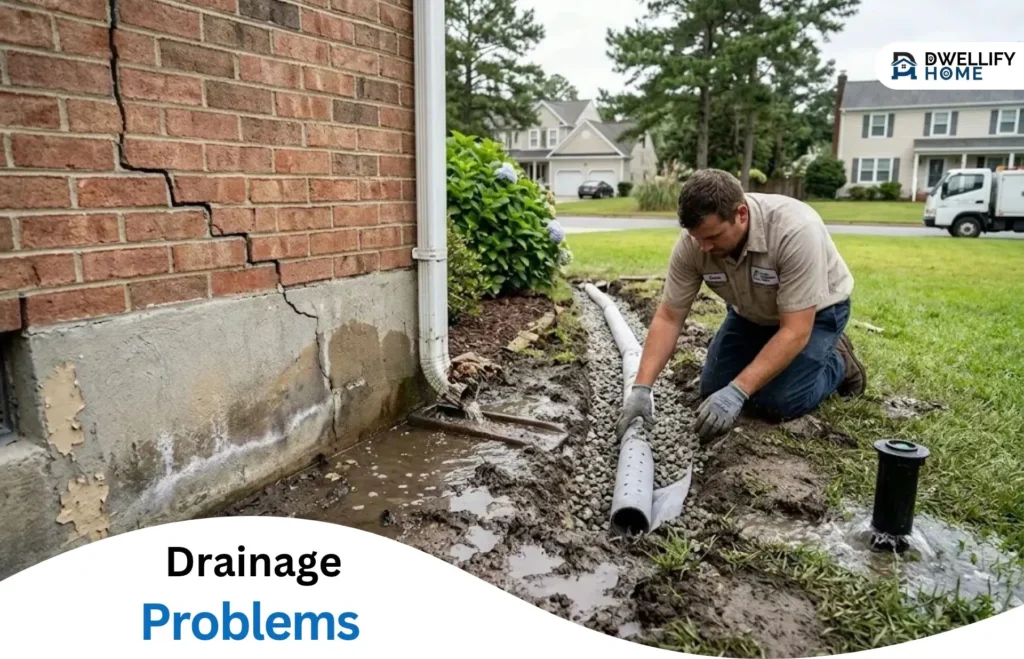
Water is one of the biggest enemies to a home’s structure. In Coastal Virginia there is rarely a shortage issue. With heavy rainfall, high ground water levels, humid summer months and occasional tropical storms, the surrounding ground can become consistently compacted. Often homeowners will contact us for foundation repair Virginia Beach VA due to issues with water drainage.
Drainage Issues Usually Don’t Cause Damage Immediately
Water issues will often take months to cause damage. As it builds up, it will begin to compromise the soil causing issues with the structure.
Softened Soil – When the soil becomes saturated it can cause it to lose strength. This can cause compression or shifting of the soil on the footings and piers causing partial sinking of your home.
Hydrostatic Pressure – Build up of water in the soil will cause pressure on the foundation walls. This can cause cracks, bowing and leaking.
Erosion – Water runs off from the roof and driveways can cause erosion of the ground around the foundation.
Dampness – If your home sits on a crawl space, constant dampness can cause rotting of the wood supports, encourage mould growth and attract pests like termites.
As much of coastal Virginia lies on flat land with high water tables, sandy and clay-rich soil types can cause drainage to become an important factor in keeping your home structurally sound in the long term.
Common Causes Of Poor Drainage
Poor Drainage Around your home is usually caused by:
- Blocked or missing gutters
- Short downpipes
- Poor grading (slope of the garden)
- Impervious surfaces such as patios and driveways
- Leaky piping or irrigation
- High ground water levels causing water to build up in the crawl space after heavy rainfall
Often you will suffer from multiple issues. For example blocked gutters and poor grading will cause water to pool against your foundation after almost every storm.
Signs To Look Out For
Issues with foundations tend to show signs early on. Most of the time, the earlier they are caught, the cheaper the repair.
Inside The Home
- Sticking doors and windows
- Cracks in the dry wall (often around doors and windows)
- Sinking or sloping floors
- Gaps between walls and ceilings or skirting
Outside The Home
- Stair cracks to brick/block walls
- Horizontal cracks or bowing to the foundation walls
- Pooling water
- Ground pulling away from the base of your home
Inside The Crawl Space
- Standing water or wet soil
- Musty smells, mould or high humidity
- Sinking floor joists or rotting wood
- Rust on metal supports or damaged insulation
If you have noticed multiple of these signs, you will often contact crawl space specialists near me to have a look at your crawl space. As moisture issues often present themselves first.
Solutions To Fix Drainage And Foundation Issues
Depending on how severe the issue is, the solutions can vary. Often improving the water issues is the most important factor.
Basic Drainage Improvements
Keeping your gutters clean and having long downpipes can help improve drainage immediately. Adding soil to change the gradient of the ground will also help with drainage. This is a fairly inexpensive solution and often prevents further expensive repairs.
French Drains Or Underground Drains
If you have a garden that suffers from water pooling, installing French Drains or other underground drainage systems will help move the water away from your home. Installing catch basins near the downpipes and low areas can also help.
Crawl Space Drainage
Drainage systems can be installed inside the crawl space and sump pumps can be used to remove water. Adding vapour barriers or complete encapsulation will help with controlling ground moisture and humidity. Dehumidifiers can be added to keep the moisture levels consistent during the humid months. Many homeowners looking for crawl space experts near me will look for companies that provide drainage and moisture controls as they often go hand in hand.
Structural Repairs
If you do have some damage, structural repairs may be required. Common repairs include adding support jacks or piers to sinking floors, replacing rotting joists, adding sealant to cracks in the foundation and fixing bowing walls. If severe sinking has occurred, deep piers may be required.
Why It’s Cheaper To Sort The Issue Early
Issues with foundations rarely stay the same. The water will continue to affect the soil and structure causing cracks to get larger and small sinking issues to become worse. By addressing the drainage issues early on, it will often be much cheaper than expensive structural repairs.
Checking your home regularly after heavy rain, checking your crawl space once a year and addressing new cracks quickly can help. If signs indicate there is an issue with movement, getting a professional to assess your foundation for repair in Virginia Beach VA will help identify the damage and drainage issue so the repairs will last.
FAQ’S
Can poor drainage cause foundation issues?
Yes! Water pooling near your home can cause the soil to become softened, increasing pressure on your foundation walls and erosion of the soil. Over time this can cause sinking, cracking and damp issues in your crawl space and basement.
How long should your downpipes be?
A common rule of thumb is 4-6ft away from your home. If your garden is flat or slow draining you may need longer downpipes or underground drainage.
Should I be worried about small cracks in my foundation?
Thin cracks that aren’t moving are often due to natural shrinkage in the concrete. If they are widening, horizontal, step cracks or are appearing along with sticking doors, they could be an indication of movement and should be checked by a professional.
Will crawl space encapsulation help drainage?
Encapsulation will help by controlling moisture and humidity but won’t clear up standing water. It is best used along with drainage improvements such as internal drainage, sump pumps and external grading.
How often should I check my crawl space?
Every year is a good rule of thumb. Check after large storms or flooding. If your home is on low ground in coastal areas, you may want to check more frequently during wetter months.
Transparency is an important part of our publishing approach. Some links in this article may be affiliate or sponsored links through which Dwellifyhome.com receives commissions or other compensation from applicable partnerships.