To stop a smoke alarm from beeping, press the hush or silence button first, then find the cause: a single chirp every 30 to 60 seconds almost always means a low battery. The National Fire Protection Association (NFPA) says a single chirp every 30 or 60 seconds means the battery is low and must be changed, and chirping that continues after a battery change means the alarm is at the end of its life and must be replaced. Swap in a fresh battery of the exact type on the label, reset the unit, and test it. If the beeping keeps coming back, clean the sensor or replace the alarm.
Before you touch anything, check for real danger. If you smell smoke, see haze, or feel heat, get everyone out and call 911. A loud, repeating three-beep pattern means smoke or fire, not a low battery. Only start fixing the beep once you are sure your home is safe.
First, Tell a Chirp From a Real Alarm
Smoke alarms use different sounds for different problems, and mixing them up wastes time or, worse, puts you at risk. A chirp is a short, single peep that repeats every 30 to 60 seconds. A full alarm is loud, steady, and hard to ignore: three beeps, a pause, then three beeps again. Learn the two sounds before you touch the alarm.
A chirp is a maintenance warning. It tells you the battery is low, the unit is old, or the sensor needs cleaning. A full alarm tells you the sensor sees particles in the air right now. Treat every full alarm as real until you prove it is not. Open a window, check the kitchen, and look for smoke before you press any button.
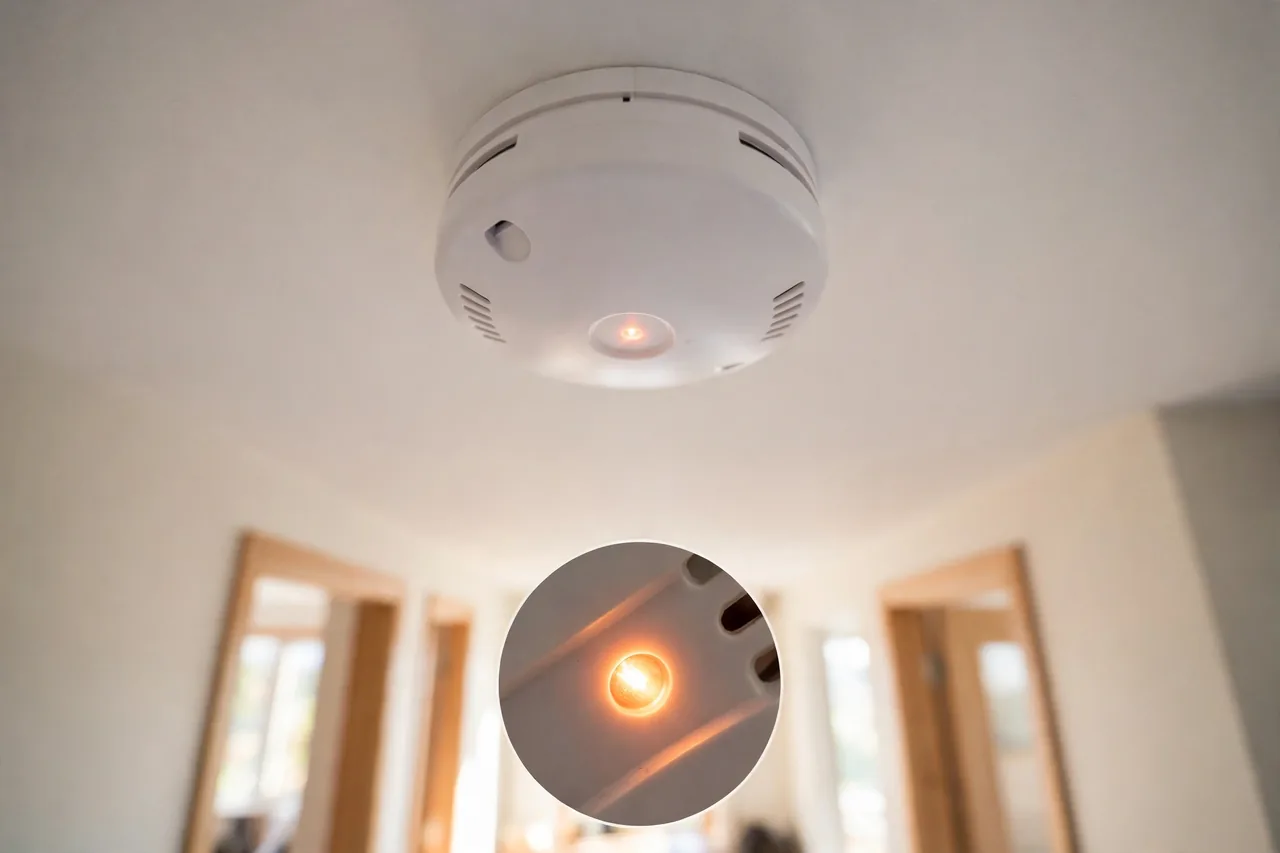
Your alarm may also flash a small light with each sound. Many models pair a red flash with the alarm pattern and a different flash with a low-battery chirp. Check the label on the back of your unit or the manual for the exact code, because beep codes vary by brand and model.
Silence the Beeping Right Now
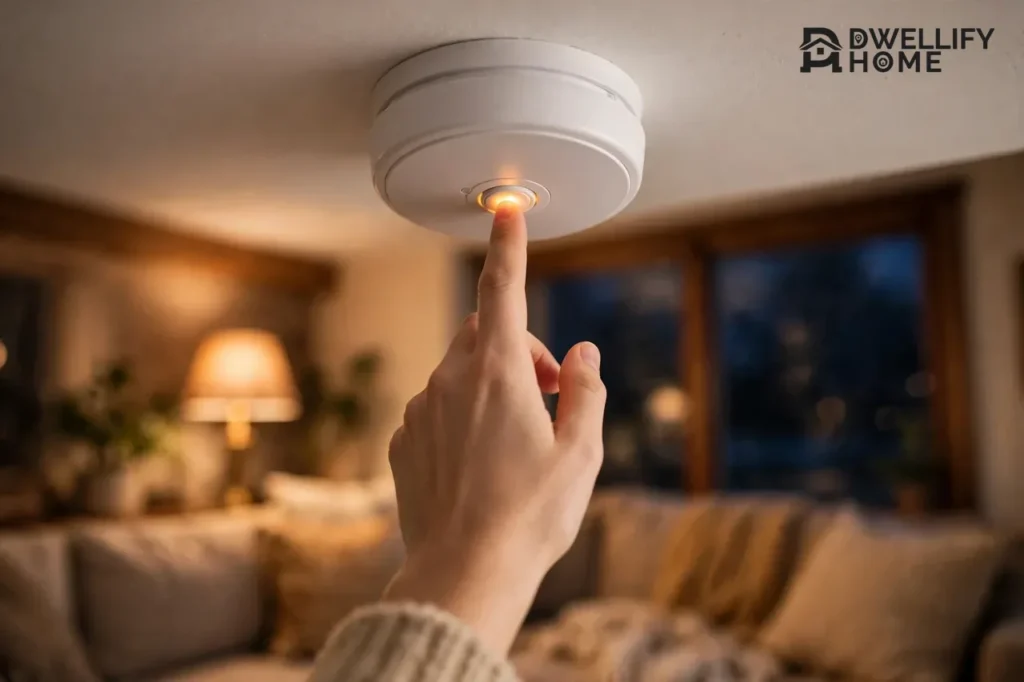
When the chirp starts at 2 a.m., you want quiet first and answers second. Most modern alarms have a hush or silence button on the face of the unit. Press and hold it for a few seconds. On many models this quiets a nuisance alarm for about 7 to 15 minutes, which gives you time to gather a ladder and a fresh battery.
Keep in mind that hush is mainly built for nuisance smoke alarms, like cooking smoke or steam. On many models it will not permanently silence a low-battery or end-of-life chirp. It may quiet the sound briefly, and then the chirp comes back. That is the alarm doing its job.
If the hush button does nothing, take the unit down. Use a steady ladder and twist the alarm counter-clockwise off its mounting bracket. For a battery-only alarm, pull the battery out and the sound stops. For a hardwired alarm, switch off the matching circuit breaker first, then unplug the power connector from the back of the unit and remove the backup battery. Never leave a smoke alarm down and forgotten. Fix it or replace it the same day, because a home with a dead alarm has no early warning at all.
Read the Beep Pattern and Find the Cause
The pattern is your fastest clue. Count the beeps, time the gap, and match it to the list below. Then check the manual for your exact model, since makers use slightly different codes.
Use this table to read what your alarm is telling you.
| Sound you hear | What it usually means | What to do first |
|---|---|---|
| One chirp every 30 to 60 seconds | Low battery | Fit a fresh battery of the labeled type |
| Chirp every 30 seconds after a new battery | End of life, about 10 years old | Replace the whole alarm |
| Five beeps every minute or so | End-of-life warning on some models | Replace the whole alarm |
| Three loud beeps, repeating | Smoke or fire detected | Check for fire, get out if unsure, call 911 |
| Four loud beeps, repeating | Carbon monoxide on a combo unit | Get everyone out, call 911 |
| Random or rapid chirps | Dust, insects, or a sensor fault | Clean the vents and reset the unit |
Start with the most likely cause. A steady chirp on a fixed interval is nearly always the battery. A chirp that keeps going after a fresh battery points to age or a dirty sensor. A full alarm that sounds with no smoke in sight points to steam, cooking fumes, dust, or a misplaced alarm.
Why is my fire alarm beeping every 30 seconds?
A chirp every 30 seconds is the low-battery warning on most alarms. The battery voltage has dropped below the level the alarm needs to guarantee a full siren in a real fire, so the unit saves power and chirps to warn you. Fit a brand-new battery, not one from a drawer, and the chirp should stop. If it does not, the unit itself may be at the end of its 10-year life.
Why is my smoke alarm beeping with a new battery?
Three things cause this. First, the battery may be old stock, the wrong type, or seated loosely, so check the date and the terminals. Second, leftover charge in the unit can hold the low-battery fault in memory until you reset it by holding the test button with the power off. Third, the alarm may simply be old: if the chirp survives a fresh battery and a reset, the sensor has reached the end of its life and the whole unit needs replacing.
Replace the Battery the Right Way
This is the fix that solves most beeping alarms, and it is also the fix people rush and get wrong. Take your time and do it in order.
- Find the noisy unit. Stand under each alarm and listen, because a chirp can echo down a hallway and blame the wrong detector. Watch for the flashing light that matches the chirp.
- Take the alarm off its bracket with a quarter-turn counter-clockwise twist. For a hardwired unit, switch off the breaker first.
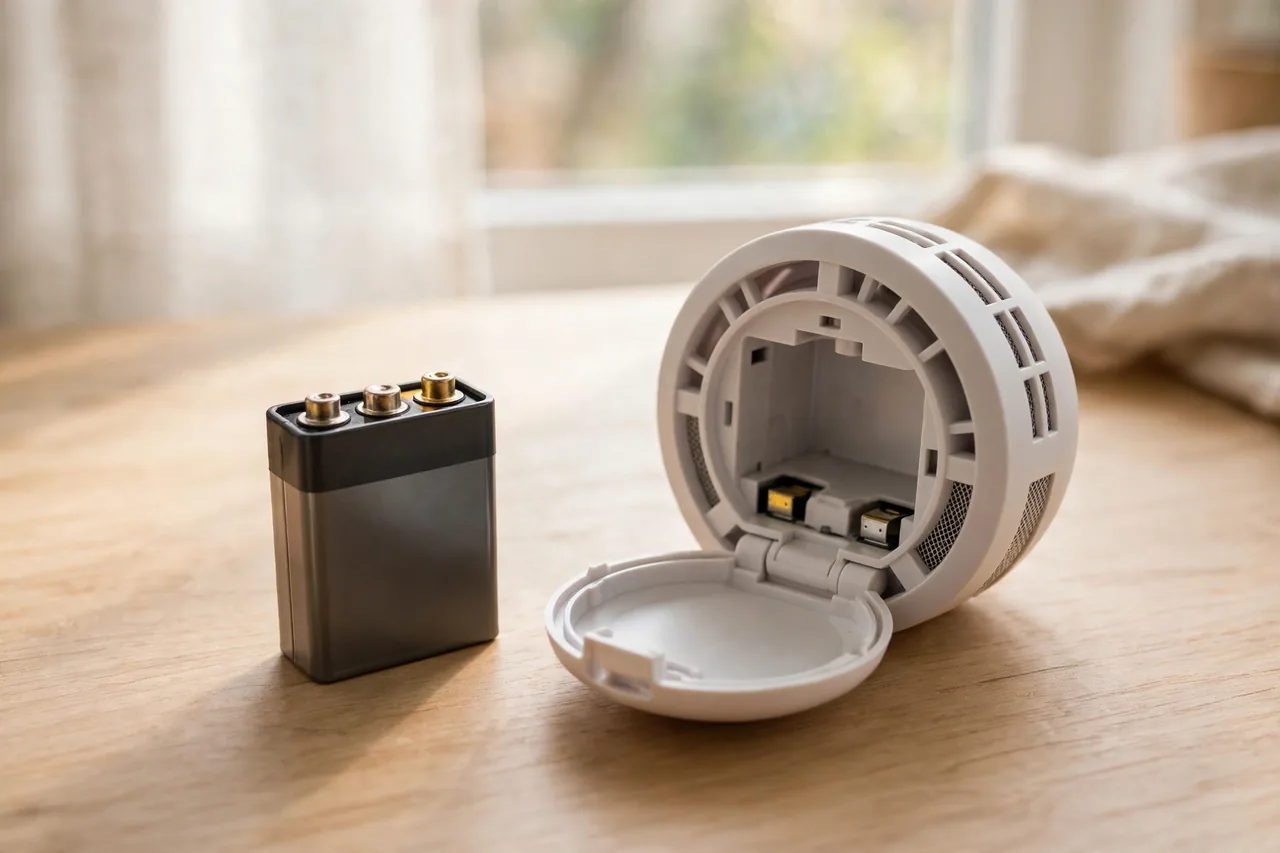
- Read the label on the back. It names the exact battery type, usually a 9-volt, AA, or AAA cell, or a sealed lithium pack. Match it exactly.
- Fit a fresh, brand-new battery. Check the expiry date on the pack and line up the positive and negative ends. Close the battery door until it latches fully.
- Reset the alarm. With the battery out and the power off, press and hold the test button for 15 to 30 seconds to drain leftover charge. Then refit the battery, restore power, and remount the unit.
- Press the test button and listen for a loud siren. A weak or missing sound means the battery is bad or the unit has failed.
Use a high-quality alkaline or lithium battery from a sealed pack. A half-used battery from a remote control can trigger the low-battery warning almost at once. The NFPA recommends changing standard batteries at least once a year, and many homeowners do it when the clocks change so they never forget. A fresh battery of the right type fixes most chirps in under five minutes.
Sealed 10-year alarms have no battery to change. If a sealed unit chirps, check the manufacture date on the back. A chirping sealed unit is usually telling you its 10 years are up, and the whole alarm must go.
Reset a Smoke Alarm After a Battery Change
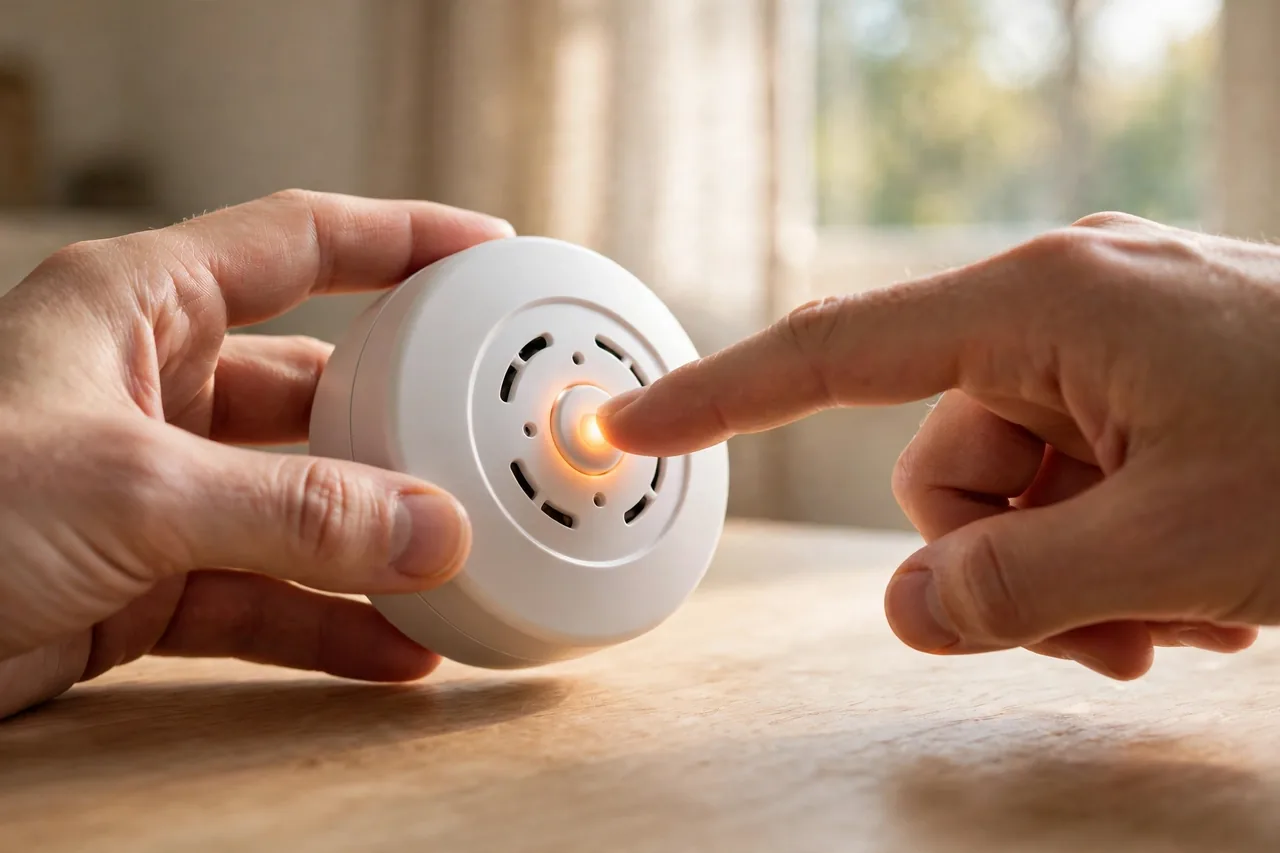
A reset clears the fault memory that can keep an alarm chirping even after you fit a new battery. Not every model needs one, but when the chirp survives a fresh battery, a reset is the next step.
For a battery-only alarm, remove the battery, then press and hold the test button for at least 15 to 30 seconds. You may hear a faint sound as the last charge drains away. Then fit the new battery and test the unit. For a hardwired alarm, switch off the breaker, unplug the power connector from the back, remove the backup battery, and hold the test button for 15 to 30 seconds. Then reconnect everything in reverse order and test.
If the alarm chirps again within an hour of a reset with a fresh battery, stop resetting it. The unit is almost certainly at the end of its life or has a sensor fault. Replacing it is cheaper than another sleepless night, and it restores real protection. One reset is a fix; repeated resets are a warning.
Clean the Sensor When Dust or Bugs Cause the Beeping
Dust, cobwebs, and tiny insects get into the sensing chamber and fool the alarm. A speck of dust can scatter the sensor light or break the ion current just like smoke does, so the alarm chirps or sounds for no visible reason. This is common in dusty rooms, near workshops, after remodeling, and in alarms that have not been cleaned in years.
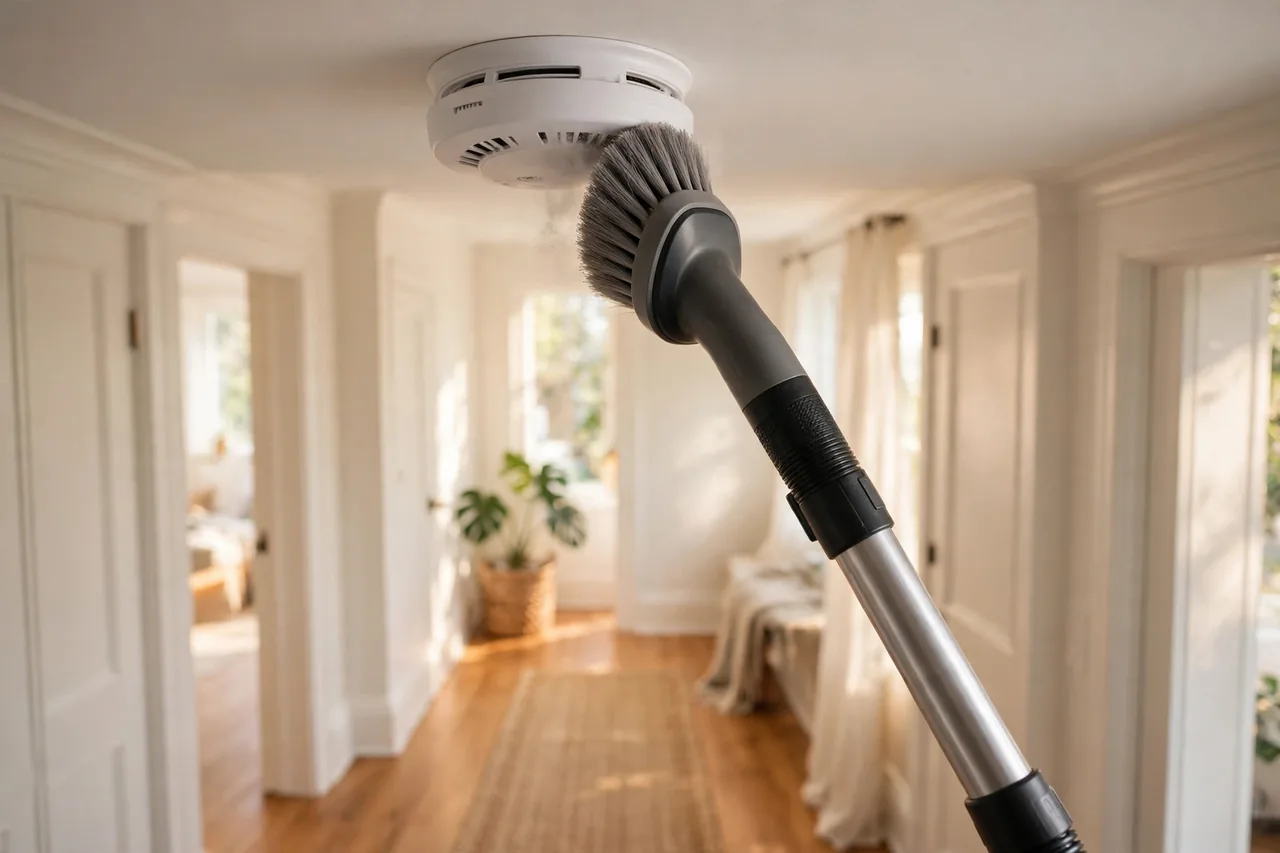
Clean the outside vents with a vacuum cleaner and a soft brush attachment, holding the nozzle close without pressing hard. A short burst of compressed air through the vents can clear what the brush misses. Never spray cleaner, insecticide, or water into the alarm, and never paint over it. The American Red Cross advises vacuuming cobwebs and dust from smoke alarms monthly to prevent nuisance alarms.
While you clean, look at where the alarm sits. An alarm right outside a bathroom catches shower steam. One near a kitchen catches cooking fumes. One beside a heating vent catches dust every time the system starts. Moving an alarm a few feet, or swapping an ionization unit near the kitchen for a photoelectric one, can end years of false beeps. Clean alarms chirp less, and well-placed alarms false-alarm less.
Fix a Beeping Hardwired Smoke Alarm
Hardwired alarms run on household power with a backup battery for outages, so they have two power sources that can cause beeping. The backup battery still needs replacing, usually once a year, even though the alarm runs on mains power most of the time. A chirp every 30 seconds on a hardwired unit is very often just that backup battery.
Power problems cause their own beeps. A recent outage, a tripped breaker, a loose wire at the ceiling box, or a power surge can leave a hardwired alarm chirping. Check the breaker first and make sure it is fully on. If the alarm chirps right after a storm or a power cut, a reset usually clears it. If the wiring looks loose, scorched, or damaged, switch the breaker off and call a licensed electrician. Do not open the ceiling box yourself if you are not sure what you are doing.
Hardwired alarms are often interconnected, so when one sounds, they all sound. That is a safety feature, but it makes finding the noisy unit harder. Walk the house and watch for the unit with the flashing red light, because that is usually the one that started the alarm. Silence that one first.
When a Beeping Smoke Alarm Means Replace, Not Repair
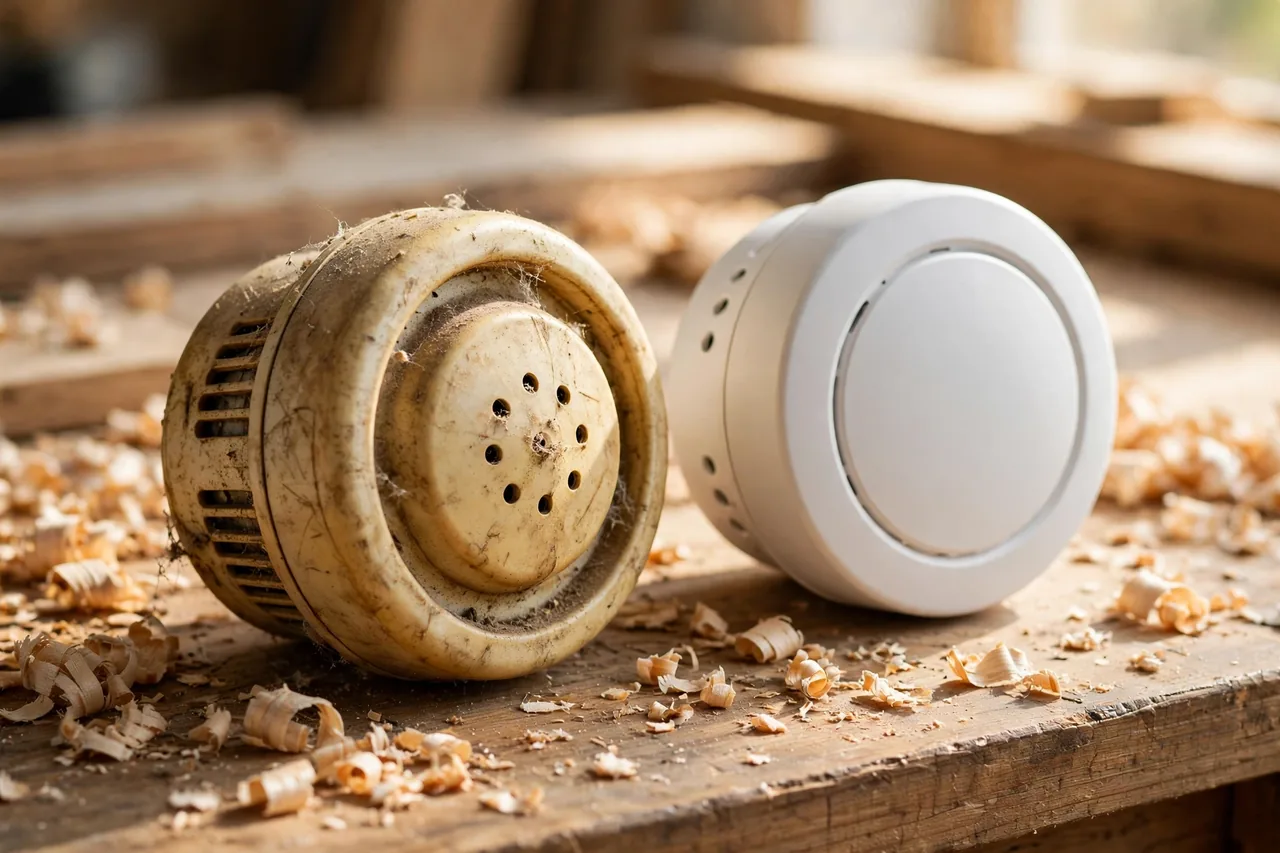
Smoke alarms do not last forever. The NFPA says all smoke alarms must be replaced 10 years after their manufacturing date. The sensor wears out, and no new battery can bring it back. Check the manufacture date printed on the back of the unit and count forward 10 years.
Replace the alarm right away if any of these are true: the chirp continues after a fresh battery, a reset, and a cleaning; the test button gives a weak, muffled, or missing sound; the unit is 10 years old or older; the case is cracked, yellowed, or heat-damaged; or the alarm sounds for no reason more than once in a few weeks. Choose a replacement listed by a nationally recognized testing laboratory, and write the install date on the back of the new unit so the next 10-year date is easy to find.
When you replace one alarm, check the others. Alarms installed together age together, so if one hits 10 years, the rest are close behind. Replacing them as a set keeps your whole home on the same schedule and stops the next chirp before it starts at 3 a.m.
Stop the Beeping From Coming Back
A quiet alarm today is only half the job. A short routine keeps it quiet and, more importantly, keeps it working when it matters.
- Test every alarm once a month with the test button. The NFPA says to push the test button once a month and listen for the loud beep, beep, beep sound.
- Change standard batteries at least once a year, and at once when the alarm chirps.
- Vacuum the vents monthly so dust never builds up in the sensor.
- Replace every alarm at 10 years, on the date printed on the back.
- Keep alarms away from bathrooms, kitchens, and heating vents where steam and dust trigger false alarms.
- Write the battery-change date on a small sticker inside the battery door.
Pick one day a month, like the first Saturday, and test every alarm in the house in five minutes. It is the cheapest safety habit a homeowner has. A tested alarm is a trusted alarm, and a trusted alarm is one you will listen to the night it matters.
Stay Safe While You Fix a Beeping Alarm
Never remove the battery and leave the alarm empty “just for tonight.” A disabled alarm cannot warn you, and fires do not wait for morning. If you must take a faulty unit down, replace it the same day. If you cannot replace it the same day, sleep with the bedroom door closed and fit a temporary alarm if you have a spare.
Use a stable step stool or ladder, never a chair, and keep your balance when you reach the ceiling. Warn everyone in the house before you press the test button, because the siren is loud on purpose. If you smell gas, hear a carbon monoxide alarm, or feel dizzy, nauseous, or confused, get everyone outside and call 911 instead of troubleshooting.
Disclaimer: This article gives general home maintenance guidance, not professional fire-safety advice. If you are unsure about wiring, if an alarm keeps sounding after the steps here, or if anyone feels ill, call a licensed electrician or your local fire department for help. Never disable a smoke alarm as a long-term fix.
Related Guides
If you are sorting out your home’s alarms, these guides help next: the best smoke alarm and carbon monoxide detector picks for a full replacement, Christmas tree safety for seasonal fire risks, and how to stay warm without power for heating safety during an outage.
Frequently Asked Questions
Why is my smoke alarm beeping every 30 seconds?
A chirp every 30 seconds is the low-battery warning. The battery voltage has dropped too low to guarantee a full siren, so the alarm chirps to warn you. Fit a fresh battery of the exact type on the label. If the chirp continues after that, the alarm is likely at the end of its 10-year life and must be replaced.
How do I stop my smoke alarm from beeping at night?
Press the hush button for a short quiet window, then fit a fresh battery. At night, the most common cause is a low battery, because cooler air can drop the voltage just enough to trigger the chirp. Keep a spare 9-volt or AA battery in a drawer so the fix takes minutes, not a trip to the store.
Why is my fire alarm beeping with a new battery?
Either the battery is old stock, the wrong type, or seated loosely, or the alarm needs a reset to clear the fault memory, or the unit is at the end of its life. Check the battery date and terminals, hold the test button for 15 to 30 seconds with the power off, and test again. If it still chirps, replace the whole alarm.
Why is my hardwired smoke alarm beeping?
A hardwired alarm beeps for a dead backup battery, a power cut, a loose connection, or old age. Replace the backup battery first, then check the breaker and reset the unit. If the chirp keeps coming back, check the manufacture date, because a 10-year-old hardwired unit needs replacing just like a battery one.
Can I just remove the battery to stop the beeping?
You can remove it to silence the noise, but never leave the alarm without a battery. A smoke alarm with no power cannot warn you about a fire. Fit a fresh battery right away, or replace the unit the same day. A quiet house with a dead alarm is far more dangerous than a chirping one.
Fix the beep tonight, then test every alarm on the first of next month. A fresh battery, a quick clean, and a monthly test keep your alarms quiet and your home protected.