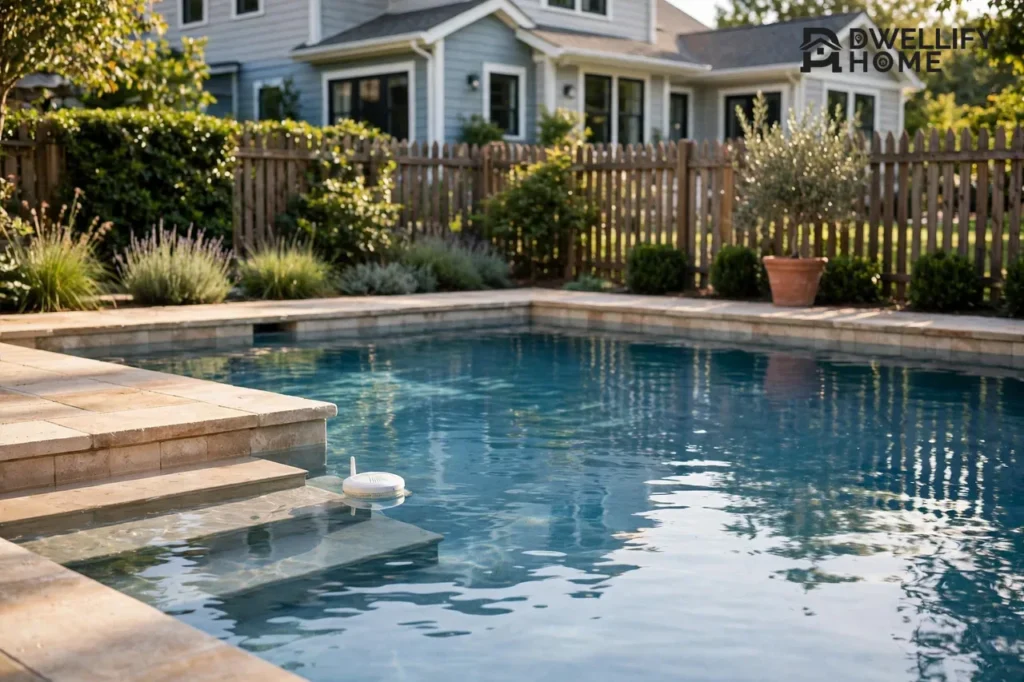
The best pool alarms for 2026 start with one clear winner for most homes: the PoolGuard PGRM-2. It is NSF certified to the ASTM F2208 pool alarm standard, sounds an 85-decibel alarm the moment something disturbs the water, and its remote receiver works up to 200 feet inside the house. It costs $219.30 on Amazon, as listed by Inspect and Test on 19 November 2026.
A pool alarm is a safety device that alerts you when someone enters or falls into a swimming pool unexpectedly. It is one layer of protection, never the only one: a fence, a self-closing gate, and adult supervision come first, and the alarm catches the moment those layers fail. This guide compares the five best pool alarms for 2026, with dated prices, real specs, and the limits no seller will tell you.
The Short Answer: Which Pool Alarm Should You Buy?
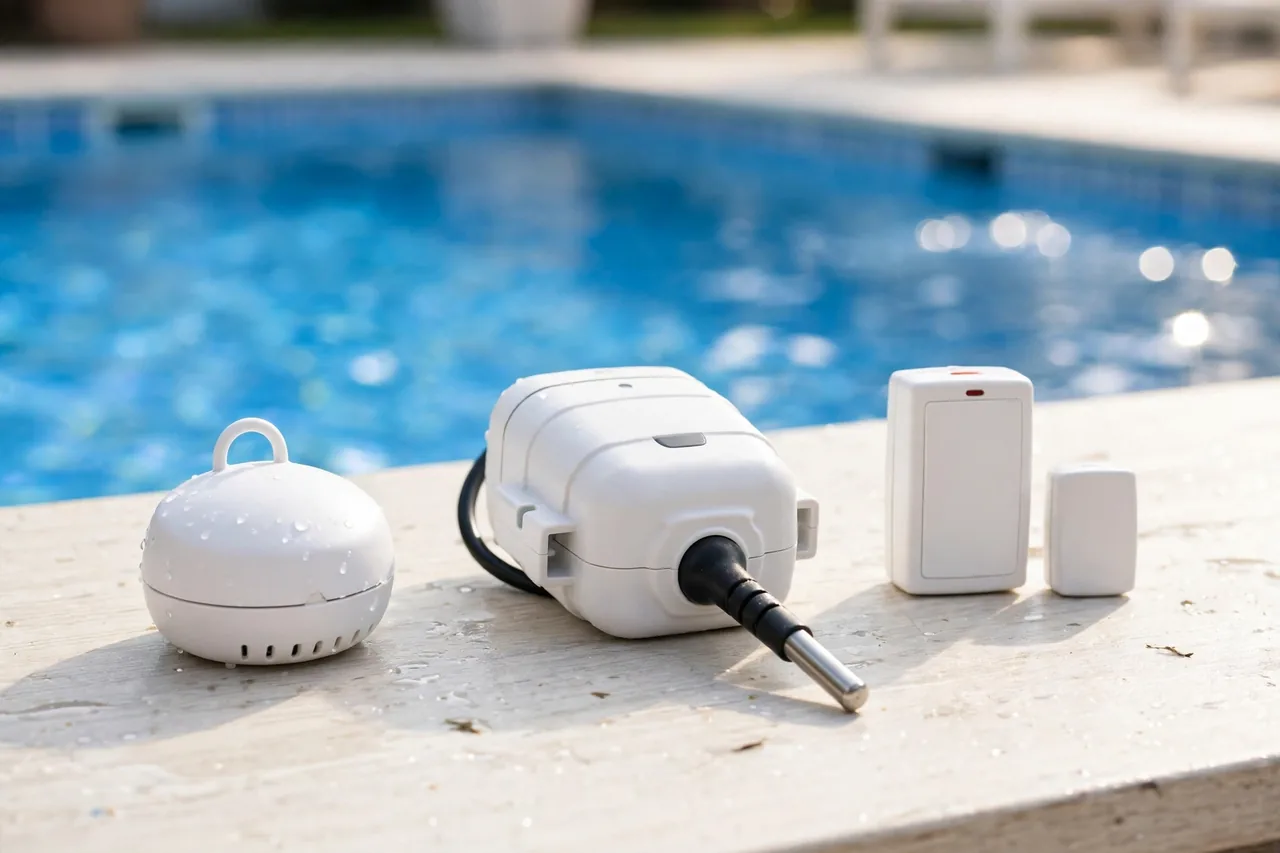
Buy the PoolGuard PGRM-2 if you have an in-ground pool and want the most trusted alarm. Its subsurface sensor ignores wind and rain better than floating alarms, and it stays armed whenever the pool is not in use.
Buy the Lifebuoy BCone if you want alerts on your phone wherever you are. Buy the Pool Patrol PA-30 if your budget is tight and you want a floating alarm that meets ASTM F2208. Buy the PoolEye PE23 if you want a mounted sensor with sirens both poolside and in the house. Buy the PoolGuard DAPT-2 door alarm if your biggest risk is a child slipping out the back door. The table below makes the choice fast.
Best Pool Alarms at a Glance
Caption: Best pool alarms compared — Amazon prices as listed 19 November 2026.
| Alarm | Type | Standard | Price | Best For |
|---|---|---|---|---|
| PoolGuard PGRM-2 | Subsurface | ASTM F2208, NSF certified | $219.30 | In-ground pools |
| Lifebuoy BCone | Floating, Wi-Fi | ASTM F2208 stated | $395.00 | Phone alerts |
| Pool Patrol PA-30 | Floating | ASTM F2208 stated | $219.99 | Budget pick |
| PoolEye PE23 | Mounted immersion | ASTM certified per listing | $126.00 | Two sirens |
| PoolGuard DAPT-2 | Door alarm | UL 2017 | $56.91 | House doors |
Prices change often, so check the live price before you buy. The prices above are Amazon’s listed prices as shown by Inspect and Test on 19 November 2026. The Lifebuoy BCone price of $395.00 also matches the maker’s own shop at lifebuoyalarm.com.
How We Picked These Pool Alarms
A good pool alarm has to do two jobs at once. It must sound fast when a child or pet enters the water, and it must stay quiet through wind, rain, and pool cleaners. We judged every pick on detection method, named safety standard, coverage area, receiver range, and how it behaves during swimming.
The standard comes first. ASTM F2208 is the pool alarm standard, and UL 2017 covers water-hazard door alarms — a listing that names neither is a toy, not a safety device. Detection method comes second: subsurface sensors watch pressure changes under the water and ignore surface chop, while floating sensors watch waves and false-alarm more in wind. Coverage comes third: one alarm must cover your whole pool, or you need two.
Swim mode decides daily life. An alarm that screams every time your family swims gets switched off and forgotten. Every pick here has a swim mode that re-arms itself when swimming ends.
1. PoolGuard PGRM-2 — Best for In-Ground Pools
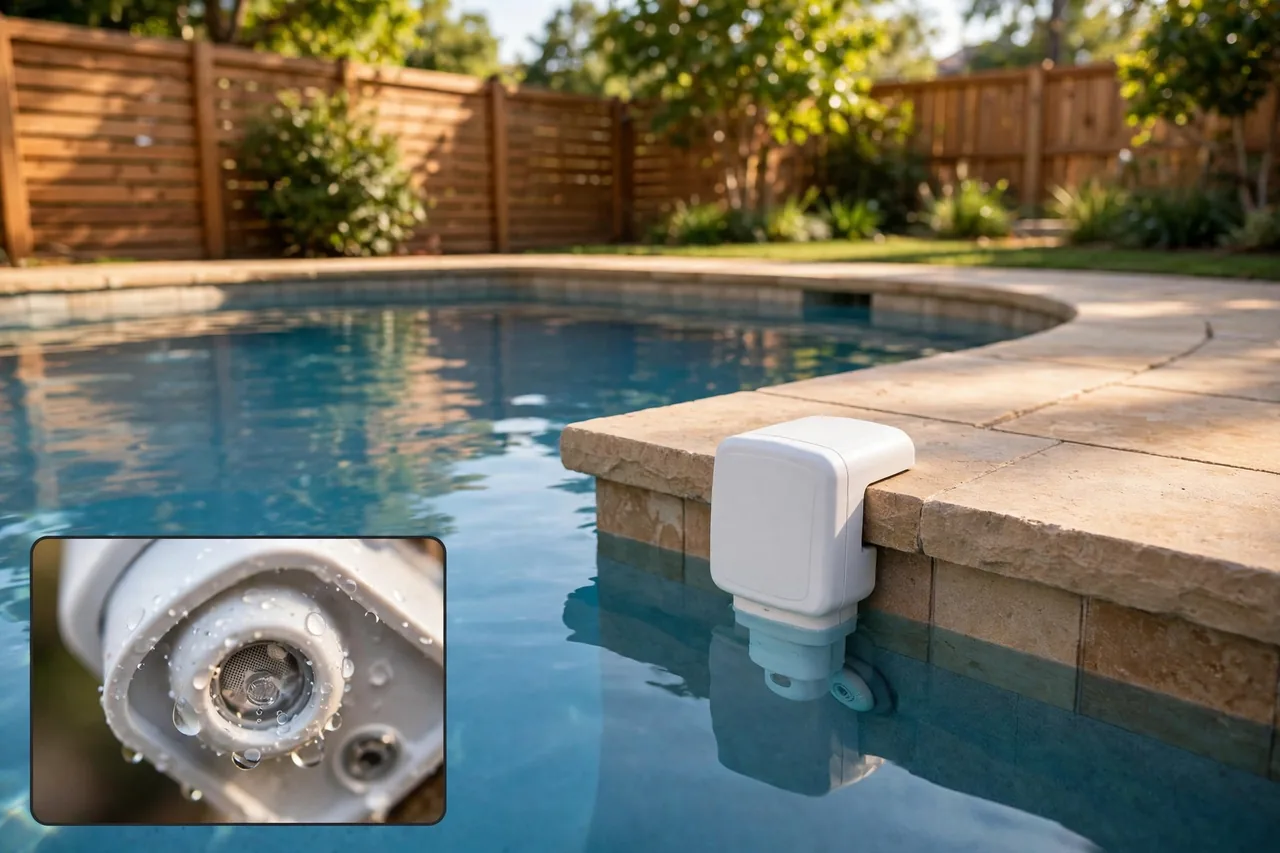
The PoolGuard PGRM-2 is the best pool alarm for in-ground pools because it is NSF certified to ASTM F2208 and its subsurface pressure sensor is far more accurate than surface sensors, especially in windy weather. It stays armed whenever the pool is empty and sounds if anyone removes it from the pool.
Caption: PoolGuard PGRM-2 key specs.
| Spec | Detail |
|---|---|
| Price | $219.30 on Amazon, listed 19 November 2026 |
| Detection | Subsurface pressure sensing |
| Standard | NSF certified to ASTM F2208 |
| Coverage | Pools up to 20 x 40 ft (800 sq ft) |
| Alarm | 85 dB horns, poolside and remote receiver |
| Receiver range | Up to 200 ft in the house |
| Warranty | 3 years |
PoolGuard’s own guide explains the key point most sellers skip: pool alarms do not prevent access, they alert you after something goes wrong, which is why the National Drowning Prevention Alliance puts barriers first and alarms as an additional layer. The PGRM-2 fits that role well because it needs a small hole in the deck, sits in the water, and arms itself every time. See the PoolGuard guide to the best pool alarms for the full layer-by-layer explanation.
Owners praise the low false-alarm rate in wind and rain, and the most common complaint is sensitivity: some users report it needs careful placement to avoid missing a gentle entry. That is the honest trade of a subsurface sensor, and it is why you should test it with a dropped weight before you trust it. Read the Inspect and Test comparison of seven pool alarms for the listing-by-listing breakdown.
Pick the PGRM-2 if you have an in-ground pool and want the certified standard. Skip it if you have an above-ground pool, because it needs a deck mount.
2. Lifebuoy BCone — Best for Phone Alerts
The Lifebuoy BCone is the best pool alarm for parents who want the alert on their phone. It floats in the pool, connects over Wi-Fi, and sends an alert to your phone and to the home unit the moment the water is disturbed, then re-arms itself automatically after swimming.
Caption: Lifebuoy BCone key specs.
| Spec | Detail |
|---|---|
| Price | $395.00 at the Lifebuoy shop and on Amazon, listed 19 November 2026 |
| Detection | Floating water disturbance sensor |
| Standard | ASTM F2208 certified, as stated |
| Alerts | Home unit siren plus Wi-Fi app alerts and Alexa |
| Swim mode | Auto re-arms after swimming |
Bob Vila tested the BCone and called it their favorite alarm, a floating pool-entry alarm that detects motion within the water, and the price on Amazon matched the maker’s own shop at $395. The app is the real difference: a poolside siren helps only if someone is home, while a phone alert reaches you at the store or at work. Read the Bob Vila Lifebuoy pool alarm review for the hands-on test.
Pick the BCone if you want phone alerts and automatic re-arming. Skip it if your budget is tight, because the PGRM-2 protects the water for about half the price.
3. Pool Patrol PA-30 — Best Budget Floating Alarm
The Pool Patrol PA-30 is the best budget pool alarm that still meets ASTM F2208. It floats on the surface, detects objects of 15 pounds and up, and has an adjustable sensitivity control, so you can tune it to your pool instead of living with false alarms.
Caption: Pool Patrol PA-30 key specs.
| Spec | Detail |
|---|---|
| Price | $219.99 on Amazon, listed 19 November 2026 |
| Detection | Floating surface wave sensor |
| Standard | Meets ASTM F2208, as stated |
| Trigger | Objects 15 lb and up |
| Sensitivity | Adjustable |
The PA-30 is the simplest alarm here: drop it in the pool, set the sensitivity, and it watches the surface. Its weakness is the one every floating alarm shares — it can miss a slow, gentle entry that barely ripples the water, and wind chop can set it off. That is why the sensitivity dial matters, and why you should test it the same way you would test the PGRM-2. See the Inspect and Test comparison for how it stacks up against the subsurface picks.
Pick the PA-30 if you want a floating alarm with no deck work. Skip it if your pool sits in open wind, because a subsurface sensor will false-alarm far less.
4. PoolEye PE23 — Best Mounted Alarm With Two Sirens
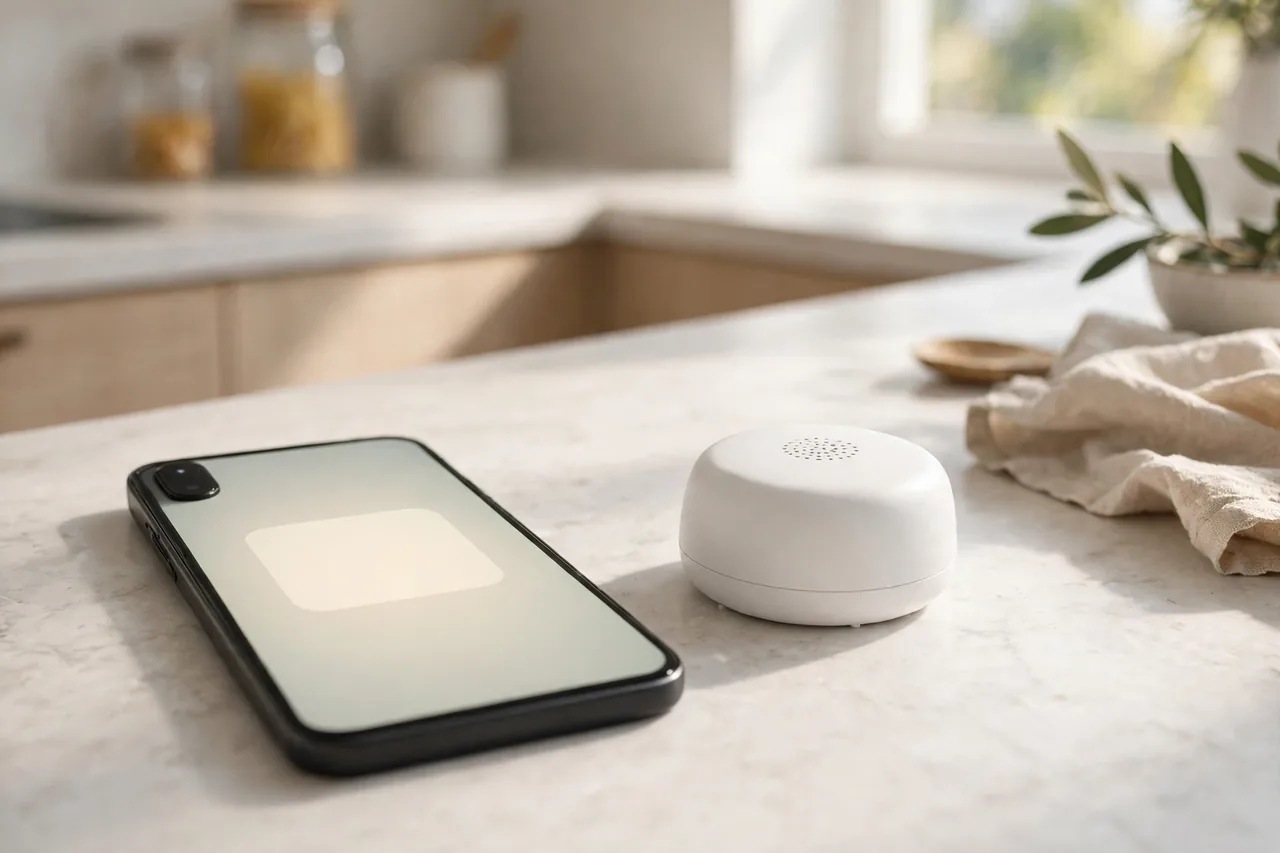
The PoolEye PE23 is the best pool alarm for owners who want sirens in two places at once. It mounts at the pool edge, senses underwater movement, and sounds an alarm both poolside and inside the house, so the alert reaches you wherever you are.
Caption: PoolEye PE23 key specs.
| Spec | Detail |
|---|---|
| Price | $126.00 on Amazon, listed 19 November 2026 |
| Detection | Mounted underwater immersion sensing |
| Standard | ASTM certified, per listing |
| Coverage | Pools up to 16 x 32 ft |
| Alarms | Poolside and in-home sirens |
The PE23 is the cheapest alarm here, and its two-siren design is genuinely useful: a poolside siren warns anyone near the water, while the indoor siren wakes the house. The trade-offs are installation, which needs a rotary hammer drill for the mount, and sensitivity to pool jets and cleaners, which can trigger it. Turn the jets off when the pool is not in use, and test the alarm weekly.
Pick the PE23 if you want the lowest price with sirens in two places. Skip it if you cannot drill the deck mount, because a floating alarm needs no installation at all.
5. PoolGuard DAPT-2 — Best Door Alarm for the House
The PoolGuard DAPT-2 is the best pool alarm for the house door because it catches the danger one step earlier: a child opening the back door. It is UL listed to UL 2017, sounds seven seconds after the door opens, and has an adult pass-through so grown-ups can come and go without setting it off.
Caption: PoolGuard DAPT-2 key specs.
| Spec | Detail |
|---|---|
| Price | $56.91 on Amazon, listed 19 November 2026 |
| Detection | Door opening to the pool area |
| Standard | UL listed to UL 2017 |
| Alarm delay | 7 seconds after opening |
| Feature | Adult pass-through button |
A water alarm only helps after a child is already in the pool. A door alarm helps before that, and it costs less than $60. The US Consumer Product Safety Commission recommends layers of protection for pool safety, including door alarms, pool covers, and self-closing, self-latching gates, because drowning takes only one distraction. Pair the DAPT-2 with a water alarm and you have two chances to catch the same mistake. Read the Inspect and Test comparison for the door-alarm details.
Pick the DAPT-2 for every door between the house and the pool. Skip it as your only alarm, because it cannot help if a child reaches the pool from the yard.
How to Choose a Pool Alarm
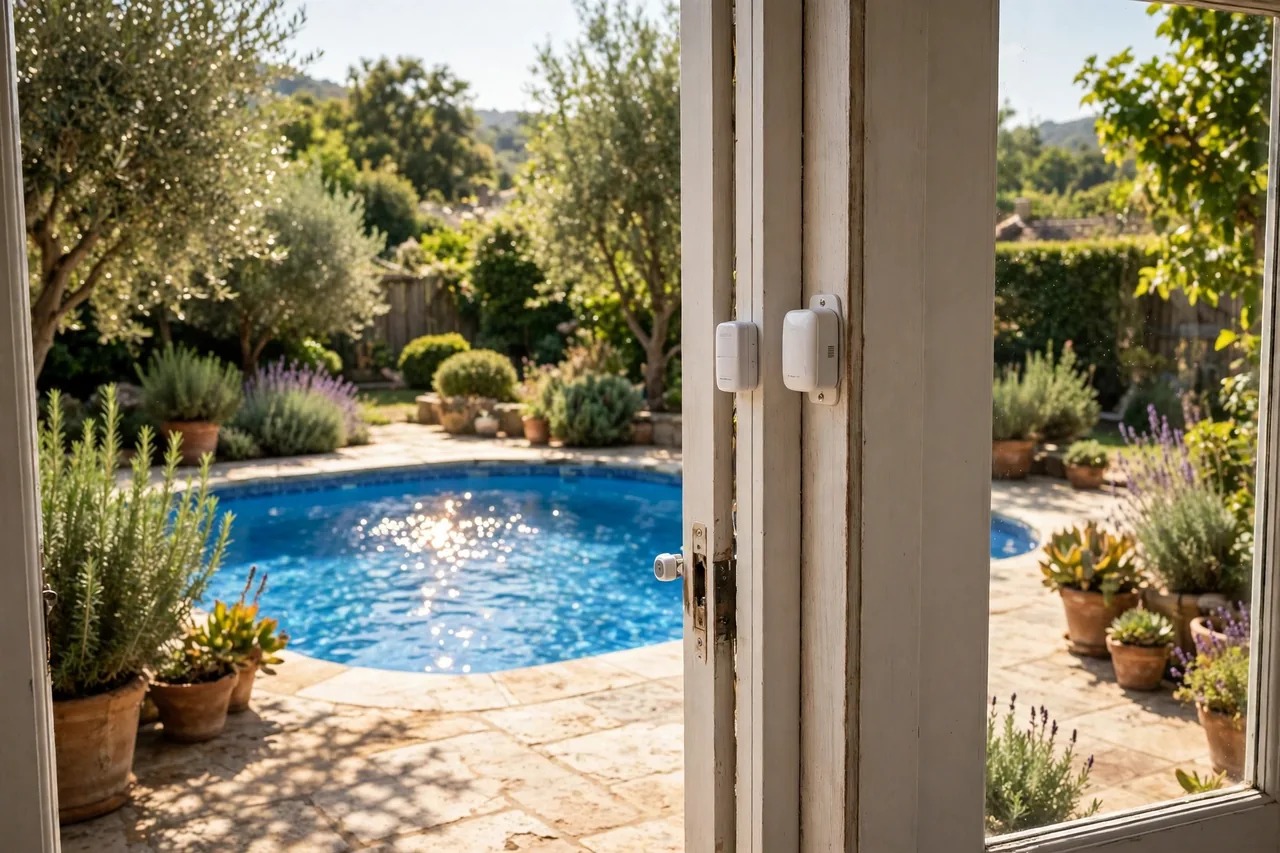
Start with your pool type. In-ground pools suit the PGRM-2 or the PE23. Above-ground pools suit a floating alarm like the PA-30 or the BCone, because there is no deck to drill. Then ask where the danger comes from: a door alarm guards the house exit, a water alarm guards the pool itself, and a camera guards the approach.
What Do the Standards Mean?
ASTM F2208 is the standard for pool alarms: it sets how sensitive the alarm must be and how loud it must sound. Some US states, including New York, require residential pool alarms to meet ASTM F2208, sound both poolside and at a second location in the home, and detect a child entering anywhere on the surface. UL 2017 is the standard for water-hazard door alarms — it covers the DAPT-2, not the water alarms. If a listing names no standard at all, do not buy it.
Floating, Subsurface, or Mounted?
Floating alarms are the easiest to install and the easiest to fool: wind and gentle entries are their weak spots. Subsurface alarms ignore surface chop and false-alarm less, but they need a deck mount. Mounted immersion alarms sit between the two, with the loudest dual sirens. Guess which fits your pool before you buy: a windy yard needs subsurface, a soft-sided pool needs floating, and a concrete deck suits a mounted alarm.
What About Wearable and Camera Alarms?
Wearable alarms like the Safety Turtle attach to a child’s wrist and sound when submerged, which is excellent for toddlers but useless for a guest or a pet. Camera alarms like SwamCam watch the pool approach with AI and warn you before anyone reaches the water, but they do not detect drowning itself. Both are extra layers, never replacements for a water alarm and a fence.
Pool Alarm Limits You Must Know
Pool alarms are reactive by design. They alert you after something goes wrong, and they never prevent access. A child can still enter the pool, and an alarm only helps if an adult hears it and acts fast. That is why the alarm is the last layer, not the first.
The second limit is coverage. One alarm must sense a child entering anywhere on the surface. If your pool is bigger than the alarm’s rated coverage, you need a second unit. The third limit is swim mode: an alarm left in swim mode after swimming is an alarm switched off, so use one that re-arms itself, and check it every time. Our baby-proof stairs guide covers the other half of child safety inside the home, because a safe pool means little if the stairs are not safe too.
Test your alarm every week with a dropped weight, not with a child. Check the batteries monthly. Replace the alarm the moment it stops sounding fast and loud, because a slow alarm is a broken alarm.
What Most People Get Wrong About Pool Alarms
Most people buy the cheapest floating alarm and assume the pool is now safe. It is not. The alarm is the weakest layer of pool safety — the fence and the gate do the real work. A pool with a good fence and no alarm is safer than a pool with an alarm and no fence.
The second mistake is buying one alarm for a pool it cannot cover, or mounting it where the pool jets set it off all day. The third mistake is turning the alarm off for a swim and forgetting to turn it back on. Automatic re-arming exists for exactly this reason, and it is worth paying for. Layered light helps too: our patio lighting ideas show how to light the pool area so you can see the water clearly after dark, and a wide angle security camera watches the pool approach while the alarm watches the water.
Pool Safety Disclaimer
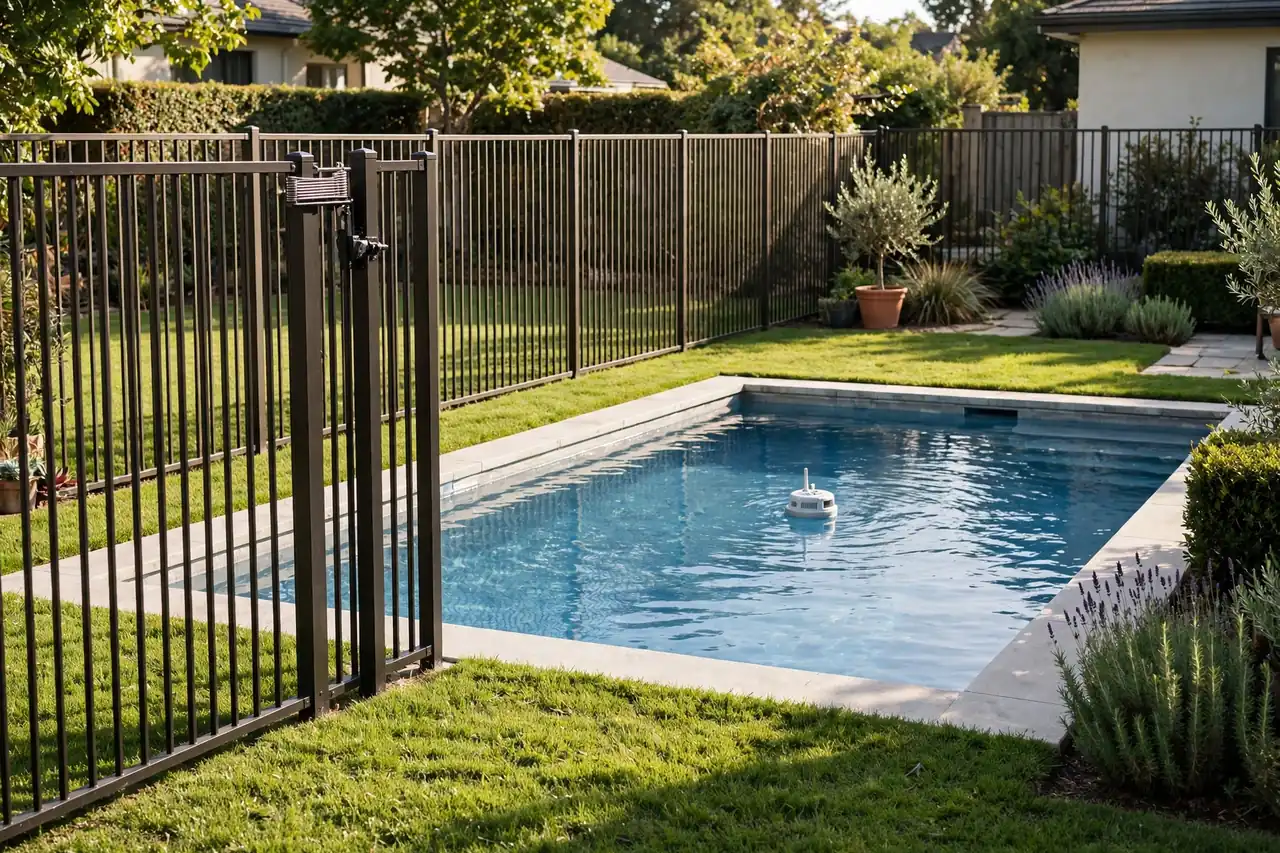
Pool alarms save lives only as part of layers of protection: a fence with a self-closing, self-latching gate, door alarms, adult supervision, and swim lessons. Never leave a child alone near water, even for a moment, and never rely on any alarm as a substitute for watching. If a child is missing, check the pool first. This guide is general information, not safety advice for your specific pool, and your state or town may have its own pool barrier and alarm rules — check them before you buy.
Related Guides
For the yard around the pool, our patio lighting ideas show how to light the area safely after dark. A wide angle security camera watches the pool approach, while the alarm watches the water itself.
Frequently Asked Questions
What is a pool alarm and why is it important?
A pool alarm is a safety device that alerts homeowners when someone enters or falls into a swimming pool unexpectedly. It matters because drowning is fast and silent, and the alarm buys the seconds an adult needs to react when the fence and gate have already failed.
What types of swimming pool alarms are available?
There are five main types: surface wave alarms that sense water disturbances; subsurface detectors that watch movement under the surface; wearable water-activated wristbands for children or pets; perimeter and gate alarms; and camera-based systems that use AI to watch the pool area.
Which pool alarm is best for families with small children?
The Safety Turtle 2.0 wearable water alarm is ideal for families with small children, because it sounds the moment the child is submerged. Pair it with a water alarm like the PoolGuard PGRM-2 and a door alarm like the DAPT-2 for three layers of warning.
Can pool alarms work in all weather conditions?
Most quality pool alarms work in rain and wind, but floating alarms false-alarm more in heavy wind and chop. Subsurface alarms handle bad weather best. Check the maker’s weather rating, test the alarm after storms, and replace batteries before winter.
Are pool alarms required by law?
It depends on your state. New York requires residential pool alarms to meet ASTM F2208, sound both poolside and at a second location in the home, and detect a child entering anywhere on the surface. Check your own state and town rules before you buy.
Start with the PoolGuard PGRM-2 for the water and the DAPT-2 for the back door, then add the fence and gate if they are not there yet. Test the alarm weekly, keep the batteries fresh, and never let an alarm replace watching the pool yourself.