
The best way to handle spring cleaning and decluttering is to declutter first, because every item you remove is one less thing to move, dust, and organize.
Spring brings a burst of energy after winter, and it is the natural moment to reset the whole home. But cleaning around clutter is slow, frustrating work. You shift piles, dust around them, and put them back where they were. When you declutter your home first, the cleaning that follows is faster and the result lasts longer. This guide gives you a simple order, a room-by-room checklist, and a schedule you can finish in a few weekends.
Why Declutter First and Clean Second
Decluttering first cuts the work in half. A shelf with five items takes a minute to dust. The same shelf crowded with twenty takes ten minutes and still looks messy when you finish. Professional organizers put it plainly: do not organize what you can declutter instead. Sort first, then clean the empty space properly.
There is a second benefit. Decisions get easier when the home is already changing. Once the first bag leaves, the next drawer feels lighter to sort. Start with the easy wins and save the sentimental items for last, when your decision muscle is warm. If you want the deeper method behind this order, read our guide to cleaning and decluttering together, which explains how the two jobs support each other instead of competing for your weekends.
The rule for the whole season is simple: less stuff, less cleaning. Every item that leaves now is an item you never dust again.
Set Up Before You Start
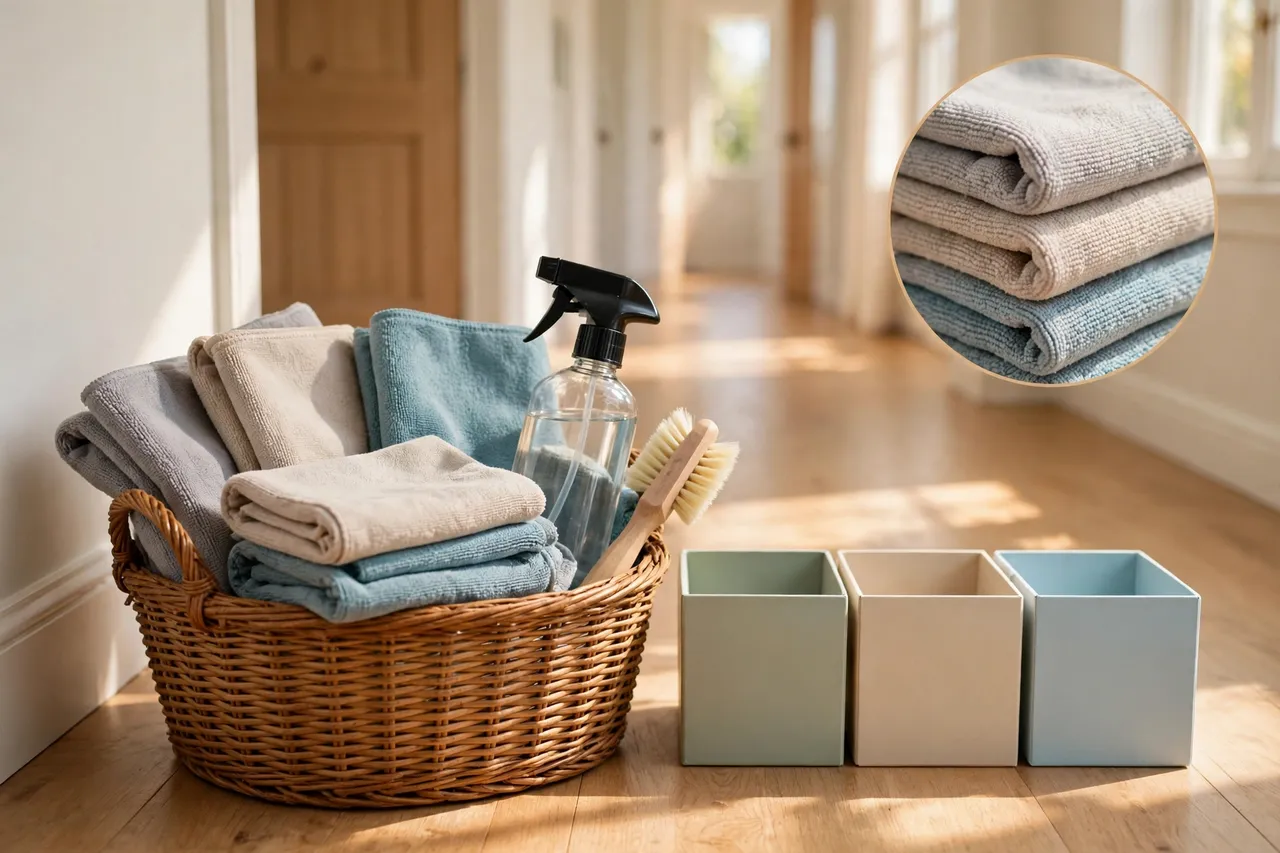
Gather your supplies in one basket before the first room. You need microfiber cloths, a gentle all-purpose cleaner, baking soda, white vinegar, a vacuum with attachments, trash bags, and three boxes labeled keep, donate, and toss. Keep the basket by the door so every session starts in seconds, not with a hunt for supplies.
Pick your schedule next. A whole-home reset fits into three weekends if you take one room per weekend, or into two weeks if you work in short daily sessions. Write the dates down. A plan on paper beats a plan in your head, because a plan in your head moves every time life gets busy.
| Supply | What it is for | Where it goes first |
|---|---|---|
| Microfiber cloths | Dusting and wiping without streaks | Shelves, mirrors, electronics |
| All-purpose cleaner | Daily surfaces and spot cleaning | Counters, tables, switches |
| Baking soda and vinegar | Deodorizing and gentle scouring | Mattress, sink, oven |
| Vacuum with attachments | Floors, sofas, and corners | Every room, top to bottom |
| Three labeled boxes | Keep, donate, and toss sorting | Every room you enter |
Open the windows as you go. Fresh air is part of spring cleaning, not a bonus. It clears dust from the air and tells your brain the season has actually changed.
Where to Begin: Start With the Pain Point
Start with the area that causes the most daily friction, not necessarily the room that appears first on a generic checklist. If the kitchen counters drive you mad every morning, start there. If the entryway is buried in shoes and bags, start there. A visible win in the first hour buys motivation for the harder rooms.
Good starting points include a crowded pantry, a closet that no longer closes, a pile of mail that needs decisions, or a bathroom that needs a deep clean. Choose one, finish it completely, and take the donation bag out of the house the same day. A finished room is proof the system works.
The Room-by-Room Checklist
Work top to bottom in every room: ceilings and fans first, then shelves and surfaces, then floors last. That way dust falls down onto floors you have not cleaned yet, instead of onto floors you just finished.
Kitchen
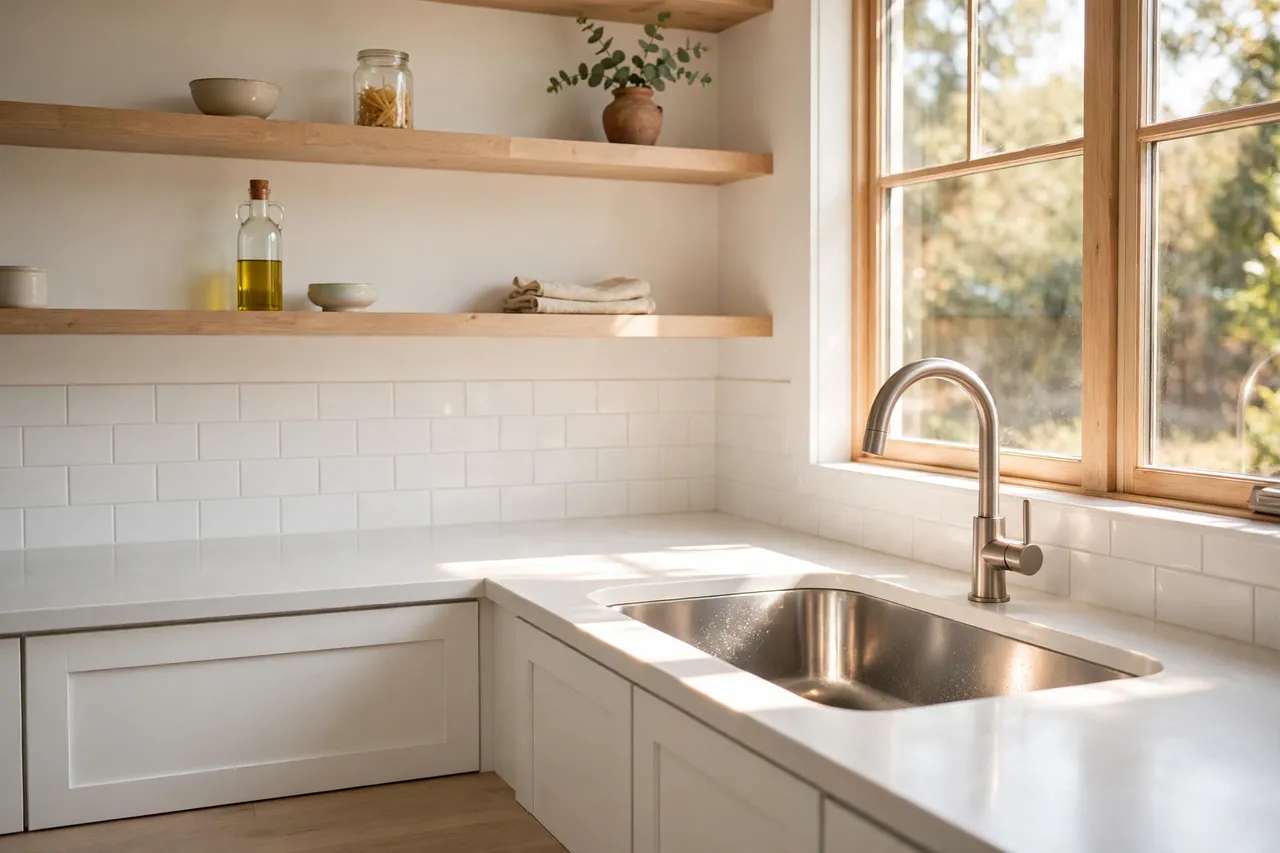
Empty the cabinets and drawers, check expiration dates, and donate unopened food you will not use. Degrease the oven, stovetop, and range hood, and deep clean the fridge inside and out, including the seals. Wipe shelves and reorganize by category, with breakfast items together and spices in one spot. Our guide to declutter kitchen cabinets walks through the cupboard pass step by step.
Living room
Vacuum sofas and chairs thoroughly, including under the cushions, and wash throw blankets and pillow covers. Dust electronics, shelves, and decor, and clear the coffee table and side tables of everything that does not belong. Move furniture to sweep and mop underneath, and wash the windows inside and out so the spring light actually gets in.
Bedroom
Strip the bed and wash all bedding on a hot cycle. Sprinkle baking soda on the mattress, let it sit, then vacuum it. Declutter the nightstands, the space under the bed, and the closet floor, and rotate heavy winter blankets into storage while lighter layers come out. A calm bedroom is the reward that makes the whole reset feel worth it.

Bathroom
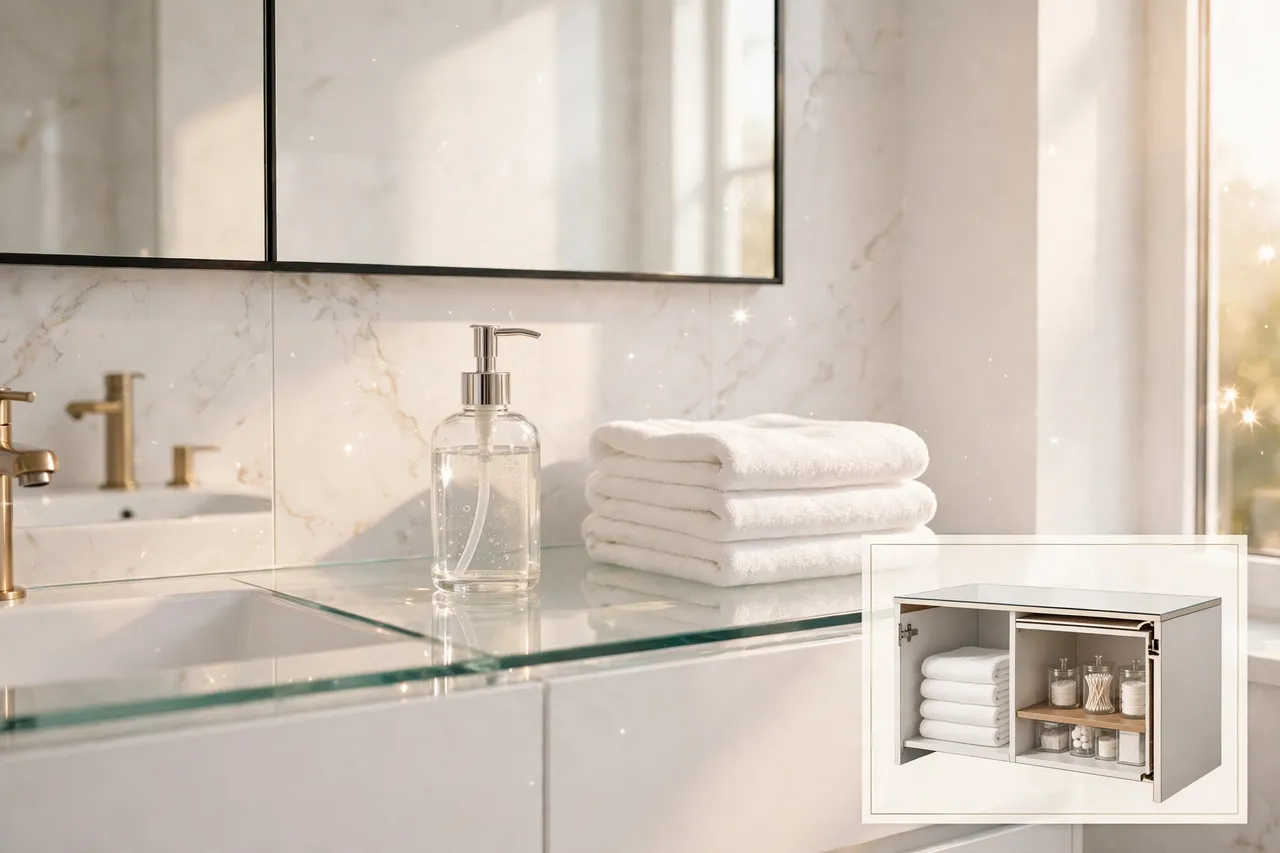
Declutter the drawers and cabinets first and toss expired makeup, old medicines, and half-used products. Scrub tiles, grout, sinks, toilets, and showers, and replace worn towels. Keep only daily items on the counter, in one tray, so the room can be wiped in seconds. Our declutter bathroom guide covers the cabinet and drawer pass in detail.
Entryway and hallways
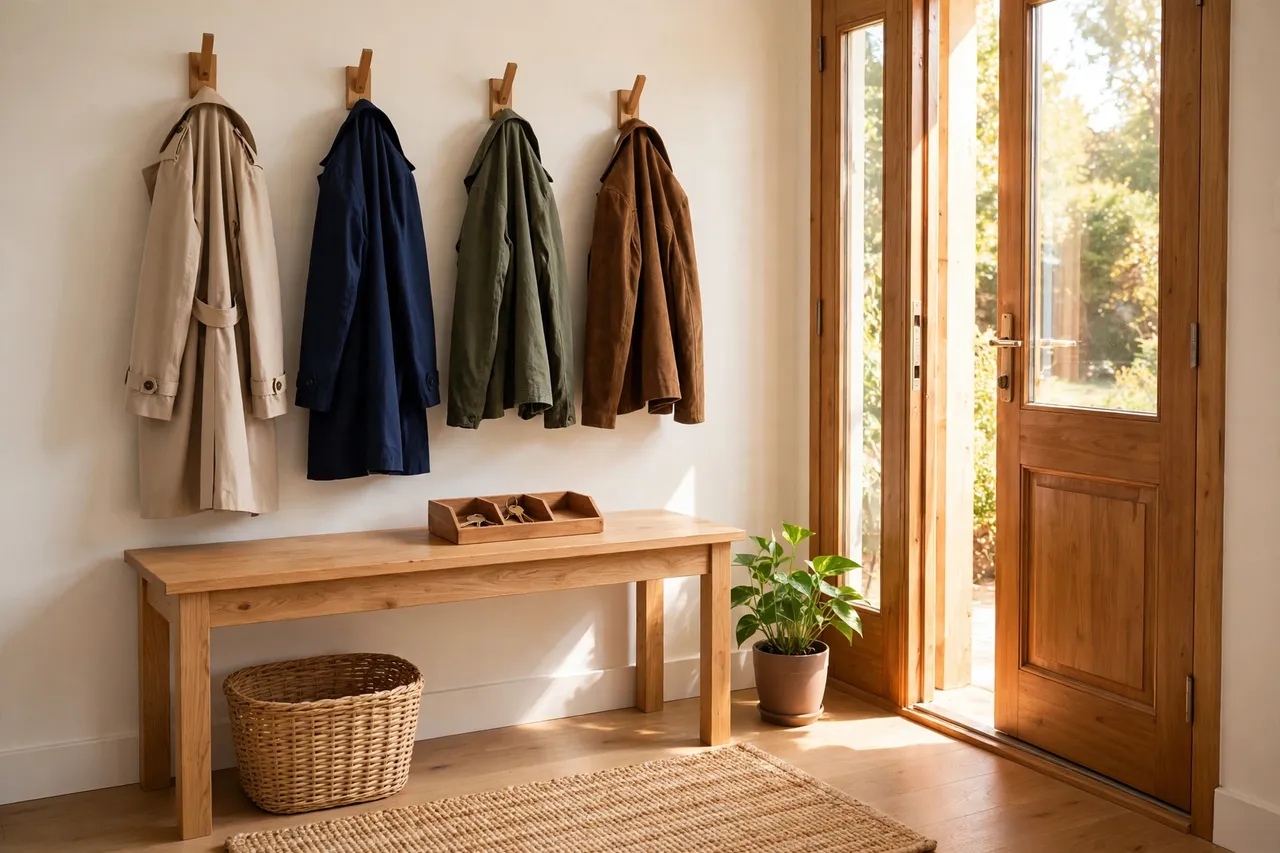
Declutter shoes, coats, bags, and mail piles and keep only what you use daily. Wipe door handles, light switches, and baseboards, clean the mirrors, and vacuum the corners. Add a small tray for keys and one hook per person, and the drop zone stays tidy for months.
Deep-Clean Jobs People Forget
The rooms get the attention, but the hidden jobs make the home feel truly fresh. Wash curtains or take them down for a proper clean. Dust lampshades, ceiling fans, and light fixtures. Wipe baseboards and window sills in every room. Vacuum and shampoo rugs, and mop hard floors after a good sweep.
Check the places that collect grime quietly: the top of the fridge, the inside of the washing machine seal, the filter in the range hood, and the tracks of sliding doors. None of these takes more than ten minutes, and each one removes a layer of winter that you stop noticing only because you live with it.
Paper deserves a session of its own. Sort the mail pile into action, file, and shred, and recycle the rest. Old papers are the quietest form of clutter, and clearing them frees more mental space than any other single job. See our guide on how to organize paperwork at home for a filing system that keeps the pile from coming back.
What to Do With What Leaves
Sort everything into keep, donate, sell, recycle, or toss, and move each pile out the same day. Donations go straight into the car. Items worth selling get listed within the week, with a firm rule: if they do not sell in two weeks, they go to donation. Broken and worn-out items go to trash or recycling without a second debate.
Clothes and linens in good shape can go to charity shops or textile banks. Old towels and sheets that are past use can go to animal shelters, which often welcome them. Check your local rules for paint, batteries, and electronics before binning them. If you need help with the sorting side, HGTV explains how to organize a closet after a purge, which is the perfect next step once the excess is gone.
Keep It Clean After the Reset
A spring reset fails when nothing changes about daily habits. The fix is small: a five-minute reset each evening, a donation bag that lives in a closet, and a one-in, one-out rule for clothes, books, and kitchen gadgets. When something new comes in, something old goes out the same day.
Pick one short session a week for the spot that fills fastest, usually the kitchen counter or the entryway. Ten minutes on a Sunday keeps the whole home at the level your spring reset reached. Apartment Therapy’s guide to linen closet organization shows how folding sheets and towels the same way every time keeps one of the busiest storage spots calm all year.
A simple weekly rhythm keeps the reset alive without turning your life into chores. Monday is the entryway, Tuesday the kitchen counter and one drawer, Wednesday the living room surfaces, Thursday the bathroom counter, and Friday the bedroom nightstand. Saturday is one paper stack, and Sunday is a quick fridge check. Each day takes about ten minutes, and the whole week adds up to barely an hour. The point is not perfection. The point is that no single spot ever gets bad enough to need another full spring reset.
Seasonal swaps deserve a date on the calendar too. When the heavy blankets go into storage, check them for wear and wash them first so they come out fresh next winter. When summer clothes come out, try each piece on and donate what no longer fits or flatters. These small seasonal habits are what keep a spring reset from fading by summer.
Spring cleaning and decluttering are not a punishment for a messy winter. They are a fresh start you give yourself, one room at a time. Start with the room that bothers you most, finish it today, and let the clean surfaces carry you into the next one.
Related Guides
Keep the momentum going with the rest of this series. Try our 30 day declutter challenge for one small task a day, or our plan to declutter your home in 15 minutes a day when you want a routine instead of a project. For the full method, start with our pillar guide to decluttering, and for the linen closet specifically, see declutter linen closet tips.
Frequently Asked Questions
Where Should You Start Spring Cleaning?
Start with the area that causes the most daily inconvenience, not necessarily the first room on a generic checklist. A crowded kitchen, a buried entryway, a pantry full of forgotten food, or a closet that no longer works are all good starting points. A visible win in the first hour builds momentum for the harder rooms.
How Do You Create a Spring-Cleaning Schedule?
Break the work into sessions based on the time and energy you realistically have. One room each weekend, one category each day, or two 30-minute sessions during the week all work. Write the dates down and treat them like appointments, because a schedule on paper is far harder to postpone than one in your head.
Should You Declutter Before Spring Cleaning?
Yes, always declutter first. Decluttering reduces the number of objects you must move, dust, and organize, so the cleaning that follows is faster and lasts longer. Sort belongings into keep, donate, sell, recycle, and discard before you pick up a cloth, and clean the empty space properly once the excess is gone.
In What Order Should You Clean a Room?
Clean from higher surfaces to lower ones in every room. Start with ceilings, fans, and the tops of cabinets, then move to shelves and surfaces, and finish with the floors last. That way dust falls onto floors you have not cleaned yet, instead of onto floors you just finished.
Where To Begin With Cleaning?
Begin with the room you use most or the one that causes the most trouble, and work through it completely before moving on. Empty one space at a time, purge what does not belong, wipe the surfaces, and put back only what earns a place. One finished room beats three half-started rooms every time.