
To start decluttering when overwhelmed, pick one tiny spot you can finish in 10 minutes, set a timer, and remove the obvious trash first.
Do not start with the whole house. Start with one spot, a few minutes, and a list someone else wrote for you.
Decluttering can involve hundreds of small decisions. Some belongings carry emotional meaning, and the work can be physically demanding. When you look at an entire home instead of one manageable area, it is easy to feel as if the project is simply too big. That feeling is not a character flaw. It is your brain correctly reporting that the job, as you have framed it, is too big to start.
Why Decluttering Feels Impossible When You Are Overwhelmed
Overwhelm has a few specific causes, and naming them makes each one easier to handle. The first is decision fatigue: every item is a choice, and a cluttered room holds hundreds of choices. The second is emotional weight: gifts, inherited things, and reminders of past versions of yourself all demand a feeling before they allow a decision.
The third is the lack of a visible finish line. “Declutter the kitchen” has no clear end, so the brain never gets the reward of completion. “Sort the top pantry shelf” has a beginning and an end, and finishing it teaches your brain that starting produces results. That lesson is what makes tomorrow’s session easier.
The fourth is physical: a messy room is genuinely harder to work in. There is nowhere to set a box down, nowhere to stand, and every step involves moving something. That is why the method below starts with trash, not decisions. Trash needs no judgment, and removing it creates the physical space to think.
The Gentle 10-Minute Method
Follow this sequence literally, like a recipe. Each step removes one decision you would otherwise have to make yourself. Your whole setup is three labeled containers and a timer. That is it.
- Set a 10-minute timer on your phone and promise yourself you will stop when it rings. A hard stop is what makes this feel safe: you are not signing up for a whole afternoon.
- Pick one micro-zone, not a room. One drawer, half the kitchen counter, the top of your nightstand, one shelf. If touching every item would take more than 10 minutes, go smaller.
- Label three containers: keep, donate, trash. Laundry baskets, grocery bags, and cardboard boxes all work. Every item gets exactly one destination.
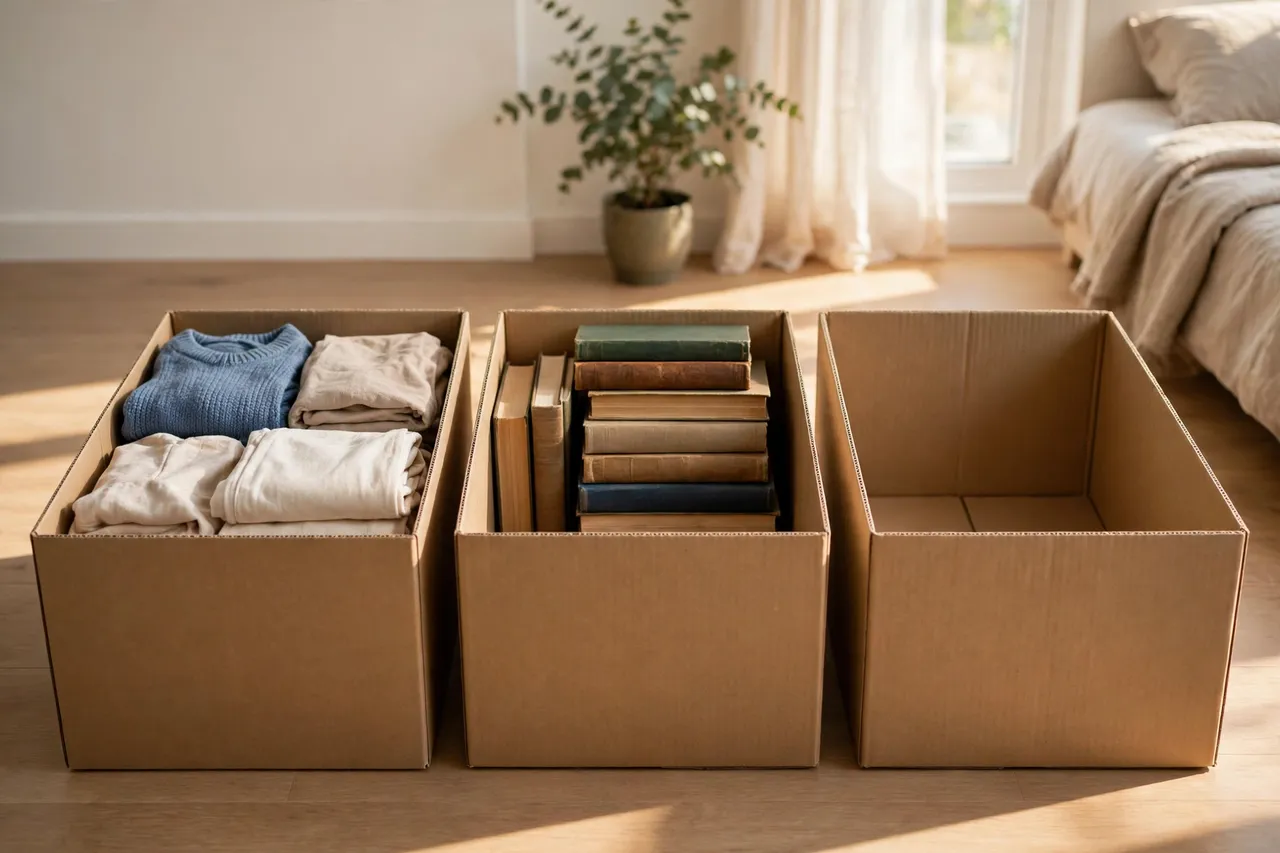
- Touch each item once and decide within 5 seconds. Fast, imperfect decisions beat slow, agonizing ones. Tiebreaker: if you have not used it in a year, own a duplicate, or cannot name where it lives, it does not go back.
- Start with no-brainer discards: expired, broken, stained, empty, dried-out, obsolete. These need zero emotional energy, and clearing five easy items builds momentum for harder calls.
- When the timer rings, finish the loop. Take the trash bag out, put the donate bag by the front door or in your car, and return the keeps to their places.
- Stand back and take a before-and-after photo. That visible proof teaches your brain that starting produces results, which makes tomorrow’s session easier.
Ten focused minutes a day add up fast. At that pace, a family home takes about a month, and the work never once feels like a marathon. If 10 minutes feels like too much on a bad day, do 5. A 5-minute session that happens beats a 60-minute session that does not.
Where to Start When Everything Is a Mess
If you would rather choose yourself than follow a method, here is the order that works best. Start with trash, not decisions. Expired food, dried-out pens, and empty bottles do not need a “should I keep this?” moment. It is the easiest win there is, and it builds momentum.
Pick a spot you see every day.
 A clear kitchen counter or entryway changes how the whole house feels faster than a clean garage does.
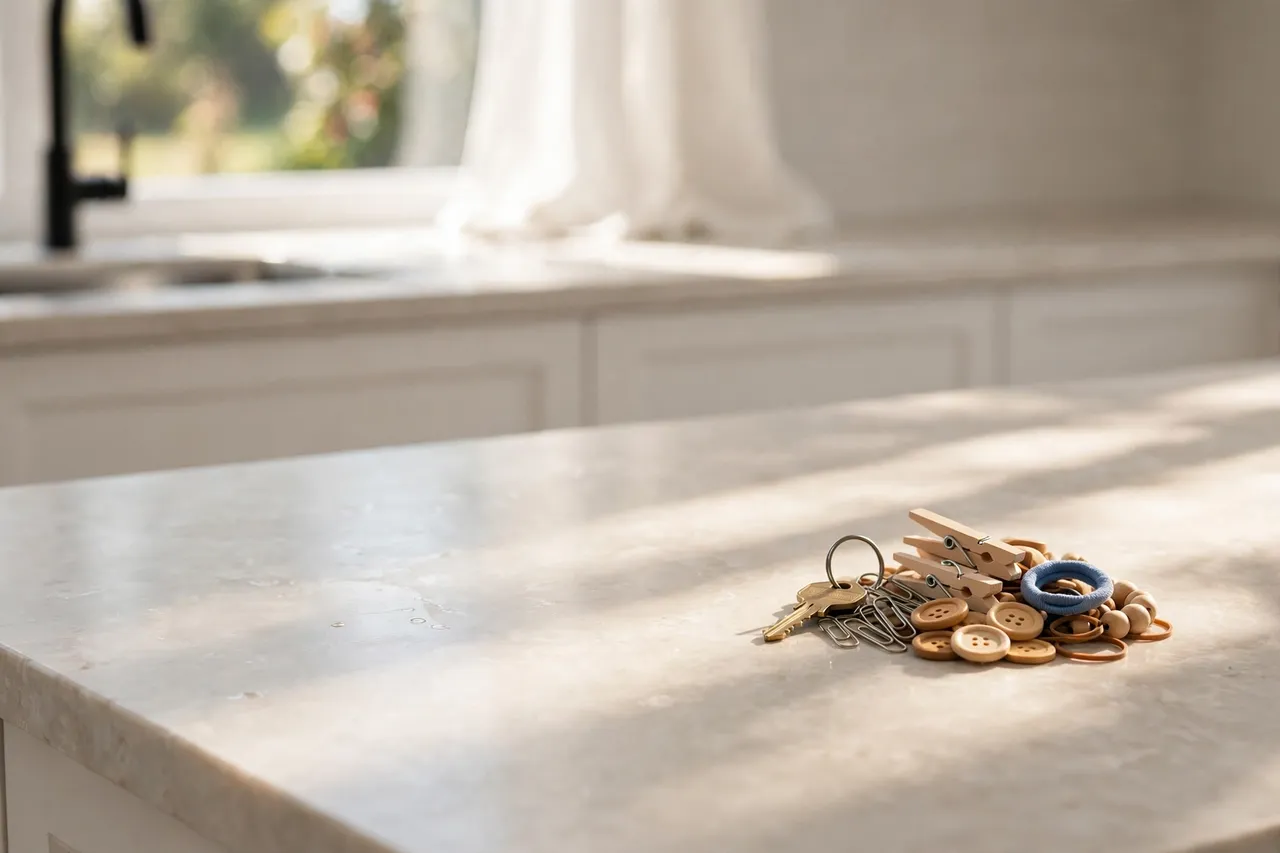 Go small: one drawer you finish beats a room you abandon halfway. Save sentimental things for last. Photos, kids’ art, and inherited items are the hardest calls, and they deserve a day when you have practice and energy.
The bathroom is a favorite starting line for a reason. Almost everything in it is purely practical, so the decisions are easy: out-of-date medicines, dried-out products, hotel samples you will never use. The fridge is another beginner-friendly zone because the expiration dates literally do the deciding for you. Your car is a third instant win: a small, clearly defined space, and a quick 10-minute sweep makes an immediate difference to your daily commute.
Do not organize things you do not need. First decide whether you want it, whether you use it, and whether it belongs here. Only then does it earn a home. If you are sorting a closet and the space itself fights you, a few small closet storage ideas can help the kept clothes fit, but buy nothing until the sort is done.
Four Simple Decisions Instead of a Hundred
Decision paralysis is the feeling of being stuck because every choice feels heavy. The fix is to reduce the number of choices. Use four simple categories to make decluttering decisions easier: keep, donate, move, and decide later. Every item gets one of the four, and you move on.
Keep means you use it, need it, or genuinely value it, and it has a place to live. Donate means it is usable but no longer fits your routine. Move means it belongs in another room, and you carry it there at the end in one trip. Decide later means it goes in the maybe box, which has three strict rules: it must be small, a shoebox and not a moving box; it must be dated, with today’s date written on the lid; and if you do not open it in 30 days, it goes unopened.
Do not buy organizers before decluttering. Declutter first so you know exactly what you are keeping and how much storage you actually need. If the linen cupboard is part of the overwhelm, a little linen closet organization goes a long way, but only after the sort.
Quick Decluttering Tasks You Can Do in 5 Minutes
No time for a full session? Pick one of these. Each takes about five minutes and leaves a visible result.
- Toss every expired condiment on your fridge door.
- Pull every empty hanger out of your closet.
- Clear the top of your nightstand completely.
- Empty one junk drawer onto a tray, keep the five things you use, and bin the rest.
- Take one bag of trash out of each room you walk through.
- Delete five apps you have not opened in a month.
- Return everything on the dining table to its proper room.
Five-minute tasks work because they are too small to argue with. Nobody needs motivation to open a single drawer.
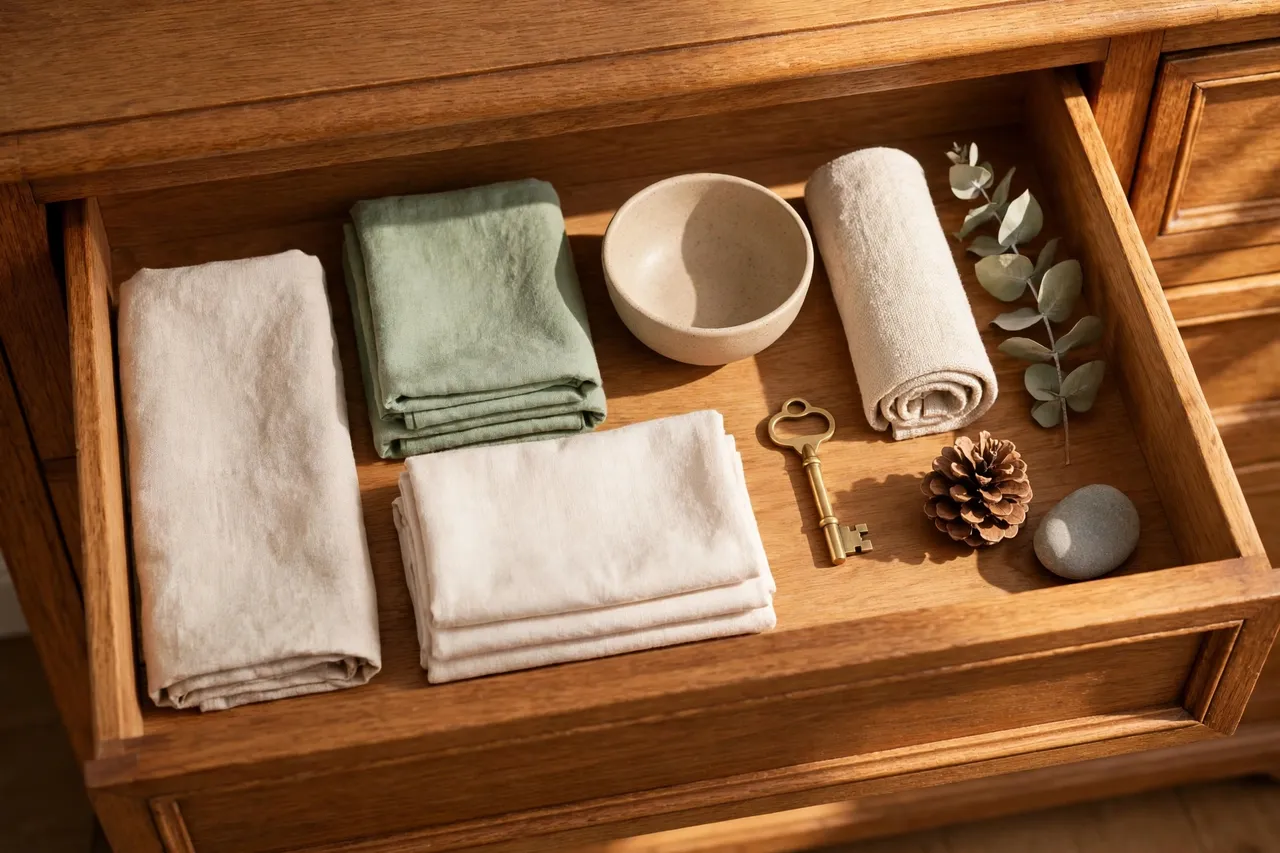 And once the drawer is done, the brain has its proof: starting works. If you want a guided rhythm for these small sessions, 15 minutes a day turns the same idea into a daily habit, and the 30-day declutter challenge gives you one short task a day.
What to Do When You Freeze
Freezing mid-sort is normal, and it has a fix. If you catch yourself holding the same item for more than a minute, put it in the maybe box and move on. The maybe box exists for exactly this moment. Do not let one hard item stop the whole session.
If the whole room freezes you, make the zone smaller. A whole closet is too big; one shelf is not. A whole kitchen is too big; one drawer is not. Go smaller until the task feels boring instead of frightening, then start there.
If you feel the urge to clean instead of declutter, notice it and return to the sort.
 Cleaning is comforting because it has no hard decisions, but a clean cluttered room is still a cluttered room. The general method, including the sorting system, is in the pillar guide to decluttering. And if the usual question of what to remove feels impossible, try the opposite: reverse decluttering asks what to keep, and the rest decides itself.
It also helps to make the session pleasant. Music, a podcast, or a simple routine such as a cup of tea before you start turns the work into a ritual instead of a punishment. And if a friend or family member can sit with you while you sort, the company alone makes the decisions easier.
How to Keep the Clutter From Coming Back
A one-time clear-out feels wonderful, and then the clutter quietly rebuilds itself. The fix is a small set of habits. Keep the one-in-one-out rule: when a new item enters the house, an old one leaves. Keep flat surfaces mostly clear, so a dining table stays a dining table. Run a weekly reset of about 10 minutes per room: everything back to its home, anything homeless into a designated basket.
Pause before new purchases. If an item costs more than you planned, wait a few days before buying it. Most impulse buys never survive the wait. And schedule a short maintenance session each season: fifteen minutes in the closet when the weather changes, or a quick pass through the kitchen before the holidays, catches clutter while it is still small.
For a faster pass when you have a free weekend, how to declutter your home fast covers the same method at weekend speed. For the living room specifically, decluttering the living room walks through the room most people see first.
Related Guides
If short daily sessions suit you, declutter your home in 15 minutes a day is the daily version of this method. If you want a day-by-day plan, the 30-day declutter challenge gives you one task a day for a month. And if the question of what to remove feels impossible, reverse decluttering flips it around and asks what to keep instead.
Frequently Asked Questions
How do I start decluttering when I’m overwhelmed?
Make the first step tiny and specific. Instead of decluttering the kitchen, pick one drawer or one shelf and give it 5 to 15 minutes. Start with obvious trash, like expired food or dried-out pens, because it needs no hard decisions.
What should I declutter first?
Start with a spot you see every day, like the kitchen counter or the entryway, so you notice the difference right away. Leave sentimental items like photos and keepsakes for last, since they are the hardest to decide on.
Where should I start decluttering when I’m overwhelmed?
Start with one small, visible area that you can completely finish, such as a drawer, shelf, or section of a countertop. Avoid beginning with an entire room, and finish the small area completely before moving on.
How long should I declutter each day?
Even 15 to 30 minutes can be enough. Short sessions are often easier to maintain than trying to declutter your entire home in one weekend, and ten focused minutes a day add up to a whole house in about a month.
Can I really declutter in 10 minutes a day?
Yes. Ten focused minutes a day add up quickly, especially when you work on one small zone at a time and finish the loop by taking the trash out and bagging donations before you stop.
You do not need a free weekend, a burst of motivation, or a perfect plan. You need one drawer, ten minutes, and a timer. Start there, finish the loop, and let the visible win do the convincing for you.