If you’ve ever looked at a laminate countertop edge and thought, “Why does that dark line ruin the whole look?” you’re not alone. That single detail is what pushes a lot of homeowners, designers, and shop fabricators toward solid-color core laminates.
Here’s the thing. When you’re building cabinets, reception desks, or wall panels, the surface matters, but so do the edges, corners, and cutouts. A material that stays visually clean after cutting can make a project look more expensive, even when the layout is simple.
In this guide, I’ll walk you through what this material is, how it compares to other surfaces, where it works best, what to check before buying, and what mistakes to avoid. I’ll keep it practical and easy to follow, the way you’d want it explained if you were standing at a counter sample rack.
Snippet-Ready Definition:
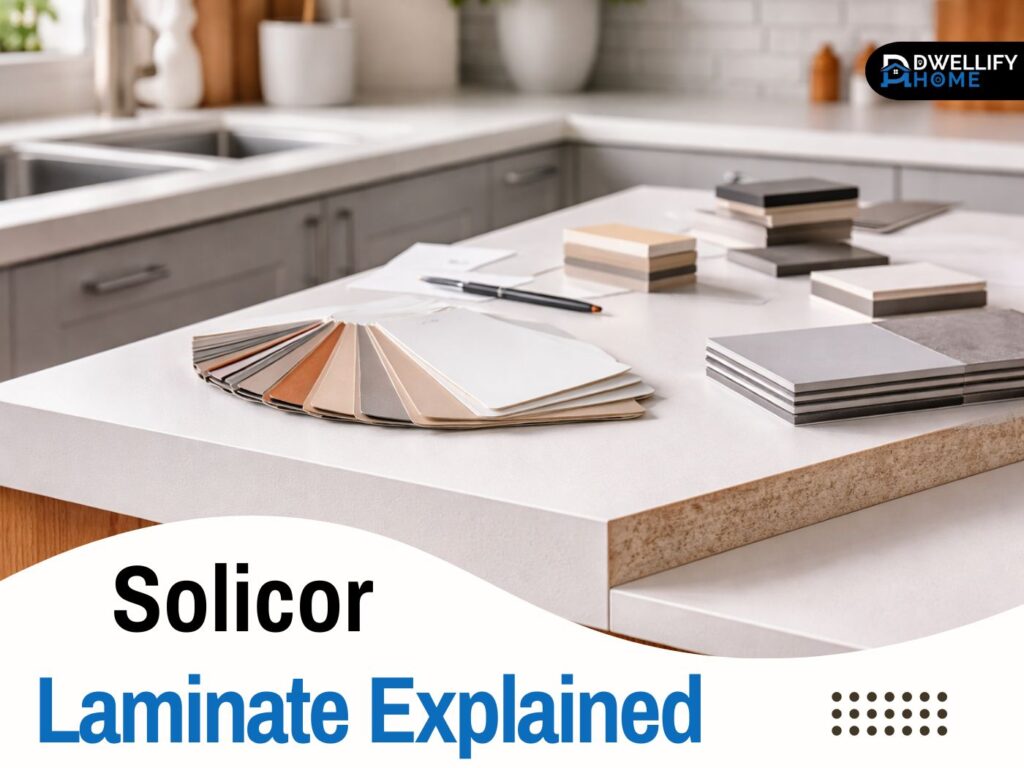
Solicor is a color-through laminate where the core matches the surface, eliminating dark edges and creating a clean, seamless look for countertops, cabinetry, furniture, and commercial interiors.
Mission Statement:
Our mission at Dwellify Home is to simplify home and material choices by providing honest, practical, and easy-to-understand guidance that helps readers make confident decisions for real-world living.
What Is Solicor Laminate?
Solicor laminate is basically a color-through laminate system, meaning the core color is designed to match the surface color so edges don’t show the usual dark or brown line. That’s the whole point, cleaner edges, cleaner design.
The best part is how it changes your options. You can do exposed edges on shelves, furniture panels, or vertical surfaces and still keep a crisp, seamless look. Instead of hiding edges with thick trim, you can keep the design minimal and modern.
This is why you’ll often see people pair terms like solid core laminate, color-through laminate, or solid color core laminate when they’re searching for it. Different phrases, same design goal: edges that don’t visually “break” the surface.
Solicor vs Other Popular Countertop Materials
| Feature | Solicor Laminate | Regular Laminate | Solid Surface |
| Edge appearance | Clean, color-matched | Dark/brown core visible | Seamless |
| Durability | High for daily use | Moderate | High |
| Repairability | Limited | Limited | Can be repaired |
| Cost | Mid-range | Budget | Higher |
| Best for | Modern exposed edges | Hidden edges | Seamless designs |
Quick Buyer Guide (Bullet List)
Choose Solicor if:
- You want clean exposed edges without thick edging
- You prefer modern, minimal designs
- You need a durable, easy-maintenance surface
- You want better edge aesthetics than standard laminate
Skip it if:
- You need seamless joints or heavy on-site repairability
- You expect frequent direct heat exposure
- You want natural stone variation
Types of Solicor You’ll See (Don’t Confuse These)
When people search, they often mix up product lines that sound similar. On top of that, brands use similar naming across laminate, compact panels, and even doors, which makes buying confusing.
So let’s make it simple. Think in three buckets: a standard laminate sheet (HPL), a thicker self-supporting panel (compact laminate), and a lab-focused chemical resistant option. Same family idea, different performance and use-cases.
Wilsonart Solicor (HPL Sheet Laminate)
This is the classic setup: a laminate sheet that gets bonded onto a substrate like MDF or plywood. It’s common for countertops, cabinet panels, and furniture parts where the structure comes from the core material underneath.
If your project needs a clean edge look, fabricators often choose matching edge treatments and careful finishing. And because it’s a sheet laminate, it’s usually lighter and more flexible in typical woodworking workflows.
Wilsonart Solicor Compact Laminate
Compact laminate is thicker and more rigid, so it can act more like a panel instead of just a surface layer. Guess what, that opens doors for partitions, restroom dividers, wall cladding, lockers, and heavy-use furniture components.
This is where the search term wilsonart solicor compact laminate usually shows up. People want the same clean-edge look, but with a more structural, moisture-tolerant panel feel.
Solicor-CR (Lab and Healthcare Grade)
Solicor-CR is a separate category you’ll see mentioned for demanding environments like laboratories and certain healthcare settings. The emphasis here is chemical resistance, heat tolerance, and stain resistance where spills are not just coffee or ketchup.
If you’ve ever seen chemical resistant countertops in a lab, you already get the idea. This is less about trendy kitchen colors and more about performance and cleanability under harsh conditions.
“Solicore” (Doors) vs “Solicor” (Laminate)
This mix-up happens a lot, so it’s worth one clear note. Solicore is used as a name for certain door-core products, while laminate products fall under different categories and specs.
If you’re buying for cabinets, counters, wall panels, or furniture, you want laminate or compact laminate specs. If you’re shopping doors, that’s a totally different product family and you should treat it as a separate decision.
Key Features That Make Solicor Different
The headline feature is the color-through edge effect. Cuts and edges keep a consistent appearance, so the finished piece looks intentional instead of “laminate with a visible core.”
On top of that, it’s built for real-life wear. Laminates in this class are typically chosen for scratch resistance, stain resistance, and day-to-day durability in high-traffic areas like offices, classrooms, retail counters, and busy homes.
A small but important bonus is design freedom. You can choose cleaner profiles, tighter reveals, and more modern exposed-edge looks without needing to hide everything with thick edging.
Best Uses for Solicor in Homes and Commercial Spaces
In homes, people usually use it for cabinetry panels, built-ins, and furniture-style projects where edges are visible. Think open shelving, desk tops, bench seating, mudroom storage, or a clean modern pantry system.
In commercial spaces, it often shows up in reception desks, transaction counters, wall panels, and retail fixtures. The reason is simple: those places get touched, bumped, cleaned, and used hard, and the finish needs to hold up.
If moisture or heavy traffic is a big concern, compact laminate is often the smarter pick. It’s common in restrooms, gyms, schools, and anywhere a thick, self-supporting panel makes installation easier and more durable.
Solicor vs Regular Laminate vs Solid Surface (Quick Buyer Guide)
Regular laminate is a great value, but the core line at the edge is usually visible. If the design hides edges behind trim or thick edging, that’s not a big deal. If the edges are exposed, it can be.
Color-through laminates are chosen when the edge appearance matters as much as the surface. It’s not automatically “better” for every job, it’s better for edge-forward design.
Now compare that to solid surface. Solid surface can be sanded and repaired, and seams can be blended more smoothly. That’s why some people search wilsonart designer white solid surface when they’re also looking at laminate options. They’re solving a similar design problem, but with a different material approach, cost, and fabrication style.
Wilsonart Solicor Colors and Finishes (What People Actually Want)
Most buyers don’t start by asking about test standards. They start by asking, “What colors come in this line?” That’s why wilsonart solicor colors is such a common query.
A practical way to choose is to start with where it will be used. Bright whites and soft neutrals are popular for modern kitchens and retail, while deeper tones can look sharp in offices or hospitality spaces. People also look for wilsonart laminate solid colors because solid colors make edge consistency more noticeable, in a good way.
Finishes matter just as much as color. Matte finishes are forgiving for fingerprints and smudges. Higher-gloss finishes can look sleek but may show touch marks in busy areas. The best move is to view samples under your actual lighting, not just a showroom spotlight.
Specs That Matter Before You Buy
Sheet size, thickness, and finish options can vary by product line and distributor. So instead of memorizing one number, focus on choosing the right category first, then confirming the exact specs from the current catalog.
For sheet laminates, your main concerns are the sheet size that fits your layout and the thickness that matches your fabrication plan. For compact laminate, thickness is a major decision because it affects rigidity, edge appearance, and how the panel will be mounted.
Edge profiles also matter. Straight edges look modern and sharp. A small radius can feel softer and more durable for high-touch surfaces. Bevel edges can look premium, but they need cleaner fabrication to look their best.
Fabrication and Installation Tips (Practical, Shop-Friendly)
Here’s the thing. Color-through edges look amazing, but they also make sloppy work easier to spot. Glue lines, rough cuts, and rushed edge finishing show more than people expect.
Clean cutting is the first win. Sharp tools, proper support, and controlled feed rates reduce chipping. If you’re routing, a stable setup matters because vibration can create tiny edge defects that become obvious in certain lighting.
Bonding and finishing are the second win. Use the right adhesive system for the material and follow the manufacturer’s guidance on conditioning and handling. And if you’re exposing edges, plan your finishing steps like you’d plan a visible piece of furniture, not a hidden cabinet interior.
Maintenance and Cleaning (Keep It Looking New)
For everyday care, simple wins. Wipe with a soft cloth and mild cleaner, then rinse or wipe again if residue builds up. That keeps the surface looking even and avoids streaking.
Avoid harsh abrasives unless you truly need them, because they can dull certain finishes over time. If the surface is in a high-traffic commercial space, make sure your cleaning routine matches the finish you chose. Matte and textured finishes often hide fingerprints better, but they can hold grime in texture if not wiped regularly.
If you’re in a clinic or lab environment, always follow the specific chemical resistance guidelines for that product line. It’s not about fear, it’s about choosing the right cleaner for the right surface.
Solicor Laminate Price (What Drives Cost)
When people search solicor laminate price, they’re usually trying to understand why quotes vary so much. The biggest drivers tend to be finish type, sheet size, whether it’s standard laminate or compact laminate, and whether the color is a stocked item or special order.
Shipping can surprise people, especially with large sheets. Freight handling, packaging, and damage risk can push the total up. That’s why two quotes can look very different even if the sheet price seems similar.
A smart approach is to request pricing in a “project package” way: surface sheets, matching edges, adhesive guidance, and delivery. It prevents last-minute costs and avoids mismatched materials that create ugly glue lines.
Where to Buy + Catalog and PDFs
You’ll usually buy through local distributors, cabinet supply shops, or specialty material vendors. If you’re comparing options, ask for samples and confirm lead times before you lock your build schedule.
A lot of people search wilsonart laminate catalog pdf free download because they want to confirm colors, finish codes, and available sizes. That’s a sensible move, but make sure you’re looking at the latest version because collections and codes can change over time.
If you’re building your project plan for Dwellify Home readers, a helpful tip is to tell them to save the product page or catalog page for the exact selection they chose. That makes reorders and matching future pieces much easier.
Common Mistakes to Avoid
The first mistake is ordering the wrong category. Door-core products and laminate surfaces can sound similar, but they are not interchangeable. Always confirm what you’re buying is intended for your application.
The second mistake is choosing a high-gloss finish in a high-touch area without thinking about fingerprints and cleaning. Gloss can look beautiful, but it asks for more maintenance.
The third mistake is underestimating edge finishing. If the whole point is a clean edge, don’t rush that step. Plan for clean cuts, careful bonding, and a finishing approach that suits the edge profile.
The fourth mistake is using sheet laminate where compact laminate would have been a better fit. Wet zones, heavy public use, and self-supporting panels are where compact laminates shine.
FAQ
What is Solicor laminate?
Solicor laminate is a solid-color core laminate where the color runs through the material, so cut edges stay clean and don’t show the usual dark laminate line.
What is the best brand of laminate countertops?
Wilsonart is considered one of the most trusted laminate brands due to its durability, design range, and specialized options like Solicor and compact laminate panels.
What’s the best countertop for the money?
Laminate offers the best value for most people because it’s affordable, durable, low-maintenance, and available in modern designs that mimic premium materials.
What is the downside of laminate countertops?
Laminate can’t be easily repaired if chipped, doesn’t handle extreme heat well, and lacks the seamless joints found in solid surface or stone materials.
Is Solicor better than regular laminate?
Yes, if edge appearance matters. Solicor looks cleaner and more premium because the core color matches the surface, unlike regular laminate.
Is it heat-resistant enough for kitchens?
It handles everyday kitchen use well, but it’s still smart to use trivets for hot pans. Direct high heat can damage many surface materials, not just laminate.
Can it be used in bathrooms?
Yes, especially for vanities and wall panels when the installation is done correctly. For very wet, heavy-use areas, compact laminate is often the safer choice.
When is compact laminate worth it?
When you need a thicker, tougher, more panel-like material for partitions, wall cladding, or high-traffic surfaces. It’s also useful where moisture exposure is frequent.
Designer White laminate vs Designer White solid surface, how do I pick?
If you want repairability and seamless joining, solid surface can be a better fit. If you want durable surfaces with clean exposed edges and a strong value-to-performance balance, laminate options can be a better match.
How long does it last in high-traffic areas?
With proper fabrication and reasonable care, it’s used successfully for years in commercial interiors. The key is matching the product type to the environment and avoiding shortcuts in installation.
Conclusion
If your project needs a clean, modern look where edges are visible, this is one of the most practical ways to get there without jumping straight to higher-cost surfaces. The edge effect isn’t a gimmick, it solves a real design problem that shows up in cabinets, counters, furniture, and wall panels.
Here’s my best advice. Choose the right category first, sheet laminate versus compact versus lab-grade, then confirm sizes, finishes, and cleaning expectations before you buy. And if you’re ever unsure, sample first, because lighting and touch are where most decisions become obvious.
If you’re building or renovating and want more straight-talking material guides like this on Dwellify Home, keep the focus on real use cases. That’s what helps readers pick the right surface the first time, without expensive do-overs.
Disclaimer:
This article is for informational purposes only. Product specifications, prices, and availability may vary by manufacturer and distributor. Always consult official product documentation or a professional installer before making final decisions.

I’m Bilal, the founder of Dwellify Home. With 6 years of practical experience in home remodeling, interior design, and décor consulting, I help people transform their spaces with simple, effective, and affordable ideas. I specialize in offering real-world tips, step-by-step guides, and product recommendations that make home improvement easier and more enjoyable. My mission is to empower homeowners and renters to create functional, beautiful spaces—one thoughtful update at a time.