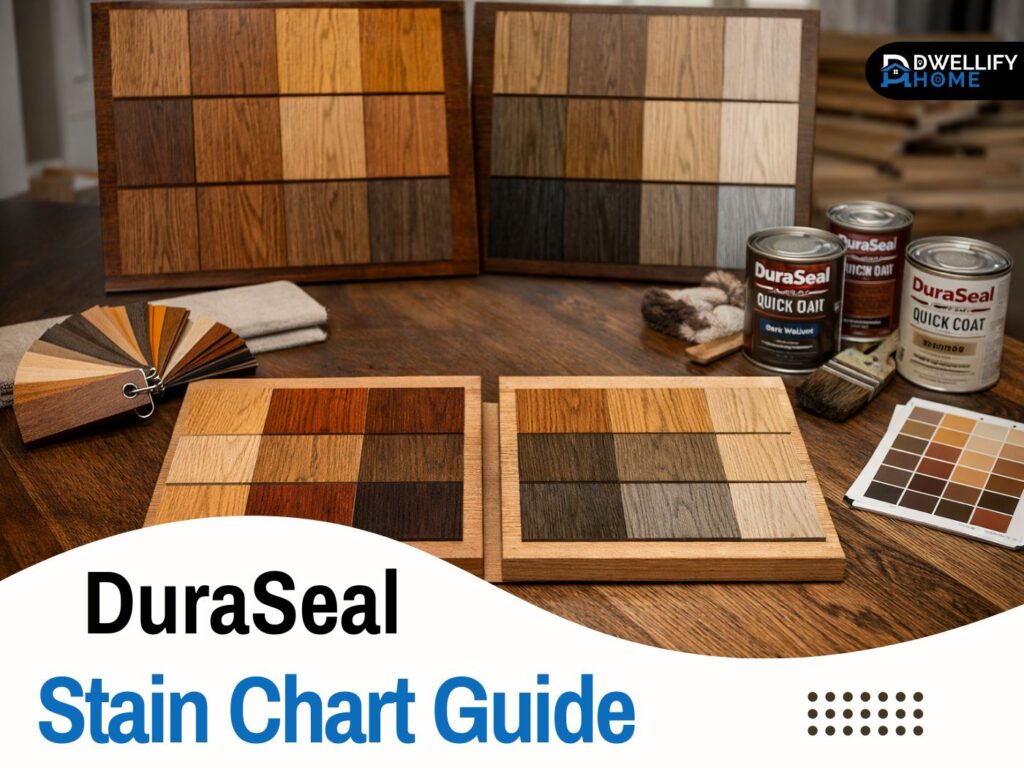
If you’re staring at stain samples and thinking, Why do they all look different online? you’re not alone. Picking a stain color feels simple until you realize one shade can look warm in a store, gray at home, and a little green at night.
A DuraSeal stain chart is a solid starting point because it helps you narrow down options fast. But here’s the thing: it’s not a promise of what your floor will look like. It’s more like a map—you still need to check the “terrain” in your house.
In this guide (made for Dwellify Home readers), I’ll walk you through how to use charts the smart way, what changes color in real homes, and how to avoid the most common “I hate my floor” mistakes.
Snippet-Ready Definition:
A DuraSeal stain chart shows wood stain color options and tone direction, helping homeowners compare shades and understand how stains may look on different wood species before testing samples.
Mission Statement:
At Dwellify Home, our mission is to help homeowners make confident, informed decisions about their living spaces through clear guidance, real-world insights, and practical home improvement advice.
Quick Comparison Table: Red Oak vs White Oak Results
| Feature | Red Oak | White Oak |
| Natural tone | Warmer, slightly reddish | Cooler, more neutral |
| Grain pattern | Strong and visible | Tighter and cleaner |
| Color shift | Stains appear warmer | Stains look more balanced |
| Best for | Traditional, rustic homes | Modern, clean interiors |
| Risk factor | Can pull orange | Can look flat if too gray |
Quick Guide: How to Use a DuraSeal Stain Chart the Right Way
Step 1: Use the chart to shortlist 3–5 colors
Step 2: Match samples to your wood species
Step 3: Test stains in real room lighting
Step 4: View results day and night
Step 5: Choose the color that looks good in all conditions
This simple process prevents most stain regrets.
Helpful Bullet List: Safe vs Risky Stain Choices
Safer choices
- Medium browns
- Balanced neutrals
- Light to medium tones
Riskier choices
- Very dark stains
- Heavy gray tones
- Colors with green undertones
Testing is key when choosing anything from the risky side.
What a DuraSeal stain chart actually shows (and what it can’t guarantee)
A chart shows you color direction—light vs dark, warm vs cool, and the overall vibe of a stain. That’s useful. It helps you shortlist 3–5 colors instead of drowning in 20+.
But a chart can’t account for what actually happens on your floor. And that’s where people get surprised.
Three things change stain color more than most homeowners expect:
- Wood species and grain (red oak and white oak can look like two different stains)
- Prep and sanding (coarser sanding often drinks stain differently than fine sanding)
- Lighting (daylight, warm LEDs, and cool LEDs can “shift” a stain a lot)
Guess what? Even your wall paint, rugs, and furniture can bounce color back onto the floor and change what you see.
DuraSeal stain color families (Collections) and how to pick one fast
DuraSeal colors are often grouped into collections (you’ll see names like Timeless, Inspired, Legacy), and people also talk a lot about DuraSeal Quick Coat stain colors because Quick Coat is a common choice for floor staining projects.
Here’s a simple way to pick faster:
- If you want classic, safe, “always looks good” tones → lean toward the more traditional browns and medium neutrals.
- If you want a modern look (lighter neutrals, cooler vibes, more “designer” feel) → shortlist the lighter and more muted options.
- If you love bold contrast (deep darks) → add one dark option to your shortlist, but sample it carefully.
The best part is, you don’t need to memorize collections. Use them as categories, then decide based on your room style: modern, farmhouse, traditional, coastal, or rustic.
DuraSeal stain chart on red oak vs white oak (the difference is real)
This is where most “chart disappointment” comes from. A stain can be the same name and still look totally different depending on the oak.
What to expect on red oak (warmer, more grain, stronger shift)
Red oak has a more obvious grain pattern and it naturally leans warm. So many stains show up:
- slightly warmer
- a bit more golden or reddish
- with stronger contrast in the grain
If you’re looking at a duraseal stain chart on red oak, expect the final floor to have more “movement.” That can be beautiful. But it can also make a color feel busier in open-concept spaces.
What to expect on white oak (cleaner, often cooler/neutral-looking)
White oak is often the “cleaner canvas.” It can make stains look:
- more neutral
- slightly cooler
- more even overall
That’s why you’ll see people searching for DuraSeal stain colors on white oak. White oak is popular for modern homes because it can keep stains looking calmer and more natural.
One quick tip: if you’re choosing between red oak and white oak results you see online, always match what you actually have in your house. Otherwise, you’ll be comparing apples and oranges.
Most popular DuraSeal stain colors people ask for (quick guidance)
People usually fall into a few “buckets” when they’re choosing:
1) Classic brown family (most forgiving)
These are the “safe choices” for resale and everyday living. They hide dust, they don’t scream trendy, and they don’t look weird in different lighting.
2) Dark stains (bold, dramatic, high contrast)
Dark floors can look amazing, but they show dust, footprints, and scratches more easily. If you’ve got pets or kids, this matters.
3) Modern neutrals (the current favorite)
This is where people try to land that “not too warm, not too gray” look.
That brings us to a common search: DuraSeal neutral stain. Neutral is often used as a baseline shade—either by itself or as part of a custom blend—to soften strong warmth or keep the tone balanced. It’s not magic, but it can be a very practical option when you’re trying to avoid orange or heavy red.
Undertones made simple (warm, cool, neutral)
Undertones are the “hidden color” that shows up after the stain dries and you see it under real lighting.
- Warm undertones often read as honey, amber, golden, or slightly red.
- Cool undertones can lean gray, taupe, or even a hint of blue in some rooms.
- Neutral undertones try to sit in the middle—less colorful, more balanced.
Here’s the thing: undertones don’t always show clearly on a screen. They show up in your hallway at night, or near a sunny window, or beside white kitchen cabinets.
DuraSeal stain with green undertones — why it happens and how to avoid it
This is a big one, and people don’t expect it. A DuraSeal stain with green undertones usually happens when:
- the wood’s natural base tone + the stain’s pigment combine in a weird way
- your lighting is cooler (some LEDs push certain tones)
- nearby colors (green-gray paint, cool whites) reflect onto the floor
How to avoid it:
- View your samples in daylight and nighttime lighting.
- Compare samples next to a piece of white paper (it helps you see the true undertone).
- If you’re worried, shortlist one “safe brown” and one “neutral” option so you’re not stuck with only risky picks.
How to test stains like a flooring pro (so your chart matches your floor)
If you take nothing else from this article, take this: don’t choose stain from a chart alone. Use the chart to shortlist, then test.
The simplest, most reliable method is a sample board made from the same species (and ideally the same batch) of wood. If that’s not possible, test in a closet or hidden corner.
A practical testing routine that works:
- Sand the sample area the same way the floor will be sanded
- Apply stain the same way you plan to apply it
- Let it dry fully before judging it
- Look at it in morning, afternoon, and at night
On top of that, keep your samples bigger than you think. Tiny swatches lie. A larger sample shows how grain, texture, and light actually play together.
Common mistakes I see homeowners make:
- Testing on a different wood than the real floor
- Skipping sanding consistency (one sample looks darker just because it’s rougher)
- Judging too early (some stains settle as they dry)
- Forgetting the topcoat changes the look (more on that below)
DuraSeal stain chart PDF vs online photos vs fan deck (what to trust)
Different chart formats are good for different steps. If you use them correctly, you’ll make faster decisions with fewer regrets.
DuraSeal stain chart PDF (best for shortlisting)
A duraseal stain chart pdf is great when you’re trying to narrow down choices. It’s easy to save, share, and compare.
But it’s not the best “final answer,” because screens vary a lot. Your phone and my laptop can show the same color differently.
Use the PDF to pick:
- 3 light options
- 3 medium options
- 1–2 dark options (if you like dark floors)
Then move to real samples.
Fan deck / real samples (best for final decision)
A DuraSeal stain fan deck (or a physical sample system from a flooring supplier) is usually the closest thing to reality—especially when you can take it into your home and check it in your lighting.
If you can get a fan deck, do it. It’s one of those small costs that can prevent an expensive redo.
DuraSeal stain chart exterior (can you use it outside?)
A lot of people search duraseal stain chart exterior because they want one stain for everything—floors, stairs, porch, maybe even outdoor wood. I get it.
But floor stains are typically designed for interior hardwood conditions. Outdoors, you’re dealing with UV, moisture, temperature swings, and surface wear in a different way. That’s when peeling, fading, or blotchy weathering can happen faster.
If you’re staining exterior wood, look for products specifically labeled for outdoor use. If you still love a DuraSeal color vibe, use the chart as inspiration—but choose an exterior-rated stain system that matches your environment.
DuraSeal stain where to buy (and how to find it near you)
When people ask duraseal stain where to buy, I usually point them to flooring supply stores first. You’ll often find:
- better product guidance
- more consistent inventory
- sometimes access to fan decks or better sample options
Searching duraseal stain near me works well if you add terms like:
- “flooring supply”
- “hardwood refinishing supplies”
- “contractor flooring store”
Before you buy, ask two quick questions:
- “Is this the right base/type for hardwood floors?”
- “Any local VOC restrictions or return limitations?”
Some retailers have shipping limits or restrictions depending on region, so it’s smart to confirm before you drive around or place a large order.
Troubleshooting guide (real-world problems people face)
My floor looks too orange.
This happens a lot on red oak or in warm lighting. Try comparing a more neutral option or testing a different tone in the same depth range.
It looks too gray and dead.
Some cool stains can feel flat in rooms with low natural light. In that case, a warmer neutral or medium brown often feels more “alive.”
It looks different at night.
Totally normal. That’s why I always recommend checking samples under your evening lights. Swap bulbs if needed—lighting changes everything.
Some areas are darker than others.
That’s usually prep. Uneven sanding or leftover finish spots cause uneven stain absorption. A consistent sanding process is the fix.
A simple rule that saves headaches: if the sample doesn’t look good before topcoat, it won’t magically look good after. Topcoat can enhance tone, but it won’t fix a color you don’t like.
Conclusion
Using a DuraSeal stain chart the right way is about being smart, not being perfect. Shortlist your options with charts and PDFs, then confirm your final choice with real samples in your actual lighting.
Here’s the practical takeaway I tell homeowners:
Pick a color you like in daylight, then make sure you still like it at night. If it passes both tests, you’re probably going to love living with it.
And if you ever feel stuck between two shades, go with the one that looks “calm” and consistent in multiple lighting conditions. Trendy colors can look amazing, but the best floors are the ones you still enjoy five years from now.
FAQ
How much stain do I need?
Coverage varies, but plan based on square footage and expect wood to absorb differently depending on species and sanding. Your supplier can help you estimate from the label guidance.
How long does it take to dry?
Dry time depends on humidity, temperature, and airflow. Don’t rush it. If it still smells strong or feels tacky, it’s not ready.
Can I mix colors to customize a shade?
Yes, blending is common. But always write down ratios and test first, because small changes can shift undertones.
What if my stain looks blotchy?
Blotch usually comes from uneven sanding or uneven absorption. Testing and consistent prep prevent most of it.
Can I lighten or darken after staining?
You can sometimes adjust with another coat or a different approach, but it’s not always simple. It’s easier to get it right in testing.
What are the most popular DuraSeal stain colors?
Medium browns and neutral tones are the most popular because they work well with different lighting and home styles and are easier to maintain long-term.
Is DuraSeal owned by Sherwin Williams?
Yes. DuraSeal is a wood finishing brand owned by Sherwin-Williams and is commonly used by professional flooring contractors.
What is the most popular wood floor stain color?
Neutral and medium brown stains remain the most popular because they balance warmth and modern style without looking dated.
What wood stain does Joanna Gaines use?
Joanna Gaines often favors natural, warm, and neutral wood tones that highlight grain rather than overpower it, aligning with classic farmhouse aesthetics.
Should I trust a stain chart alone?
No. Charts are for shortlisting. Always test stains on your actual wood and view them under your home’s lighting.
Disclaimer:
This article is for informational purposes only. Actual stain results may vary based on wood species, preparation, lighting, and application method. Always test stain samples before final application.

I’m Bilal, the founder of Dwellify Home. With 6 years of practical experience in home remodeling, interior design, and décor consulting, I help people transform their spaces with simple, effective, and affordable ideas. I specialize in offering real-world tips, step-by-step guides, and product recommendations that make home improvement easier and more enjoyable. My mission is to empower homeowners and renters to create functional, beautiful spaces—one thoughtful update at a time.