If you’ve ever replaced a kitchen faucet, you know it’s one of those upgrades that looks small but changes your whole routine. You rinse produce, fill pots, wash greasy pans, and clean up spills every day. When a faucet is awkward, leaky, or weak on water flow, it becomes annoying fast.
I’m a licensed plumber and I’ve installed and repaired a lot of kitchen faucets in real homes, including plenty of Delta models. Here’s the thing: a faucet can look great in photos, but real life is different. The sprayer has to dock properly, the handle has to feel smooth, and the finish has to hold up to daily cleaning.
In this guide, I’ll walk you through Delta kitchen faucets the same way I would if you were standing next to me in your kitchen. We’ll cover fit, features, finishes, installation, parts, and repair basics, without the hype.
Snippet-ready definition:
Delta kitchen faucets are popular sink fixtures known for practical sprayers, modern and classic styles, and options like touch control. They’re widely sold at major retailers, and replacement parts are typically easy to source.
Mission Statement:
Help homeowners choose the right Delta kitchen faucet with clear, practical guidance on fit, sprayer performance, finishes, and real-world maintenance, so they buy once and enjoy it every day.
Why Delta Kitchen Faucets Are a Top Choice
From a plumber’s view, Delta is popular for a few practical reasons. First, the designs tend to work well in average kitchens. The spouts usually have good clearance, the spray heads are easy to use, and the controls feel familiar even for guests or older family members.
On top of that, Delta products are easy to find at major retailers. That matters more than most homeowners think. If you ever need a cartridge, aerator, hose, or spray head, it’s less stressful when parts are available and you’re not hunting for a mystery replacement.
One more reason I see homeowners stick with Delta is consistency. If you replace one faucet with another Delta model, the installation steps and layout often feel similar, which makes DIY work easier and helps plumbers finish jobs faster.
Quick Guide Table (Fast Pick Help)
| What you need | Best choice | Why it works | Quick tip |
| Deep sink, big pots | Pull-down sprayer | Better control straight into the bowl | Choose a higher arc only if your sink is deep |
| Smaller sink, tight space | Pull-out spray | Easier angle and reach in compact setups | Check hose length so it doesn’t feel short |
| Messy cooking, hands full | Touch or touchless | Convenient on/off without grabbing handle | Keep spare batteries under the sink for touch models |
| Low-maintenance look | Stainless/chrome | Hides spots better in many homes | Dry after use if your water leaves marks |
| Bold modern style | Matte/black finish | Strong contrast and modern vibe | If you have hard water, wipe down more often |
| Warm metal look | Champagne bronze or gold tone | Softer than bright gold, pairs well with warm kitchens | Match cabinet pulls for a “planned” look |
| Easy future repairs | Standard single-handle | Fewer electronic parts | Save model number photo for parts matching |
Step-by-step mini guide (How to choose in 5 steps)
- Count sink holes (1, 3, or 4) and confirm if you need a deck plate.
- Pick pull-down vs pull-out spray based on sink depth and space.
- Decide if you truly want touch control or prefer simple manual use.
- Choose a finish that fits your cleaning habits: black can show water spots more than stainless in hard-water homes.
- Before buying, confirm what’s in the box and keep the model number for future parts.
Quick Buyer Checklist (Read This Before You Pick a Model)
Before you fall in love with a finish or a fancy feature, do a quick reality check. In my experience, most faucet regrets come from fit issues, not brand issues.
Make sure it fits your sink
Start with the sink holes. Pop open the cabinet and look up at the underside, or look down from above if the faucet base is visible.
- One-hole setups are common in newer kitchens
- Three-hole setups are common with older sinks or with a separate sprayer or soap dispenser
- Four-hole setups show up when you have extra accessories
If you have extra holes and want a clean look, you’ll usually use a deck plate, also called an escutcheon plate. It’s basically a trim piece that covers holes so the faucet base looks finished.
Next, check spout height and spout reach. This sounds simple, but it saves headaches. A high-arc spout is great for big pots, but it can splash more if the sink is shallow. Spout reach matters because if the water lands too close to the front, you’ll soak the counter.
Choose what matters for daily use
Now think about how you actually use your kitchen.
- Pull-down sprayers are great for deep sinks and big cookware
- Pull-out spray styles can be easier in tight spaces and smaller sinks
- Single-handle faucets are fast and convenient for one-handed use
- Two-handle setups give more traditional control, but they’re slower day to day
Also, consider flow rate and water pressure. Many homes have decent pressure, but older plumbing, clogged angle stops, or mineral buildup can reduce flow. A faucet won’t magically fix that, but the right sprayer pattern and a clean aerator can make water feel stronger.
Delta Kitchen Faucet Types (Simple Breakdown)
When homeowners ask me what type they should choose, I try to keep it simple. Most kitchens fall into one of these categories.
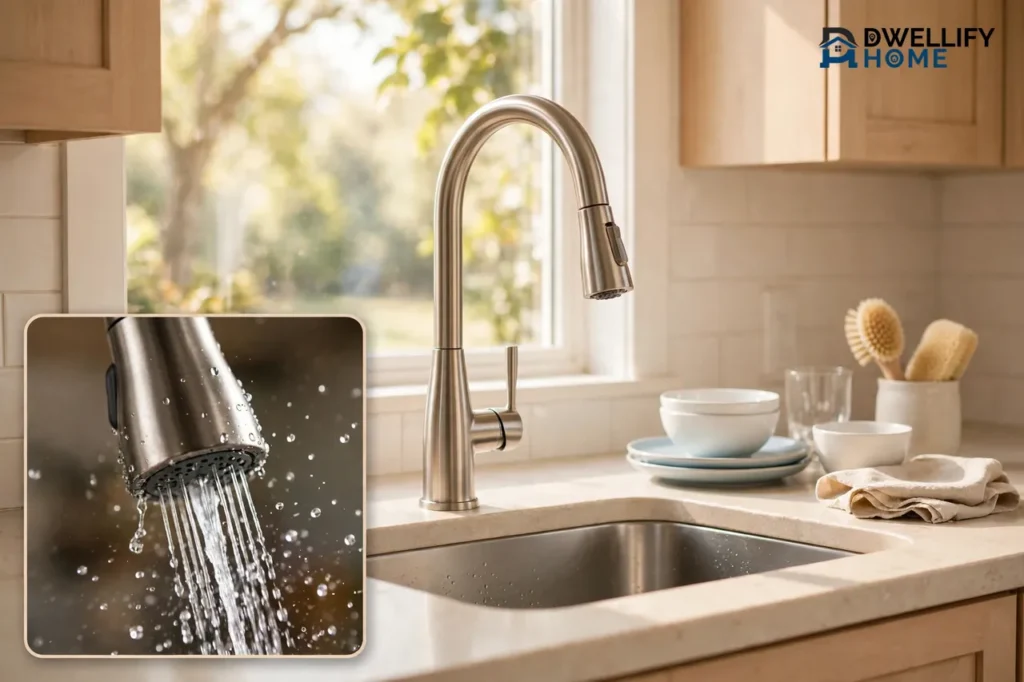
Pull-down models are the most common installs I do. The sprayer pulls straight down into the sink and usually gives the best control for rinsing pans and cleaning the basin.
Pull-out models are what many people mean when they say delta kitchen faucets with pull-out spray. The sprayer pulls outward toward you. In a smaller kitchen, that motion can feel more natural, especially if you don’t want a tall spout.
Standard faucets without a sprayer still exist, but most homeowners prefer having a sprayer because it makes cleanup easier. Bar and prep faucets are smaller versions for a second sink, often in an island. They’re handy if you cook a lot and want a quick rinse station.
Key Features Explained (So You Don’t Overpay for the Wrong Thing)
Features can be useful, but only if they fit your habits. I’ve seen homeowners spend extra and then stop using the feature because it doesn’t match their routine.
Touch and touchless options
Delta kitchen faucets touch models can be convenient, especially when your hands are messy from cooking. The idea is simple: you can tap the spout or handle and the water turns on or off. Touchless versions use a sensor so you don’t have to touch anything.
Here’s my honest take. Touch features are great in a busy family kitchen, but they also add parts like a battery pack and an electronic module. That doesn’t mean they’re bad. It just means you should be comfortable changing batteries and doing basic troubleshooting if the faucet acts weird.
If you want the simplest long-term setup, a standard single-handle faucet is still the least fussy. The best part is you can still get great spray performance without any electronics.
Sprayer performance (what good feels like)
A sprayer isn’t just a sprayer. In real kitchens, you notice:
- Hose length and smooth pull
- How easy it is to switch between stream and spray
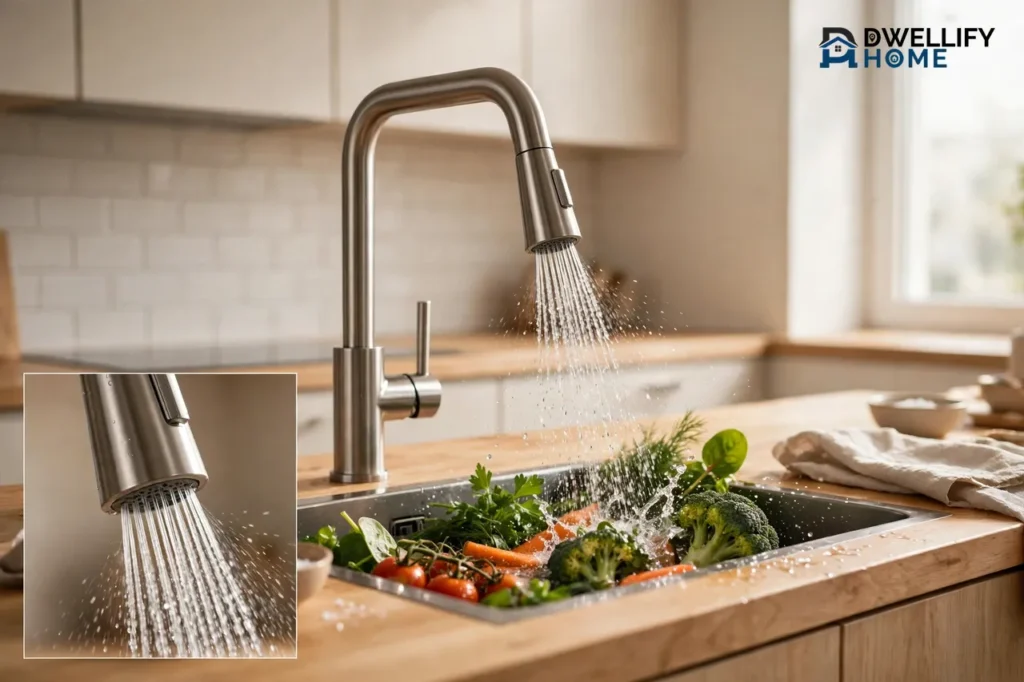
- Whether the spray hits with control or splashes everywhere
I always test the sprayer dock by pulling it out and letting it return naturally. If it docks cleanly and stays put, that’s a good sign. If it feels flimsy or doesn’t sit right, you’ll be annoyed within a week.
Nice-to-have features that can be worth it
Some faucets have spray patterns designed for heavy messes, like stuck-on food. Others have easy-clean spray faces that help reduce mineral buildup. If you have hard water, these small details can make maintenance easier over time.
Pull-Down vs Pull-Out Spray (Choose the Right One)
If you’re stuck choosing between pull-down and pull-out, I usually ask one question: what’s your sink like?
Pull-down sprayers shine in deeper sinks. They drop straight down, which gives better control and less hose twisting. If you wash big pans, sheet trays, and stock pots, pull-down is usually the winner.
Pull-out sprayers can be nicer in compact kitchens or shallow sinks. The hose comes toward you and can feel smoother for filling a pot on the counter beside the sink, depending on your layout.
Quick decision rule:
- Deep sink and heavy cookware, go pull-down
- Small sink or tight space, pull-out often feels easier
Finishes and Colors (Pick a Look That Stays Practical)
Finishes are not just about style. They’re about how much cleaning you want to do and how your water behaves.
Matte and black options
Delta kitchen faucets black finishes look sharp, especially with light countertops or modern cabinets. But here’s the thing: hard water spots can show more on darker surfaces. If your tap water leaves white marks on your shower glass, expect the same on a matte black faucet.
A simple habit helps: wipe the faucet with a soft cloth after heavy use. You don’t need fancy cleaners. Avoid harsh abrasives because they can dull the finish.
Gold tones and warm metals
Delta kitchen faucets gold can look great, but gold comes in different shades. Delta kitchen faucets champagne bronze is one of the warmer, softer options that pairs nicely with cream, wood, and warm gray kitchens.
If you’re mixing metals, keep it controlled. For example, champagne bronze faucet with matching cabinet pulls, then use stainless appliances. That usually looks intentional instead of chaotic.
Stainless and chrome basics
If you want easy matching and low stress, stainless and chrome are still the safest choices. They hide water spots better than black in many homes, and they work with most sinks and appliances without making the kitchen feel too busy.
Popular Delta Styles and Best For Picks (Keep It Short, Not a Catalog)
I’m not going to dump a huge list of model numbers on you, because real kitchens don’t need that. Instead, think in terms of what style fits your home and how you cook.
Best for modern kitchens: clean lines, simple handle shapes, and a high arc that looks sleek. These tend to pair well with matte black, stainless, and modern gold tones.
Best for traditional or transitional kitchens: softer curves, slightly decorative handles, and finishes like chrome or warm bronze tones.
Best value picks: these are the models you’ll often see at big retailers. They usually include common accessories and fit the widest range of sink setups.
Best for heavy daily use: focus on sprayer comfort, docking reliability, and a finish that doesn’t show every spot. In homes with kids, that’s often stainless or brushed finishes.
Where to Buy (And How to Avoid Buying the Wrong Version)
Most homeowners pick up faucets from big stores because it’s convenient. That’s fine, but you need to double-check compatibility so you don’t end up returning a faucet after you’ve opened everything.
Home Depot Delta kitchen faucets listings usually let you filter by handle type, finish, sprayer style, and sometimes activation type. Use those filters, but also read the compatibility notes about sink holes and deck plate options.
For other big retailers and online marketplaces, focus on a few basics:
- Confirm the finish name and shade, especially with gold tones
- Confirm the mounting type and hole compatibility
- Check what’s included in the box
- Make sure returns are straightforward in case it doesn’t fit
Installation and Compatibility (DIY-Friendly, but Don’t Guess)
I’m all for DIY when it’s done safely. A faucet swap is one of the more doable upgrades, but there are a few common traps.
Most faucets include mounting hardware and sometimes supply lines. Still, don’t assume. Check the box contents before you start so you’re not stuck mid-job.
If you’re converting a three-hole sink to a one-hole faucet look, you’ll likely need that deck plate. It’s a clean fix and it hides unused holes.
When to call a plumber:
- If your shutoff valves are old and won’t turn
- If you see corrosion or leaks under the sink
- If your water pressure is already low and you suspect plumbing issues
- If you’re installing a touch faucet and don’t want to deal with battery packs and setup
A quick real-life tip: before removing the old faucet, take a photo of the supply lines and valve connections. It makes reassembly much easier.
Care and Maintenance (Keep It Looking New)
Most faucets last longer when you do a little maintenance. Nothing complicated, just smart habits.
Clean the finish with mild soap and water, then dry it. This helps prevent spotting and keeps the surface looking even.
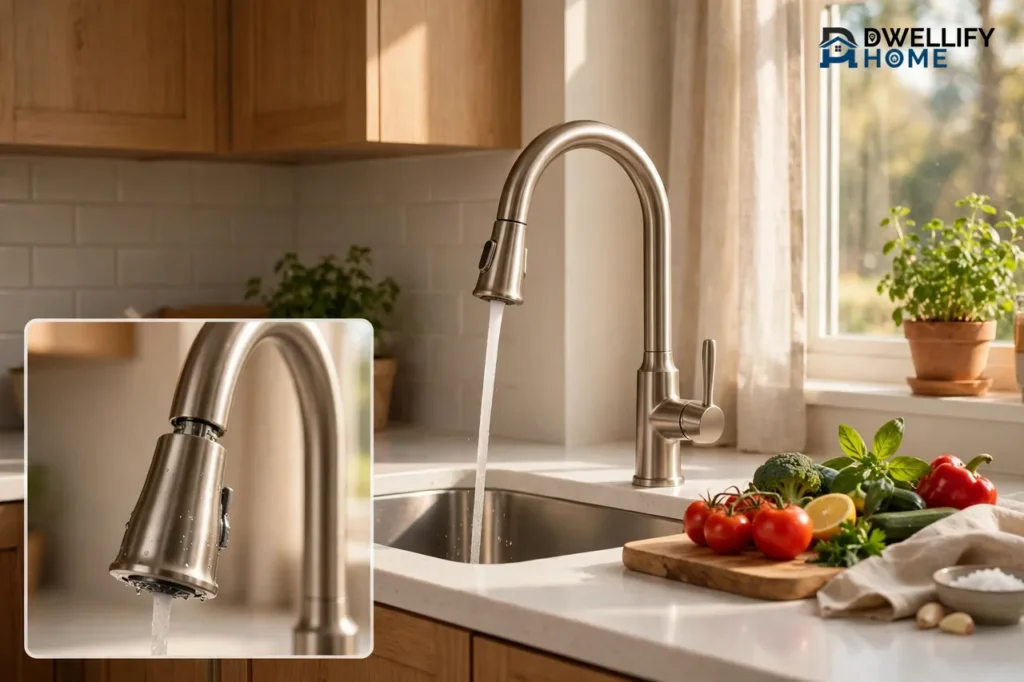
If flow feels weak, check the aerator first. That small mesh piece at the end of the spout collects debris and mineral buildup. In many homes, a quick clean brings the flow back.
For sprayers, mineral buildup can affect spray patterns. If the spray looks uneven, cleaning the spray face and checking for clogs can help.
Delta Kitchen Faucets Parts
Delta kitchen faucets parts are one reason I don’t worry much about long-term ownership. Most common parts are easy to identify and replace.
The parts homeowners replace most often include:
- Cartridge, which controls water mixing and shutoff
- Aerator, which affects flow and helps reduce splashing
- Spray head, hose, and check valves depending on the model
- Handle components if the handle loosens over time
For touch models, you may also have:
- A battery pack
- An electronic module or solenoid that controls water on and off
How to find the correct part fast: look for the model number. It’s often on a tag under the sink, in the manual, or sometimes on the faucet body. Once you have that, matching parts becomes much easier and you avoid buying the wrong cartridge.
Delta Kitchen Faucets Repair and Troubleshooting
Delta kitchen faucets repair questions tend to fall into a few common buckets. I’ll share the simple checks I do first, because they solve a lot of issues without turning into a big project.
Common problems:
- Dripping from the spout after shutting off
- Leaks around the handle
- Weak flow or weird spray patterns
- Sprayer not docking properly
- Touch faucet not responding or turning on randomly
Safe try-this-first fixes:
- Clean the aerator and spray head
- Check that the supply valves are fully open
- Inspect for kinked hoses under the sink
- For touch models, replace batteries and make sure connections are snug
If you see water dripping under the sink, don’t ignore it. Tighten connections gently, and if it keeps leaking, it’s time to replace a washer, a hose, or call a pro. Water damage under sinks can get expensive fast.
Warranty, Certifications and Accessibility (Quick but Trust-Building)
Homeowners rarely think about warranty until something goes wrong. But it’s worth paying attention to, especially for faucets with electronic features.
You’ll also see notes about accessibility, like ADA compliance on some models. In practical terms, it often means the handle is designed to be easier to use and doesn’t require tight gripping or twisting. That can be helpful for older homeowners, arthritis, or anyone who just wants a smoother experience.
Mistakes to Avoid When Buying Delta Kitchen Faucets
This section can save you the most time and frustration, because these are the mistakes I see in the field.
- Buying without checking sink hole count and whether a deck plate is included
- Choosing a tall spout for a shallow sink and then dealing with splash forever
- Picking a finish that clashes with cabinet pulls or shows every water spot in your home
- Going touch or touchless without thinking about batteries and basic troubleshooting
- Ignoring future repair comfort, like whether you can access parts easily under the sink
If you take one thing from this guide, let it be this: measure first, then shop. Most problems disappear when fit is handled correctly.
FAQs
Are Delta kitchen faucets worth it?
In many homes, yes, especially when you want widely available parts and common installation compatibility. The value is better when you choose a model that matches your sink and daily habits.
Touch vs touchless, what’s better?
Touch is simple and convenient, touchless is great for reducing mess, but both add electronics. If you want the lowest-maintenance option, a standard single-handle faucet is still the easiest long-term.
Which finish is easiest to keep clean?
Stainless and brushed finishes usually hide spots best. Matte black looks amazing but may show mineral marks more depending on your water.
How do I know which replacement cartridge or parts I need?
Find the model number first. That’s the key. Then match the cartridge or part based on that exact model.
Are retailer models different?
Sometimes certain bundles and configurations vary, like included deck plates or accessories. That’s why checking box contents and specifications matters.
What if my faucet doesn’t match my sink holes?
A deck plate can solve many cases, but not all. If you’re unsure, it’s worth asking a plumber before buying so you don’t end up returning things.
Conclusion
A faucet should make your kitchen easier, not give you a new set of problems. The smartest way to choose is to start with fit, then decide on sprayer style, then pick features that match your habits. After that, choose a finish you’ll enjoy and can realistically maintain.
If you want my plumber-style shortcut, it’s this: measure your sink hole setup, pick pull-down or pull-out based on your space, and keep the features practical. That’s how you end up with a faucet you actually like using every day, not just one that looks good in a product photo.
Disclaimer:
This guide is for general education based on real installation and repair experience. Faucet compatibility and local plumbing conditions vary. If you notice leaks, corrosion, or old shutoff valves, consider hiring a licensed plumber.