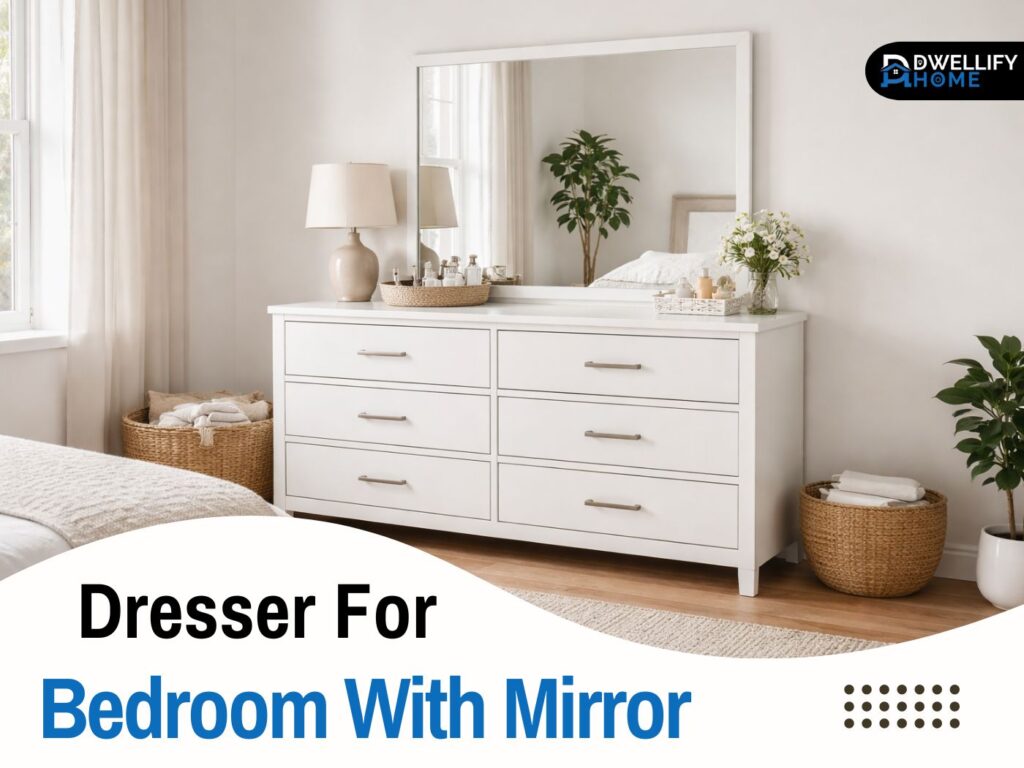
A dresser with a mirror can quietly change how your bedroom works day to day. It gives you storage for clothes, a spot to check your outfit, and a visual anchor that makes the whole room feel more finished. I’ve styled a lot of bedrooms where one good dresser and mirror combo fixed three problems at once: clutter, awkward empty walls, and getting-ready chaos.
The “right” choice isn’t only about looks. It’s about proportions, drawer space, mirror placement, and lighting. When those pieces line up, the setup feels effortless. When they don’t, it can feel bulky, wobbly, or strangely out of place.
This guide will walk you through the practical decisions that matter. You’ll get layout tips, sizing rules, safety notes, and real styling tricks I’ve used in actual bedrooms. And yes, we’ll keep it clean and simple, without turning your bedroom into a showroom.
Snippet-ready definition:
A dresser for bedroom with mirror is a bedroom storage dresser paired with an attached or wall-hung mirror, giving you organized drawers plus a practical spot to check outfits, while making the room feel brighter and more finished.
Mission Statement:
Dwellify Home helps you build calm, functional rooms with simple, honest design guidance you can actually use in real life.
Quick Checklist Before You Buy (The 60-Second Plan)
Before you fall for a pretty photo, take one minute and check the basics. I do this on every client project, even when the budget is big. It prevents returns, frustration, and that “why does this look wrong?” feeling.
Start with your measurements. Note the wall width, the depth you can spare, and how much walkway you need. In most bedrooms, you’ll want at least 24 to 30 inches of clear space in front of drawers so you can open them comfortably without bumping into the bed.
Then do a quick lifestyle check. Are you using it for daily clothing, folded items, accessories, or all of it? Do you want a dedicated getting-ready spot, or is the mirror mainly for checking your outfit? That little decision affects whether you need a wide top surface, deeper drawers, or better lighting nearby.
A quick checklist that works:
- Measure wall width and available depth
- Check drawer opening clearance in front
- Decide your main purpose: storage, ready-up, or both
- Choose a style that matches your bed and nightstands
- Think about delivery and assembly space, especially in apartments
Quick Guide Table (fast comparison)
| What you need | Best choice | Why it works | Quick tip |
| Small bedroom | Narrow drawer dresser with mirror | Saves floor space, keeps traffic clear | Use a wall mirror above the dresser to feel lighter |
| Shared bedroom | Mirrored dresser 6 drawers | Easy “his and hers” organization | Put heavier items in bottom drawers for stability |
| Bright, airy look | White dresser for bedroom with mirror | Opens up darker rooms visually | Add a warm lamp so it doesn’t feel cold |
| Warm, classic look | Brown dresser for bedroom with mirror | Hides wear, feels cozy | Brass or black hardware looks great here |
| Extra display space | Dresser with mirror and shelves | Baskets keep it tidy, adds function | Keep shelves minimal so the mirror doesn’t reflect clutter |
| Budget setup | Cheap dresser with mirror set, or dresser + separate mirror | More flexibility, easier upgrades later | Spend on drawer quality, not fancy trim |
| IKEA-style mix | Dresser with mirror IKEA setup | Simple, clean, modular | Upgrade with better mirror frame and lighting |
Step-by-step mini guide (clean and practical)
- Measure first: wall width, dresser depth, and at least 24–30 inches in front for drawer opening comfort.
- Choose the storage layout: daily clothes need smoother, deeper drawers; accessories need smaller sections.
- Get the mirror proportion right: aim for a mirror about two-thirds to three-quarters the dresser width.
- Plan the placement: avoid tight walkways and harsh glare spots.
- Fix the lighting: add a lamp or side lighting so your face isn’t shadowed by overhead lights.
- Do the safety step: level the dresser and anchor it to the wall if possible.
Dresser With Mirror vs Vanity (Which One Fits Your Bedroom Routine?)
This is the first design fork in the road. A dresser with a mirror is usually a storage-first piece, while a vanity is routine-first. I’ve seen people buy the wrong one because they didn’t pause and think about how they actually use the room.
A dresser and mirror set is great if your main need is clothing storage and you want a mirror as a bonus. It’s also a smart choice in shared bedrooms because it keeps the top surface useful for everyday items like fragrance, a tray, and a lamp. On top of that, it tends to look more “bedroom” and less “bathroom getting-ready station.”
When a dresser plus mirror set is the better choice
Pick this route when:
- You need serious drawer space for clothes
- You want one piece that visually anchors the wall
- You prefer a more classic bedroom look
- You like the idea of styling the top with a few decor pieces
A common real-life win: in a couple’s bedroom, a 6-drawer dresser with a clean mirror above it often replaces two small storage pieces. The room instantly feels calmer because storage gets centralized.
When a dressing table or vanity makes more sense (including IKEA-style setups)
A vanity makes sense when getting ready is the main function. If you do makeup, hair, skincare, or you like sitting down to get ready, a vanity setup can feel more comfortable. The best part is you can often pair a smaller table with a wall mirror and still keep the room airy.
This is where dresser with mirror IKEA style setups show up a lot. People often mix a simple dresser for storage with a separate wall mirror, or they use a dressing table with mirror and keep clothing storage elsewhere. It’s flexible, especially in smaller bedrooms where a full dresser-and-mirror combo can feel heavy.
Size and Proportion Guide (So It Looks Balanced, Not Awkward)
Most “it looked better online” disappointments come down to proportion. A dresser that’s too tall can feel like a block. A mirror that’s too small can look like it’s floating. When the scale is right, even a budget piece looks intentional.
Start with width. In small bedrooms, a narrow dresser keeps things from feeling tight. In medium bedrooms, a standard-width dresser usually works best, and in large bedrooms you can go wider without it looking lost. Depth matters too. Deep dressers can dominate a small room, especially if the bed is close.
Height is where people get surprised. A taller dresser can be great for vertical storage, but it needs breathing room around it. If it sits under a low window or next to tall wardrobes, it can look cramped.
Best dresser sizes for small, medium, and large bedrooms
A practical sizing approach:
- Small bedroom: narrower width and slimmer depth, keep drawer opening space in mind
- Medium bedroom: standard width works, balance it with artwork or a mirror
- Large bedroom: wider dresser looks more proportional, especially on a big blank wall
If your dresser sits across from the bed, consider how it feels from that viewpoint too. You’ll see it every day, so you want it to look settled, not oversized.
Mirror size rules that work in real bedrooms (simple proportion tips)
Here’s the easy rule I use: your mirror should usually be about two-thirds to three-quarters the width of the dresser. That creates a stable visual relationship between the two.
If you go too narrow, the mirror looks like an afterthought. If you go too wide, it can feel like a wall mirror that swallowed the dresser. Keep the mirror centered, and leave a little breathing space on each side.
Storage That Actually Works (Layouts Most People Regret Ignoring)
Storage layout matters more than finish color. I’ve seen gorgeous pieces that became daily annoyances because the drawers were shallow or awkward. A good bedroom dresser with mirror should match how you fold, stack, and store.
Think about what you store most often. T-shirts and lounge wear love medium-depth drawers. Jeans need deeper drawers. Accessories need smaller sections or organizers. If you share the dresser, symmetry helps because each person gets a “side.”
Mirrored dresser 6 drawers options are popular because they’re easy to organize, and they usually fit a lot without feeling too tall. They’re also easy to style because the front reads as clean and consistent.
- A drawer dresser with mirror is usually best for simple, everyday clothing storage
- A dresser with mirror and shelves can work well if you use baskets and keep shelves tidy
If you love the shelves look, keep the open shelf area for folded blankets, baskets, or a few curated items. If it becomes a random pile zone, it will reflect in the mirror, and the room will feel messier instantly.
Styles That Match Real Homes (Not Just Showrooms)
Style should support the room, not fight it. In bedrooms, I usually aim for calm lines, soft textures, and one or two standout details. That’s why dressers with mirrors work best when they echo something else in the room, like the bed frame, hardware, or lighting.
Modern dressers with mirror options often have flat fronts and simple pulls. They fit well in clean, minimal spaces and are easy to keep looking neat. Classic and traditional styles often have molding and warmer tones, which can make a bedroom feel cozy and grounded.
Farmhouse and rustic looks bring texture and warmth, especially with wood grain. Glam and mirrored furniture styles can feel bright and luxe, but they also show fingerprints and dust faster. If you love the glam look, plan for a quick wipe-down routine and choose a layout that doesn’t get touched constantly.
Color and Finish Choices That Change the Whole Bedroom
Color isn’t just a preference, it changes how big and bright the room feels. I usually pick color based on light levels and how visually busy the rest of the space is.
A white dresser for bedroom with mirror can make a small or low-light bedroom feel fresher. It’s also easy to style because nearly any lamp shade, frame, or decor piece works with it. The trade-off is it may show scuffs more, so a wipeable finish matters.
A brown dresser for bedroom with mirror brings warmth and hides everyday wear better. It feels calmer in rooms with warm wall colors and wood flooring. It also looks great with brass or black hardware.
Mirrored or high-gloss finishes bounce light around, which is helpful in darker rooms. The downside is obvious smudges. If you live in a dusty area or you hate constant cleaning, consider a semi-matte finish and keep the mirror itself as the reflective star.
Best Options for a Girl’s Room (Teen-Friendly, Not Childish)
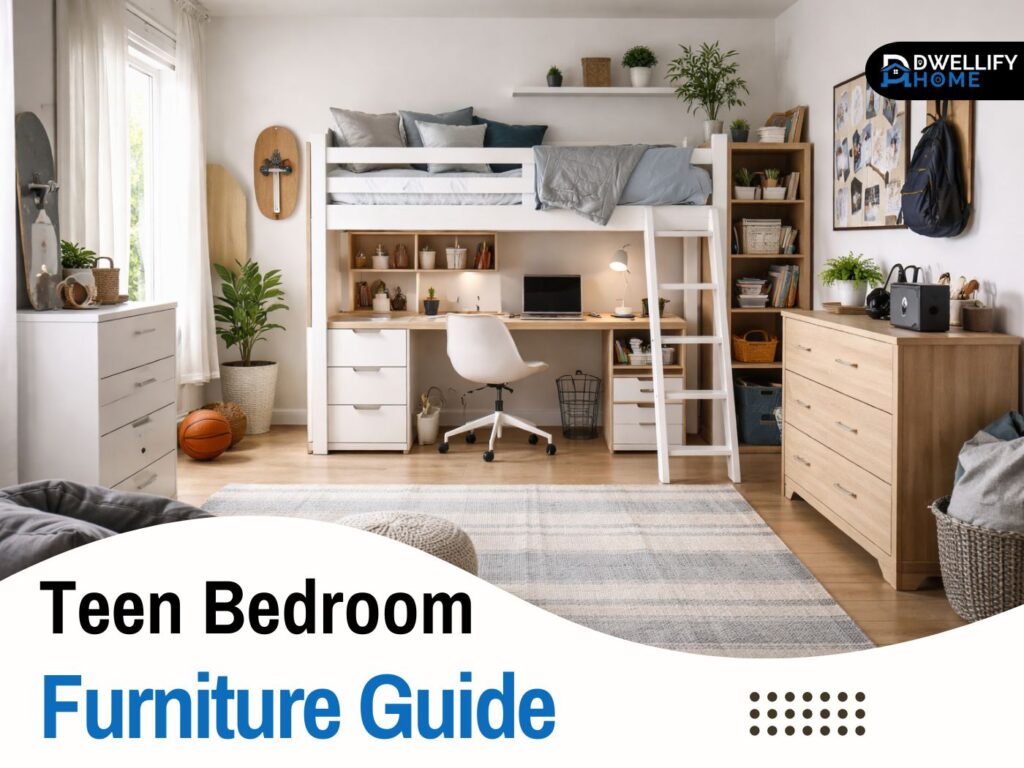
When I design a teen or girl’s bedroom, I try to avoid themes that feel too young too fast. The goal is a space that still feels good in a few years. A dresser with mirror for girl setups should be functional first, then styled in a way that feels personal.
Soft glam can work well, but keep it simple. Choose a clean dresser shape and let decor bring the personality, like a framed print, a tray, or a small lamp. Rounded edges are also a good idea, and smooth drawer slides matter more than you’d think. If drawers stick, the piece becomes annoying, fast.
If your room is smaller, a compact dresser with a wall mirror often looks lighter than a bulky dresser with a heavy attached mirror. And it’s easier to update later by swapping the mirror shape or frame style.
Small Bedroom Hacks (Make the Room Feel Bigger With the Right Mirror Setup)
Small bedrooms need smart reflection, not random reflection. The mirror should bounce light and open the room visually, without doubling the clutter.
One of my favorite tricks is placing the dresser where the mirror catches natural light from a window, but not direct harsh glare. You get a brighter room and a more useful mirror. Another trick is keeping the top surface minimal. A crowded top reflects as visual noise, and it makes the whole space feel tighter.
Try these small-bedroom moves:
- Use a wall mirror above the dresser instead of a bulky attached mirror
- Keep the decor limited to a tray and one lamp
- Choose a dresser with clean lines and simple pulls
- Use under-mirror lighting or a nearby lamp to reduce shadows
Where to Place a Dresser With Mirror (Layout Rules That Always Work)
Placement is where design becomes practical. A dresser can be beautiful, but if it blocks movement or fights with the bed, you won’t enjoy it.
Most bedrooms work best when the dresser sits on a clear wall, ideally not the same wall as the headboard. That gives the room visual balance. If you place it opposite the bed, it becomes a calm focal point and makes getting ready easy.
Best placements for natural light, daily use, and flow
Great placement choices include:
- On a wall with enough clearance to fully open drawers
- Near natural light, but not where the mirror gets harsh glare
- Where it won’t compete with a doorway swing or closet door
Placements to avoid (glare, tight walkways, awkward reflections)
Avoid squeezing it into a spot where you can’t stand comfortably while drawers are open. Also avoid placing it where the mirror reflects clutter zones like laundry baskets or storage piles. Even a tidy bedroom can look messy in the mirror if the reflection is chaotic.
Lighting Tips for a Mirror You’ll Actually Like Using
Lighting is the difference between a mirror that helps and a mirror that lies. Overhead lighting can create shadows under the eyes and chin, which makes getting ready feel harder than it needs to be.
The best lighting is usually at face level. That’s why a lamp on the dresser or a pair of wall sconces beside the mirror works so well. Neutral or warm-neutral bulbs tend to be flattering and accurate for everyday use.
If you can only add one thing, add a lamp with a shade that softens light. It makes the mirror more useful and makes the dresser corner feel cozy instead of clinical.
IKEA Ideas (Smart Ways People Combine Dresser and Mirror)
I’ve seen plenty of IKEA-based bedrooms look amazing, especially when people keep the setup simple and consistent. A common approach is using a dresser for storage and pairing it with a separate wall mirror. This allows you to choose a mirror size that fits the wall and looks balanced.
With dresser with mirror IKEA setups, small upgrades go a long way. Swapping hardware, adding a better mirror frame, and styling the top with a tray and lamp can make it feel more custom.
A practical tip: if the dresser is lightweight, always anchor it. Many flat-pack pieces can be stable when assembled correctly, but the safety step is still worth doing.
Budget Buying Without Buying Twice
A cheap dresser with mirror set can be a smart buy, but it’s also where I’ve seen the most regret. The issue usually isn’t the look, it’s the function. Drawers that don’t align, slides that scrape, and mirrors that feel flimsy can turn a good-looking piece into a daily headache.
If you’re on a tight budget, focus on structure and stability. A smaller dresser with solid drawers and a separate mirror can be a better long-term solution than a larger set with weak construction. Secondhand dressers can also be a hidden gem, then you add a new mirror and it feels fresh.
Good budget moves:
- Choose fewer drawers, but better drawer action
- Pick a separate wall mirror for flexibility
- Use baskets or organizers to make small drawers work harder
Safety and Stability
This part isn’t glamorous, but it matters. Dressers can tip, especially when drawers are open and weight shifts forward. If kids are in the home, or even if you store heavy items in top drawers, anchoring is a smart and responsible step.
Here’s the thing. A stable dresser should still be anchored. Even quality furniture can tip under the right conditions, and it only takes one moment of climbing or pulling. Anti-tip kits are usually simple, and they give peace of mind.
Why anchoring matters (especially with kids)
Tip-over accidents are a known household risk. The safest approach is to treat tall or heavy furniture as something that should be secured. It’s one of those small steps that’s easy to ignore until you hear a real story from someone who went through it.
Easy anti-tip steps and what to check in the box
Quick safety steps:
- Place heavier items in lower drawers
- Level the dresser so it doesn’t rock
- Use the included anti-tip hardware, or buy a reliable kit
- Anchor into wall studs when possible
If you rent, there are still safe ways to anchor, and a small wall repair is worth the safety benefit.
Setup and Installation Basics (Mirror Mounting Done Right)
A mirror should feel solid, not shaky. If your mirror attaches to the dresser, follow the instructions carefully and tighten everything properly. If it’s a wall mirror above the dresser, use the right anchors for your wall type.
Height matters. You want to see your face and upper body comfortably without crouching or stretching. In most bedrooms, leaving a small gap between the dresser top and the mirror looks cleaner and makes cleaning easier.
A simple setup tip I use: once the mirror is placed, step back to the doorway and look at the whole wall. If it feels top-heavy or too small, adjust before you commit to drilling or permanent mounting.
Care and Cleaning (Especially for Mirrored Furniture)
Mirrors and glossy finishes look best when they’re clean, but cleaning shouldn’t become a daily chore. A microfiber cloth and a gentle glass cleaner are usually enough. Spray the cloth, not the mirror, so you don’t get drips into edges or seams.
For dresser tops, use felt pads under trays and decor to prevent scratches. If you use fragrance bottles, place them on a tray because spills can stain certain finishes. If your bedroom gets humid, keep airflow moving so wood and hardware stay in good shape.
With mirrored fronts, wipe lightly and often. Heavy scrubbing can leave streaks, and it’s easier to do quick maintenance than deep cleaning.
Buying Guide: What to Check Before You Order (Or Before You Pay In-Store)
A photo can’t tell you how a drawer feels. So you’ll want to look for signs of quality that actually matter in daily use. Smooth drawer slides, good alignment, and a stable frame beat fancy details every time.
Check drawer depth and what you store. Shallow drawers are fine for accessories, but they frustrate you for jeans and sweaters. If possible, read reviews for real-life notes like wobble, drawer gaps, and hardware loosening.
A practical delivery tip: measure your hallway, stair turns, and bedroom door. I’ve watched people buy the perfect dresser, then struggle to get it into the room. It’s a painful mistake, and it’s avoidable.
Quick quality checks:
- Does it wobble when you pull a drawer out?
- Do drawers open smoothly and evenly?
- Are corners and edges finished cleanly?
- Is the mirror clear and securely mounted?
- Is the return policy reasonable if it arrives damaged?
Make It Look Built-In (Designer Look Without Custom Work)
Want that high-end look without remodeling? It’s mostly about symmetry, spacing, and restraint. A dresser and mirror set looks “built-in” when it’s centered, balanced, and styled simply.
Try adding two matching wall sconces, or two matching lamps if you prefer tabletop lighting. Keep the top surface clean with one tray and one or two personal items. Add one piece of art or a tall vase if the wall needs height, but don’t crowd it.
One of my favorite styling formulas:
- Center mirror above the dresser
- Add a lamp on one side
- Add a tray in the middle for small items
- Leave one side open so it doesn’t feel cluttered
The best part is this works with almost any style, modern, rustic, or classic.
FAQs
What mirror size looks best over a dresser?
Usually a mirror that’s about two-thirds to three-quarters the dresser width looks balanced. Keep it centered and leave a little space on each side.
Can I use a dresser with mirror like a vanity?
Yes, especially if the dresser height is comfortable and you add good lighting. If you like sitting while getting ready, consider a vanity stool and a slightly lower setup.
Are mirrored dressers hard to maintain?
They’re not difficult, but they do show fingerprints and dust more. A quick microfiber wipe keeps them looking sharp.
Do I really need to anchor a dresser?
It’s strongly recommended, especially for taller pieces or homes with kids. It’s a small step that adds a lot of safety.
Conclusion: Final Tips for Choosing a Dresser for Bedroom With Mirror
A dresser for bedroom with mirror works best when it fits your room and your routine, not just your taste. Start with size and clearance, then choose a storage layout that matches what you actually own. After that, pick a style and finish that feels calm in your space, whether that’s a white dresser for bedroom with mirror, a warm brown option, or a mirrored 6-drawer look.
Don’t forget the setup details that make the difference. Place it where drawers open easily, add lighting that flatters, and keep the top surface simple so the mirror reflects calm, not clutter. And please, take the safety step and anchor it. It’s easy, and it’s worth it.
If you remember one thing, make it this: the best bedroom dresser with mirror isn’t the fanciest one. It’s the one that feels natural to use every single day, and still looks good doing it.
Disclaimer:
This article shares general home design and safety guidance. Always measure your space, follow the product manual, and use a qualified professional for wall anchoring or electrical work if you’re unsure.

I’m Bilal, the founder of Dwellify Home. With 6 years of practical experience in home remodeling, interior design, and décor consulting, I help people transform their spaces with simple, effective, and affordable ideas. I specialize in offering real-world tips, step-by-step guides, and product recommendations that make home improvement easier and more enjoyable. My mission is to empower homeowners and renters to create functional, beautiful spaces—one thoughtful update at a time.