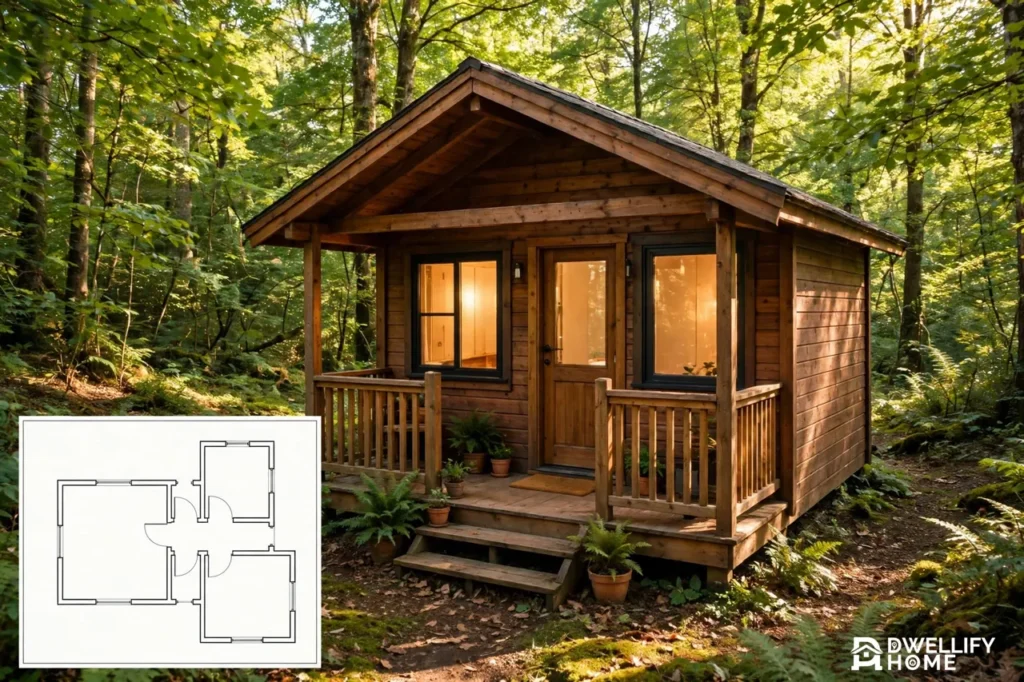
A one bedroom cabin sounds simple, but the plan you pick will shape everything, how it feels inside, how much it costs to build, and how comfortable it is year-round. I’ve designed these cabins for real clients on real land, and the best results almost always come from choosing a plan that matches your daily habits, not just a pretty drawing.
Before you fall in love with a layout, think about how you’ll actually use the space. Do you cook often or mostly heat up quick meals. Do you need quiet for work. Will guests stay over. Those answers decide whether you need an open great room, a loft, more storage, or a studio-style one room cabin with bathroom.
The best part is you don’t need a huge footprint to get a cabin that feels calm, roomy, and practical. With smart planning, even small one bedroom cabin plans can feel comfortable, especially when you prioritize flow, light, and storage from day one.
Snippet-ready definition:
One bedroom cabin plans are compact floor plans that combine a private bedroom with an efficient great room, kitchen, and bath. Many add a porch or loft to boost comfort without adding much footprint.
Mission Statement:
At Dwellify Home, our mission is to make home planning feel simple and doable, with practical, experience-based guidance that helps you choose designs that work in real life, not just on paper.
What a Good One Bedroom Cabin Plan Includes (Quick Comparison Guide)
A solid one bedroom cabin layout usually has four key zones: a private bedroom, a living area, a small kitchen, and a bathroom. That sounds obvious, but the details matter. For example, a bedroom that only fits a bed and nothing else may look fine on paper, yet it feels tight once you add nightstands and a closet.
In many simple one bedroom cabin plans, the living and kitchen areas share one open space. That’s often the right move because it keeps the cabin from feeling chopped up. When the kitchen, dining, and lounge area connect, the whole interior reads bigger, even if the square footage is modest.
A few features also show up again and again in great cabins because they make everyday life easier:
- A small entry or mud area for shoes and wet coats
- Storage that’s built in, not added as an afterthought
- Easy access to outdoor living like a porch or deck
- Windows placed for light and views, not just symmetry
Quick Guide Table (Comparison)
| Plan style | Best for | Typical feel | Key watch-outs |
| Small one bedroom cabin plans | Weekend stays, rentals, low upkeep | Cozy and efficient | Storage must be planned early |
| Simple one bedroom cabin plans | Faster builds, tight budgets | Clean, practical | Too many corners or roof changes raise costs |
| One bedroom cabin plans with loft | Guests, office, extra storage | Spacious without bigger foundation | Headroom, safe stairs, railings matter |
| 1 bedroom log cabin plans | Rustic look and warm interior vibe | Traditional cabin feel | Wood maintenance and moisture control |
| Modern one bedroom cabin plans | Views, big windows, indoor-outdoor living | Bright and airy | Glazing and shading must match climate |
| One room cabin with bathroom | Tiny footprint, quick build | Studio-style living | Zoning and bathroom placement are critical |
Step-by-step shortlist (fast and practical)
- Pick your size band: tiny and minimal, or comfortable with a full great room.
- Decide on loft or no loft: guests and storage, or simpler one-level living.
- Choose your layout style: open plan for spacious feel, or more separation for privacy.
- Lock in “daily comfort”: kitchen storage, bathroom ventilation, and a real entry zone.
- Match the plan to the land: sun, slope, access, wind, and drainage.
- Confirm the plan set quality: dimensions, elevations, sections, and build details before building.
Start With Size: Small One Bedroom Cabin Plans That Still Feel Open
If you’re working with a tighter budget, a smaller lot, or you simply want less maintenance, small one bedroom cabin plans can be a perfect fit. In my projects, the sweet spot is often the range where you can fit a comfortable great room, a real bedroom, and a bathroom without squeezing everything into skinny hallways.
The trick is to spend square footage where it changes the feeling most. Give a little more space to the main living area, then keep secondary spaces efficient. A bedroom can be compact as long as the closet and door swing are planned well. A bathroom can be smaller as long as it has decent ventilation and a layout that doesn’t feel cramped.
Here are a few layout moves I lean on in small cabins because they work in the real world:
- Skip long corridors and use direct room connections
- Use a combined living and dining zone instead of separate rooms
- Add storage where walls are already needed, like behind the sofa or along the entry
- Put larger windows in the main area, smaller windows in private zones
A real example. One client wanted a tiny footprint for a wooded site but still wanted it to feel airy. We raised the ceiling in the main room, added a simple shed dormer for light, and kept the bedroom modest. The cabin felt bigger than it was because the space that mattered most got the breathing room.
Simple One Bedroom Cabin Plans That Are Easier to Build (and Budget-Friendly)
Simple one bedroom cabin plans usually win on cost and construction speed, not because they’re boring, but because they avoid complicated shapes. Straightforward foundations, clean rooflines, and stacked plumbing locations can save serious money. On top of that, simple forms tend to perform better in tough weather because there are fewer leak points and less fussy detailing.
If you’re trying to keep the build realistic, aim for a basic rectangle or a rectangle with a small bump-out. That’s often enough to create a better bedroom, add a pantry wall, or form a tiny entry without turning the project into a puzzle.
Simple doesn’t mean plain. You can still create a cabin that feels special with choices like:
- A covered porch for shade and rain protection
- Tall ceilings in the main room
- A few well-placed windows that frame the view
- Warm, durable finishes that suit cabin life
One more practical tip. If a plan has multiple roof intersections, valleys, or many corners, expect more labor and more flashing work. Those details aren’t always bad, but they need to be worth it.
Layout Styles: Open Concept vs More Privacy (What Works Better?)
Open concept cabin plans are popular because they feel spacious. In a small cabin, walls can make everything feel tight. When the kitchen and living space are connected, you can cook, relax, and talk without feeling boxed in. This is one reason modern one bedroom cabin plans often lean into open layouts and big glass.
But privacy matters too. If you plan to work remotely, take naps while someone cooks, or host guests, you’ll appreciate separation. Some people love a bedroom that’s truly quiet, with a door that blocks sound and light.
Here’s the honest approach I give clients. Keep the main space open, then protect privacy where it counts. A few ways to do that without adding too many walls:
- Use a small hallway or a short L-shaped transition to the bedroom
- Place the bathroom between the bedroom and living area as a sound buffer
- Use pocket doors where swings would steal space
- Add a partial wall or built-in shelving to define zones
That last one works especially well. A low storage wall can separate the kitchen from the living area while adding cabinets you’d otherwise miss.
One Bedroom Cabin Plans With Loft (Extra Sleeping, Storage, or Office Space)
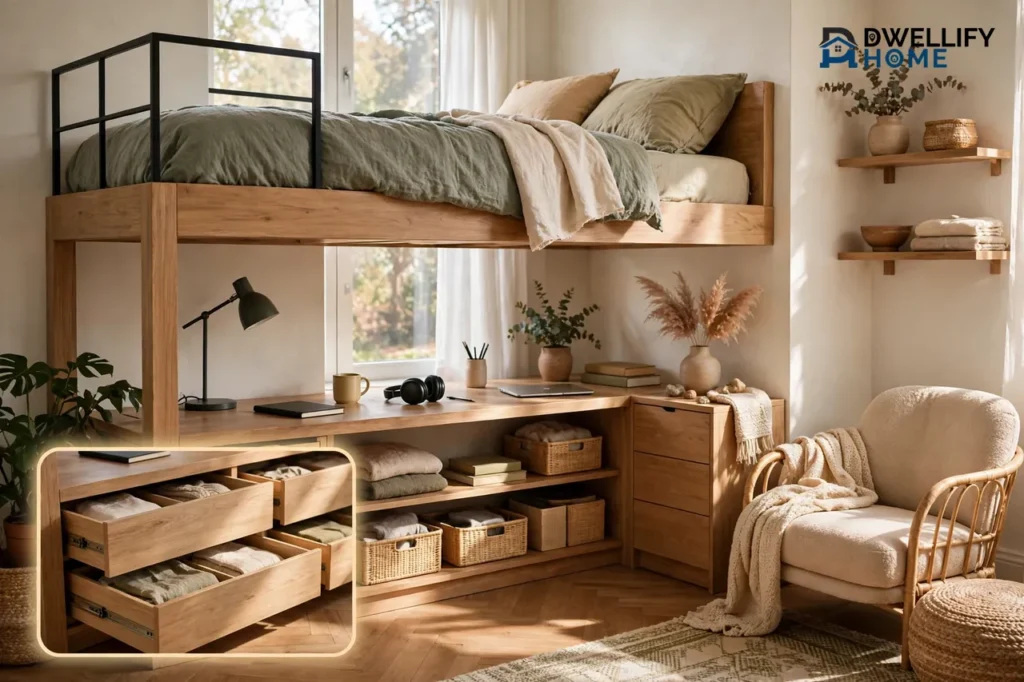
One bedroom cabin plans with loft are popular for a reason. A loft gives you flexible space without expanding the foundation, which often helps the budget. You can use it for guest sleeping, storage, a small office, or even a cozy reading nook.
In real builds, I see lofts used in three practical ways. First, a sleeping loft for guests, especially in cabins that also function as short-term rentals. Second, a storage loft for seasonal items so the main cabin stays uncluttered. Third, a quiet corner office when the main room doubles as living and kitchen space.
Loft comfort basics: headroom, stairs vs ladder, safety railing
A loft can be great, but only if it’s designed for real humans. Headroom is the first issue. If you can’t sit up comfortably in bed, it’ll feel like a crawl space. The second issue is access. Ladders look cute, but they aren’t fun at midnight, and they can be risky for kids or older guests.
If you want the loft to be used often, consider compact stairs with storage underneath. If the loft is occasional, a ladder might be fine, but make it stable and angled, not vertical.
And please don’t skip safety. A proper guardrail is not optional. Even in a cozy cabin vibe, safety should be built into the design, not added later as an awkward patch.
One Room Cabin With Bathroom (Studio-Style Cabin Layout)
A one room cabin with bathroom is the simplest version of cabin living. Think of it as a studio with a private bath. This style works well for very small sites, quick builds, hunting cabins, guest houses, or backyard retreats. It’s also common when someone wants a low-cost cabin now, with the option to expand later.
The key to making it feel comfortable is zoning. Even without walls, you can create a sleeping area, a sitting area, and a kitchenette zone that don’t clash. A change in ceiling height, a partial divider, or built-in shelving can make the space feel organized.
Bathroom placement matters a lot here. Put it where plumbing runs are short and ventilation is easy. If possible, keep the bathroom door from opening directly into the kitchen zone. A tiny buffer wall or angled entry can make the whole cabin feel more polished.
Choosing a Look: 1 Bedroom Log Cabin Plans vs Modern One Bedroom Cabin Plans
Let’s talk style in a practical way. 1 bedroom log cabin plans give you that classic cabin feel, thick walls, warm interiors, and a timeless look. They can be wonderful, but they also come with reality checks: settling, maintenance, and moisture control all matter more in log construction.
Some clients choose a log-look approach instead of full logs. That might mean timber accents, wood siding, or interior wood finishes that capture the feel without the same upkeep. It can also make insulation strategies simpler in colder climates.
Modern one bedroom cabin plans go the other direction. Clean lines, large windows, and strong indoor-outdoor connections. Modern cabins can feel amazing, especially on scenic land, but glass must be planned intelligently. In hot climates, too much sun-facing glass can overheat the cabin. In cold climates, poor glazing can feel drafty.
If you love the modern look, keep it comfortable by planning for:
- Shading on the sun-heavy side
- High-quality windows appropriate for your climate
- Insulation and air sealing that match year-round use
- Durable exterior materials that handle weather without constant maintenance
Porch, Deck, and Outdoor Living (The Second Living Room)
In many cabin builds I’ve worked on, the porch ends up being the most used space. It’s where you drink coffee, eat when the weather is nice, and enjoy the view. A porch can also keep the inside cleaner by giving you a place to knock off mud and snow before you step indoors.
Covered porches are my favorite for real usability. A deck is great, but a cover means you can still use it in rain or harsh sun. Wraparound porches can be beautiful, but they add cost. A smaller covered front porch can give you most of the benefit without blowing the budget.
A quick weather-smart tip. Pay attention to wind and sun direction on your site. If your porch faces harsh wind, it won’t get used. If it faces direct afternoon sun in a hot climate, it can feel like an oven. Even small tweaks in placement can make outdoor living feel effortless.
Kitchen and Bathroom Planning (The Daily Comfort Section)
Cabin kitchens work best when they’re simple and efficient. In small cabins, the most practical layouts are one-wall, galley, or an L-shape. These keep your steps short and your storage easy to reach. An island can be great, but only if it doesn’t choke the walkway.
One small upgrade that pays off is planning a real pantry spot. It doesn’t need to be a walk-in pantry. A tall cabinet, open shelves, or a built-in pantry wall can keep food and cookware from spreading across every surface.
Bathrooms are where cabins often go wrong. Some plans shrink the bathroom so much that it becomes uncomfortable. A compact bath can still work well if the shower is sized sensibly and the door doesn’t fight the fixtures. And please include ventilation. Even a small fan properly ducted outside helps prevent moisture issues that can damage finishes over time.
If you want a simple checklist for these two rooms, here it is:
- Keep plumbing grouped to reduce cost and complexity
- Use durable finishes that handle wet boots and steamy showers
- Plan storage at the start, not after framing
- Make sure doors and drawers can open without collisions
Utilities and Site Reality (On-Grid, Off-Grid, Water, Septic)
This part isn’t glamorous, but it’s where smart planning saves headaches. Whether you’re on-grid or off-grid, the plan needs to work with your site. If you’re using a septic system, the location of the bathroom and kitchen affects how easily you can route drains. If you’re relying on solar, roof orientation and shading matter more than many people expect.
Site basics: slope, access, sun path, drainage
I always tell clients to walk the land at different times of day. You’ll notice where water collects, where the wind hits hardest, and where the best light comes from. That’s the kind of information that helps you place windows, porches, and even the front door in a way that feels natural.
Drainage is especially important. If water flows toward the cabin, you’ll fight moisture forever. Simple grading choices and foundation planning can prevent long-term problems.
Off-grid-friendly planning: mechanical closet, propane, solar-ready thinking
If you’re leaning off-grid, plan a small mechanical closet early. It’s much easier to tuck in batteries, water heaters, and filters when the plan already includes a dedicated spot. Even if you’re not fully off-grid now, making the cabin solar-ready is often smart. A clean roof plane, a good orientation, and space for equipment can keep future upgrades simple.
Foundation and Build Approach (What to Decide Early)
Foundations come down to site conditions, climate, and budget. A slab foundation can be cost-effective and simple in many situations. Crawlspaces can be helpful for access to plumbing and for sites that need some elevation. Pier foundations can work well on uneven terrain and reduce excavation, but they need careful detailing for stability and insulation.
There’s no one best choice. The best foundation is the one that suits your land. If the site has frost, moisture, or serious slope, the foundation choice becomes even more important.
A practical warning from real builds. If you try to force a foundation type that doesn’t match the site, costs often rise later through extra excavation, drainage work, or structural changes. It’s usually cheaper to choose the right foundation early than to correct a mismatch mid-build.
Budget: What Raises the Cost of a One Bedroom Cabin the Most
Cabin budgets aren’t only about square footage. I’ve seen small cabins cost more than larger ones because of complicated shapes, premium window packages, or tough site conditions. The biggest cost drivers are usually the foundation work, roof complexity, bathrooms, and large windows.
If you want to keep costs predictable, keep the building shape simple and keep plumbing grouped. Also, be cautious with lots of custom angles and corners. They can look exciting on paper, but they add labor and waste.
Now for the good news. Some upgrades really are worth it because they improve comfort and reduce future problems. I usually recommend prioritizing:
- Strong insulation and air sealing
- Durable flooring that can handle wet boots
- A quality bathroom fan ducted outside
- Enough storage so the cabin stays tidy
Those choices make the cabin feel better every day, and they can help avoid maintenance issues.
One Bedroom Cabin Plans PDF: What a Plan Set Should Include
A one bedroom cabin plans PDF can be a great way to start, especially if it’s a complete plan set, not just a pretty floor plan image. A solid plan package usually includes dimensions, elevations, and enough details for a builder to price it accurately.
At minimum, a plan set should show:
- A fully dimensioned floor plan
- Exterior elevations showing roof and window placement
- Basic sections that show ceiling height and structure
- Door and window sizes and locations
- Notes about materials or framing intent
One important reality check. Many plans still need adjustment for local building codes, climate conditions, and your specific site. That’s normal. Even great plans often require local review for snow loads, wind requirements, and foundation details.
One Bedroom Cabin Plans Free: When Free Plans Help (and When They Don’t)
One bedroom cabin plans free can be helpful for inspiration. They’re great for exploring layout ideas, porch concepts, or loft positioning. If you’re early in planning, free plans can help you understand what you like and what you don’t.
The downside is that free plan sets often skip details that matter during construction. You might not get enough information for accurate pricing, or you might miss structural notes that your builder needs. Some free plans are more like sketches than build-ready documents.
A smart way to use free plans is to treat them as a starting point. Take the ideas you like, then confirm the real build details with a professional who can adapt the plan for your land and local code requirements.
Quick Checklist: Pick the Best Plan for Your Land and Lifestyle
Guess what. Most cabin regret comes from skipping a few simple questions early. This quick checklist helps you choose a plan that fits how you’ll actually live.
- Will it be weekend use, full-time living, or a rental
- Do you need a loft for guests or extra storage
- Do you prefer open living, or do you need more privacy
- Is a covered porch important for your climate
- Do you want a one room cabin with bathroom, or a separate bedroom
- Will you be on-grid or planning for off-grid options
- Does the plan have realistic storage, not just furniture placed on paper
- Are plumbing areas grouped to keep costs reasonable
- Does the plan set include enough detail, especially in PDF format
If you can answer those, you’ll narrow down the best options quickly and avoid plans that look nice but don’t live well.
FAQs
1) How much does it cost to build a 1 bed cabin?
A common ballpark is about $125 to $175 per square foot for a log-style cabin build, with wider real-world ranges depending on finishes, site work, and labor rates. That means a 600–900 sq ft one-bedroom cabin often lands roughly in the $75k to $160k+ range before land costs, permits, and utility hookups.
2) Is it cheaper to build a cabin or a house?
Per square foot, costs can be similar. The reason cabins often feel cheaper is simple: they’re usually smaller, simpler, and can skip some complexity. A typical new house can range widely per sq ft, and cabin builds often land in overlapping ranges depending on style and finish level.
3) How much would it cost to build a 20×20 cabin?
A 20×20 cabin is 400 sq ft. Using a common cabin cost range of $125–$175 per sq ft, that’s roughly $50,000 to $70,000, before land, permits, utility runs, and site prep. Premium finishes, tricky terrain, or a full bath and kitchen package can push it higher.
4) How much does it cost to build a 2000 sq ft log cabin?
For 2,000 sq ft, published cost ranges vary a lot by method and finish level. You’ll commonly see installed ranges around $100–$300 per sq ft (about $200k–$600k), with many real builds clustering toward the mid-range once utilities, interiors, and site work are included. Some cost guides for cabins at this size show averages around $250k–$450k for mid-range builds.
5) Are free one-bedroom cabin plans safe to build from?
Free plans can be great for inspiration, but many are missing details needed for construction like structural notes, local code alignment, and site-specific foundation requirements. It’s smart to have any plan reviewed and adapted for your location and loads.
Conclusion: Next Steps to Choose Your One Bedroom Cabin Plan
A good cabin isn’t about chasing the biggest layout or the fanciest look. It’s about picking a plan that matches your daily life and your land. The most successful builds I’ve designed were the ones where the owner focused on comfort, flow, storage, and climate decisions early.
If you’re choosing between small one bedroom cabin plans, a studio one room cabin with bathroom, a design with loft sleeping space, or a more polished modern style, keep it simple. Start with the site, decide how you’ll use the cabin, and choose a layout that supports those needs without overcomplicating the build.
The best part is that once you’ve got the right plan, everything gets easier. Budgeting becomes clearer, building decisions feel less stressful, and the finished cabin feels like it was made for you, not just drawn for someone else. If you want, share your rough size target and climate, and I can point out which layout choices usually work best, plus the common mistakes to avoid before you commit.
Disclaimer:
This article is for general informational purposes only. Building costs and plan requirements vary by location, site conditions, materials, labor rates, and code rules. Always confirm details with a qualified local builder, engineer, or permit office before you build.