If you’ve ever stood in front of a lamp and thought, “Why does this look off?” it’s usually the shade. The base might be fine, the bulb might be fine, but the shade is what controls how the light feels and how the lamp looks in the room.
I’ll walk you through choosing the right shade in a practical way. We’ll cover fit, measuring, shape, material, and styling, plus what to check when you need replacement lamp shades. By the end, you’ll be able to pick a shade confidently, without guessing or buying the wrong one twice.
Snippet-ready definition:
Lamp shade shades are covers that control how a lamp looks and how its light feels. The right shade reduces glare, softens brightness, and helps your lamp match your room’s style and scale.
Mission Statement:
At Dwellify Home, our mission is to make everyday home decisions feel simple and confident, with practical design guidance that improves comfort, lighting, and style without confusion or overwhelm.
What Lamp Shade Shades Do (Light + Comfort + Mood)
Here’s the thing: a shade isn’t just decoration. It’s a light tool. It softens harsh brightness, reduces glare, and changes where the light lands, on your book, your wall, or your ceiling.
A good shade can make a room feel calmer instantly. A bad shade can make the same lamp feel too bright, too dim, or weirdly shadowy. I’ve seen bedside lamps that look beautiful but feel irritating at night simply because the shade is too short and you can see the bulb when you sit up.
On top of that, shades affect mood. A light fabric shade gives a relaxed glow. A dark shade creates a cozy, dramatic pool of light. A metal shade can throw light downward and feel more focused, which is great for task lighting but not always great for a living room where you want softness.
Quick Guide Table (Comparison)
Use this as a fast decision sheet while choosing or replacing a shade.
| Where you’re using it | Best “safe” shapes | Best everyday materials | Quick size cue | Common fitter |
| Table lamps (bedside, side table) | Drum, tapered (empire) | Linen/cotton fabric | Shade bottom about as wide as base (or slightly wider) | Spider, sometimes Uno |
| Floor lamps | Drum, tapered | Fabric, mica | Slightly larger shade often looks more balanced | Spider |
| Desk/task lamps | Drum, cone, metal shade | Metal, thicker fabric | Keep glare down, aim light where you work | Spider or Uno |
| Ceiling lamp shade shades (pendants) | Dome, drum, diffuser-friendly | Glass, fabric, metal (with diffuser) | Prioritize bulb hiding and glare control | Fixture-specific |
| Chandelier/sconces | Mini bell, mini tapered | Fabric | Keep it light and heat-safe | Clip-on |
Rule-of-thumb checklist (quick bullets)
- Measure these first: top diameter, bottom diameter, height (and slant if needed).
- A common guideline is shade height around one-third of the overall lamp height.
- Confirm the fitter type before buying: spider, uno, or clip-on.
Step-by-step: How to buy a replacement lamp shade (fast method)
- Identify the fitter (spider, uno, clip-on).
- Measure top, bottom, height (and slant if it’s tapered).
- Check bulb visibility at seating height (so you don’t get glare).
- Match function to material: fabric for soft glow, metal for focused task light.
- Use an adapter ring only when needed and only if the shade sits level and stable.
Step 1 — Make Sure the Shade Will Fit Your Lamp (Fitter Types)
Before you fall in love with a style, check the fitter. The fitter is how the shade attaches to the lamp. If it doesn’t match, the shade won’t sit properly, or it won’t fit at all.
This is where most people get stuck, and honestly, it’s not your fault. Shade listings can be confusing, and many lamps look similar until you look at the socket area.
The most common fitter styles (quick and simple)
Spider fitter
This is the most common setup for table and floor lamps. The shade has a metal frame on top that sits on a harp, and a finial screws on top to hold it in place. If your lamp has a harp, you’re likely in spider fitter territory.
Uno fitter
This one sits directly on the socket, almost like a ring that hugs it. You’ll often see uno shades on modern lamps, especially where the designer wants a cleaner silhouette without a harp.
Clip-on fitter
These clip right onto the bulb. They’re usually used for small accent lamps, chandelier shades, and wall sconce shades. Clip-on can work well, but you need to be extra mindful about bulb heat and clearance.
Euro fitter + adapters (when sizes don’t match)
Sometimes you’ll find a shade you love, but the opening is a different standard. Euro fitter setups often need a reducer ring or adapter so the shade sits securely. This is a normal fix, not a hack, as long as the shade is stable and level.
My quick tip: if a shade wobbles on the lamp or sits tilted, don’t accept it as “good enough.” A slightly crooked shade is the kind of detail your eyes notice every day, especially at night.
Step 2 — Measure Once, Buy Once (Lamp Shade Size Guide)
If you remember one thing, make it this: measuring saves money and frustration. A shade can be gorgeous, but if it’s the wrong size, the lamp will look awkward and the light will feel wrong.
For table lamp shade shades and lamp shade shades for table lamp setups, the size is often the difference between a lamp that looks finished and one that looks like it’s wearing the wrong hat.
The three measurements you actually need are:
- Top diameter
- Bottom diameter
- Shade height
If the shade is tapered, the top is smaller and the bottom is wider. If it’s a drum shade, the top and bottom are usually the same size.
Now, let’s talk about proportion in a simple way. In most homes, I aim for the shade’s widest point to be about the same width as the base at its widest point, or slightly wider. If the shade is much narrower than the base, the lamp looks top-heavy. If it’s too wide, it can feel bulky and crowd a nightstand.
Height matters too. A shade that’s too short can expose the bulb. A shade that’s too tall can swallow the base and make the lamp look stubby. A practical guideline is to keep the shade height around one third of the total lamp height, give or take. The best part is you’ll see it immediately when you hold a tape measure next to the lamp.
Real example from my own work: a client had a beautiful ceramic lamp base but a short shade that revealed the bulb from the sofa. We changed nothing except the shade height, and the entire living room felt softer at night. Same lamp, completely different comfort.
Step 3 — Choose the Right Shape (Look + Light Spread)
Shape is where style meets function. Each shade shape changes how light spreads and how the lamp reads in the room.
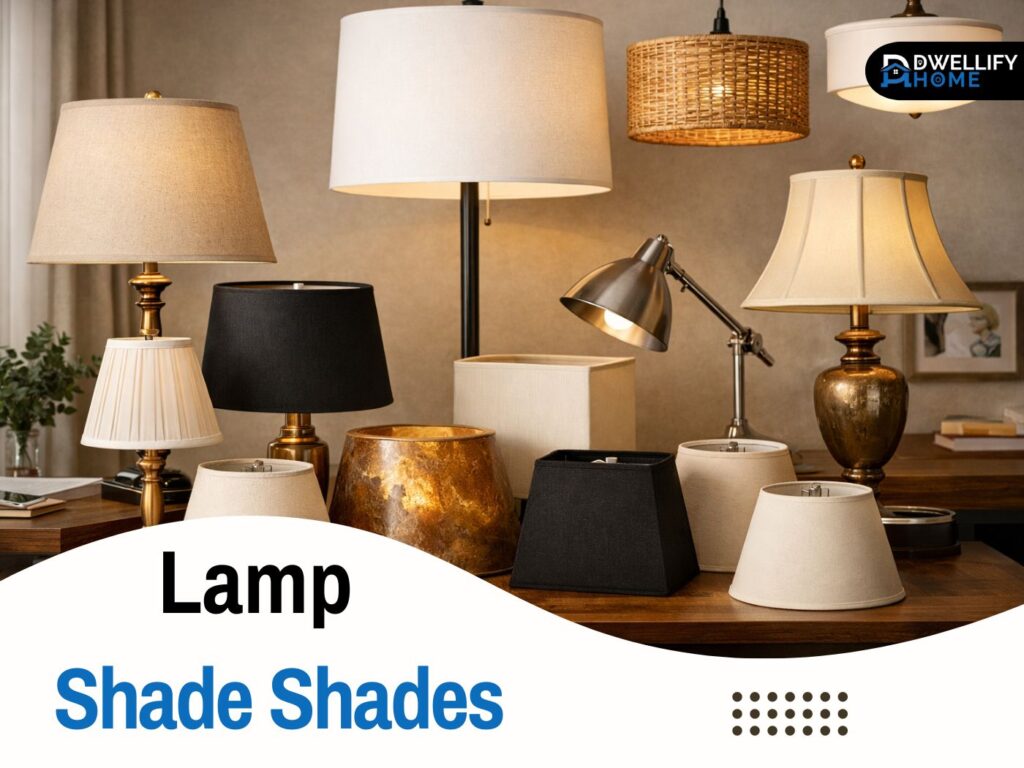
Drum lamp shade shades
Drum shades are a go-to for modern and transitional interiors. They give an even glow and look clean. If you’re unsure, a drum is often the safest choice because it works with many base styles.
Empire or tapered
This classic shape is narrower at the top and wider at the bottom. It tends to direct light downward a bit more, which can feel cozy on a side table or bedside. It also suits traditional bases beautifully.
Bell
Bell shades feel soft and decorative. They’re common in traditional rooms and can look great with vintage or curved bases. Light feels a bit warmer and more intimate with this shape.
Square, rectangular, and oval
These are excellent when you want structure. A rectangular shade works well on console tables, especially if you have two lamps and want a tailored look. Oval shades are helpful when space is tight but you still want a wider bottom opening for light.
Cone
Cone shades are great for smaller lamps or when you want a taller, narrower profile. I like them for reading nooks if you want light aimed more downward.
If you’re choosing unique lamp shades for table lamps, shape is an easy way to be bold without going overboard. A simple base with an unexpected shape can look designer, as long as the size is right.
Step 4 — Pick the Best Material (Brightness, Durability, Cleaning)
Material changes the glow, the texture, and how much maintenance you’ll deal with. It’s one of the most practical decisions, especially in real homes with dust, cooking, kids, or pets.
Fabric lamp shade shades (most popular choice)
Fabric shades, like linen and cotton, are popular for a reason. They soften light, hide the bulb well, and suit almost any room. Linen looks airy and relaxed. Cotton feels clean and classic. Silk looks elegant but usually needs gentler care.
If you want a calm bedroom feel, fabric is usually my first recommendation. It creates a pleasant glow without turning the whole room into a spotlight.
Other materials (when they make sense)
Paper or parchment can look beautiful, especially in minimalist spaces, but they can be more delicate. Mica shades are great for warm, ambient light and can hide dust better than you’d expect. Metal shades are excellent for focused task lighting, like on a desk, because they aim light downward. Glass can be stunning, but it often needs more frequent cleaning to stay crisp.
Also, check whether the shade is softback or hardback. Hardback shades keep a clean shape and feel more structured. Softback shades can look more relaxed and traditional, but they may show dents more easily.
A practical tip: if you live in a dusty area or you don’t want frequent cleaning, choose a material and texture that forgives. Light linen shows dust less than glossy surfaces, and textured weaves hide small marks better than smooth ones.
Step 5 — Color, Pattern, and Lining (Control Light Without Changing Bulbs)
Color is not just style, it’s brightness control.
A white or light neutral shade lets more light through and feels brighter. A darker shade reduces side glow and creates a more dramatic mood, with most light coming from the top and bottom openings. That can be gorgeous in a living room, but it might not be ideal on a bedside lamp where you want gentle general light.
Patterns and texture can add personality fast. But here’s my honest advice: if the room already has a lot going on, keep the shade simple. If the room is calm and neutral, a patterned shade can be the statement piece that makes it feel intentional.
Lining is a quiet upgrade. A lined shade often looks more polished and can reduce glare. It can also make the shade appear more opaque, which changes the mood. If you want a soft glow without seeing the bulb outline, lining helps a lot.
Match Lamp Shade Shades to Your Lamp Type (Table, Floor, Ceiling)
Different lamps have different jobs, so the “best” shade changes depending on where it’s used.
Table lamp shade shades (bedside, desk, living room)
For a bedside lamp, comfort comes first. You don’t want the bulb visible when you’re sitting or lying down. A fabric drum or tapered shade usually works well because it diffuses light gently.
For a desk lamp, you may want a more focused shade, sometimes a more opaque material, to aim light where you need it.
If you want unique lamp shades for table lamps, I like using texture as the special detail. Think woven fabric, subtle pleats, or a warm inner lining. It feels elevated without making the room feel busy.
Unique lamp shades for floor lamps (scale matters)
Floor lamps need scale. A shade that looks fine on a table lamp can look tiny on a tall floor lamp. This is where many people go wrong. The shade needs to match the height and presence of the lamp.
Unique lamp shades for floor lamps can look incredible when they’re slightly oversized, especially in a reading corner. A larger shade can reduce glare and make the light feel more like a soft pool, which is very comfortable in the evening.
Ceiling lamp shade shades (pendants + semi-flush)
Ceiling lamp shade shades are a different category because the light is overhead. Glare control matters more, especially in kitchens, hallways, and bedrooms where the light can hit your eyes directly.
Look for shades that work with diffusers or have a shape that hides the bulb from common angles. For chandeliers and sconces, smaller clip-on shades can add softness, but always pair them with cooler, safe bulbs like LEDs.
Replacement Lamp Shades (Quick Checklist Before You Buy)
Replacement lamp shades are one of the easiest upgrades you can do, but it’s also where mistakes happen fastest. The reason is simple: you’re trying to match an existing lamp’s fit and proportions.
Before buying, check:
- Fitter type (spider, uno, clip-on)
- Top and bottom diameter
- Height
- Whether the new shade will expose the bulb from your seating height
If you’re replacing a shade because the old one is yellowed or dented, you can either match it closely or intentionally shift the style. A modern drum shade on a traditional base can look fresh, as long as the size is right and the lamp still feels balanced.
If the new shade sits too low or too high, the fix might be a different harp size or an adapter ring, not a whole new shade. That small adjustment can save you a lot of trial and error.
Expert Tips Most People Miss
Let me share a few things I’ve learned the hard way in real homes.
First, bulb heat and shade safety matters. Even with LEDs, you want airflow. Clip-on shades, paper shades, and smaller shades need extra clearance so nothing overheats or warps.
Second, think about eye level. A lamp can look perfect standing up, then feel annoying once you sit down and see the bulb glare. If you’re choosing a living room lamp, test from the sofa height, not just from standing height.
Third, match shapes in a simple way. Curvy bases often look best with softer shapes like empire or bell. Straight, modern bases pair nicely with drum or rectangular shades. You don’t have to follow rules, but this one tends to work reliably.
Common Mistakes (and the quick fixes)
One common mistake is buying a shade that’s too small. It makes the base look oversized and the light can feel harsh because the bulb is closer to your line of sight. The fix is usually going wider and slightly taller.
Another is choosing the wrong fitter. A spider shade won’t sit properly without a harp. An uno shade won’t work on a harp setup. If the fitter doesn’t match, stop and switch before you waste time.
A third mistake is choosing style first and fit second. I get it, the shade is the fun part. But if the shade doesn’t fit and size well, the lamp won’t look good, no matter how pretty the shade is.
Care, Cleaning, and Keeping Shades Looking New
Shades stay nicer when you clean them lightly and regularly. A soft brush attachment on a vacuum works well for fabric shades, as long as you’re gentle. A lint roller can help on linen and cotton too.
For hardback shades, a microfiber cloth is usually enough. For glass and metal, wipe with a slightly damp cloth and dry immediately so you don’t leave streaks.
If a shade is badly yellowed or warped, replacement is often the better choice. It’s one of the simplest ways to refresh a room without changing furniture or repainting.
FAQ
1) What is the rule of thumb for lampshades?
A simple guideline is: choose a shade that looks proportional to the base, and keep shade height roughly one-third of the full lamp height. Always confirm the fitter type first.
2) How to buy a replacement lamp shade?
Start with the fitter type (spider, uno, clip-on), then measure top, bottom, and height. Pick shape and fabric based on how you want the light to feel, softer for ambient, more opaque for focused light.
3) Can you put any lampshade on any lamp?
Not safely or neatly. The shade must match the lamp’s fitter type and sit stable and level. Many mismatches happen when a lamp needs a harp (spider) but the shade is uno, or vice versa.
4) What are the different types of lampshades called?
Common names are based on shape (drum, empire/tapered, bell, oval, square/rectangular, cone) and fitter (spider, uno, clip-on, sometimes euro fitter with an adapter).
5) How do I know if I need a spider or uno shade?
If your lamp uses a harp and finial, it typically takes a spider fitter. If the shade attaches directly to the socket area with a ring, that’s usually an uno fitter.
Conclusion
Choosing a shade doesn’t have to be confusing. When you focus on comfort and fit first, the style part becomes easy and fun.
Here’s a simple final checklist I use in real rooms: fit, measure, pick the shape that suits the lamp and the room, then choose a material and color that creates the light you actually want at night. Do that, and you’ll end up with a lamp that looks right and feels right, which is really the whole point.
If you’re ever torn between two options, go with the one that hides the bulb better and feels calmer from where you sit. That small detail makes your lighting feel intentional every single day.
Disclaimer:
This article is for general home design and lighting guidance. Always follow your lamp and bulb manufacturer instructions, and consult a qualified electrician for wiring, fixture, or heat-safety concerns.

I’m Bilal, the founder of Dwellify Home. With 6 years of practical experience in home remodeling, interior design, and décor consulting, I help people transform their spaces with simple, effective, and affordable ideas. I specialize in offering real-world tips, step-by-step guides, and product recommendations that make home improvement easier and more enjoyable. My mission is to empower homeowners and renters to create functional, beautiful spaces—one thoughtful update at a time.