
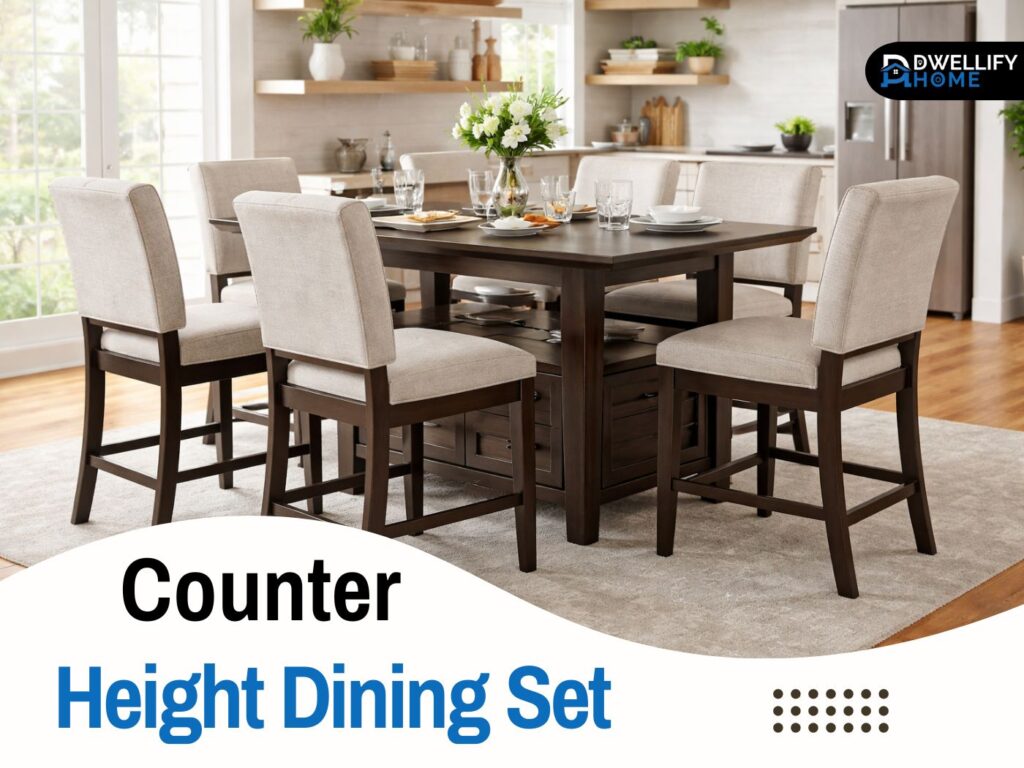
If you’ve ever stood in a kitchen and noticed how people naturally gather around the counter, you already understand the appeal of a counter height dining set. It has that casual, come-on-in feeling that makes everyday meals, coffee chats, and quick laptop sessions feel easy.
Here’s the thing though. A taller table isn’t automatically better. I’ve helped homeowners fall in love with the look, then regret it because the seating felt awkward, the table crowded the walkway, or the chairs were uncomfortable after 20 minutes.
In this guide, I’ll walk you through how counter height dining sets work in real life, how to measure properly, which sizes and shapes make sense, and the common mistakes to avoid so you end up with a setup that actually fits your home and your people.
Snippet-ready definition:
A counter height dining set is a taller table and matching seating, usually around 34–36 inches high. It creates a casual, kitchen-friendly dining spot and works best when seat height, footrest comfort, and room clearance are planned well.
Mission Statement:
At Dwellify Home, our mission is to help you build comfortable, practical living spaces with clear guidance you can trust, so every furniture choice fits your home, your routine, and your budget.
What Is a Counter Height Dining Set (And How Tall Is It?)
A counter height dining table is designed to sit around the same height as most kitchen counters. In practical terms, the tabletop is usually around 34 to 36 inches tall. That extra height changes everything, from how you sit to how your legs fit to what kind of chair feels comfortable.
A counter height dining set typically includes the table plus matching seating. Depending on the style, that seating might be full chairs with backs and footrests, or stool-style seating that looks more like what you’d use at a kitchen island.
If you like a relaxed, modern vibe and you want something that blends into an open kitchen and dining space, this style can be a great match. The key is making sure the height works for you day to day, not just in photos.
Counter height vs standard vs bar height (quick comparison)
Let’s keep it simple. Standard dining tables are lower and feel more traditional. Counter height sits in the middle. Bar height is taller and more like a pub table.
In real use, the difference shows up in comfort. Standard height is usually easiest for long meals. Counter height feels casual and social. Bar height can feel fun, but it’s the most demanding in terms of climbing up and sitting comfortably.
A quick comfort rule I use: the taller the table, the more important the chair design becomes. Back support and a good footrest matter a lot more.
Quick Guide Comparison Table
| Type | Typical Table Height | Typical Seat Height | Best For | Watch Outs |
| Standard dining | 28–30 in | ~18 in | Long dinners, most households | Can feel more formal, less “kitchen-adjacent” |
| Counter height | 34–36 in | 24–27 in | Casual meals, open kitchens, smaller dining zones | Needs good footrest and back support for comfort |
| Bar height | 40–42 in | ~28–30 in | Pub vibe, entertaining, high-top look | Harder for kids and some adults, comfort is hit-or-miss |
Step-by-step mini guide: choose the right set fast
- Confirm the height category
- If you want counter height, aim for a table around 34–36 inches.
- Match seat height to the table
- Most counter seating lands around 24–27 inches from floor to seat.
- Plan your walking space
- Try to keep about 36 inches behind chairs for comfortable movement (more is better in busy pathways).
- Pick the size by real life, not rare events
- Small kitchens: counter height dining set for 2
- Everyday homes: counter height dining table set for 4
- Family plus guests: counter height dining table set for 6 or 6 chairs counter height dining set
- Bigger rooms: counter height dining set for 8
- Choose seating style for comfort
- Want longer, relaxed meals: choose chairs with backs
- Tight space: consider a counter height dining set with bench on the wall side
- Social, casual vibe: stools work best when they have a supportive back and a solid footrest
- Pick the shape that helps the room flow
- Narrow rooms: rectangle
- Tight corners and easier conversation: counter height dining set round
- Double-check “piece count”
- A 7 piece counter height dining set usually means a table + 6 seats, but confirm if it includes a bench or mixed seating.
Do You Really Need Counter Height? A Quick 5-Question Quiz
Before you commit, take a minute and be honest with yourself. The best part is, these answers usually make the decision obvious.
- Do you want a casual, kitchen-adjacent dining spot more than a formal dining feel?
- Will people sit here for long dinners, or mostly for quick meals and chatting?
- Are there kids, shorter adults, or anyone with knee, hip, or mobility issues in your home?
- Do you have enough room for taller chairs plus comfortable walkways around the table?
- Do you prefer chairs with backs, or are you genuinely comfortable on stool-style seating?
If most of your answers lean toward casual use, open layouts, and enough space, counter height can work beautifully. If comfort and long meals are the priority, you may want to compare it seriously against a standard height set.
Pros of Counter Height Dining Sets (Why They’re So Popular)
One reason people love counter height sets is how naturally they fit into everyday life. In open floor plans, they visually connect the kitchen and dining area, so the table doesn’t feel like a separate, formal zone.
On top of that, the extra height can make a room feel more modern and airy. It’s a small design shift that often makes the dining area look intentional, especially when the set is close to an island or breakfast bar.
They also tend to be great for multitasking. I’ve seen families use a counter height dining table for homework, board games, and casual hosting where guests drift between the kitchen and the table without that sit-down dinner formality.
Cons Most People Discover After Buying (Read This First)
Here’s the thing. Many regrets come from seating comfort, not the table itself. If the chairs feel too high, have a shallow seat, or lack a supportive footrest, people end up perching instead of relaxing.
Another common issue is accessibility. A taller seat is harder for some people to get into and out of, especially if the chair is heavy or the footrest is awkward. In homes with kids, you’ll also deal with more climbing and more wobbling.
And one more practical downside: counter height chairs take up visual space. In a tight room, taller chair backs can make the area feel busier, even if the table footprint is similar to a standard set.
Measure Your Space First (So It Fits Without Regret)
If I could give you one piece of advice from years of helping people plan dining spaces, it’s this: measure the room like you’re planning to walk through it every day. Tables don’t just sit there. Chairs pull out, bodies move around, and traffic patterns matter.
Start with the room size, then sketch the table footprint, then add chair space. Counter height seating often needs a little more breathing room because people usually sit higher and pull chairs back differently.
Clearance around the table (chairs + walking space)
A comfortable guideline is to leave enough space behind each seated person so someone can pass without squeezing sideways. In many homes, aiming for around 36 inches of clearance from the table edge to the nearest wall or furniture is a solid target.
If your space is tight, you can make it work, but you’ll want smart choices like a bench on one side or a round table that softens corners. I’ll cover those tricks later.
Lighting tips for taller tables (pendants/chandeliers height)
Counter height tables sit closer to your light fixture, so the drop height matters. If your pendant hangs too low, people will bump their heads or feel like the table is boxed in.
A quick real-life check: sit in a chair, look across the table, and make sure the light isn’t cutting through your sightline. You want warm light over the tabletop, not a lamp in your face.
Choose the Right Size by Seats (Best Fit for Real Homes)
This is where people often overbuy. They picture holiday gatherings, then live with an oversized table for years. The best approach is to choose your everyday size, then decide how you’ll handle guests.
Also, remember that counter height seating needs comfortable elbow room. A crowded tall table feels even tighter because everyone sits more upright and closer to the table edge.
Counter height dining set for 2 (apartments, breakfast corners)
A counter height dining set for 2 is one of my favorite solutions for small kitchens and condos. It gives you a dedicated eating spot without taking over the room.
Look for a small round or square top and chairs that tuck in cleanly. If the chairs have bulky arms or a wide base, they’ll steal space quickly.
Counter height dining table set for 4 (small families, small dining areas)
A counter height dining table set for 4 is usually the sweet spot for everyday comfort. It’s enough for a couple plus kids, or a pair of roommates, without feeling like a big formal dining table.
If your room is narrow, a rectangular table can work well, but pay attention to chair pull-out space. In tight areas, a bench on the wall side can keep pathways open.
Counter height dining table set for 6 / 6 chairs counter height dining set (most versatile)
A counter height dining table set for 6, often sold as a 6 chairs counter height dining set, is great for families who actually sit together regularly. It also works well in open concept layouts where the dining zone can handle a bigger footprint.
This size is where chair comfort becomes a big deal. If you expect people to linger after dinner, choose chairs with supportive backs and a footrest that hits at a natural height.
Counter height dining set for 8 (hosting-friendly, room requirements to check)
A counter height dining set for 8 can be fantastic for hosting, but it needs a room that can support it. If the table is too large for the space, you’ll feel it every single day when you’re navigating around it.
If you love the idea of eight seats but your room is borderline, consider a table with an extension leaf, or a layout that uses a bench on one side. That can give you flexibility without crowding the room full-time.
What “7 Piece Counter Height Dining Set” Means (And What to Double-Check)
A 7 piece counter height dining set usually means one table plus six seats. Sounds straightforward, but there are a few details that surprise people.
Sometimes the seating is a mix, like four chairs and two stools. Other times, one side may be a bench, which changes how many people can sit comfortably. And in some sets, the “piece count” includes an extra leaf or a storage component.
Before buying, confirm:
- Table length and width in inches
- Seat height and whether it matches counter height seating standards
- Whether the chairs have footrests and decent back support
- Whether the set includes a bench, and how long it is
Those small checks save a lot of frustration later.
Pick the Best Table Shape for Your Layout
Shape affects how the room flows more than most people expect. I’ve seen the same square footage feel roomy with one shape and cramped with another.
Think about your walkways, where doors open, and how people naturally move through the space. Then choose the shape that supports that movement.
Rectangle vs square: best for rooms and traffic flow
Rectangular tables are usually the easiest fit for longer rooms. They line up with walls, they work well in open concept layouts, and they often seat more people without increasing width too much.
Square tables can feel cozy, but they’re tricky in narrow rooms. They usually need a wider “bubble” around them, because chairs pull out on all sides.
Counter height dining set round: best for conversation + tight spaces
A counter height dining set round is a smart choice when you want softer flow and better conversation. No sharp corners means it’s easier to navigate in tight areas, and people can slide into seats more naturally.
Round tables are also great for smaller groups because everyone faces toward the center. Just make sure the diameter isn’t too large, or you’ll end up with a table that’s hard to reach across.
Seating Choices That Change Comfort the Most
If you want a counter height setup you’ll enjoy for years, focus on the seating. Chairs and stools are not interchangeable in real life.
When I’m advising someone, I ask how long they like to sit at the table. Ten minutes of coffee is very different from an hour of dinner and conversation.
Chairs vs stools (back support, footrest comfort, long meals)
Stools look sleek and save visual space, but they’re often less comfortable for long meals unless they have a supportive back and the seat is shaped well.
Chairs usually win for comfort, especially for families. They provide better posture support, and they feel more stable when kids climb in and out.
Either way, don’t ignore the footrest. A footrest that’s too low or too high leads to dangling feet or awkward knees, and people will get fidgety fast.
Counter height dining set with bench (space-saving, family use, pros/cons)
A counter height dining set with bench can be a space saver and a lifesaver in a narrow room. The bench tucks in, reduces chair clutter, and makes it easier to slide people in during gatherings.
The trade-off is comfort and convenience. Benches are not great for long meals, and the middle seat always involves people scooting around. If you host often, a bench is nice for flexibility. If you want everyone to sit comfortably for long dinners, chairs are usually better.
Comfort Rules People Ignore (Seat Height, Footrest, Legroom)
Let’s talk comfort in plain terms. You want your feet supported, your knees at a natural bend, and your thighs not jammed under the table. That’s what makes a dining set feel right.
For counter height tables, seat height is typically in the 24 to 26 inch range. That usually leaves a comfortable gap between the seat and the tabletop for legroom, but only if the table apron and supports are designed well.
A quick real-world test I recommend: sit down and see if you can rest your feet naturally on the footrest without pointing your toes. If your feet dangle, you’ll feel tired faster. If your knees sit too high, it’ll feel cramped.
Also check the chair depth. Some counter height chairs look beautiful but have shallow seats, which can feel like you’re perched on the edge. For daily use, a slightly deeper seat with a supportive back makes a huge difference.
Materials & Build Quality (What Actually Matters Daily)
You don’t need to be a furniture engineer to judge quality. You just need to know where problems show up.
Solid wood tends to hold up well and can be refinished, but it costs more. Veneer over a stable core can be a great middle ground if it’s done well. Low-quality MDF tops can chip or swell if spills sit too long.
For frames, metal can be very sturdy, but check for wobble. With taller tables, wobble feels worse because the leverage is higher. Give the table a gentle shake in the store, or look for reviews that mention stability.
If the chairs have footrests, check how they’re attached. A weak footrest is one of the first parts to loosen because people use it constantly.
Style Matching Without Overthinking It
A counter height set can lean modern, farmhouse, industrial, or transitional depending on the materials and lines. The trick is not to match everything perfectly. You want it to look intentional, not like it came from a single showroom vignette.
If your kitchen has warm wood cabinets, a table with warm tones usually feels natural. If your space has a lot of black hardware, a black or dark metal base can tie things together.
And if you’re mixing styles, keep one element consistent, like the wood tone, the metal finish, or the chair shape. That’s usually enough to make the set feel like it belongs.
Features Worth Paying For (And Features You Can Skip)
Some features genuinely help in daily life. Others just sound fancy.
Worth considering:
- An extension leaf if you host but don’t want a huge table every day
- Performance fabric or easy-clean upholstery if you have kids or pets
- A storage shelf if you need a spot for placemats or serving pieces
- Leveling feet if your floor isn’t perfectly flat
Features you can often skip:
- Overly intricate pedestal bases that steal legroom
- Glass tops if you hate fingerprints and constant wiping
- Ultra-light stools with no backs if you want long-meal comfort
Guess what, the best “feature” is usually a chair you actually enjoy sitting in.
Counter Height Sets for Small Spaces (Practical Layout Tricks)
Small spaces can work beautifully with counter height furniture when you plan it right. I’ve seen tiny kitchens feel more usable just by switching to a compact counter height set that doubles as prep space and dining.
A few practical tricks:
- Use a bench on the wall side to reduce pull-out space
- Choose a round table to improve flow and soften corners
- Pick chairs that tuck in fully without bulky arms
- Consider a narrower rectangular top if your room is long and slim
If you’re working with a tight footprint, a counter height dining set for 2 or a counter height dining table set for 4 is often the cleanest option. It keeps things functional without turning the dining area into an obstacle course.
Maintenance, Safety, and Everyday Protection Tips
Daily life is messy, so set yourself up for success.
Use felt pads under chair legs to protect floors and reduce scraping sounds. If you have a rug under the table, make sure it’s big enough that chairs stay on the rug even when pulled out. A too-small rug is one of those things that drives people crazy over time.
For the tabletop, wipe spills quickly, especially on veneer or MDF surfaces. Use coasters and placemats, and be careful with hot pans. Heat marks are avoidable, but once they happen, they’re tough to fix.
Every few months, tighten chair hardware. Taller seating gets more movement, and a quick tightening keeps everything stable and safe.
Buying Checklist (What to Confirm Before You Order)
Before you buy, slow down and confirm the details that matter in real life. This is how you avoid the classic, “It looked perfect online but feels wrong at home” situation.
Checklist:
- Table height and exact tabletop dimensions
- Seat height and whether it matches counter height proportions
- Footrest position and stability
- Chair comfort for at least 20 to 30 minutes, if possible
- Clearance in your room, including door swings and walkways
- Delivery path, stairwells, and tight turns
- Assembly difficulty and whether tools are included
- Return policy and warranty basics
If you’re choosing a 7 piece counter height dining set, verify what the seven pieces actually are. It’s a small detail that prevents big surprises.
FAQs About Counter Height Dining Sets
What is the standard height for a counter height dining table?
Most counter height tables are around 34 to 36 inches tall, similar to many kitchen counters.
What seat height works best with a counter height table?
A seat height around 24 to 26 inches is common. The goal is comfortable legroom with your feet supported.
Counter height vs bar height, what’s the difference?
Counter height is lower and easier to sit at daily. Bar height is taller and often feels more like a pub setup.
Are counter height tables comfortable for long dinners?
They can be, but chair design matters a lot. Supportive backs and a solid footrest make a huge difference.
Is a bench better than chairs for a counter height set?
A bench can save space and add flexibility, but it’s usually less comfortable for long meals and less convenient for frequent seating changes.
Can a counter height set work in a small dining room?
Yes, especially with a compact footprint and smart seating. A round table or a bench on one side can help keep walkways clear.
What does a 7-piece counter height dining set include?
Typically, it’s one table plus six seats. Always confirm if the seating is chairs, stools, or a bench mix.
Conclusion: Finding the Best Counter Height Dining Set for Your Space and Lifestyle
A counter height dining set can be a great choice when you want a casual, social dining spot that blends into the kitchen and keeps the space feeling open. It’s especially nice in open floor plans, smaller dining zones, and homes where the table gets used for more than just dinner.
But comfort and fit are everything. Measure your clearance, choose the right size, and don’t settle for seating that feels like a perch. If you want daily comfort, prioritize supportive chairs, a good footrest, and enough legroom.
If you do those things, you won’t just end up with a table that looks good. You’ll end up with a dining space that feels easy, welcoming, and used all the time, which is really the whole point.
Disclaimer:
This guide is for general information and planning help only. Furniture dimensions and comfort vary by brand and body type, so always confirm measurements and test seating comfort when possible. For mobility or medical concerns, consider professional advice before purchasing.

I’m Bilal, the founder of Dwellify Home. With 6 years of practical experience in home remodeling, interior design, and décor consulting, I help people transform their spaces with simple, effective, and affordable ideas. I specialize in offering real-world tips, step-by-step guides, and product recommendations that make home improvement easier and more enjoyable. My mission is to empower homeowners and renters to create functional, beautiful spaces—one thoughtful update at a time.