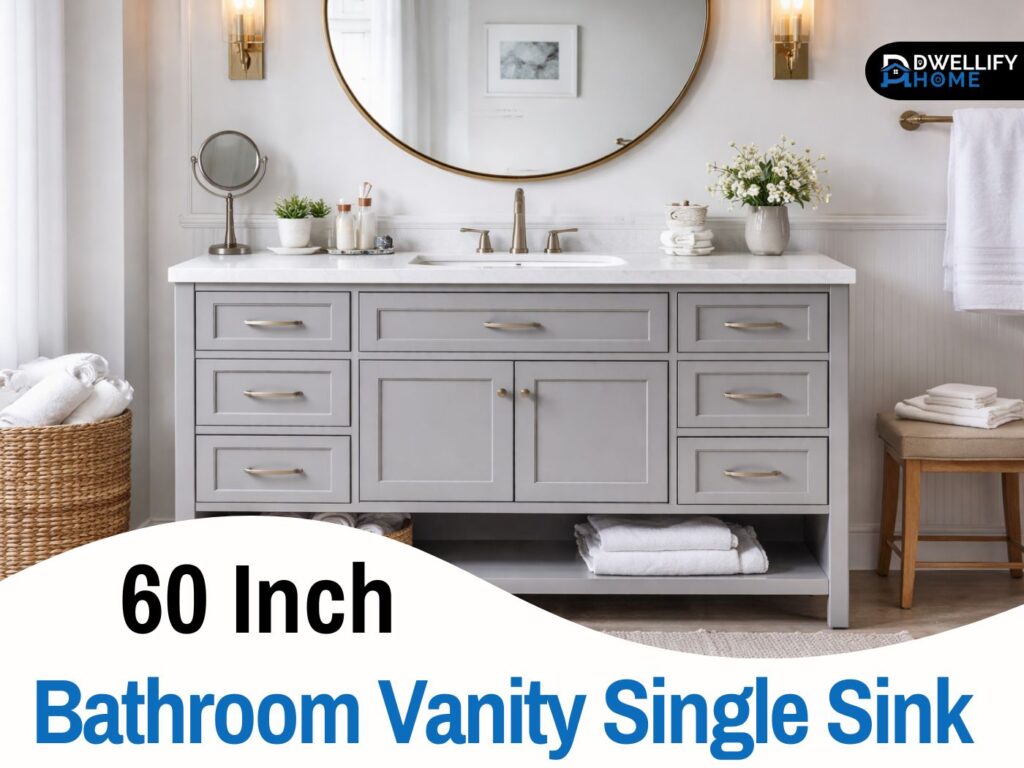
If you’re thinking about a 60 inch bathroom vanity single sink, you’re usually in a good spot. This size gives you the breathing room of a larger vanity without forcing you into a two-sink setup that can eat up counter space and complicate plumbing.
Here’s the thing: in real homes, a 60-inch single-sink vanity often feels like the most comfortable and flexible option. You get a wide countertop for daily routines, plenty of storage for clutter control, and enough layout freedom to make the bathroom feel organized instead of cramped.
I’ve helped homeowners choose and install hundreds of these vanities over the years. And the best part is, once you know what to measure and what to look for, picking the right one gets a lot easier.
Snippet-ready definition:
A 60 inch bathroom vanity single sink is a wide vanity that gives you generous counter space and storage with one sink. It’s ideal for master or larger bathrooms where you want room to spread out without adding a second basin.
Mission Statement:
At Dwellify Home, our mission is to make home upgrades feel simple and confident, with practical, experience-based guidance that helps you choose products that fit your space, your routine, and your budget.
What a 60-inch single-sink vanity is best for (and when it isn’t)
A 60-inch single-sink vanity shines in master bathrooms and larger guest bathrooms where one main person uses the sink at a time. You still get that big-vanity feel, but you keep the extra counter space that a second sink would take away.
I’ve seen couples love this setup because it creates a shared counter without forcing two sinks. One person can have their everyday items on the left, the other can claim the right, and the sink stays central or offset based on the layout. It feels balanced and practical.
Where it’s not ideal is the true “two-people-brushing-at-the-same-time” bathroom. If your mornings are a daily traffic jam with kids or a couple getting ready at once, a double sink may reduce conflict. But if the bathroom isn’t wide enough, forcing a double sink can backfire by shrinking drawers and making storage awkward.
Single sink vs double sink, quick decision guide
If you’re torn, this is the simple way I help homeowners decide:
- Go single sink if you want more counter space, deeper drawers, and easier cleaning.
- Go double sink if two people genuinely need to use the sink at the same time most days.
- If you want both, consider a single sink with an offset basin and a wider counter zone. It often gives you the best of both worlds.
Quick Guide Table (comparison you can scan fast)
| What you’re deciding | Best choice if… | Watch out for |
| Single sink vs double | You want more counter space and bigger drawers | Double sinks often shrink storage and counter area |
| Center sink vs offset | You want a balanced look and simple plumbing alignment | Can reduce usable counter space |
| Left or right offset | You want a makeup zone or better elbow room near toilet/shower | Pick the side based on traffic flow and door swings |
| Drawers vs doors | You want easy everyday organization | Plumbing can block drawers in cheaper designs |
| Quartz vs marble top | You want low-maintenance and stain resistance | Marble can etch or stain if spills sit |
| Floating vs freestanding | You want a lighter, open look | Floating needs strong wall support and precise install |
Step-by-step buying checklist (simple and practical)
- Measure the wall and the “standing space” in front of the vanity (don’t ignore door swings).
- Choose sink placement: centered for symmetry, offset for more usable counter space.
- Decide your storage style: drawers for daily items, cabinet space for taller bottles and bulk.
- Pick the top material: quartz for easy care, marble only if you’re okay with extra attention.
- Confirm what’s included: cabinet, top, sink, backsplash, faucet holes, hardware.
- Plan installation: plumbing alignment, leveling, wall support (especially for floating vanities).
Measure first: space requirements that prevent returns
Most vanity regrets come from one issue: the measurements were rushed. A 60-inch cabinet sounds straightforward, but real bathrooms have trim, uneven walls, baseboards, door swings, and plumbing that doesn’t land where you wish it would.
Start with wall width, but don’t stop there. Measure the usable space from wall to wall at the baseboard line and again a few inches above it. In older homes, walls can bow slightly, and that can be the difference between a clean fit and a frustrating install.
Next, check the clearance in front of the vanity. In most everyday bathrooms, you want comfortable room to stand, bend, and open drawers without bumping into a toilet or shower door. If the aisle is tight, a slightly slimmer-depth vanity can feel like a huge upgrade.
Vanity depth: standard vs narrow and what feels best day-to-day
Depth is a big deal, especially in medium bathrooms. Many vanities land around the standard depth range, but you’ll occasionally see narrow-depth options that make tight spaces feel more open.
A simple real-world test: stand where the vanity would be, then pretend to open a drawer. If your body naturally shifts backward because you feel boxed in, you’ll be happier with a slightly shallower cabinet. It’s one of those things you feel every day, even if you don’t notice it in a showroom.
Also, don’t forget faucet reach. If the countertop is deep and the faucet is short, water can land too close to the back of the sink and cause splash. A good faucet and sink pairing matters more than people expect.
Choose the sink position (center vs offset or left-side) for real-life use
Sink placement changes how the whole vanity works. A centered sink looks symmetrical and classic, and it’s easy to design around. But an offset sink often wins in real bathrooms because it gives you a larger uninterrupted counter zone.
On top of that, offset sinks can solve layout problems. If your toilet is close to the vanity, shifting the sink away from that side can create more elbow room where you actually stand.
Another big advantage is “get-ready space.” With many 60-inch units, an offset sink leaves you a makeup area where you can park products, set down tools, or add a small stool without the sink being in the way. It’s practical, not just pretty.
60 inch vanity single sink left side: when it’s the smartest layout
A left-offset sink can be a great choice when the bathroom’s traffic flow enters from the right, or when the toilet or shower is closer on the right side. Moving the basin left can keep your main standing zone clearer.
I also like left-offset sinks in bathrooms where the mirror or lighting layout makes the left side the “best-lit” spot. It’s a small detail, but if one side gets better light, putting the sink there can make daily grooming feel easier.
If your layout is the opposite, a right-offset sink can do the same job. The goal is simple: put the sink where it supports the natural flow of your bathroom, not where a product photo says it should go.
Storage design that actually works (drawers, doors, and plumbing reality)
Storage is where a 60-inch vanity can really earn its keep. The difference between a vanity you love and one you tolerate is often how well it holds your everyday mess without turning into chaos.
Drawers are usually the star in this size. Deep drawers hold hair tools, toiletries, and backup supplies in a way that’s easy to see and easy to reach. Cabinets are great for tall items, but they can become a black hole if the interior isn’t organized.
Here’s a tip from real installs: always think about the plumbing trap. In many vanities, the plumbing steals the most useful storage area, right where you want a full drawer. Better designs include a U-shaped drawer or split drawers to work around the drain.
60 inch bathroom vanity single sink with drawers: what to look for
If you want a 60 inch bathroom vanity single sink with drawers, focus on features that hold up long-term:
- Full-extension drawer slides, so you can reach items in the back.
- Soft-close drawers, because slamming wears the cabinet over time.
- A top drawer designed around plumbing, not a fake drawer front.
- Solid drawer bottoms and strong joinery, not flimsy stapled corners.
If you’re the type who likes things organized, drawers are your best friend. Add simple dividers and suddenly the vanity feels twice as useful.
Countertop and sink combos (durability, maintenance, and what stains truthfully)
Countertops and sinks are where everyday wear shows up. Toothpaste, makeup, hair dye, cleaning sprays, and hard water can all leave marks over time, especially if the material is porous.
Quartz is popular for a reason. It’s generally low-maintenance, resists staining, and doesn’t demand regular sealing. That makes it a very comfortable choice for busy households or anyone who wants less upkeep.
Marble looks beautiful, but it’s more sensitive. It can etch from acidic products and can stain if spills sit too long. I’m not anti-marble at all, I just like homeowners to go into it with clear expectations.
Sink style matters too. Undermount sinks are easy to wipe into, integrated sinks are simple to clean with fewer seams, and vessel sinks can look great but may increase splash if paired with the wrong faucet height.
60” single sink vanity with quartz top: pros, cons, and who should buy it
A 60” single sink vanity with quartz top is a solid “set it and forget it” choice for many bathrooms. It’s tough, it’s easy to clean, and it handles real-life mess well.
The downside is that quartz can feel a bit uniform if you want a highly natural stone look. Some patterns are beautiful, but others can look a little flat up close. If you care about that, ask for close-up photos or visit a showroom.
If you want durability, fewer worries, and a clean modern finish, quartz is hard to beat.
Build quality checklist (the experience-based inspection before you buy)
This is where I put on my consultant hat and get picky, because build quality is what separates a vanity that lasts from one that swells, sags, or chips after a couple of years.
Start with the cabinet box. Solid wood is great, plywood is also strong and stable, and MDF can be okay in the right places if it’s well-finished and protected. The problem is cheap MDF in damp bathrooms with poor sealing.
Check the finish. A good finish should feel smooth and consistent, especially around edges and inside corners. If the interior looks rough, that can be a warning sign.
Hardware matters more than people think. Soft-close hinges and quality drawer slides are not luxury details, they protect the cabinet over time. Also, look at the back panel and how plumbing access is handled. A well-designed cutout saves time and avoids ugly hacks during installation.
And yes, look at the warranty. A stronger warranty often reflects confidence in construction, though you should still check what it actually covers.
Style and color choices that look timeless (not trendy for three months)
Style is personal, but I always suggest aiming for a look you’ll still enjoy years from now. Bathrooms are expensive to redo, so a vanity is not the best place to chase a short-lived trend.
Shaker style is popular because it works in many homes. It can feel modern with clean hardware or more classic with warmer finishes. Modern floating vanities can make a bathroom feel bigger, especially if the floor area is visible underneath.
Traditional and transitional styles are great for older homes. Farmhouse and rustic can look fantastic too, but make sure it matches your flooring and lighting so it feels intentional.
Colors like white, navy, and grey remain common because they’re easy to pair with tile and paint. Natural wood finishes also look amazing when the tone matches the rest of the bathroom.
White 60 vanity single sink: why it stays popular (and how to keep it clean)
A white 60 vanity single sink is one of the safest choices I recommend when homeowners want something bright, clean-looking, and resale-friendly. White reflects light, makes bathrooms feel larger, and works with almost any tile.
To keep it looking fresh, use gentle cleaners and wipe up hair dye or strong makeup quickly. Also, choose hardware that won’t show fingerprints too easily. Matte finishes can be forgiving in busy bathrooms.
Common configurations people want (so you don’t get surprised by the listing)
This is where confusion happens. Many listings sound similar, but what’s included can vary a lot.
A 60” single sink vanity with top may include the cabinet and countertop, but not always the sink or faucet. Sometimes the sink is integrated, other times it’s a separate undermount basin. It’s worth checking the details so you don’t end up with missing pieces mid-project.
The phrase single sink bathroom vanity with top is also common, and again, it can mean different bundles. Some sets include the sink and top as a package, while others include only the countertop and require you to pick the sink separately.
Here’s a quick checklist I always tell homeowners to confirm before ordering:
- Does it include the countertop?
- Does it include the sink, or is it sold separately?
- Are faucet holes pre-drilled, and how many?
- Is a backsplash included, and do you need side splashes?
- Is the hardware included, or will you need to buy knobs and pulls?
This small bit of homework can save a lot of stress.
Add-on options that upgrade function (linen tower and makeup area)
If you want your bathroom to feel truly organized, consider vertical storage. A 60 inch vanity single sink with linen tower can be a smart move when you don’t have a closet nearby. Linen towers hold towels, bulk supplies, and cleaning products without stealing valuable floor space elsewhere.
I’ve seen linen towers make small bathrooms feel calmer because they remove clutter from the countertop. The key is to leave enough clearance so doors and drawers still open comfortably.
A 60 inch bathroom vanity single sink with makeup area is another practical upgrade, especially for master bathrooms. This often pairs well with an offset sink, creating a longer counter section where you can sit, style hair, or lay out products. Lighting matters here. A well-lit mirror and side sconces can make the space feel like a true daily routine zone, not just an extra counter.
Installation guide (DIY-friendly steps and when to call a pro)
Installation is where good planning pays off. Before the vanity arrives, measure your plumbing locations and compare them with the vanity’s cutout and interior layout. That’s especially important if the vanity has drawers, because plumbing can interfere if the design isn’t meant for it.
When the vanity is delivered, inspect it right away. Look for countertop cracks, finish chips, and drawer alignment issues. Freight deliveries can be rough, and it’s easier to address problems before you install anything.
If you’re doing it yourself, make sure the vanity is level. A vanity that’s even slightly out of level can cause countertop stress and doors that don’t close properly. Use shims carefully and secure the vanity to studs.
Floating vs freestanding: what changes for installation and storage
Floating vanities look sleek and can make a bathroom feel more open, but they need strong wall support. You’ll want solid blocking or studs in the right locations, and the install is less forgiving.
Freestanding vanities are usually simpler to install and often offer slightly more cabinet volume. If you want a straightforward project and maximum storage, freestanding is a safe pick.
Budget and pricing: what changes the cost most
Prices vary widely, and the reasons are usually predictable. Materials, countertop type, construction quality, and what’s included in the set all matter.
If you see a big price jump, it’s often because of:
- A premium countertop material
- Better cabinet construction and finish
- Higher-quality drawer slides and hinges
- Included sink and top as a full set
- Brand reputation and warranty support
My practical advice is to set a budget range, then prioritize the parts you’ll touch every day. For most homeowners, that’s storage quality and countertop durability.
Where to buy (and how to shop smarter)
Where you buy matters almost as much as what you buy. Big-box retailers can be great for easy returns and consistent stock. Specialty retailers often have higher-end options and more unique designs. Online stores can offer a wide selection, but you’ll want to be extra careful with dimensions, included parts, and freight delivery policies.
Focus on a few details that protect you:
- Clear return policy and restocking fees
- Warranty length and what it covers
- Delivery method and inspection rules
- Replacement part availability for hinges and hardware
Also, pay attention to real customer photos. They often reveal how the finish looks in normal lighting, which is more useful than studio images.
Mistakes people regret (quick expert-style warnings)
Let’s save you from the most common headaches I see.
First, choosing a vanity that’s too deep. It can make the bathroom feel tight and awkward, even if the vanity looks great online.
Second, ignoring faucet holes and backsplash details. People order the perfect faucet, then realize the countertop holes don’t match. Or they skip side splashes and later get water damage on painted drywall.
Third, assuming drawers will work with existing plumbing. If your drain is not centered where the vanity expects it, you may lose a drawer or need plumbing adjustments.
Fourth, picking style over function. A vanity can look stunning and still frustrate you daily if storage is poorly designed.
And finally, rushing the measurements. I know it’s boring, but it’s the difference between a smooth install and a stressful one.
FAQs
1) Should a 60 vanity have one or two sinks?
It depends on how the bathroom is used. A single sink gives you more counter space and often better storage. Two sinks only make sense if two people truly need to use the sink at the same time most days.
2) Is it cheaper to buy or build a vanity?
Buying is usually cheaper once you factor in tools, materials, finishing, and the countertop. Building can cost more but makes sense if you need a custom layout, custom depth, or a specific wood finish that’s hard to find.
3) What is the standard size of a single bathroom vanity?
Many single vanities are commonly found around 24–36 inches wide, with 30–34 inches being very common in standard bathrooms. A 60-inch single is more of a “master bath” size because it offers much more counter and storage space.
4) What are common vanity design mistakes to avoid?
The big ones are choosing a vanity that’s too deep for the room, ignoring door and drawer clearance, not matching faucet holes to the faucet, and buying drawers that don’t account for plumbing. Rushing measurements is the fastest path to regret.
5) Do vanities usually come with the top and sink?
Sometimes yes, sometimes no. A “60” single sink vanity with top” often includes the countertop, but the sink and faucet may be separate unless it’s an integrated or bundled set. Always check the “included components” section.
Conclusion
A 60 inch bathroom vanity single sink can be one of the most satisfying upgrades you make in a bathroom, because it improves daily life in a way that’s hard to ignore. You get space to spread out, storage that can actually handle real routines, and a layout that feels calmer.
If you want a simple way to decide, follow this path: measure carefully, choose the sink position based on how you move through the room, prioritize drawer-friendly storage, then pick a countertop material that fits your maintenance style. After that, the rest is just choosing a look you’ll enjoy for years.
If you take your time with those few steps, you won’t just end up with a vanity that fits, you’ll end up with one that works. And that’s the goal.
Disclaimer:
This article shares general remodeling and design guidance based on real-world project experience. Measurements, plumbing conditions, and building requirements vary by home. For structural changes or plumbing work, consult a licensed professional in your area.

I’m Bilal, the founder of Dwellify Home. With 6 years of practical experience in home remodeling, interior design, and décor consulting, I help people transform their spaces with simple, effective, and affordable ideas. I specialize in offering real-world tips, step-by-step guides, and product recommendations that make home improvement easier and more enjoyable. My mission is to empower homeowners and renters to create functional, beautiful spaces—one thoughtful update at a time.