Yes, solar Christmas outdoor decorations work, and they can look lovely all through December — if you give the little solar panel enough sun. A small panel charges a rechargeable battery during the day, a light sensor switches the lights on at dusk, and efficient LED bulbs glow at night without an outdoor outlet or a long extension cord. The catch is simple: weak winter sun, shade, and snow on the panel mean a shorter glow, so placement matters more than the price tag.
If you have a sunny spot for the panel, solar decor can light a path, a porch, a fence, or a far corner of the yard that no cord can reach with ease. If your yard stays shady all winter, you will enjoy solar lights more as pretty accents than as your main display. This guide shows you how solar-powered outdoor Christmas decorations work, where they shine, where they struggle, and how to set them up so they last through the holidays.
How Solar Christmas Outdoor Decorations Work
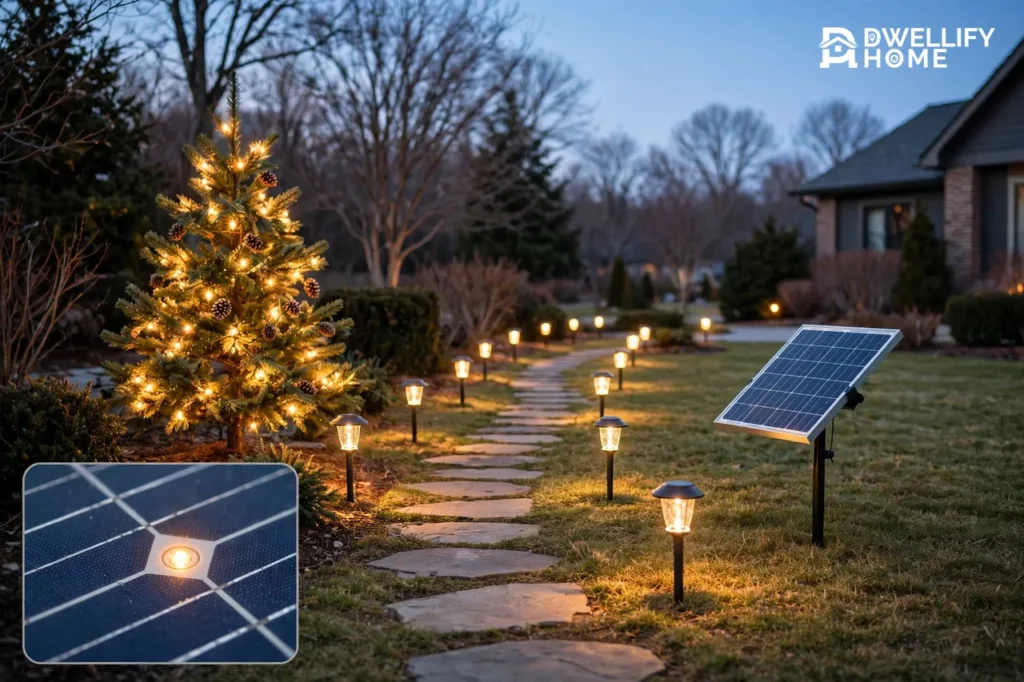
Every solar decoration runs on the same short loop, and once you see that loop, every tip in this guide makes sense. Sunlight hits the panel, the panel turns light into electricity, the battery stores that electricity, and the lights use the stored power after dark. Nothing here needs a plug, a timer you must remember, or a cord across the lawn.
The three parts that do the work
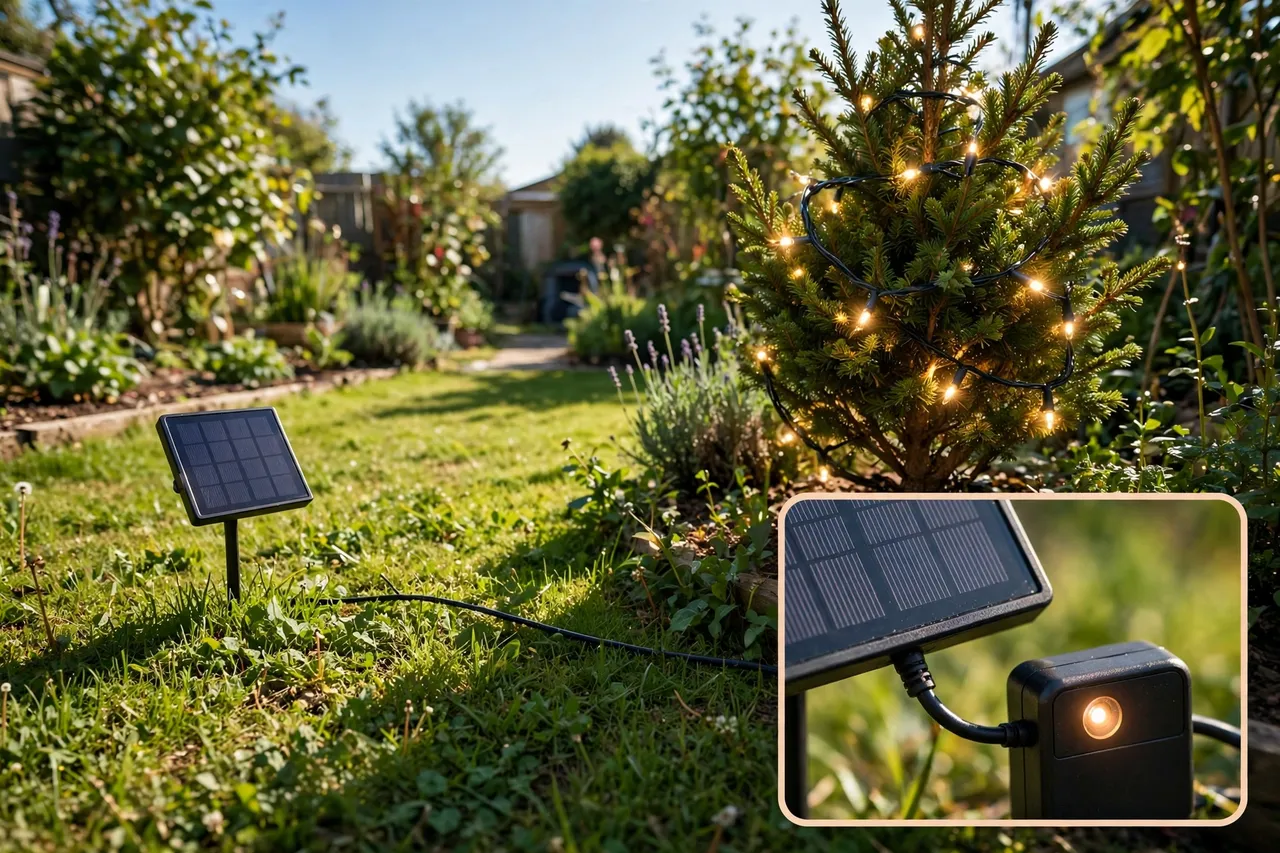
First comes the solar panel, a small dark panel that turns sunlight into electricity. Most home sets use a panel you stake into the ground or clip to a rail, and many sets let you place the panel in the sun while the lights sit in a shadier spot nearby. Second comes the rechargeable battery, tucked inside the panel box or the light unit. It holds the day’s charge until night falls. Third comes the light sensor, which notices darkness and switches the LEDs on by itself. At dawn, the sensor switches them off again, and charging starts over.
LED bulbs make the whole system practical. LEDs sip power compared with old incandescent bulbs, so a small battery can run a whole string for hours. That is also why solar sets almost always use LEDs. If you see a solar set with old-style hot bulbs, walk away, because it will drain its battery fast and give you little glow for your money.
What a full charge really gives you
Most guides report that a well-charged solar string glows for about 6 to 10 hours at night, and EnergySage reports a range of 8 to 14 hours for solar Christmas lights, depending on the set and the charge it got. Treat those numbers as a best case, not a promise. A bright, clear December day gives you a long evening glow. A gray week gives you a shorter one, and a panel buried under snow gives you almost nothing until you clear it.
Many sets also offer modes such as steady, twinkle, fade, and chase. Steady light usually drains the battery at a steady pace, while twinkle and fade modes can stretch the charge a little further on some sets. Check your own set’s manual, because modes work a bit differently from brand to brand. When in doubt, pick steady for the front walk, where people need to see, and save the playful modes for trees and fences.
Will Solar Christmas Decorations Work in Winter?
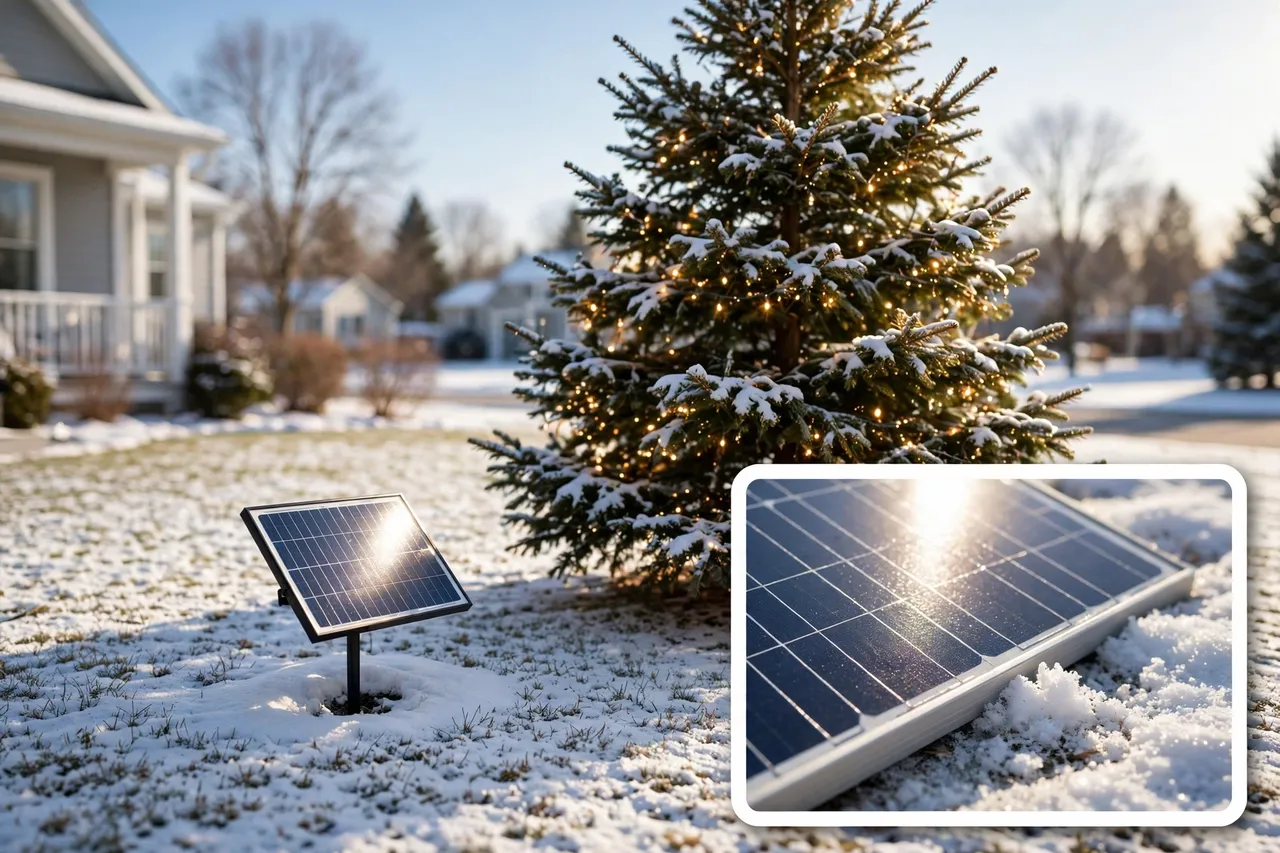
Yes, solar Christmas decorations can work in winter, but winter asks more of them than summer does. Cold air itself does not hurt a solar panel. In fact, solar panels turn light into electricity, not heat, and they can run well on a cold, bright day. The real winter problems are shorter days, a lower sun, more cloud, and snow that covers the panel.
Think of it this way: your panel needs light, not warmth. A sunny January-style afternoon in December can charge it just fine, even when the air feels icy. A dull, gray afternoon gives it far less to store, even though the panel still picks up some light through cloud. That is why two neighbors can buy the same set and get very different results. The neighbor with a clear, south-facing panel wins, and the neighbor with a panel under an eave loses.
Cloud, snow, and short days
On cloudy days, panels still charge, but at a much lower rate. Some winter guides put cloudy-day output at roughly 10 to 25 percent of a panel’s rated output under heavy overcast, so a string that glows for eight hours after a sunny day may glow for only a few hours after several gray days. Snow is stricter. A snow-covered panel makes almost no power until you brush the snow off, because the snow blocks the light itself.
Batteries feel winter too. Cold can cut how much usable charge a battery holds, and older batteries lose capacity faster in freezing weather. That is why a set that glowed until midnight last year may fade by 9 p.m. this year. Often the panel is fine, and the tired battery is the weak link. If your set allows a battery swap, use only the exact type and size its manual names, and never mix old and new batteries.
How to judge your own yard honestly
Before you buy a big display, test your sun. Stand where you plan to put the panel at midday in late November or early December, and ask one plain question: does this spot get clear, open sky for most of the day? South-facing spots in the Northern Hemisphere catch the most winter sun. Spots under evergreens, porches, eaves, and tall fences catch far less, even when they look bright to your eye.
A smart first move is to buy one set, not ten. Set it up, watch it for a week, and note when it turns on, when it fades, and how it copes with a cloudy spell. If that one set glows well, buy more of the same kind. If it fades early, you have learned something cheap: your yard needs a sunnier panel spot, a larger panel, or plug-in lights for the main display, with solar as a pretty accent.
Where to Put the Solar Panel for the Best Charge
Panel placement is the single biggest choice you make with solar-powered outdoor Christmas decorations. The lights themselves can sit almost anywhere, but the panel must sit in the sun. Get this right, and even a modest set can surprise you. Get it wrong, and even a pricey set will disappoint you.
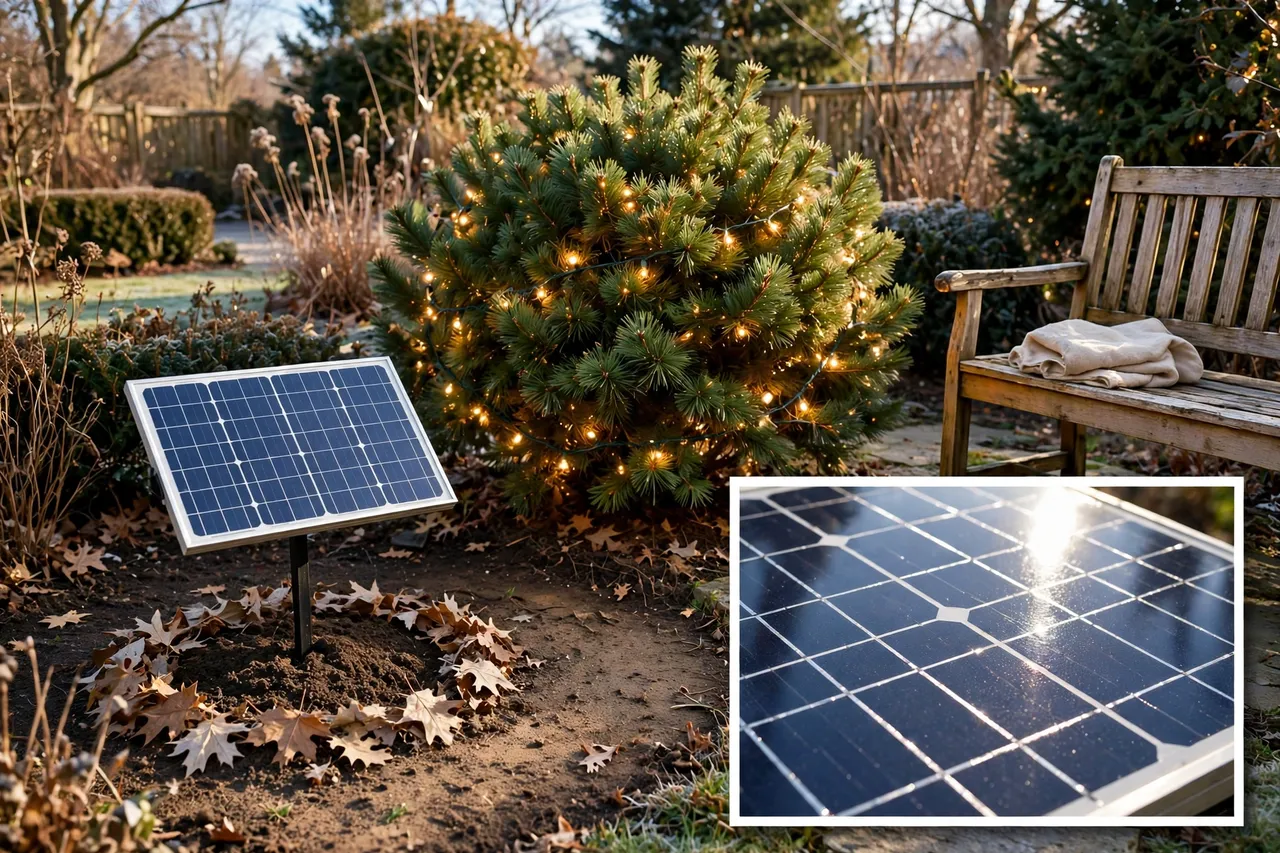
Pick a spot that faces south, stays clear of shade, and tilts toward the low winter sun. A steeper tilt helps in winter, because the sun sits low in the sky, and a tilted panel also sheds snow more easily than a flat one. If your set has a separate panel on a cord, use that freedom. Stake the panel in the sunny bed by the walk, and run the lights to the porch rail or the shrub where you want the glow.
- Face the panel south and keep it clear of trees, eaves, fences, and porch roofs.
- Tilt the panel up toward the winter sun instead of laying it flat.
- Keep the panel away from porch lights and streetlights at night, so the sensor sees real darkness.
- Brush snow, leaves, and dirt off the panel often, with a soft cloth or a soft brush.
- Never scrape a panel with metal, and never pour hot water on an icy panel, because sudden heat can crack it.
One small habit pays off all season: wipe the panel when you take out the trash or check the mail. Dust, road salt, and bird droppings block light in a quiet way, and a quick wipe can restore a charge you thought you had lost. Think of the panel like a window. A dirty window lets in less light, and a clean one does its job with ease.
Types of Solar-Powered Outdoor Christmas Decorations
Solar decor now goes far beyond one string of fairy lights. You can light a whole yard with solar power, as long as you match each type to a job it can do well. Small, low-power pieces suit solar best. Big, bright centerpieces that must blaze all night usually suit plug-in power better, or a mix of both.
String and fairy lights
Solar string lights are the classic choice, and they still make the most sense for most yards. Wrap them around a porch rail, drape them along a fence, or wind them through a small tree near a sunny spot. They come in warm white, cool white, and multicolor, and many offer several modes. Keep each string on its own panel when you can, because one small panel struggles to run a very long string at full brightness.
Pathway stakes and stake figures
Solar pathway stakes light the walk to your door, and they install in seconds: push the stake into soft ground, point the panel at the sun, and switch the unit on. Snowmen, candy canes, stars, and small trees on stakes add charm to garden beds and lawn edges. They also help guests find the path on dark evenings, though they give a soft glow rather than the bright beam of a wired path light.
Net, icicle, and curtain lights
Net lights drape over shrubs in one quick step, icicle lights hang from eaves and porch edges, and curtain lights make a glowing wall behind a porch swing or a window. All three look lovely, but all three need a panel plan. If the lights hang under a roof, the panel must still sit out in the sun, so choose a set with a separate panel and a cord long enough to reach open sky.
Motifs, wreaths, and lawn figures
Solar motifs, such as stars, snowflakes, reindeer shapes, and lit wreaths, give you a focal point without a cord. A solar wreath on a sunny gate or fence post can glow all evening, while the same wreath on a shaded front door may fade early. Lawn figures with built-in solar panels work best on open lawn, where nothing blocks the sky. For a shaded front door, a plug-in wreath or a battery set you charge indoors may serve you better, and you can still use solar pieces around it.
For the rest of your outdoor look, pair solar lights with the bigger picture. If you plan the whole front of your home, outdoor Christmas exterior ideas can help you place lights, greenery, and focal points together. For a smaller, cozier space, Christmas decor for your porch shows how a few well-placed pieces can carry the whole look, and front door Christmas decorations help you frame the entry guests see first.
Solar vs Plug-In: Which One Fits Your Yard?
Solar and plug-in lights both have a place in a good display, and the honest answer is that many yards do best with a mix. Solar wins on freedom and ease. Plug-in wins on steady brightness and long runtimes. Your yard, your sun, and your display size should make the call, not a brand claim.
Plug-in LED lights give you the same brightness at 10 p.m. as at 6 p.m., and they run as long as you leave them on. They need an outdoor outlet, outdoor-rated cords, and care with load limits, but they never fade because a cloud passed by. Solar lights give you freedom from outlets and cords, no running cost, and an automatic on-off rhythm. They fade as the battery drains, and they depend on the day’s sun.
Here is a plain comparison to help you decide, based on how each type behaves in real yards rather than on a box.
Table: Solar vs plug-in outdoor Christmas lights at a glance
| Feature | Solar-powered lights | Plug-in LED lights |
|---|---|---|
| Power source | Sun plus battery | Outdoor outlet |
| Nightly runtime | Varies with sun, often 6 to 10 hours | Steady, as long as you run them |
| Brightness | Soft to moderate, fades as battery drains | Steady all night |
| Setup | Stake and go, no cords | Needs outlets and cords |
| Running cost | None from the grid | Small, for LED sets |
| Best for | Paths, fences, far corners, accents | Rooflines, big trees, main displays |
Cost tells a useful story too. EnergySage reports that each strand of solar Christmas lights typically costs between $15 and $30, while plug-in LED strings often cost less to buy. Solar lights cost nothing to run, but LED plug-in lights cost very little to run as well, so do not buy solar only to save on your power bill. Buy solar for freedom from cords, for spots with no outlet, and for the simple joy of lights that switch themselves on at dusk.
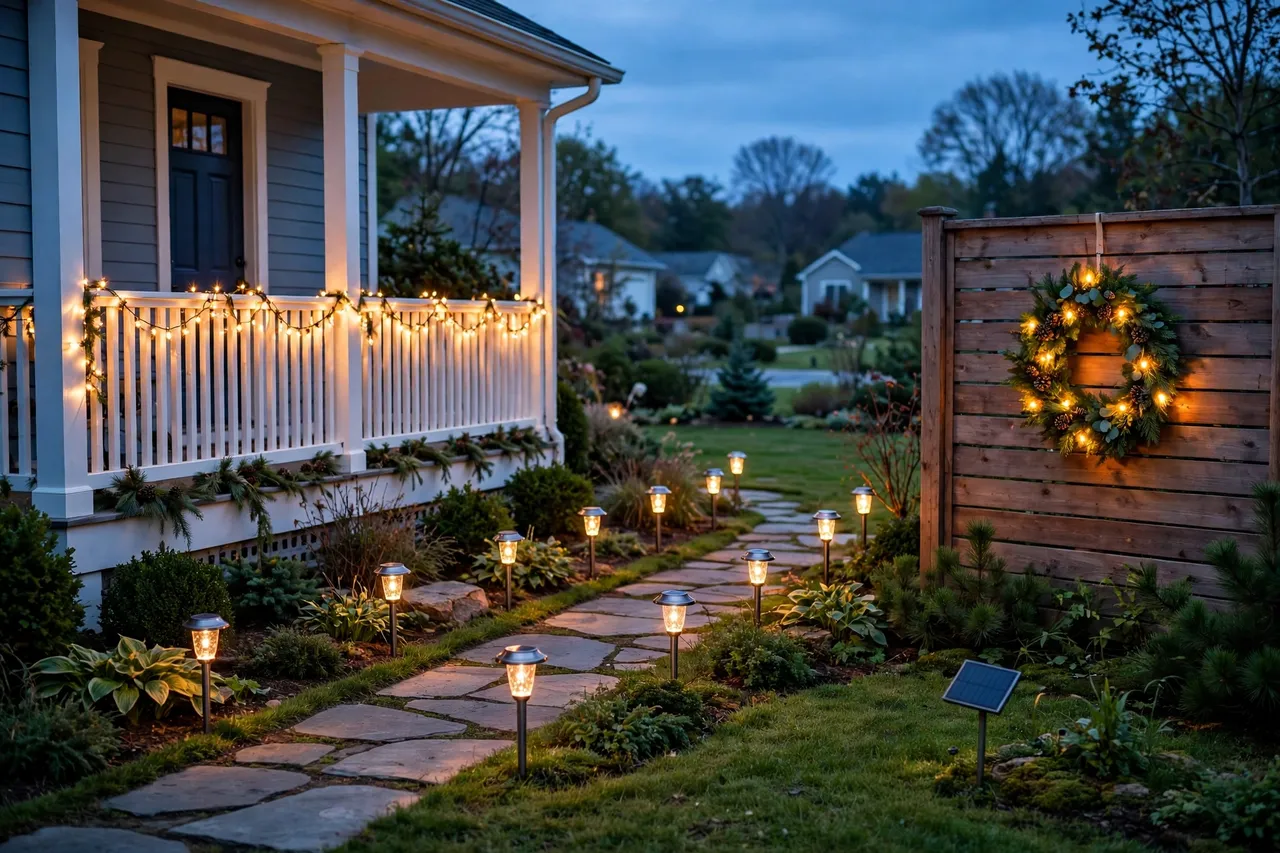
A mix often works best. Use plug-in lights for the roofline and the big tree, where steady brightness matters most. Use solar lights for the path, the garden bed, the fence line, and the far tree, where cords would trip guests or spoil the look. That way, even on a gray week, your home still glows where it counts, and the solar accents add charm where they can.
How to Set Up Solar Christmas Decorations Step by Step
Setup takes minutes, but a few careful steps at the start save you weeks of dim lights. Work in daylight, so you can see the sun and the shade as they really fall, and test each set before you hang it in a hard-to-reach spot.
- Peel off any clear protective film on the panel, and switch the unit on. Many sets will not charge with the switch off.
- Place the panel in full, direct sun, facing south, and tilt it toward the low winter sun.
- Give the battery a full first charge in direct sun before you judge brightness. Most guides suggest 6 to 8 hours of sun for a first charge.
- Hang or stake the lights where you want them, and keep the panel cord clear of walkways and mower paths.
- Wait for dusk, and check that the sensor switches the lights on by itself. If a porch light shines on the sensor, move the panel or shield it from that light.
- Watch the set for a few nights. If it fades too early, move the panel to a sunnier spot before you buy more sets.
Renters love solar decor for one clear reason: it needs no drilling, no wiring, and no permanent change to the home. Stakes pull out in January, clips come off rails with ease, and you leave no holes behind. Homeowners love it for the far corners of the yard, where an outlet would mean trenching, cords, and cost. Either way, keep the manual for each set, because battery types, cord lengths, and mode buttons differ from set to set.
How to Make Them Last Longer Through December
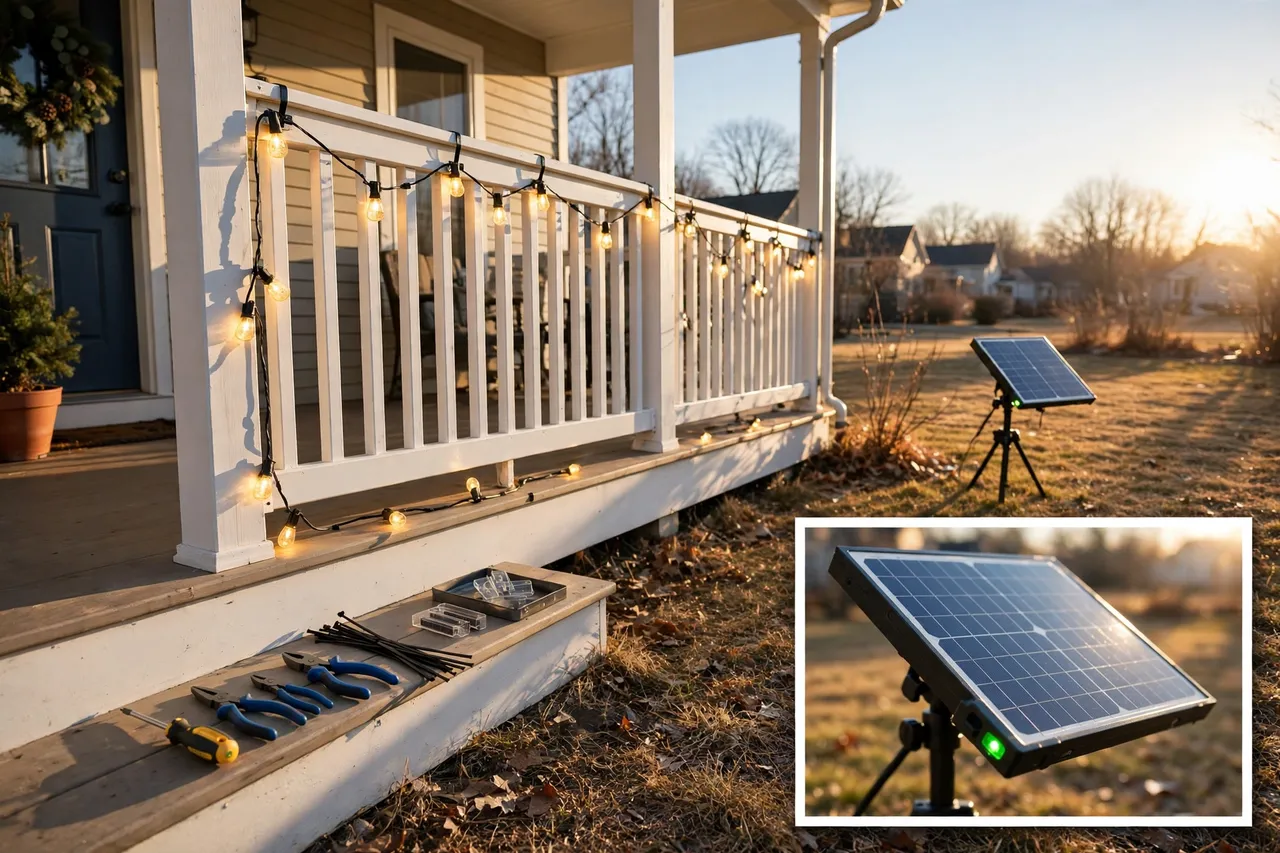
Most solar disappointments come from three causes: a shaded panel, a dirty panel, or a tired battery. Fix those three, and you fix most problems. The troubleshooting list below runs from the safest and cheapest checks first, so you can work through it in order without wasting money on new sets you do not need.
Quick-reference troubleshooting list: fix solar Christmas lights that fade or fail
- Clear the panel. Brush off snow, leaves, and dirt, and wipe the panel with a soft cloth.
- Move the panel to a sunnier, south-facing spot, and tilt it toward the winter sun.
- Move the panel away from porch lights and streetlights, so the sensor sees true darkness at night.
- Switch the set to a lower-power mode, such as twinkle, to stretch a weak charge further.
- Check the switch. Make sure it sits in the on position, and check that the protective film is off the panel.
- Replace the battery only with the exact type your manual names, if your set allows a swap.
- Test one string at a time. If one set fails while others glow, the fault sits in that set, not in your yard.
- Accept the limit on gray weeks. Use plug-in lights for must-glow spots, and let solar pieces shine as accents.
Care after the season matters just as much. When January comes, switch each set off, clean the panels, and store the sets in a cool, dry place. If your set lets you remove the batteries, take them out and store them apart from the lights. A battery left dead in a dark garage for eleven months may never hold a full charge again, while a stored set with a fresh battery can glow like new next December.
When you shop, look past the prettiest box. Choose outdoor-rated sets with a waterproof rating of IP65 or higher where you can, because rain, snowmelt, and freeze-thaw cycles punish weak seals. Look for a separate panel with a cord, replaceable batteries, and a clear warranty. A slightly dearer set that lasts three or four seasons beats a cheap set you replace every year, and it keeps less plastic and fewer batteries out of the trash.
What to Buy: A Quick Checklist Before You Spend
Use this short checklist in the store or online, and you will avoid the most common buyer regrets. It takes two minutes, and it forces the seller’s claims to meet your yard’s reality.
- Sun check: do you have a clear, south-facing spot for each panel?
- Panel size: does the set have a panel large enough for its string length, or does one tiny panel feed a very long string?
- Separate panel: can you place the panel in the sun while the lights sit where you want them?
- Battery: can you replace the battery, and does the manual name its exact type?
- Weather rating: is the set rated for outdoor use, ideally IP65 or higher?
- Modes and timer: does it offer steady plus twinkle, and does it switch on and off by itself at dusk and dawn?
- Hybrid help: for gray climates, does it offer USB charging as a backup, so you can top it up indoors?
- Length: did you measure the fence, path, or tree first, with a little extra for draping?
Hybrid solar-plus-USB sets deserve a special note for northern yards. On a sunny week, they run on sun alone. On a gray week, you can bring the panel or battery unit indoors, top it up from a wall outlet, and put it back out for the evening. That backup turns solar from a gamble into a reliable plan, and it suits anyone who wants solar charm without worrying about every cloud.
Safety First With Outdoor Christmas Decor
Solar lights run on low-voltage batteries, so they carry far less shock risk than plug-in displays. That safety edge is real, but it does not remove every risk. Wet plugs, damaged wires, tripping cords, and ladders on icy ground still hurt people each year, so treat every outdoor display with care, solar or not.
Use only lights and decorations rated for outdoor use, and check each set for cracked sockets, frayed wires, and loose connections before you hang it. Throw out damaged sets instead of nursing them through one more season. For any plug-in part of your display, the U.S. Consumer Product Safety Commission advises plugging outdoor lights into GFCI-protected circuits, using outdoor-rated cords, and fastening lights with insulated clips rather than nails or tacks that can pierce wires. Keep cords out of walkways, keep connections out of puddles, and never run cords where guests can trip.
Disclaimer: This guide covers general home decorating advice only, and homes, yards, and weather vary. Use only outdoor-rated products outdoors, use GFCI protection for any plug-in lights, never modify wiring or open sealed electrical parts, and call a qualified electrician for hardwired work or any fault you do not understand. If a set smells hot, looks melted, or trips a breaker, switch it off and stop using it.
Related Guides
If you enjoyed planning this solar display, keep going with the rest of your outdoor look. Start with outdoor Christmas exterior ideas for the whole front of your home, then dress the entry with Christmas decor for your porch and front door Christmas decorations that greet guests first.
Frequently Asked Questions
Do solar Christmas lights really work?
Yes, solar Christmas lights really work when their panel gets enough sun. The panel charges a battery by day, and a sensor switches the LEDs on at dusk. Give the panel 6 to 8 hours of direct sun, and most sets glow for hours at night.
Do solar Christmas lights need direct sunlight?
They work best in direct sunlight, but they can still charge in bright daylight on cloudy days. Direct sun gives the longest glow, while shade and heavy cloud shorten runtime. Place the panel in open, south-facing sun for the best result.
Can solar Christmas lights charge on cloudy days?
Yes, but at a much lower rate than on sunny days. Under heavy cloud, panels may make only a small share of their rated output, so runtimes shorten. Clear snow and dirt off the panel, and use a lower-power mode to stretch the charge.
How long do solar Christmas lights last?
The LED lights themselves can last for years, but rechargeable batteries often need replacement every 2 to 3 years. When a set fades early after a sunny day, a fresh battery of the exact type often restores it. Store sets switched off indoors after the season.
Can I leave solar Christmas lights out all winter?
Well-made, cold-rated sets can stay out all winter if their panels stay clear and their batteries cope with cold. Budget sets with weaker batteries and seals do better indoors after the holidays. Store them switched off in a cool, dry place.
Solar Christmas outdoor decorations reward one simple habit: put the panel in the sun, and let the sun do the work. Start with one set, test it in your yard, and build from what glows. Your path will welcome guests, your porch will feel warm, and your yard will shine without a single cord across the lawn. This weekend, pick your sunniest spot, stake a panel there, and watch your home light itself at dusk.