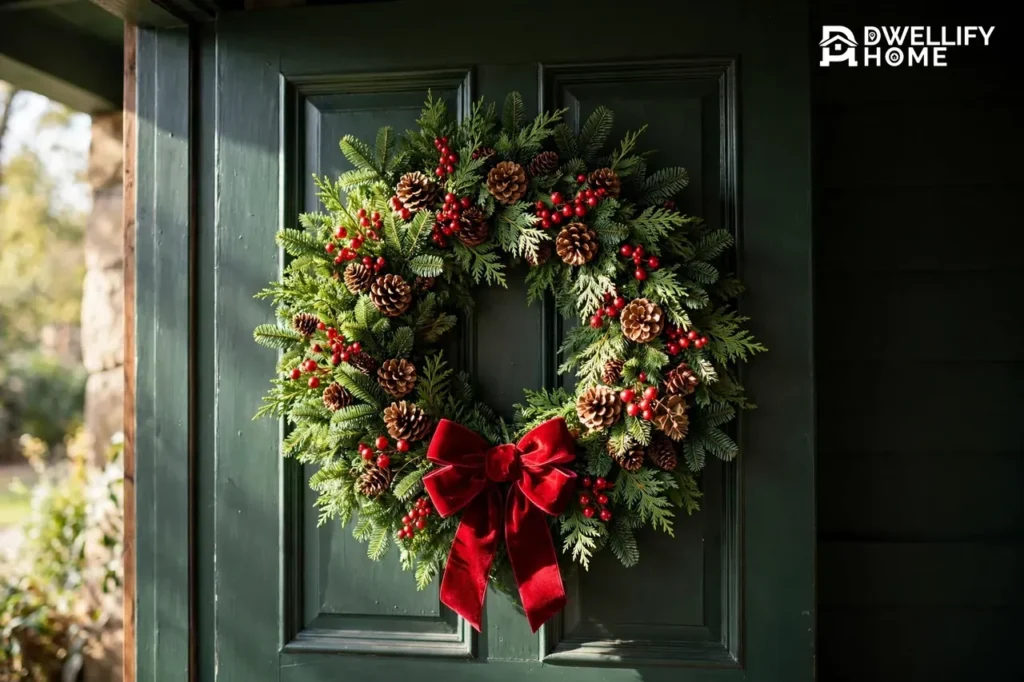
If you want ideas for DIY Christmas wreaths that actually work for a beginner, start here: pick a base, add greenery or decorations in overlapping layers, and finish with a bow or a few ornaments. You can make a fresh evergreen wreath in about an hour, a faux wreath in an afternoon, and a grapevine, ornament, dried-orange, or fabric wreath with simple tools you probably already own. This guide gives you six styles, with materials and steps for each, plus hanging and door-care tips so your wreath looks great all season.
Making your own wreath beats buying one for a simple reason: you control the size, the colors, and the cost. A wreath you build yourself also fits your door, your home, and your style in a way no store wreath can. The best part? None of these ideas for Christmas wreaths need special skill. If you can wrap wire, tie a knot, and use scissors, you can make a wreath you will be proud to hang.
Before You Start: Pick Your Wreath Base
Every wreath starts with a base, and the base you pick shapes the whole project. A wire frame works best for fresh and faux greenery because you wire bundles right onto it. A grapevine wreath already looks beautiful on its own, so it suits rustic styles and light decorations. A foam form holds hot-glued ornaments and fabric strips well, while a straw form gives fresh greens something soft to pin into.
Size matters more than most beginners expect. For a standard 36-inch-wide front door, a wreath about 24 inches across looks right from the street, and a good rule is to aim for roughly one-third of your door’s width. Smaller doors look best with 14- to 18-inch wreaths, and double doors can carry wreaths up to 30 inches. Measure your door before you buy anything, because a wreath that is too small disappears and one that is too big crowds the door.
Here is a quick guide to choosing:
Table: Which wreath base fits which style
| Base | Best for | How you attach things |
|---|---|---|
| Wire frame | Fresh and faux greenery | Floral wire, wrapped tight |
| Grapevine | Rustic, dried, and light decor | Wire picks, hot glue, tucked stems |
| Foam form | Ornaments, fabric, paper | Hot glue, pins, wrapped strips |
| Straw form | Fresh greenery | Floral pins, wire |
Tools and Materials You Will Need
Most of these Christmas wreath ideas share the same basic kit, so gather it once and you can make several wreaths. You will need a wreath form in your chosen size, floral wire (22- or 24-gauge works well for greenery), wire cutters, sharp scissors or pruning shears, a hot glue gun with extra glue sticks, and ribbon for hanging and bows. Keep a trash bag or old sheet under your work area, because evergreen needles and grapevine bits get everywhere.
Safety comes first, even on a fun craft. Hot glue burns fast, so keep your fingers clear of the nozzle and the fresh glue, and never leave a hot glue gun on and unattended. Wire cutters can snap wire ends across the room, so point the cut away from your face and wear glasses if you cut thick wire. If you hang a wreath above a door or on a high hook, use a sturdy step ladder on flat ground, and ask someone to hold it steady rather than stretching from a chair.
Fresh Evergreen Wreath
A fresh evergreen wreath is the classic Christmas front door wreath idea, and it smells wonderful. Fir and noble fir hold their needles well, pine and cedar add drape and scent, and boxwood and magnolia leaves stay glossy for weeks. Mix two or three types of greenery for a full look: one flat base green, like fir, and one fluffy filler, like cedar or pine.
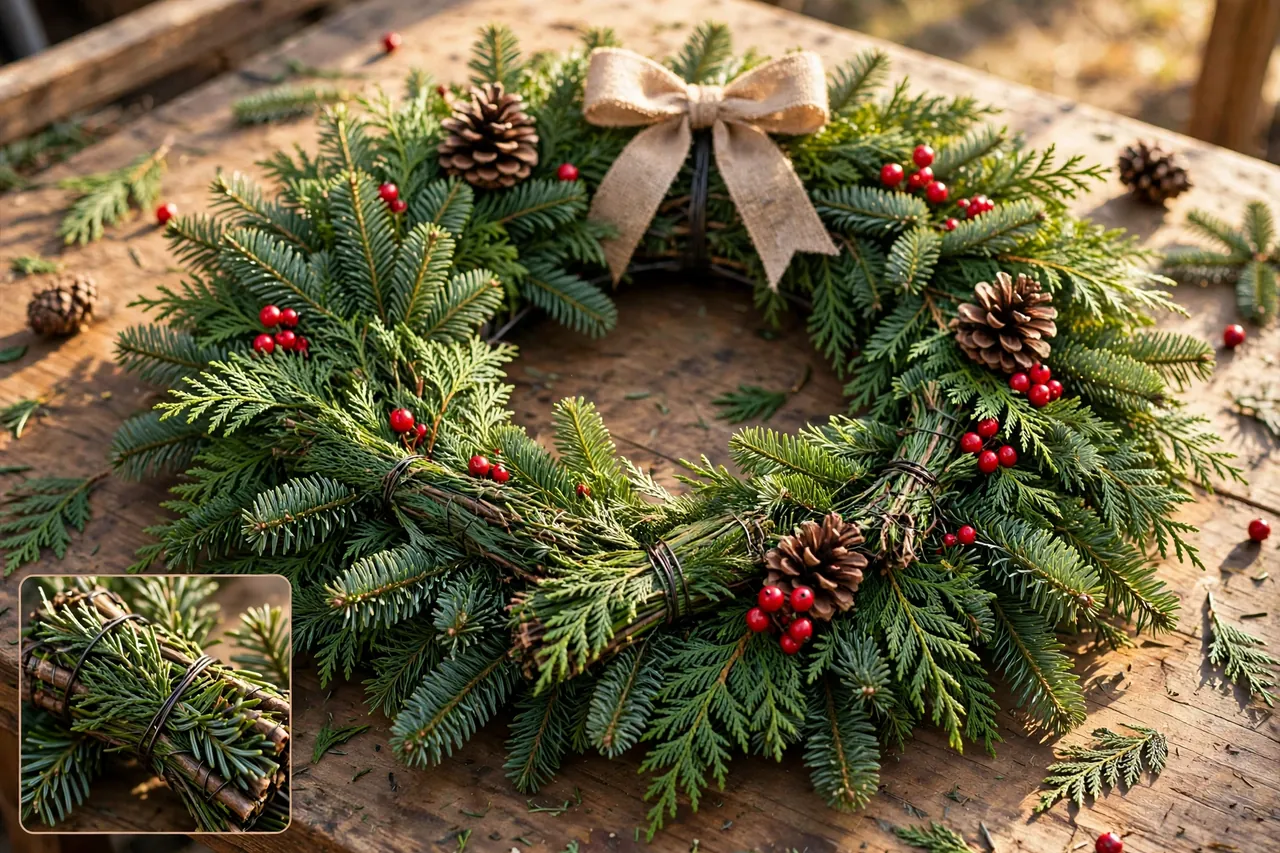
Cut your greens into sprigs about 4 to 6 inches long, and soak them in water for a few hours before you build. The Royal Horticultural Society recommends cutting holly into sections of about 5 to 6 inches and wiring bundles onto a moss-covered ring in one direction, overlapping each bundle so no base shows through. The same idea works on a wire frame: lay a small bundle on the frame, wrap floral wire around the stems two or three times, then place the next bundle so it covers the stems of the first.
- Tie the end of a paddle of floral wire firmly to the wire frame.
- Lay a bundle of 3 to 5 sprigs on the frame, all pointing the same way.
- Wrap the wire around the bundle stems two or three times, pulling it snug.
- Add the next bundle just below the first, overlapping it to hide the wire.
- Work all the way around the frame, keeping every bundle pointing the same direction.
- Tuck the last bundle under the leaves of the first bundle and tie the wire off.
- Add pinecones, berries, or a bow with short pieces of wire, then make a wire loop at the top for hanging.
Fresh wreaths last longest outdoors in cold weather, about 4 to 6 weeks, and about 2 to 3 weeks indoors, because dry heated air pulls moisture from the needles fast. Thursd’s wreath FAQ gives the same outdoor range and the same indoor warning. Mist your wreath every few days, keep it out of direct sun, and keep it away from fireplaces, radiators, and heat vents. A glass storm door can trap heat in the sun and dry a wreath out in days, so check the spot before you hang.
Faux Greenery Wreath
A faux wreath is the smart pick if you want a wreath you can reuse year after year, or if your door sits in warm sun. Faux greenery needs no water, drops no needles, and survives storage in a box. It also lets you build a wreath in July without worrying about freshness, which matters if you like to craft ahead.
Start with a wire frame and several faux garland picks or stems in two or three greens. Cut the picks into sprigs, then wire them onto the frame in overlapping bundles, exactly like a fresh wreath. Because faux stems are stiff, bend each sprig slightly outward as you go so the wreath looks full instead of flat. Fluff the finished wreath by pulling tips outward and filling any thin spots with single stems.
Add ornaments, berries, or a bow last, and wire each piece on separately so you can move it later. A faux wreath also takes lights well: wrap a short battery fairy-light strand around the frame before you add greenery, and tuck the battery pack behind the wreath where you can reach it. When the season ends, store the wreath in a breathable box or a wreath bag, away from damp and pests, and it will look fresh next December.
Grapevine Wreath
A grapevine wreath brings instant rustic charm, and the base itself does half the decorating work. You can buy a plain grapevine wreath at a craft store, or weave one from flexible pruned branches if you have them. Its open, twiggy texture suits farmhouse, cabin, and natural styles, and it holds light decorations beautifully.
For a simple grapevine Christmas wreath, tuck small sprigs of fresh or faux evergreen into the vines around the lower half or one side, leaving part of the grapevine showing. Wire a few pinecones and dried orange slices into the greenery, then add a burlap or velvet bow where the greenery meets the bare vine. This off-center style looks modern and takes far less greenery than a full wreath, so it is a great first project.
You can also wrap the whole grapevine base in lights or ribbon for a fuller look. Wind a string of battery fairy lights through the vines, then tuck in sprigs and ornaments until you like the balance. Because grapevine is light, a simple over-the-door hook usually holds it fine, and the wreath stores well for next year if you keep it dry.

Ornament Wreath
An ornament wreath turns spare baubles into a showpiece, and it is one of the fastest Christmas wreath ideas for the front door. Shatterproof ornaments work best for an outdoor wreath, because glass can break in wind or cold. Pick one color family, like red and gold, or mix matte, shiny, and glitter finishes in the same color for depth.
- Wrap a foam form in ribbon or fabric so no white foam shows through gaps.
- Thread ornaments onto a long piece of sturdy wire, or hot-glue them one by one onto the form.
- Start with the largest ornaments, spacing them evenly around the ring.
- Fill the gaps with medium ornaments, then tuck small ones into any holes left.
- Turn the wreath over and check the back, then glue or wire a ribbon loop for hanging.
- Add a bow at the bottom or top to hide the join and finish the look.
Hot glue is the fastest way to build an ornament wreath, but work in small sections and press each ornament for a few seconds so it sets before you move on. If you want to reuse the ornaments later, thread them on wire instead of gluing them. An ornament wreath is heavy, so hang it on a strong hook or a sturdy over-the-door hanger, never on a weak adhesive hook.
Dried-Orange Wreath
A dried-orange wreath looks elegant and smells gently of citrus and spice, and it costs very little to make. Slice oranges about 1/4 inch thick, lay them on a baking sheet lined with parchment, and dry them in a low oven (around 200°F) for 2 to 3 hours, flipping them halfway, until they feel dry and firm. Let them cool fully before you use them, because warm slices bend and tear.
Build this wreath on a grapevine or wire base with a thin layer of greenery, or on a plain grapevine wreath for a simpler look. Wire or hot-glue the orange slices in small groups of two or three around the ring, then add cinnamon sticks, star anise, and a few pinecones between the groups. A green velvet bow finishes the look and plays beautifully against the warm orange color.
Dried-orange wreaths last well indoors and in sheltered outdoor spots, but rain softens the slices, so keep this one under a porch roof or inside. Store it in a dry box with tissue paper between the slices, and it can return next year. If a slice darkens or softens, swap it for a fresh dried one rather than keeping a tired-looking piece on the wreath.

Fabric Scrap Wreath
A fabric scrap wreath is the coziest of all DIY Christmas wreath ideas, and it uses up fabric you already have. Old flannel shirts, felt, velvet, and even worn sweaters all work, and mixing textures makes the wreath look rich. Cut the fabric into strips about 1 inch wide and 6 to 8 inches long; you will need a lot of strips, so this is a good project to do while watching a holiday movie.
- Bend a wire coat hanger into a circle, or use a wire wreath frame.
- Fold a fabric strip in half, loop it around the wire, and pull the ends through the loop.
- Push each strip close to the last one so the wire disappears.
- Alternate colors and textures as you go around the ring.
- Fluff the strips outward, trim any very long ends, and tie on a ribbon hanger.
A fabric wreath needs no glue and no heat, so it is a wonderful project to make with kids. For a Christmas look, mix red, green, cream, and plaid strips, and add a few small bells or wooden ornaments tied on with twine. Keep a fabric wreath indoors or on a covered porch, because rain will soak the fabric and weigh it down.

How to Hang Your Wreath and Care for Your Door
Hanging a wreath well matters as much as making it, because a wreath that slips, swings, or damages paint ruins the effect. Over-the-door hangers are the easiest damage-free option, and they work on most doors without tools. Magnetic hooks suit steel doors, and outdoor-rated removable adhesive hooks hold light wreaths, though cold weather can weaken them, so check the weight rating and test the hook on a hidden spot first.
Hang the wreath at eye level or slightly above, centered on the door, and step back to the sidewalk to check the height before you call it done. If your door has a glass storm door, leave a gap between the wreath and the glass so the wreath does not press against it or trap heat. Put small felt pads where a metal hanger touches paint, and never use nails or tape on a painted door, because both leave marks that show long after Christmas.
For decorating ideas for Christmas wreaths beyond the front door, hang smaller wreaths on interior doors, above the mantel, or on a blank wall, and mirror the style of your front-door wreath so the whole home feels pulled together. If you want the full entryway to match, see our guide to Christmas decorations on the front door for damage-free hanging, garland, and lighting ideas that pair with any wreath in this guide.

Keep Your Wreath Looking Fresh All Season
Fresh wreaths need a little care, and faux and dried wreaths need a little storage sense. Mist a fresh wreath every few days, more often indoors, and pull out any sprigs that brown so they do not spread dryness to their neighbors. If the whole wreath looks dry, lay it face-down in cool water for a few minutes, let it drip, and hang it again.
At the end of the season, strip fresh greens for compost and keep the frame and wire for next year. Faux wreaths go into a breathable box or wreath bag, labeled by theme so you find them fast next December. Dried wreaths need a dry box and gentle handling, because orange slices and cinnamon sticks break if crushed. Taking ten minutes to store a wreath well saves you an hour of rebuilding next year.
Mistakes That Ruin a Good Wreath
Most wreath mistakes are easy to avoid once you know them. Wrapping wire too loosely is the top one: greens shrink as they dry, so a loose wrap turns into a drooping gap within days, so pull each wrap snug. Using only one type of greenery is another: a single flat green looks thin no matter how much you add, so pair a flat base with a fluffy filler. Building on a frame smaller than 12 inches crowds the center hole, so start with a 14- to 16-inch frame for a standard door; Nebraska Extension likewise calls a 15-inch frame ideal for most home decorations.
Other mistakes cost you freshness. Skipping the overnight soak leaves stems that brown from the tips inward, and hanging a fresh wreath over a heat vent or against a sun-struck glass door cooks it fast. Dried evergreen near an open flame is a real fire risk, so keep wreaths away from candles and fireplaces, and use battery candles near greenery instead. Finally, do not overload one side: step back often while you build and check the balance from a few feet away.
Related Guides
If you loved making a wreath, these guides help you carry the look through the rest of your home: learn how to make a mesh wreath with poof, ruffle, and cruffle methods, plan Christmas decor for your porch in seven easy layers, or browse indoor Christmas decorations room by room. For the living room, see decorating ideas for a living room at Christmas, and for the mantel, Christmas ideas for decorating a fireplace mantel.
Frequently Asked Questions
How long does a fresh Christmas wreath last?
Outdoors in cool weather, a fresh wreath of fir, pine, or cedar lasts about 4 to 6 weeks, which covers the whole holiday season. Indoors, dry heated air shortens its life to about 2 to 3 weeks. Mist it every few days and keep it away from heat, sun, and glass storm doors to get the longest life from it.
What greenery is best for a Christmas wreath?
Fir, especially noble fir and Nordmann fir, holds its needles best and makes a strong base. Pine and cedar add drape and scent, while boxwood and magnolia leaves stay glossy for weeks. Spruce drops needles faster indoors, so save it for an outdoor wreath, and add holly, berries, or pinecones for color.
How do you keep a fresh wreath from drying out?
Soak the greens in water for a few hours before you build, mist the finished wreath every few days, and keep it away from heaters, vents, fireplaces, and sunny windows. An anti-desiccant spray can help seal in moisture, but skip it on cedar, juniper berries, and blue spruce, whose waxy coating it can damage.
What size wreath should I choose for my front door?
Choose a wreath about one-third as wide as your door. For a standard 36-inch door, an 18- to 24-inch wreath looks right, while smaller doors suit 14- to 18-inch wreaths and double doors can carry wreaths up to 30 inches. When in doubt, go slightly larger, because a too-small wreath disappears from the street.
Can I make a Christmas wreath if I am not crafty?
Yes. Start with a pre-made wire or grapevine form and faux greenery, which forgives mistakes and needs no soaking or wiring skill. A fabric scrap wreath needs only knots, and an ornament wreath needs only glue. Pick one style from this guide, gather the kit, and give yourself an unhurried afternoon.
How do I hang a Christmas wreath without damaging my door?
Use an over-the-door hanger, a magnetic hook on a steel door, or an outdoor-rated removable adhesive hook for a light wreath. Add felt pads where metal touches paint, test adhesive on a hidden spot first, and never use nails or tape on painted surfaces. Hang the wreath at eye level and step back to check it.
Start with the style that makes you smile: fresh evergreen for scent, grapevine for rustic charm, or fabric scraps for cozy warmth. Gather your kit this week, build your wreath in one relaxed afternoon, and hang it where every guest sees it first. Your front door will say welcome before you say a word, and next year, you will already know exactly how to make an even better one.
Safety note: keep hot glue guns away from children, cut wire away from your face, use a steady ladder for high hooks, and keep dried evergreen away from open flames and candles.