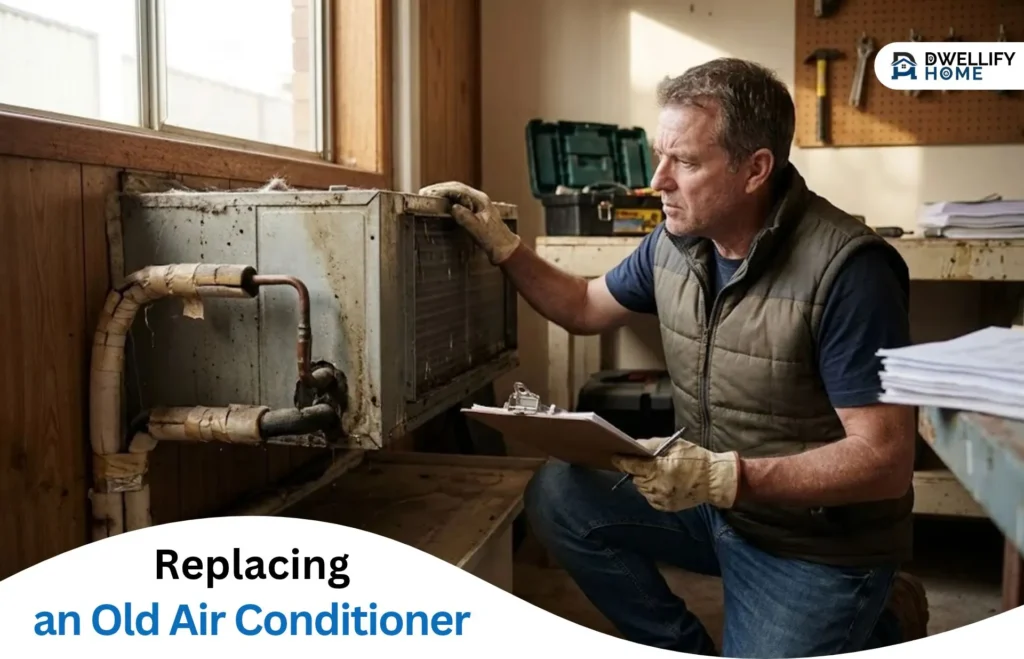
An aging air conditioner may become less reliable, require frequent repairs, or struggle to keep your home comfortable. Before deciding whether to repair or replace it, consider its condition, repair costs, energy efficiency, and cooling performance.
Understanding these factors can help you choose a solution that meets your household’s needs and budget.
1. Recognizing the Signs of an Aging Air Conditioner
Several warning signs may indicate that your air conditioner needs attention, including frequent breakdowns, rising energy bills, unusual noises, and difficulty maintaining consistent indoor temperatures.
Frequent Breakdowns and Increasing Repair Costs
If your air conditioner requires repeated service calls, the costs can add up quickly. Problems involving electrical components, compressor performance, or refrigerant leaks may require professional attention.
Compare the cost of repairs with the system’s overall condition and the likelihood of future breakdowns. A single repair does not necessarily justify replacing the entire unit, but recurring problems may make replacement worth considering.
Difficulty Maintaining Comfortable Temperatures
An air conditioner that struggles to cool your home may have several underlying problems, including restricted airflow, refrigerant issues, dirty coils, or aging components. Uneven temperatures between rooms can also indicate ductwork problems.
A professional inspection can help determine whether the issue requires a repair or whether replacing the system would be a more practical long term solution.
2. Comparing Repair Costs With Replacement Costs
Deciding between repair and replacement requires more than comparing the immediate cost of a repair with the price of a new unit. Consider the equipment’s age, condition, repair history, and expected operating costs.
Evaluating the System’s Age and Condition
Many residential air conditioners last approximately 10–15 years, although their lifespan varies depending on maintenance, usage, installation quality, and operating conditions.
As a system ages, replacement parts may become more difficult to source, and additional repairs may become necessary. However, age alone does not mean a unit must be replaced. Its actual condition and performance should also influence the decision.
Considering Future Repair Costs
If your air conditioner repeatedly develops expensive problems, investing in another repair may offer limited long term value. Ask a qualified technician to explain the problem, the expected durability of the repair, and whether other components show signs of wear.
This information can help you compare the likely cost of continued repairs with the cost of installing a replacement system.
3. Evaluating Energy Efficiency and Operating Costs
An older air conditioner may consume more electricity than a comparable modern system, particularly if it has deteriorated or has not received proper maintenance. However, actual energy consumption depends on several factors, including equipment efficiency, climate, insulation, and household usage.
Comparing Efficiency Ratings
When evaluating replacement options, compare the efficiency ratings of available systems. Higher efficiency models may use less electricity to provide the same level of cooling under comparable conditions.
Consider both the purchase price and expected operating costs rather than choosing a unit based on its efficiency rating alone.
Understanding Potential Energy Savings
Dirty coils, restricted airflow, worn components, and duct leaks can reduce cooling performance and increase energy consumption. Addressing these problems may improve an existing system’s efficiency without requiring replacement.
If you choose a new air conditioner, remember that potential savings depend on the efficiency of the old unit, the replacement’s performance, and how the system is installed and operated. Avoid assuming that every replacement will produce the same reduction in energy bills.
4. Choosing the Correct Air Conditioner Size
Selecting the correct cooling capacity is essential for maintaining indoor comfort and controlling energy use. An air conditioner that is too small may struggle during hot weather, while an oversized unit may cycle on and off too frequently.
Problems With Incorrect Sizing
An undersized system may run for extended periods without adequately cooling the home. An oversized system may cool the space quickly but shut off before removing enough moisture, potentially leaving the indoor environment uncomfortable.
Both situations can affect performance and efficiency.
Getting a Proper Cooling Load Assessment
Choosing a system based on square footage alone can lead to sizing problems. A professional assessment should consider the home’s layout, ceiling height, insulation, windows, air leakage, occupancy, and local climate.
Proper sizing helps ensure that the new air conditioner can meet the home’s cooling requirements without unnecessary energy consumption.
5. Considering Indoor Comfort and Airflow
Replacing an air conditioner provides an opportunity to investigate comfort problems that the existing system may not be resolving.
Addressing Uneven Temperatures
If some rooms remain warm while others cool adequately, the problem may involve blocked vents, duct leaks, poor insulation, thermostat placement, or an improperly sized system.
Replacing the air conditioner alone may not solve these issues. Inspecting the entire cooling system can help identify the cause before new equipment is selected.
Managing Indoor Humidity and Filtration
Air conditioners remove some moisture from indoor air as they cool. A poorly sized or malfunctioning system may struggle to control humidity effectively.
Homeowners should also check air filters regularly and ensure that supply and return vents remain unobstructed. These simple steps support airflow and help the system operate as intended.
6. Understanding Installation Requirements
Even a high efficiency air conditioner may perform poorly if it is incorrectly sized or installed. Professional installation helps ensure that the equipment is suitable for the property and operates according to manufacturer specifications.
When comparing local service options, homeowners considering air conditioner installation Vancouver should evaluate the contractor’s experience, proposed equipment, and installation scope.
Inspecting Ductwork and Electrical Requirements
Before installation, the existing ductwork should be checked for leaks, restrictions, and other problems that could affect airflow. Electrical connections and system compatibility should also be assessed.
Identifying these issues in advance can help prevent unexpected complications and additional expenses during installation.
Following Applicable Codes and Manufacturer Instructions
Air conditioning installations must meet applicable building and electrical codes. Refrigerant handling, equipment placement, drainage, and system commissioning should also follow relevant requirements and manufacturer instructions.
Ask the contractor what the installation quote includes and whether permits or additional work may be required.
7. Planning for Long Term Maintenance
Regular maintenance helps preserve an air conditioner’s performance and can identify developing problems before they cause major disruptions. However, maintenance cannot prevent every mechanical failure.
Homeowners can support their systems by:
- Replacing or cleaning air filters according to manufacturer recommendations.
- Keeping the outdoor unit clear of leaves and debris.
- Ensuring supply and return vents remain unobstructed.
- Scheduling professional inspections when appropriate.
- Addressing unusual noises, reduced airflow, or cooling problems promptly.
These practices can help maintain efficient operation and reduce avoidable wear.
8. Planning the Replacement Budget and Timing
Before committing to a new air conditioner, compare installation quotes and consider the full cost of ownership.
Review the equipment specifications, installation work, warranty terms, expected maintenance requirements, and potential operating costs. Confirm whether the quote includes necessary electrical work, duct modifications, permits, and removal of the old unit.
It is also worth planning ahead if your current system is becoming unreliable. Replacing it before a complete breakdown can give you more time to compare options rather than making a rushed decision during hot weather.
Conclusion
Replacing an old air conditioner involves more than choosing a new unit. Homeowners should consider the existing system’s condition, repair costs, energy efficiency, cooling capacity, indoor comfort, and installation requirements.
A professional assessment can help identify whether repairs are sufficient or replacement is the more practical option. By comparing equipment carefully, addressing airflow problems, and planning for ongoing maintenance, homeowners can make a more informed decision about their home’s cooling needs.
Thank you for visiting Dwellifyhome.com. Some links or references in this article may be connected to affiliate or sponsored partnerships. We may receive compensation from these arrangements, which helps support our continued publishing efforts.