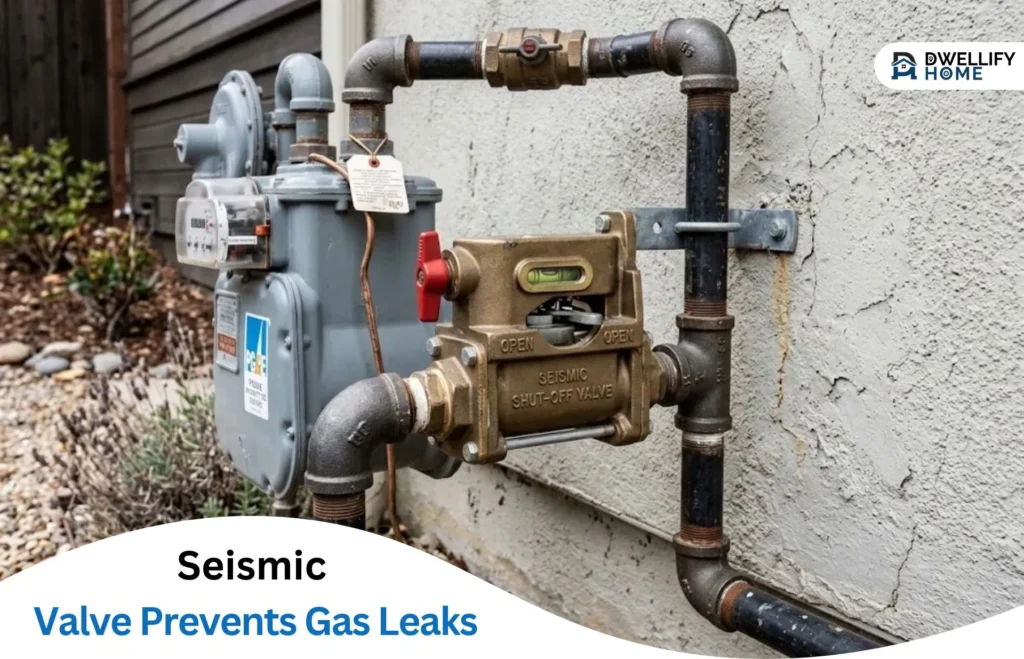
Beyond the immediate structural damage, earthquakes present a profound and insidious danger: the potential for natural gas leaks. When the ground violently shifts, the intricate network of gas pipes within and around structures can be subjected to immense stress. This structural movement can cause pipes to shear, fittings to crack, or connections to rupture, leading to uncontrolled releases of natural gas. The consequences are dire; natural gas is highly flammable, and its ignition can transform a damaged building into a raging inferno.
Historically, seismic events have repeatedly demonstrated this catastrophic potential. The 6.7 magnitude Northridge earthquake in 1994, for instance, tragically resulted in 185 mobile homes burning due to gas fires. This event, among others, highlighted the critical need for robust safety measures. Statistics consistently show that a significant portion—up to 50%—of post-earthquake fires are directly related to natural gas leaks. These fires not only compound the devastation but also strain emergency services, turning localized damage into widespread secondary disasters. Protecting critical gas appliances, such as your water heater, is paramount. For comprehensive guidance on securing your water heater against seismic activity, including proper bracing and flexible connectors, refer to our detailed article on Gas water heater seismic safety.
Gas Water Heater Seismic Safety: How Ground Motion Threatens Piping
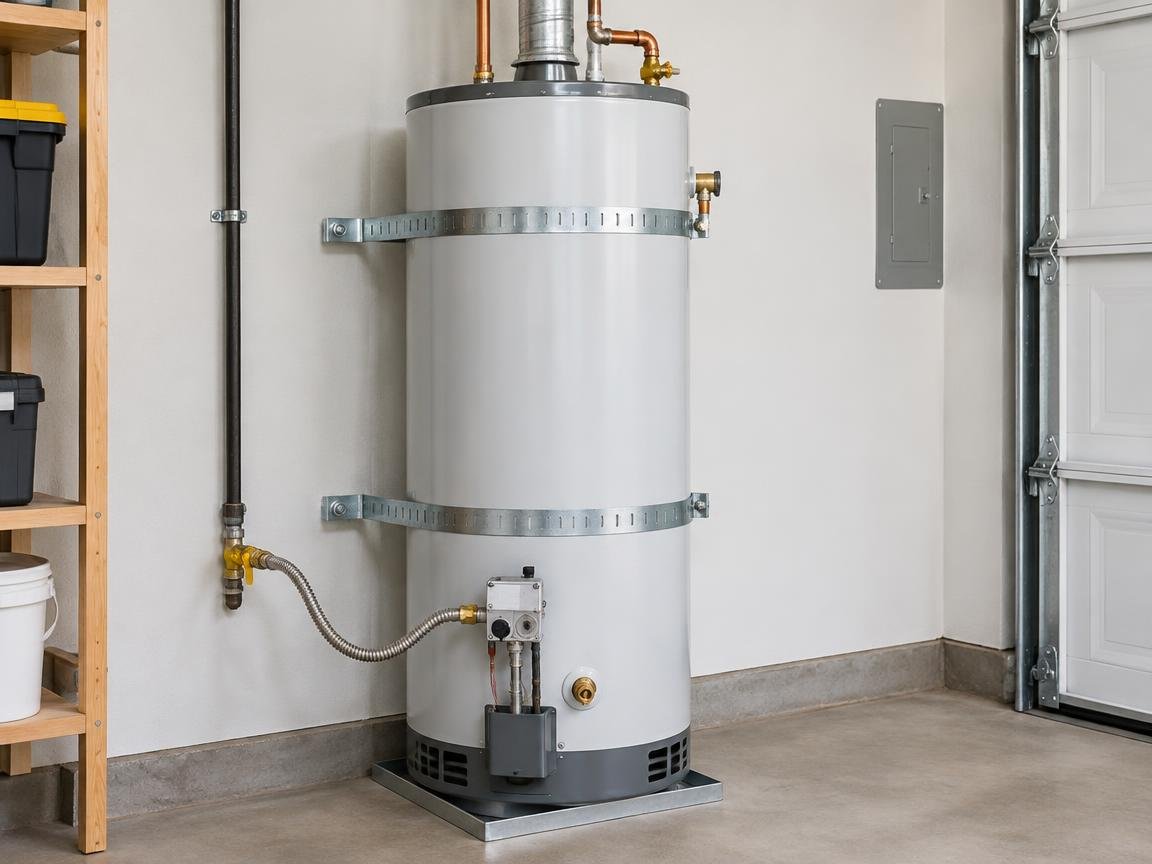
The gas supply to a water heater is particularly vulnerable during an earthquake. A water heater, being a heavy and often tall appliance, can experience significant tank displacement during violent shaking. If it’s not adequately anchored, it can topple over, pulling on its gas line. While flexible gas connectors are designed to absorb some movement, they have limits. Rigid pipes, common in older installations, offer virtually no flexibility and are highly susceptible to shearing or breaking at fittings when subjected to the forces of an earthquake.
When these gas lines rupture, natural gas escapes. This highly combustible fuel, if it encounters an ignition source, can combust, leading to explosions or fires. The combination of a heavy, displaced appliance and a compromised gas line creates a perfect storm for post-quake fire hazards. Modern safety practices emphasize not only the installation of seismic shut-off valves but also the proper bracing of water heaters and the use of approved flexible connectors to mitigate these risks.
Post-Disaster Statistics and Fire Ignition Hazards
The statistics paint a stark picture: approximately one in four fires after an earthquake is related to natural gas leaks. This isn’t merely anecdotal; it’s a consistent pattern observed in major seismic events. The danger is compounded by the multitude of potential ignition sources present in a post-earthquake environment. These can include:
- Electrical sparks: Damaged wiring, fallen power lines, or short circuits can easily ignite escaping gas.
- Pilot lights: While many modern appliances have electronic ignitions, older models often feature standing pilot lights that can become ignition points if gas lines are compromised.
- Structural collapse: Falling debris or collapsing structures can generate sparks or expose hot surfaces that ignite gas.
- Gas accumulation: In enclosed spaces, gas can accumulate rapidly, creating an explosive mixture that can be triggered by even a small spark.
The sheer volume of incidents after a major quake can overwhelm emergency response services. During the Northridge earthquake, for example, the Los Angeles County Fire Department saw a five-fold increase in responses. Preventing these gas-related fires through automatic shut-off mechanisms is thus not just about protecting individual properties, but about preserving community safety and allowing emergency personnel to focus on other critical life-saving efforts.
How Seismic Gas Shut-Off Valves Work to Stop Gas Flow
A seismic gas shut-off valve is an ingenious device designed to provide automatic protection against gas leaks during an earthquake. Its primary function is to detect significant ground motion and, in response, immediately interrupt the flow of natural gas into a building. This fail-safe design ensures that even if gas lines within the structure are compromised, the primary fuel source is cut off, drastically reducing the risk of fire or explosion.
These valves are mechanical devices, meaning they operate without electricity, relying solely on the physics of motion and gravity. This makes them highly reliable in an emergency where power might be out. They are typically constructed with durable materials like stainless steel components to ensure longevity and consistent performance. Unlike systems that react to pressure differentials or gas flow rates, seismic valves specifically respond to the shaking of an earthquake.
Mechanical Triggering and Magnitude Activation Thresholds
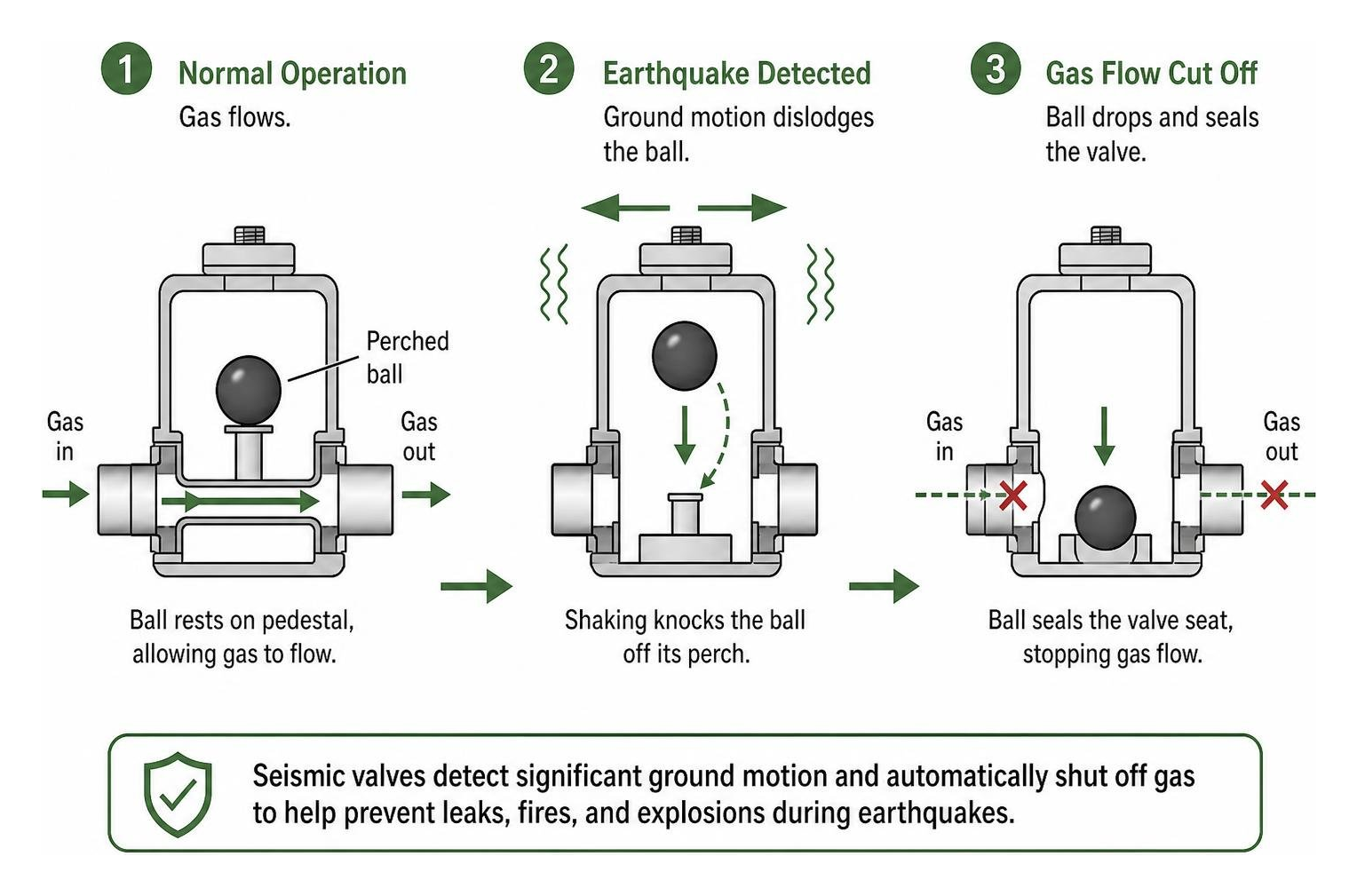
The core of a seismic valve’s operation lies in its mechanical triggering mechanism. Most residential seismic valves employ a “perched ball” design. Inside the valve, a stainless steel ball rests on a pedestal, allowing gas to flow freely past it under normal conditions. When an earthquake occurs, the ground acceleration—specifically, horizontal acceleration—causes the ball to dislodge from its perch. Once dislodged, gravity pulls the ball down, causing it to fall into a valve seat, blocking the gas flow.
Some advanced designs may use a magnetic latch system or a rolling latch, which releases a spring-loaded shut-off disc. For instance, some valves are engineered to trigger when sinusoidal oscillations reach approximately 5.5 on the Richter Scale, sustained over five seconds, or when horizontal acceleration reaches about 0.11g. The standard for these devices is often referenced by ASME 25-97 or ANSI Z21.70, which specify performance criteria.
These valves are calibrated to activate at a specific magnitude of earthquake, typically around 5.4 or greater on the Richter scale. This threshold is chosen to ensure activation during potentially damaging quakes while minimizing false actuations from minor tremors or non-seismic vibrations. To further prevent false trips from everyday bumps or vibrations (like heavy trucks passing by), stabilizer brackets are often used during installation. These brackets secure the valve firmly, ensuring it only responds to genuine seismic activity. Each valve is individually tested before shipping to confirm its precise activation threshold and reliability.
Proper Valve Placement on the Meter House Line
The effectiveness of a seismic valve is heavily dependent on its correct placement. By regulation and best practice, a seismic valve must be installed on the homeowner’s side of the gas meter. This means it is located downstream of the utility’s equipment, including the main utility shut-off valve, pressure regulator, and the gas meter itself.
The valve is typically installed on the main gas line entering the building, usually outside and above ground. This placement ensures that once triggered, it shuts off the gas supply to the entire structure and all connected gas appliances, including furnaces, stoves, and water heaters. It’s crucial that the valve is not installed on utility facilities, as these are owned and maintained by the gas provider, and tampering with them is prohibited.
Installing the valve downstream of the meter provides a clear utility boundary: the gas company is responsible for everything up to and including the meter, while the homeowner is responsible for everything from the meter into the house. When installing, it’s also important to ensure clear access for manual shut-off and future resetting. Stabilizer brackets are often used to secure the valve to the building’s exterior wall or foundation, ensuring it accurately detects building motion rather than localized pipe vibrations.

Comparing Seismic Valves and Excess Flow Valves
While both seismic gas shut-off valves and excess flow valves (EFVs) are designed to enhance gas safety, they operate on fundamentally different principles and address different types of hazards. Understanding these distinctions is crucial for comprehensive gas safety.
A seismic gas shut-off valve (SGSV), as discussed, detects ground shaking (motion) caused by an earthquake. It triggers and closes the gas supply even if there isn’t an immediate pipe rupture, acting as a preventative measure. Its primary goal is to cut off gas before or immediately after an earthquake causes damage that could lead to leaks and fires.
An excess flow valve (EFV), on the other hand, does not detect ground motion. Instead, it monitors the flow rate of gas through the service line. If there’s a sudden, significant increase in gas flow—such as what would occur if an underground pipe were severed by digging, vehicle impact, or even a major earthquake-induced rupture—the EFV will automatically restrict or shut off the gas supply. It reacts to a line rupture and the subsequent surge in gas flow, not the earthquake itself. This means an EFV might not activate during an earthquake if no significant rupture occurs, or if the rupture is small.
Here’s a comparison of their key characteristics:
Feature Seismic Gas Shut-Off Valve (SGSV) Excess Flow Valve (EFV) Activation Trigger Ground shaking/motion (e.g., 5.4+ Richter, 0.11g horizontal accel.) Sudden, significant increase in gas flow (line rupture, pressure drop) Placement Location On homeowner’s side of the meter (downstream) On utility’s side of the meter (upstream, often underground) Installation Responsibility Homeowner, typically by a licensed plumber Utility company Primary Hazard Addressed Gas leaks and fires from earthquake shaking Gas leaks from severed lines, digging accidents, vehicle impact Reset Requirements Manual reset, often requires professional inspection and relighting Automatic reset once pressure normalizes, or utility intervention Cost Homeowner pays for valve and installation Utility pays for installation (federally mandated for new lines) The distinct functions mean these valves are not interchangeable but rather complementary. An SGSV provides protection against earthquake-induced leaks, even if a pipe isn’t immediately severed but might develop small leaks or cracks. An EFV protects against major ruptures from various causes, including significant earthquake damage. Federal law has required EFVs on all new single-family gas lines since 2006, and by October 2026, millions are in service. However, EFVs do not offer the same comprehensive protection against earthquake-related gas leaks that an SGSV does, as they only react to a substantial increase in flow, not the seismic event itself.
Installation, Building Codes, and Safe Reset Procedures
The installation of a seismic gas shut-off valve is a specialized task that requires adherence to specific codes and safety protocols. Due to the inherent risks associated with natural gas, installation should always be performed by qualified professionals. In most jurisdictions, this means licensed plumbers or C-36 plumbing contractors who are certified to work on gas lines. They are familiar with local building codes, manufacturer specifications, and safety procedures.
Before any installation, it is essential to check with your local Department of Building and Safety for specific requirements, including whether permits are needed. In California, for example, seismic valves must often be certified by the Division of the State Architect (DSA) and approved by local authorities like the City of Los Angeles, especially for new construction or significant renovations. Some local jurisdictions may even require these devices at the time of property sale.
Gas Water Heater Seismic Safety Standards and Code Compliance
Building codes and safety standards for gas systems, especially in earthquake-prone areas, are continuously evolving. The California Plumbing Code, for instance, often incorporates requirements for seismic safety devices. After major seismic events like the Northridge earthquake, many local ordinances were updated to mandate the installation of seismic gas shut-off valves for new construction and substantial remodels. Some cities, recognizing the importance of these devices, may even waive permit fees for their installation.
Compliance with these codes is not just a legal obligation; it’s a critical safety measure. Beyond regulatory requirements, some insurance companies may offer discounts or require seismic valves as a condition of coverage, particularly in high-risk zones. Homeowners should verify their local requirements and consult with their insurance provider. When selecting a valve, ensure it meets recognized standards such as ASCE 25-97, ANSI Z21.70, and California Standard No. 12-23-1, where applicable.
Step-by-Step Protocols for Post-Quake Inspection and Resetting
After an earthquake, if your seismic gas shut-off valve has activated, it’s crucial to follow a careful and methodical process before attempting to restore gas service. Safety is the top priority, as gas leaks pose an immediate threat.
- Prioritize Safety First:
- Evacuate: If you smell gas, hear a hissing sound, or suspect a leak, evacuate the premises immediately. Do not use phones, light switches, or anything that could create a spark.
- Call for Help: From a safe distance, call your gas utility company (e.g., SoCalGas at 1-800-427-2200) or 911.
- Initial Inspection (if safe):
- Check for Gas Leaks: If you do not smell gas and it is safe to do so, visually inspect your gas appliances and lines for any obvious damage. Listen for any faint hissing sounds.
- Visual Indicator: Most seismic valves have a visual indicator (e.g., a window showing a ball or a colored display) that shows whether the valve is open or closed. Confirm it is in the “closed” position.
- Resetting the Valve (with caution):
- Professional Recommendation: It is highly recommended that a qualified professional—a licensed plumber or utility personnel—perform the reset and subsequent safety checks. This is because even if the valve has shut off the gas, there could still be undetected leaks within the system, and pilot lights need to be safely relit.
- Manufacturer Instructions: If you choose to reset it yourself (only after confirming no leaks and understanding the risks), strictly follow the manufacturer’s instructions. For example, some valves require a specific tool (like a flathead screwdriver) to turn a reset screw clockwise until an indicator turns green, or a concealed magnet to lift a ball back into place.
- Post-Reset Checks: After resetting, you must perform a thorough leak check on all gas lines and connections. This often involves applying a soapy water solution to connections and looking for bubbles, or using a gas leak detector.
- Relighting Pilot Lights:
- Once gas flow is restored and no leaks are detected, pilot lights on appliances will need to be relit. Again, this is best done by a professional to ensure safety and proper operation.
Utilities often prefer to perform the inspection and relighting themselves, as it ensures a comprehensive safety check and prevents homeowners from inadvertently creating a hazardous situation. Always err on the side of caution and involve professionals when in doubt.
Frequently Asked Questions About Seismic Gas Valves
Understanding the nuances of seismic gas shut-off valves can empower homeowners to make informed decisions about their safety. Here, we address some common questions.
What earthquake magnitude triggers an automatic seismic gas valve?
Most seismic gas shut-off valves are designed to activate when they detect ground movement equivalent to approximately 5.4 or greater on the Richter scale. This threshold is chosen to ensure the valve triggers during potentially damaging earthquakes, while also filtering out minor tremors or non-seismic vibrations that could cause false activations. Some specific models may have slightly different thresholds, such as 5.2 or 5.5 Richter, especially if sustained over a certain period (e.g., five seconds). The triggering mechanism responds to horizontal acceleration, often around 0.11g. Stabilizer brackets are crucial to ensure the valve responds accurately to structural shaking rather than localized pipe vibrations, maintaining its intended activation threshold.
Can homeowners safely reset a seismic gas valve after an earthquake?
While many seismic valves have a manual reset mechanism, it is strongly recommended that homeowners do not attempt to reset the valve themselves immediately after an earthquake. The primary reason is safety. Even if the valve has successfully shut off the gas, there could be undetected damage to gas lines or appliances within the home that could lead to a leak once the gas supply is restored.
The safest protocol involves:
- Confirming No Leaks: Before any reset, a thorough inspection for gas leaks must be conducted. This is best done by a qualified professional (licensed plumber or gas utility personnel) who has the expertise and equipment to detect even subtle leaks.
- Professional Verification: Many gas utility companies require that their personnel inspect the property and reset the valve themselves after an earthquake. This ensures that the entire gas system is safe before service is restored and pilot lights are relit.
- Relighting Protocols: Relighting pilot lights on gas appliances also requires care and knowledge to avoid potential hazards.
Attempting to reset the valve without a professional safety check could inadvertently lead to a dangerous gas leak or fire. Always prioritize safety and consult with your local gas utility or a licensed plumber.
Is a seismic gas shut-off valve required by building codes?
The requirement for seismic gas shut-off valves varies significantly by location. In earthquake-prone regions, particularly in California, many local building codes mandate their installation. For example, following the 1994 Northridge earthquake, cities like Los Angeles adopted ordinances requiring approved seismic gas shut-off valves on all new construction and for commercial remodels exceeding a certain value. Some jurisdictions may also require them when a property is sold or undergoes significant renovations.
However, these requirements are not universal across all states or even all municipalities within a state. It is crucial for homeowners to:
- Check Local Building Departments: Contact your local Department of Building and Safety or planning department to inquire about specific requirements in your area.
- Consult Gas Utility: Your local gas utility company can also provide information on local mandates and recommended safety practices.
- Insurance Providers: Some insurance companies may require these valves or offer premium discounts for properties that have them, especially in high-risk seismic zones.
While not universally required, installing a seismic gas shut-off valve is a proactive safety measure that significantly reduces the risk of post-earthquake gas leaks and fires, offering invaluable peace of mind in seismically active areas.
Conclusion
In regions where seismic activity is a constant reality, the threat of natural gas leaks after an earthquake is a serious concern that every homeowner and business owner must address. A seismic gas shut-off valve stands as a critical line of defense, offering automatic protection against the devastating potential of gas-fed fires. By intelligently detecting ground motion and immediately interrupting the gas supply, these valves transform a passive gas line into an active safety system.
From understanding the mechanical ingenuity behind their triggering mechanisms to adhering to proper installation guidelines and respecting the stringent safety protocols for resetting, the integration of seismic valves into our infrastructure is a testament to our commitment to resilience. They provide not just a piece of hardware, but an essential layer of home safety and hazard mitigation, safeguarding properties, protecting lives, and supporting the swift recovery of communities in the aftermath of a seismic event. In an unpredictable world, investing in such automatic protection is a clear step towards greater peace of mind and enhanced infrastructure security.
As part of our website’s business model, some articles may include affiliate or sponsored links. Dwellifyhome.com may receive commissions from qualifying purchases or compensation for sponsored placements where applicable.