Paint doesn’t fail because it was cheap. It fails because it was applied at the wrong hour.
I’ve watched a neighbor’s south-facing wall chalk out in under three summers while the shaded north side of the same house still looked fresh. Same paint, same brand, same guy holding the sprayer. The difference was timing and surface temperature, and it’s the one variable most homeowners never ask about when they hire a crew. If you live somewhere that runs past 110 degrees for weeks at a stretch, you’re already in the harshest paint-testing climate in the country, and the schedule matters more than the product label.
Getting this right isn’t complicated, but it does take a painter who plans around heat instead of gambling on it. Crews like Accent Painting sequence exterior work by which elevations sit in shade and push heavy painting into the shoulder seasons, which is exactly the kind of scheduling discipline most bids skip over. Here’s what that discipline looks like from your side of the fence.
The 90-Degree Rule Nobody Tells You About
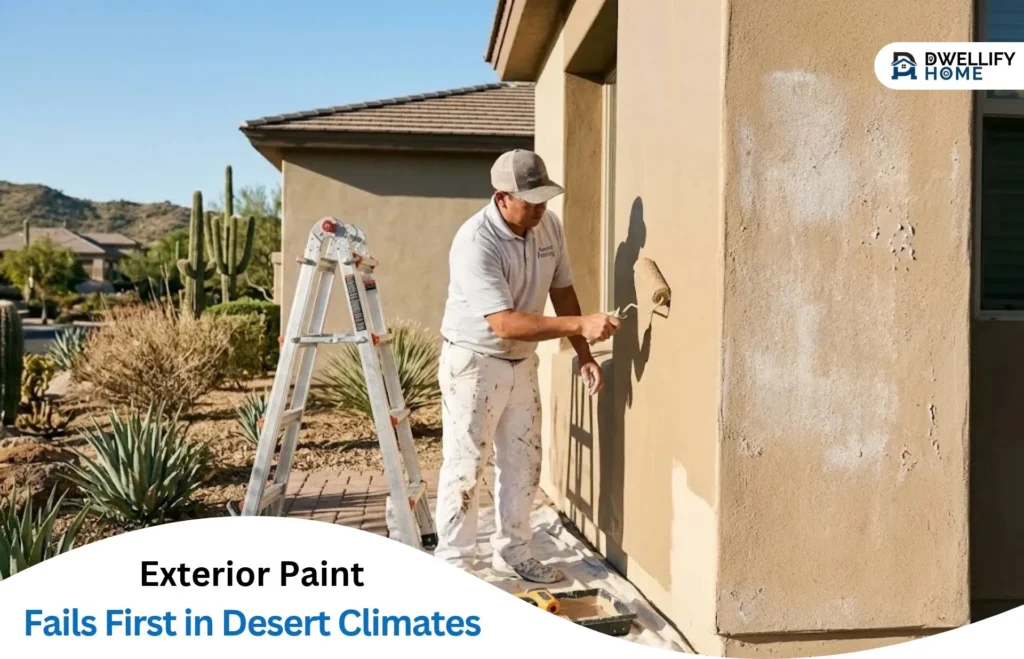
Every can of exterior paint lists a surface temperature range on the back. Most fall somewhere between 50 and 90 degrees Fahrenheit. That’s the surface, not the air. A stucco wall in direct afternoon sun can run 40 degrees hotter than the ambient temperature, so an 85 degree day easily puts your wall over 125.
What happens when you apply above the limit? The paint skins over before it can properly adhere. Solvents flash off too fast, the film traps stress, and the bond never fully forms. You won’t see the problem the day the job wraps. You’ll see it two or three years later when the finish starts chalking, peeling in sheets, or blistering near the bottom of the wall.
According to the National Weather Service, desert Southwest summers routinely deliver long stretches of triple-digit highs, and that heat load is what makes surface temperature the first thing a good estimator checks. My honest take: if a painter shows up at 2 p.m. in July and starts spraying a west-facing wall, send them home. That’s not a style preference. It’s physics.
Shade Sequencing: The Trick That Separates Good Crews From Fast Ones
The best exterior painters I’ve seen work a house like a clock. They start on the east side in the morning while it’s still cool, follow the shade around the building through the day, and finish on the west or south face either early or late. Nobody sprays the sunny elevation at peak heat.
This slows the job down. Sometimes it adds a day. That’s the trade, and I’d take it every time over a crew that knocks out all four sides in one frantic pass.
There’s a second layer to it. On two-story homes, the upper wall catches more sun and holds heat longer into the evening. That means the top half of a south wall can stay too hot to coat even after the bottom half has cooled enough. Sequencing by elevation and height, not just by side, is what keeps the whole job inside the temperature window.
- East elevations: morning, before the sun swings around
- North elevations: most flexible, can be worked almost any time
- West elevations: late afternoon or early evening, after the wall bleeds heat
- South elevations: early morning in summer, midday in cool shoulder months
Why Stucco and Old Adobe Want Different Prep
Surface prep changes block by block, and this is where a generic bid falls apart. Newer stucco in the growth areas south of town is porous and thirsty. It pulls moisture out of the paint film fast, which means it usually needs a primer or a masonry sealer coat before finish paint goes on. Skip that and you’ll get a patchy finish with flat spots where the stucco drank the coating.
Older homes near the historic core, especially the red sandstone and adobe construction, are a different animal. That material is softer, historically protected, and often has decades of layered paint on it. Aggressive power washing can chew the surface. A good crew uses lower pressure, hand-scrapes loose material, and spot-primes bare areas instead of blasting everything down to raw substrate.
And then there’s the monsoon. Late summer storms roll through fast and dump water on walls that were perfectly dry an hour earlier. Paint applied just before a storm can get rained on before it cures, and that’s a redo. Planning around the storm window isn’t paranoia. As the Department of Energy notes in its guidance on building envelopes and moisture control, water intrusion behind a failing paint film is one of the leading causes of long-term exterior damage. That’s true in wet climates and just as true in a place that gets its rain in concentrated bursts.
How to Time Your Own Repaint
You don’t need to be a painter to run this checklist. You just need to ask the right questions before you sign anything.
- Ask when they plan to start each elevation. If the answer is vague, that’s your answer.
- Get the surface temperature plan in writing. A crew that carries a thermometer and works within the label range is a crew that cares.
- Schedule for spring or fall if you can. Shoulder seasons give you the widest working window and the fewest weather surprises.
- Confirm the prep scope. Primer on new stucco, gentle washing on old masonry, caulking around joints and trim.
- Watch the forecast for the week after. Fresh exterior paint needs a dry cure window, and monsoon season doesn’t negotiate.
One thing worth knowing: current building research keeps pointing the same direction. According to the National Association of Home Builders, maintenance and upkeep remain one of the biggest ongoing costs homeowners face, and exterior surfaces are where most of that money goes. Timing a repaint correctly stretches the interval between jobs, which is the cheapest maintenance strategy there is.
What This Means for Your Next Repaint
None of this is glamorous. It’s scheduling, thermometers, and shade maps. But it’s the difference between a finish that lasts a decade and one that’s chalky by year three, and you can’t fix it after the fact by buying a fancier paint.
The homeowners who get the longest life out of an exterior job aren’t the ones who paid the most. They’re the ones who hired a crew willing to work slower and smarter around the heat. If your walls look tired and you’re in a punishing climate, the calendar is your first decision, not the color.
Some links in this article may be affiliate or sponsored links. Dwellifyhome.com may receive compensation through qualifying purchases or paid partnerships, helping support our website and its ongoing activities.