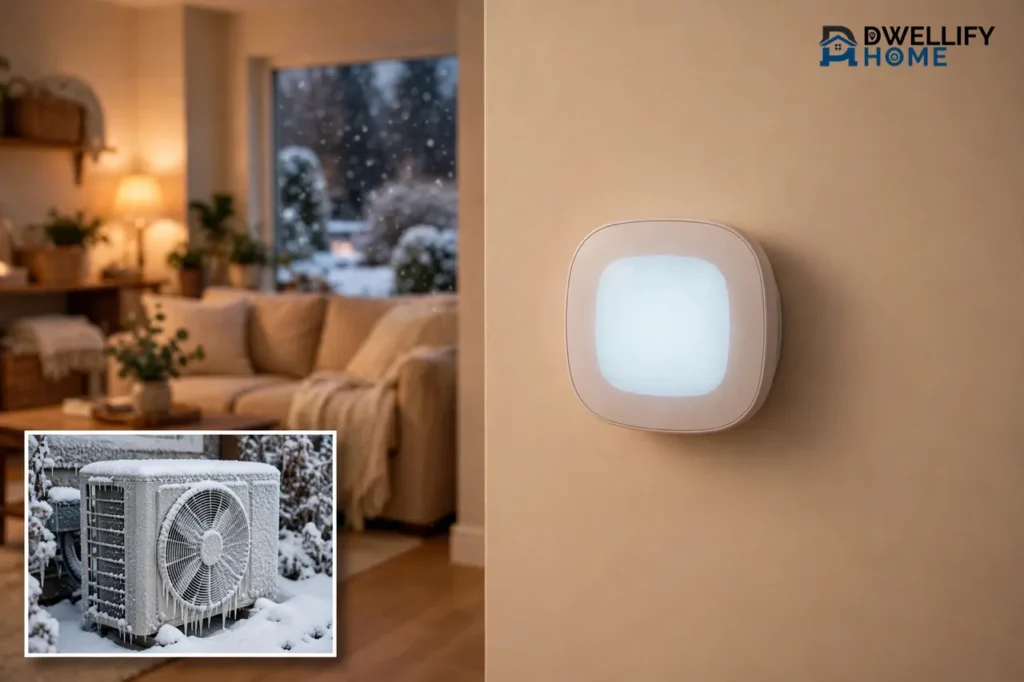
You see two choices on your thermostat, HEAT and EM HEAT, and they look almost the same. They are not. In EM heat vs heat, the difference is simple: HEAT runs your heat pump the normal, low-cost way, and EM HEAT turns the heat pump off and heats your home with backup heat only. Use HEAT every day. Save EM HEAT for a real emergency, when your heat pump has failed and you need warmth until a technician can fix it.
Pick the wrong setting and you can pay two to four times more to heat the same home. Pick the right one and you stay warm without the shock bill. This guide shows you what each mode does, what each one costs, when EM HEAT is the right call, and the one rule that settles the choice every time.
What Does HEAT Mode Do?
HEAT is your normal winter setting. When you choose it, your heat pump does the work. A heat pump does not make heat the way a toaster does. It moves heat from the outside air into your home, even on a cold day.
That sounds odd, because cold air does not feel warm. Yet outdoor air still holds heat energy, and the heat pump pulls that energy inside. As ENERGY STAR explains in its guide to how heat pumps work, a heat pump moves heat from one place to another rather than generating it, and that is why it uses less energy to warm your home than a standard electric system. You can read their full explanation in ENERGY STAR’s guide to how a heat pump works.
HEAT mode also manages backup heat for you. When the house falls behind, when you raise the temperature several degrees at once, or when the outdoor unit runs a defrost cycle, the thermostat adds backup heat on its own for a short time. You do not touch anything. The heat pump keeps running, the backup heat helps, and then it switches off again.
So HEAT is not just one piece of equipment. It is the whole system working as designed: the heat pump first, with backup heat stepping in only when the thermostat calls for it.
What Does EM HEAT Mode Do?
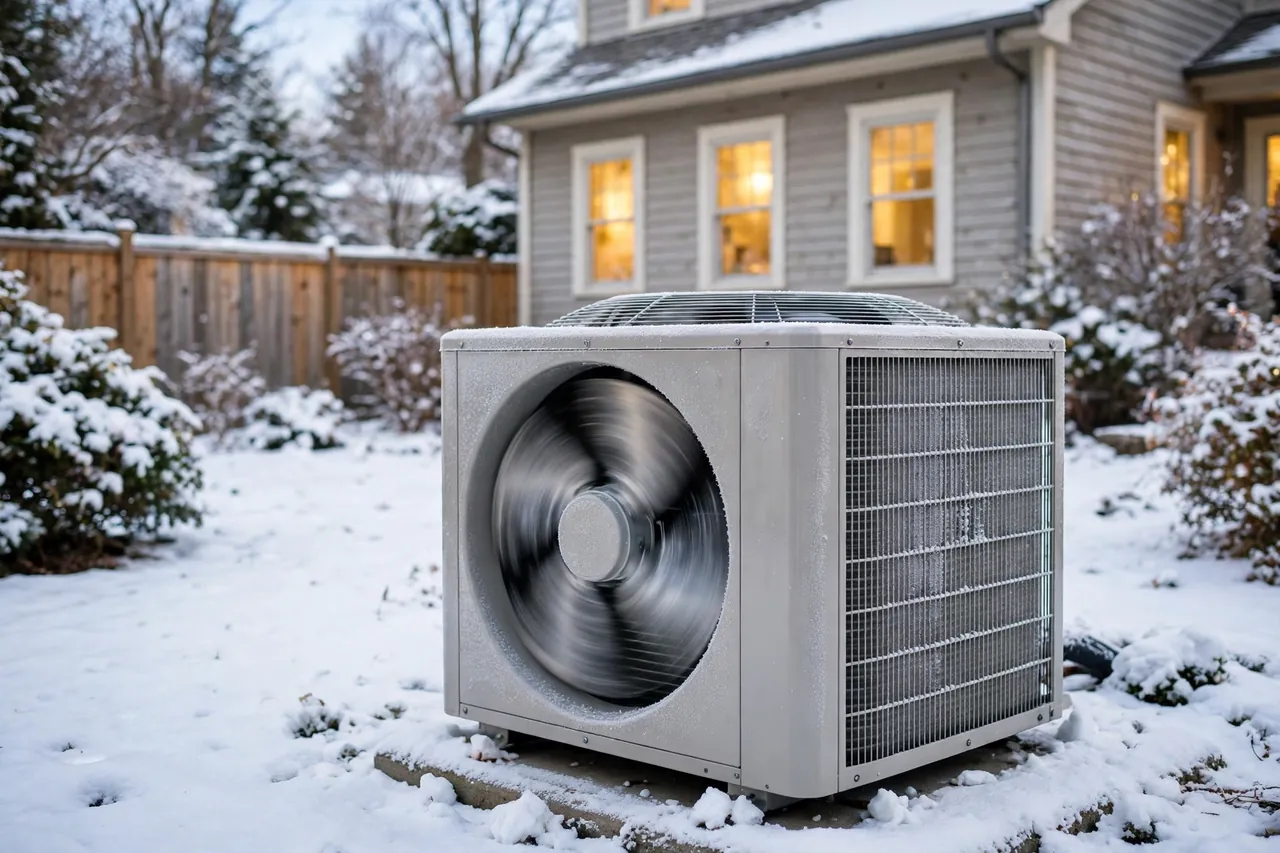
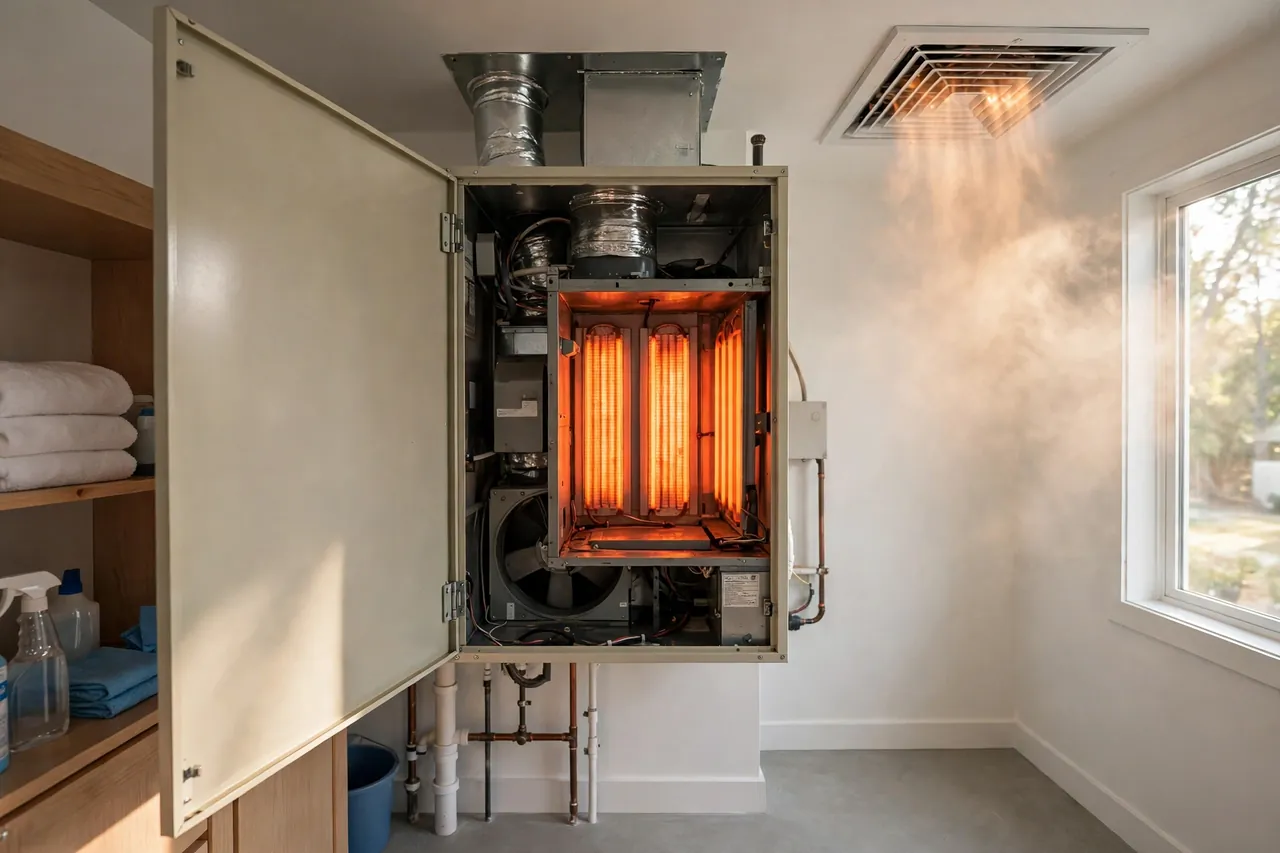
EM HEAT stands for emergency heat. It is a manual setting you choose on the thermostat, and it changes which equipment heats your home. When you switch to EM HEAT, the thermostat stops the outdoor heat pump unit and heats the house with the backup heat source alone.
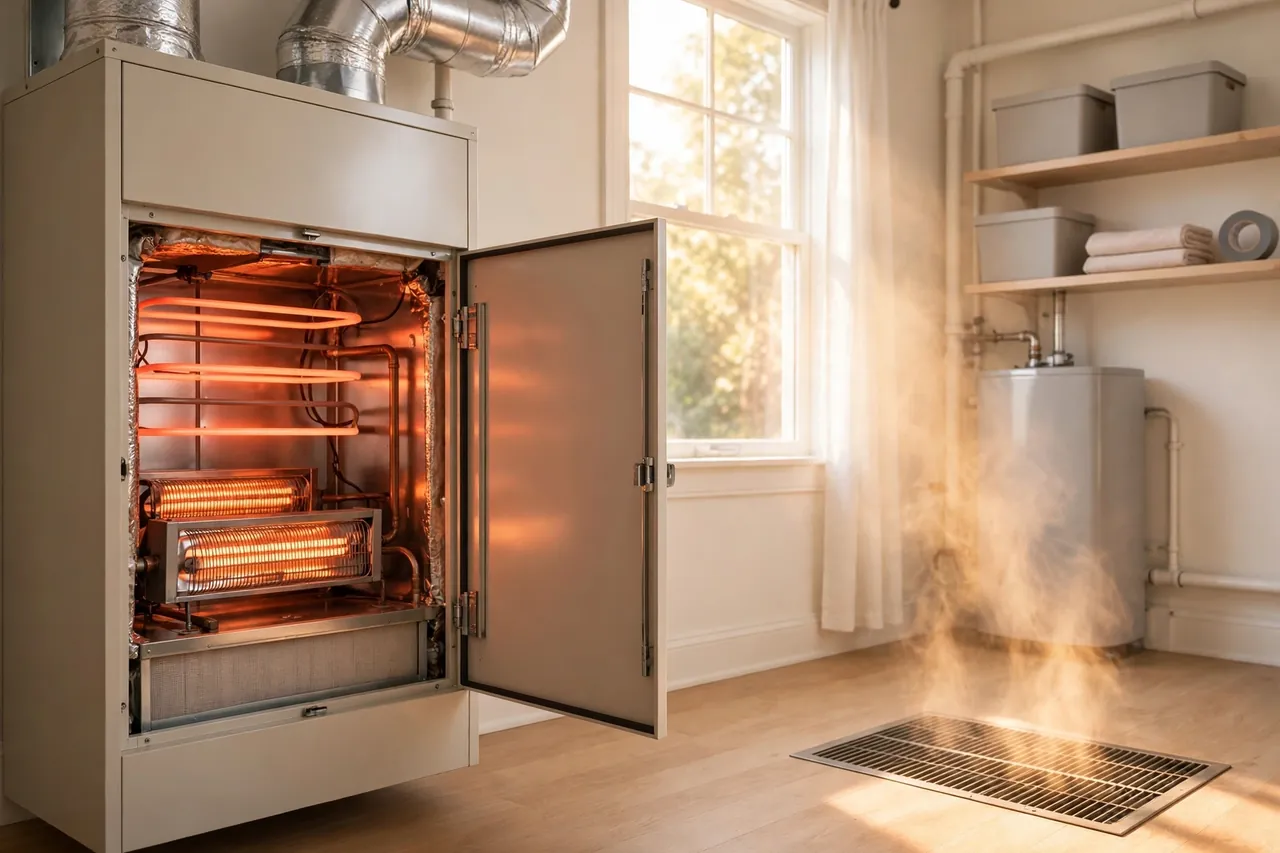
In most all-electric homes, that backup is a set of electric heat strips inside the indoor air handler. They work like the coils in a big toaster: electricity runs through them, they get hot, and the blower pushes that hot air through your ducts. In a dual-fuel system, the backup is a gas furnace instead, and EM HEAT runs the furnace only. If your backup is a furnace, the cost picture changes, so check which type your home has before you judge the bill.
Lennox, the heat pump manufacturer, states the split plainly in its support center: emergency heat means you use your second-stage supplemental heat by itself, without the use of your heat pump. Read the exact wording in Lennox’s explanation of emergency heat and auxiliary heat.
EM HEAT is not a boost mode. It does not make the heat pump work harder, and it does not warm the house faster. It takes the efficient part of your system out of the picture and leaves the expensive part to carry the whole load. That is why it exists for emergencies only.
EM Heat vs Heat: Side-by-Side Comparison
The table below puts the two settings next to each other so you can see the choice at a glance. Keep it in mind the next time you stand at the thermostat on a cold night.
Table: EM heat vs heat at a glance
| Feature | HEAT | EM HEAT |
|---|---|---|
| What runs | Heat pump first, backup heat only when needed | Backup heat only, heat pump off |
| Who turns it on | You, as the normal winter setting | You, by hand, as a manual override |
| How it heats | Moves heat from outdoor air indoors | Makes heat from electricity or gas |
| Running cost | Lowest, your everyday cost | Highest, often two to four times more |
| When to use it | Every day, all winter | Only until a broken heat pump is repaired |
| Heat pump status | Running | Locked out, not running |
| Biggest risk | None when the system works well | A steep bill and a hidden fault |
One row in that table matters more than the rest: who turns it on. HEAT is the setting you choose once and leave alone. EM HEAT is a choice you make on purpose, for a reason, and then undo as soon as the reason is gone.
How Much More Does EM Heat Cost?
EM HEAT costs more because it throws away the heat pump’s big advantage. A working heat pump delivers two to four units of heat for each unit of electricity it uses. Electric heat strips deliver only one unit of heat for each unit of electricity. The strips turn power straight into heat, with no free lift from outdoor air.
Heating pros measure this with a number called the coefficient of performance, or COP. A heat pump in HEAT mode usually runs at a COP of 2 to 4. Electric resistance heat, the backup in most EM HEAT systems, has a COP of 1.0. That gap is the whole cost story: for the same warmth, EM HEAT needs two to four times as much electricity as a working heat pump.
Here is what that looks like in plain numbers. The U.S. Department of Energy puts electric resistance heat at about 3,412 Btu per kilowatt-hour. The same kilowatt-hour through a working heat pump delivers roughly 6,800 to 13,600 Btu, depending on the outdoor temperature and the equipment. You pay for the electricity either way. With HEAT, each dollar buys two to four times as much warmth.
Real bills show the same pattern. Watkins Heating, a Dayton, Ohio heating company, estimates that emergency heat adds about $20 per day compared with running a heat pump in normal HEAT mode, based on a modern heat pump and Dayton electricity rates, and notes that one customer’s January bill hit $650 when it could have been around $300 without emergency heat. Your numbers will differ with your rates, your home, and the weather, but the direction never changes: EM HEAT always costs more, and a week of it shows up clearly on the next bill. If a high bill already surprised you, our guide to why your electric bill is so high walks through the other common causes, so you can check whether EM HEAT is the culprit.
The cost also grows with time. One cold night on EM HEAT is a small extra charge. A full week is a painful bill. A full winter is the most expensive mistake a heat pump owner can make, and it still leaves the broken heat pump unfixed.
When Should You Use EM Heat?
Use EM HEAT only when the heat pump itself cannot run and you need heat until help arrives. That is a short list, and it stays short on purpose.
- The outdoor unit will not run at all. The indoor fan blows, but the outdoor unit stays silent, or it trips the breaker again after one reset.
- The outdoor unit is damaged. A storm, a fallen branch, flood water, or debris has hit it, or you smell burning near it.
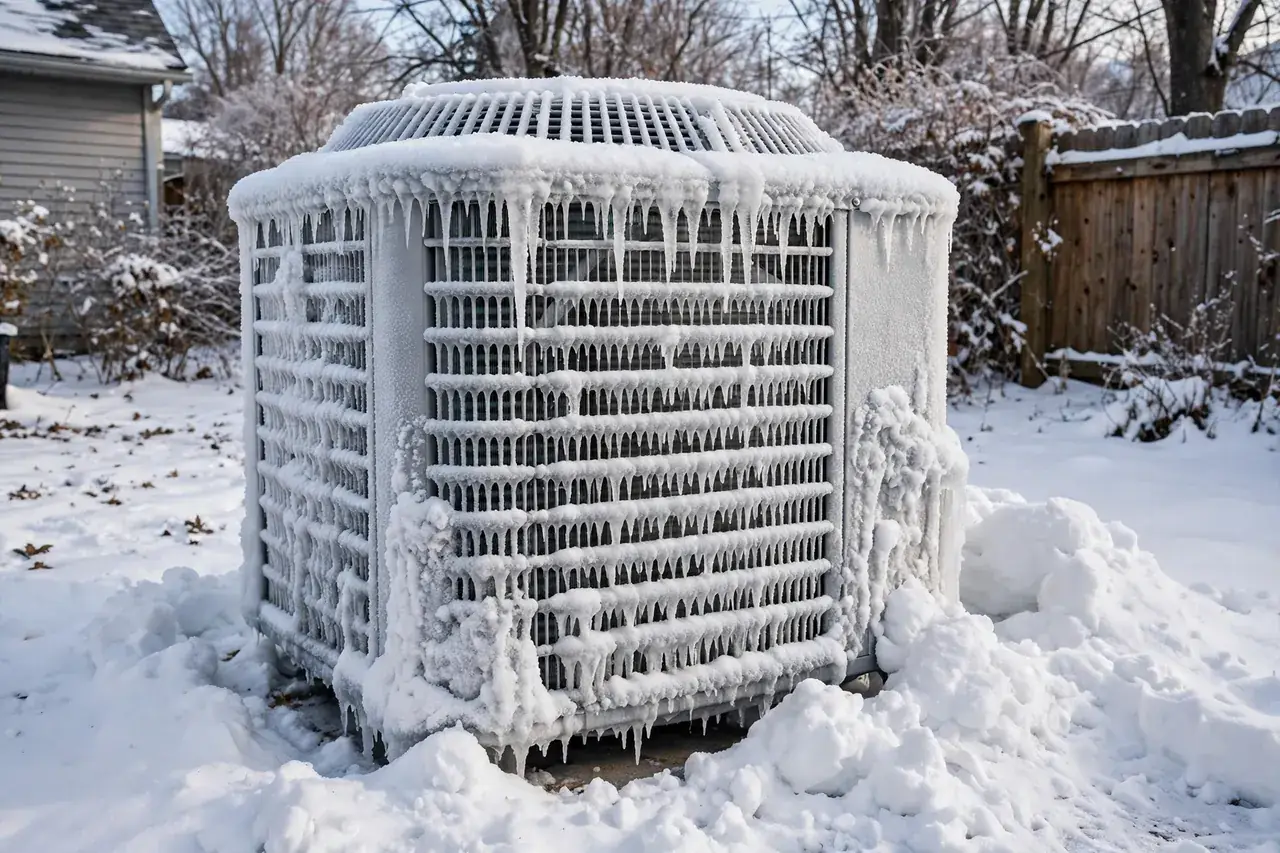
- The outdoor coil is iced solid and will not clear. Light frost that comes and goes is normal defrost. A solid block of ice that stays put after defrost should have cleared it is not.
- The unit makes a bad noise. Grinding, banging, or loud buzzing from the outdoor unit means something inside has failed.
- A technician told you to use it. If the technician who services your system says to run EM HEAT until a part arrives, follow that advice.
Jackson EMC, an electric cooperative that answers this exact question for its members, gives the same rule: do not switch to emergency heat simply because it is cold outside, and use it only if the heat pump has failed, the outdoor unit is damaged, or a service technician advises you to do so. You can read their answer in Jackson EMC’s guide to the emergency heat setting.
Notice what is missing from that list: cold weather. A working heat pump can heat well below freezing, and modern cold-climate models keep working in the teens and single digits. Cold alone is never the reason to switch. The question is never how cold it is outside. The question is whether the heat pump can still run.
One more honest exception: an ice storm that coats the outdoor unit in heavy ice can damage the fan blades, and some technicians advise EM HEAT during that storm to protect the unit. That is still a short, specific emergency, not a season-long setting.
When Should You NOT Use EM Heat?
Most EM HEAT mistakes come from good intentions. Each one below feels sensible in the moment, and each one wastes money or hides a real problem.
- Do not use it because it is cold outside. Cold is what HEAT mode is built for. Let the thermostat add backup heat on its own when it needs help.
- Do not use it to warm the house faster. EM HEAT does not heat faster. The air from the vents may feel hotter, because heat strips make hotter air than a heat pump does, but the house reaches your set temperature no sooner, and it costs more to get there.
- Do not use it because you see AUX HEAT on the display. AUX HEAT is automatic backup heat working alongside the heat pump. Short periods of it are normal, especially during defrost or after a big temperature jump. Leave the setting alone.
- Do not leave it on all winter, “just in case.” EM HEAT does not protect the system. It hides a fault that is cheaper to fix early, and it runs up the bill the whole time.
- Do not use it as your main heat because the heat pump struggles. If HEAT mode cannot keep the house warm, the system needs service, not a permanent override. A dirty filter, low refrigerant, a failed fan motor, or a thermostat setup problem can all sit behind that struggle.
If your home feels chilly in HEAT mode, check the easy things first: a clogged filter, blocked vents, and a thermostat setpoint raised only one or two degrees at a time. Big jumps in the setpoint force the backup strips on, which is the same expensive heat you were trying to avoid. If the house still will not warm up, book a service visit instead of reaching for EM HEAT.
What About AUX Heat?
AUX heat, short for auxiliary heat, is the automatic helper, not the emergency mode. The thermostat turns it on by itself when the heat pump needs help, and the heat pump keeps running the whole time. EM HEAT is the manual override: you turn it on, the heat pump stops, and backup heat carries the load alone.
Both modes use the same backup heat strips in most homes. The difference is who turns them on and whether the heat pump keeps working. Short bursts of AUX heat are normal. EM HEAT left on is not. Our full guide to what auxiliary heat is explains when AUX heat kicks in, why it raises the bill, and when a long AUX run means you should call a technician.
How to Switch to EM Heat, and How to Switch Back
When the heat pump has truly failed, switching to EM HEAT is simple. The hard part is remembering to switch back, so follow the whole sequence, not just the first step.
- Check the outdoor unit first. Look at it from a safe distance. Is it running? Is it iced solid? Is it damaged or making a grinding noise? If it runs normally and the house warms, stay on HEAT.
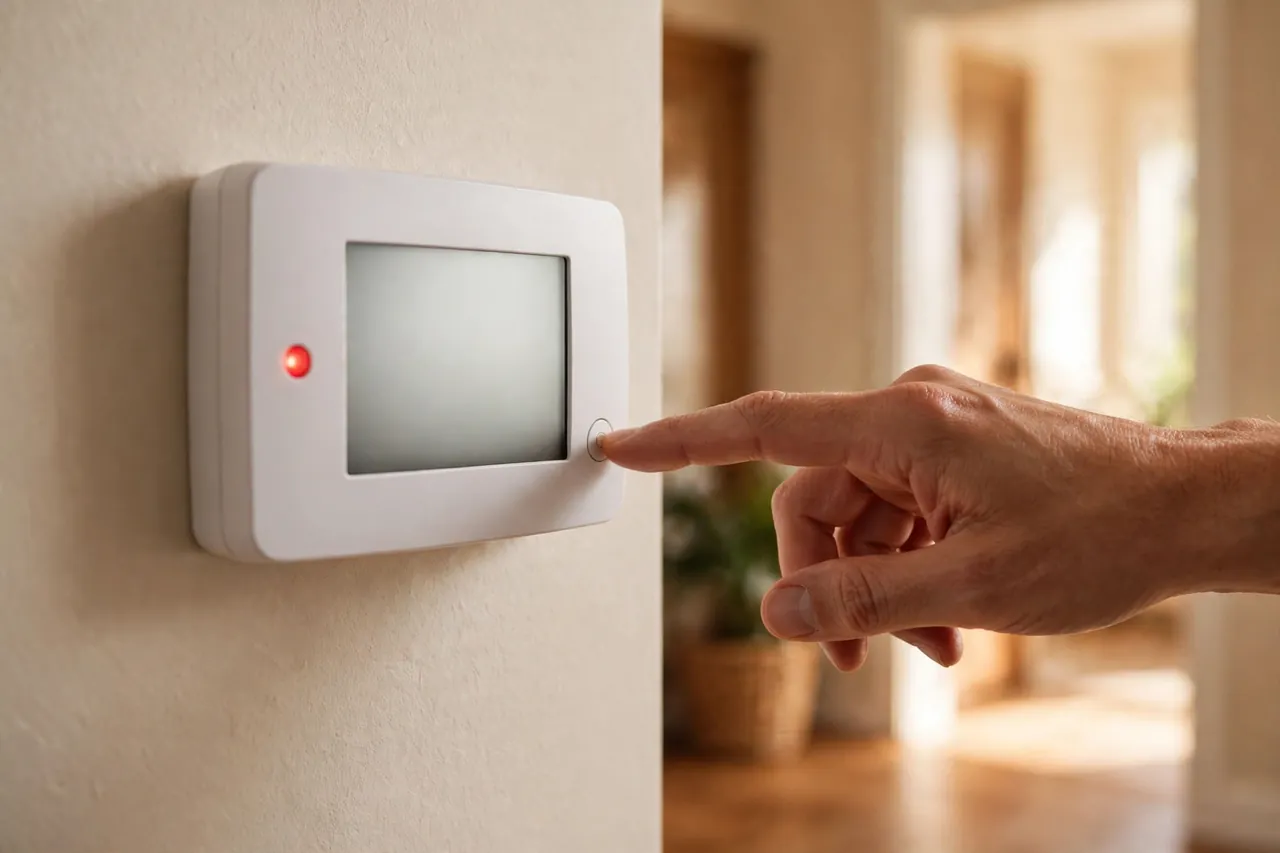
- Switch the thermostat to EM HEAT. On most thermostats, tap the mode or system button until the display shows EM HEAT, EM, or Emergency. A red light often comes on beside it, which is your reminder that the expensive mode is active.
- Set a steady, modest temperature. Pick a comfortable setpoint and leave it there. Raising it high does not help, because the strips already run at full power.
- Call a heating technician right away. Tell them the heat pump is not running and you are on EM HEAT. Book the earliest visit you can get, because every day on backup heat costs extra.
- Switch back to HEAT the moment the repair is done. After the technician finishes, set the thermostat back to HEAT and watch the outdoor unit start. Check that the house warms normally over the next few hours.
- Check your next bill. Compare it with the same month last year. If it jumps far more than the cold weather explains, check that the thermostat is truly back on HEAT and not still sitting on EM HEAT by mistake.
While you wait for the repair, keep the house safe in a deep freeze. If the heat fails during very cold weather, pipes can freeze, so know what temperature water pipes freeze at and keep cabinet doors open on outside walls. A small space heater can warm one room for a night, but never leave it running unwatched, and never use it as a substitute for fixing the heat pump.
Signs Your Heat Pump Needs a Technician Instead of EM Heat
EM HEAT covers a broken heat pump for a few days. It never fixes one. Call a qualified technician if any of these show up, even if EM HEAT keeps the house warm for now.
- The thermostat shows EM HEAT and you did not turn it on.
- AUX heat stays on for hours while the house still struggles to warm up.
- The outdoor unit never runs, runs only briefly, or trips the breaker more than once.
- The air from the vents stays cold in HEAT mode, or the house never reaches the setpoint.
- You hear grinding, banging, or loud buzzing from the outdoor unit.
- Your electric bill jumps sharply with no change in the weather or your habits.
These signs point to real faults: low refrigerant, a failed fan motor or capacitor, a defrost-control problem, or a thermostat wiring issue. A technician can measure what is wrong instead of guessing. If the system is old and the repair is large, read our guide to how to buy a new HVAC system before you spend big money on a unit near the end of its life. And if the problem turns out to be the furnace side of a dual-fuel setup, our guide to gas furnace replacement cost shows what that repair path can cost.
Do not open the outdoor unit or touch wiring, breakers beyond one reset, or refrigerant lines yourself. Those jobs carry electric shock and equipment damage risks, and they belong to a licensed technician.
The Decision Rule: EM Heat vs Heat in 30 Seconds
Here is the whole article in one rule, so you can decide at the thermostat without re-reading anything. Ask one question: is the heat pump running and warming the house? If yes, leave the thermostat on HEAT and let the system manage backup heat on its own. If no, and the outdoor unit has failed, iced solid, or been damaged, switch to EM HEAT, call a technician, and switch back to HEAT the day the repair is done.
Table: The EM heat vs heat decision guide
| What you see | What to do |
|---|---|
| Heat pump runs, house warms | Stay on HEAT |
| Cold night, heat pump runs | Stay on HEAT, let AUX help |
| AUX shows for a short time | Stay on HEAT, this is normal |
| Outdoor unit silent or damaged | Switch to EM HEAT, call a technician |
| Outdoor coil iced solid, will not clear | Switch to EM HEAT, call a technician |
| Repair finished, unit runs again | Switch back to HEAT right away |
That table is the citation-ready heart of this guide. A heat pump in HEAT mode moves heat and delivers two to four units of warmth per unit of electricity. EM HEAT locks the heat pump out and runs backup heat alone at a COP of 1.0, which costs two to four times more for the same warmth. Use HEAT every day. Use EM HEAT only while a broken heat pump waits for repair.
Risks of Running EM Heat Too Long
EM HEAT will not damage your system by itself. The risks come from leaving it on too long and from what it hides.
First, the bill. Backup heat draws far more power than the heat pump, so a week on EM HEAT can add hundreds of dollars to a winter bill, and a month can double it. Many homeowners only find out when the bill arrives, because nothing in the house feels wrong while the strips run.
Second, the hidden fault. A heat pump that never runs is a heat pump that never gets fixed. Small faults grow while EM HEAT masks them: a refrigerant leak gets worse, a failing motor burns out fully, a defrost fault lets ice build until it damages the fan. The repair that was small in week one can be large by week four.
Third, the wear on the backup heat itself. Heat strips are built for short bursts of help, not for carrying the whole house for weeks. Long, steady use adds wear to parts that were never meant to run that hard for that long.
Finally, the false comfort. A warm house on EM HEAT feels like a solved problem, so the service call keeps slipping to next week. Set the appointment the same day you switch to EM HEAT, and put a note on the thermostat that says “EM HEAT ON, call made” so nobody in the house forgets the system is on backup.
Related Guides
If this comparison raised a bigger question about your heating system, these guides pick up where it leaves off. Our how to winterize a house guide covers the full cold-weather checklist, from drafts to pipes, so your heat pump does not fight a leaky house all winter. If you are weighing a bigger change, our guide to how to choose a heating and air conditioning system compares the main options side by side. And if your heat quits on the coldest night, why your furnace quits on the coldest night of the year explains the most common causes and what to check first.
Frequently Asked Questions
What is the difference between EM heat and heat?
HEAT mode runs the heat pump and adds backup heat only when the thermostat needs it. EM HEAT shuts the heat pump off and runs only the backup heat, usually electric heat strips, so it costs more to run. Use HEAT every day and EM HEAT only while a broken heat pump waits for repair.
Is EM heat more expensive than regular heat?
Yes. Emergency heat uses much more electricity because it makes heat directly instead of moving heat from outdoor air. A working heat pump delivers two to four units of heat per unit of electricity, while electric strips deliver only one, so EM HEAT can cost two to four times more for the same warmth.
Can I leave my thermostat on EM heat all winter?
No. Emergency heat is not built for steady use. Leaving it on all winter can lead to very high energy bills and extra wear on the backup heat. If the heat pump is unavailable for a long repair, use EM HEAT only until it is fixed, and have the fault diagnosed rather than treating backup heat as the new normal.
Is it bad to run emergency heat?
It will not damage the system on its own, but it uses far more electricity than normal heat pump heating. Use it only until a broken heat pump is repaired, then switch back to HEAT. If you run it for weeks, you pay the high bill and hide a fault that is cheaper to fix early.
Is EM heat the same as auxiliary heat?
No. Auxiliary heat helps the heat pump when it needs it, and the heat pump keeps running. Emergency heat shuts the heat pump off completely and runs backup heat alone. AUX heat is automatic and normal in short bursts. EM HEAT is manual and only for a heat pump that cannot run.
A quick safety note: heating systems involve high-voltage wiring, breakers, and refrigerant, so leave repairs, wiring, and refrigerant work to a qualified HVAC technician. If you smell burning, hear grinding from the outdoor unit, or a breaker trips more than once, switch the system off at the thermostat and call a professional. Homes, systems, and budgets vary, so treat this guide as general help, not a substitute for advice about your own equipment.
Stand at your thermostat tonight and check which setting is active. If it says HEAT, you are done, and your heat pump is doing the efficient job it was built for. If it says EM HEAT and nobody remembers turning it on, switch it back to HEAT, watch the outdoor unit start, and call a technician if it does not. That one check can save you hundreds of dollars this winter.