If your electric bill jumped this month, the cause is usually one of two things: your home used more electricity, or you paid more for each unit of it. In winter, the first reason wins most of the time. Cold weather makes heating run far longer, and if you have a heat pump, its backup heat can quietly triple your heating cost on the coldest days.
Before you blame any one appliance, check two numbers on your bill: the kilowatt-hours (kWh) you used and the rate you paid per kWh. If the kWh climbed, something in your home ran more. If the kWh stayed flat but the dollars rose, your rate or fixed charges changed. This guide walks you through that check first, then the nine most likely causes in order, with real numbers and the cheapest fix for each one.
The 2-Minute Diagnosis: Is It Usage or a Price Problem?
Every electric bill follows one simple formula: kWh used times your rate per kWh, plus fixed monthly charges. So a bill can rise for only three reasons: you used more kWh, the price per kWh went up, or the fixed charges changed. Find those three numbers on your bill and compare them with the same month last year, not last month. Same-month comparisons matter because seasons drive usage more than anything else.
Pull up this month’s bill and last year’s bill for the same month. Then read the table below and match your situation.
Use this table to read your bill like a detective.
| What changed | What it means | Where to look next |
|---|---|---|
| kWh up, rate the same | You used more electricity | Heating, a new appliance, or a failing device |
| kWh flat, dollars up | Your price went up | Rate change, expired plan, or higher fixed charges |
| Both kWh and dollars up | More use at a higher price | Check the weather first, then your rate |
| kWh doubled for no reason | A mistake or a stuck device is likely | Estimated read, meter error, or a running appliance |
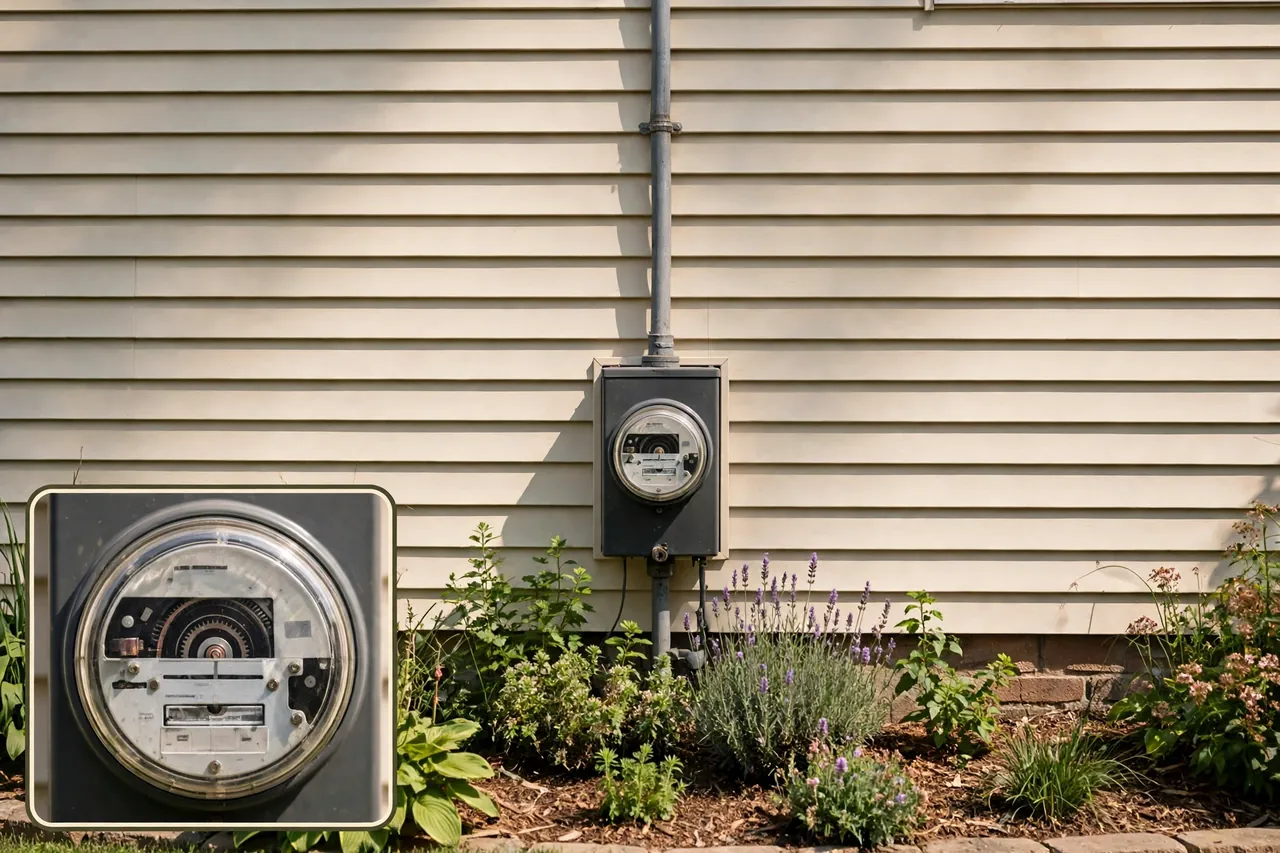
One more check takes thirty seconds: look for the letter next to your meter reading. An “E” means the reading was estimated, and an “A” means it was actual. An estimated bill can be far off, and the next actual read can land as a nasty catch-up spike. If your bill says “E” and the jump looks wrong, that is your first suspect.
What Is a Normal Electric Bill?
According to the U.S. Energy Information Administration (EIA), the average American home used 863 kWh a month in 2024 and paid about $142 a month for it. That is the latest full-year figure the EIA has published.
Prices have risen since then. The EIA reported an average residential rate of 18.16 cents per kWh in August 2026, the latest month it had published when this article was checked on November 5, 2026. At that rate, the same average home using 863 kWh would pay about $157 a month before taxes and fees. Your state can sit far from that average: Nevada averaged 12.72 cents per kWh in August 2026, while Hawaii averaged 47.18 cents.
Here is the quick reference to keep beside your bill.
| Benchmark | Figure | Source and date |
|---|---|---|
| Average home use | 863 kWh per month | EIA, 2024 full-year data |
| Average monthly bill | About $142 | EIA, 2024 full-year data |
| Average residential rate | 18.16 cents per kWh | EIA, August 2026 |
| Cheapest state rate | 12.72 cents per kWh (Nevada) | EIA, August 2026 |
| Highest state rate | 47.18 cents per kWh (Hawaii) | EIA, August 2026 |
| 2026 forecast rate | 18.2 cents per kWh | EIA Short-Term Energy Outlook, October 2026 |
If your bill sits far above these numbers, do not panic yet. A large home, electric heat, a pool, or an electric car can all push a bill well past the average for honest reasons. The question is not whether your bill beats the average. The question is what changed since your own bill was normal.
The 9 Most Likely Causes, in Order
Work through these causes in order. The first two explain most high bills, and the cheapest checks come first.
1. Winter Heating Ran Far More Hours
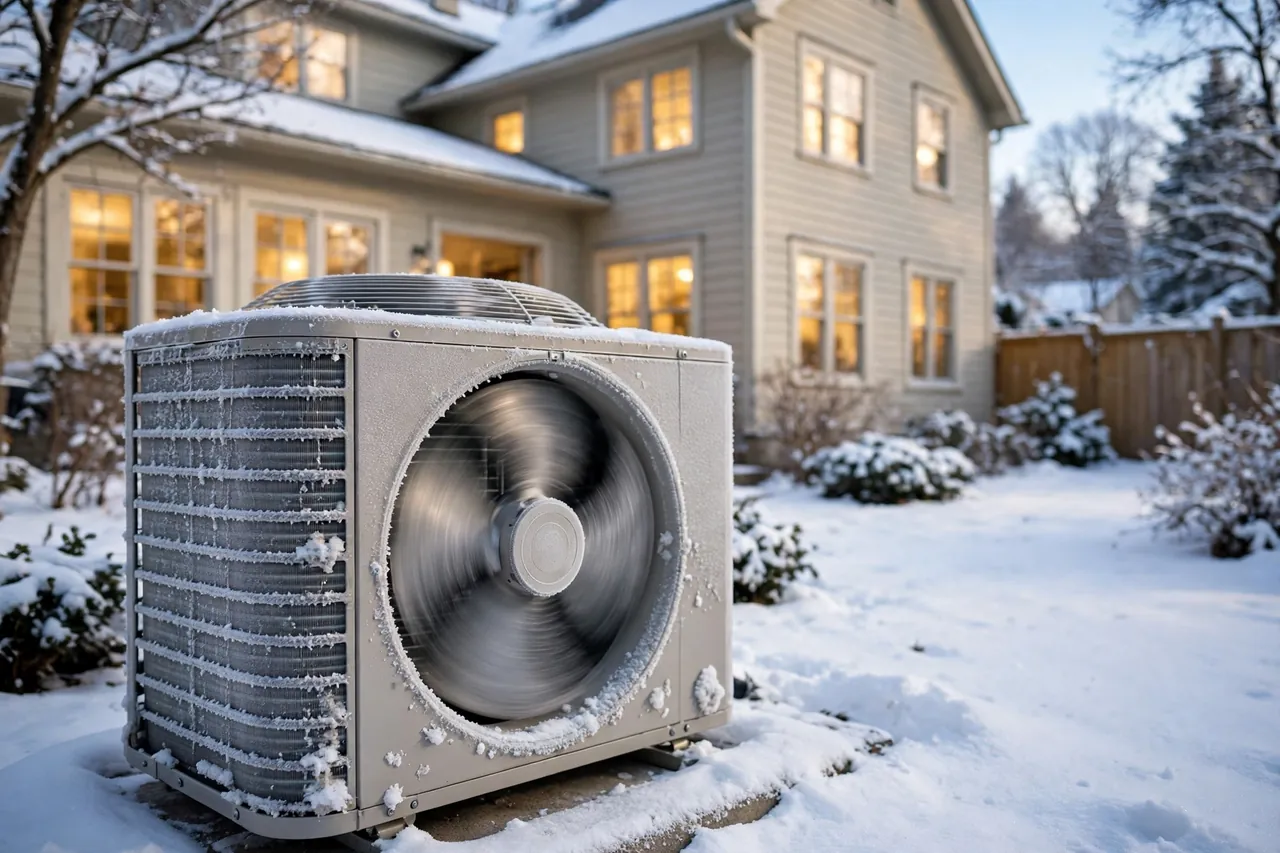
Cold weather is the number one reason a winter bill jumps. Heating is the biggest electricity user in most homes, and it runs longer with every degree the temperature drops outside. You can change nothing in your routine and still see a much bigger bill after a cold snap, because your system simply worked more hours to hold the same indoor temperature.
Heat pumps deserve special attention here. When the temperature drops very low, a heat pump switches on its backup electric heat, called auxiliary heat, to keep up. That backup heat works like a giant space heater and can use three times the electricity of the heat pump itself. If your thermostat shows “aux heat” often, or your bill spiked during the coldest week of the year, backup heat is a strong suspect. Our guide to what auxiliary heat is and when it runs explains how to spot it and keep it from running more than it must.
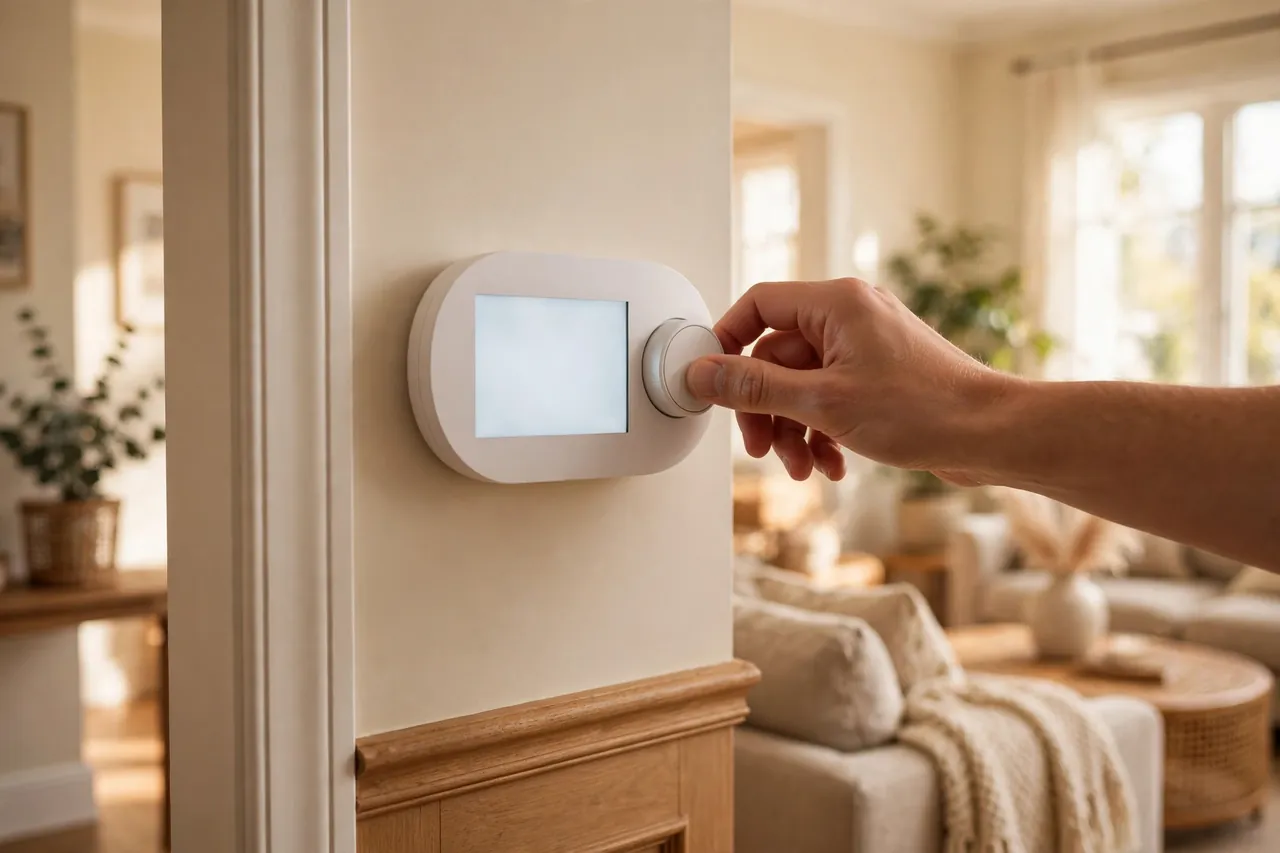
What to do: keep the thermostat steady instead of cranking it up and down, which can trigger backup heat. The U.S. Department of Energy (DOE) suggests setting it around 68°F to 70°F while you are awake in winter and lower while you sleep or are away. If your system runs on emergency heat, that is a different setting with a much bigger cost, so learn the difference in our emergency heat versus regular heat guide before you touch that switch.
2. Your Rate Went Up
Sometimes you did nothing wrong at all. Electricity rates have climbed across the country: the EIA’s August 2026 average of 18.16 cents per kWh is about 3.4 percent higher than a year earlier, and its October 2026 outlook puts the 2026 average at 18.2 cents, up from 17.3 cents in 2025. At average use, that alone adds roughly $8 a month to a bill, and in some states the rise is much steeper.
Rates can also jump for personal reasons. A fixed-rate plan can expire and roll you onto a higher month-to-month rate. Your utility can raise its delivery charges, which pay for the poles and wires and can make up a third or more of the total bill. Or a new fixed monthly service charge can appear on the bill. None of these change how much electricity you used.
What to do: compare the per-kWh rate on this bill with the same month last year. If the rate rose, call your utility and ask what changed, and check whether a different plan fits you better. In states with retail choice, such as Texas, Ohio, and Pennsylvania, you can shop for a new supplier. In regulated states, ask about time-of-use plans or budget billing, which spreads the cost evenly across the year.
3. A New Big Load Moved In
A bill rarely lies about a new appliance. The usual newcomers are an electric car charged at home, a hot tub, a second refrigerator in the garage, a chest freezer, or a gaming computer that runs all day. Charging an electric car for about 1,000 miles of driving adds roughly 300 kWh a month, or about $54 at the national average rate. A hot tub can add $30 to $80 a month.
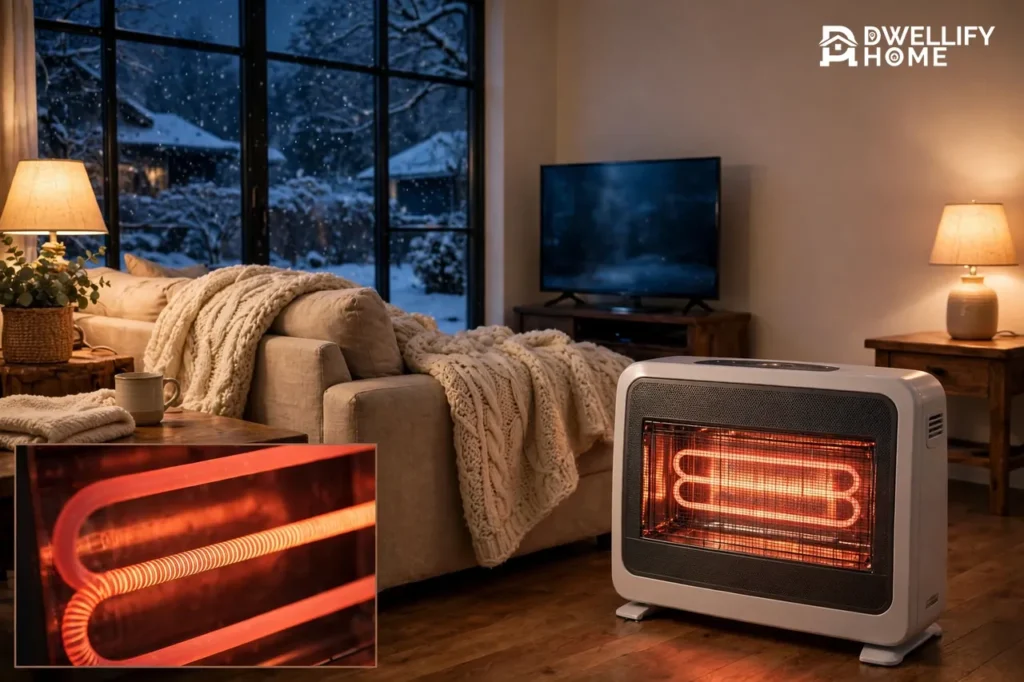
Space heaters belong in this group too. One 1,500-watt space heater running 8 hours a day uses about 360 kWh a month, which costs roughly $65 at 18 cents per kWh, and that is for one heater in one room. If two or three heaters are running, they can cost more than heating the whole house. We cover the full math in our guide to whether space heaters use a lot of electricity.
What to do: think back over the last two months. Did anyone start working from home, did guests stay for weeks, or did a new appliance arrive? Match the timing to the month your bill jumped. If the new load explains the jump, the bill is not a mystery. It is a trade-off you can now decide about with open eyes.
4. Your Electric Water Heater Is Working Harder
Water heating is often the second-biggest electricity user in a home, and it works harder in winter because the incoming water is colder. A thermostat set to 140°F, a tank full of sediment, or a failing lower heating element can all make it run far longer than it should. More hot showers, more laundry in hot water, or guests staying over add up the same way.
What to do: set the water heater to 120°F, which is hot enough for most homes and cuts wasted heat. Run a load of laundry in cold water when you can, and fix a dripping hot-water tap fast, because a leak pours heated water straight down the drain. If the tank is more than 10 years old and your hot water runs out early, ask a plumber to check the elements and sediment before you assume the whole tank is done.
5. An Appliance Is Failing Quietly
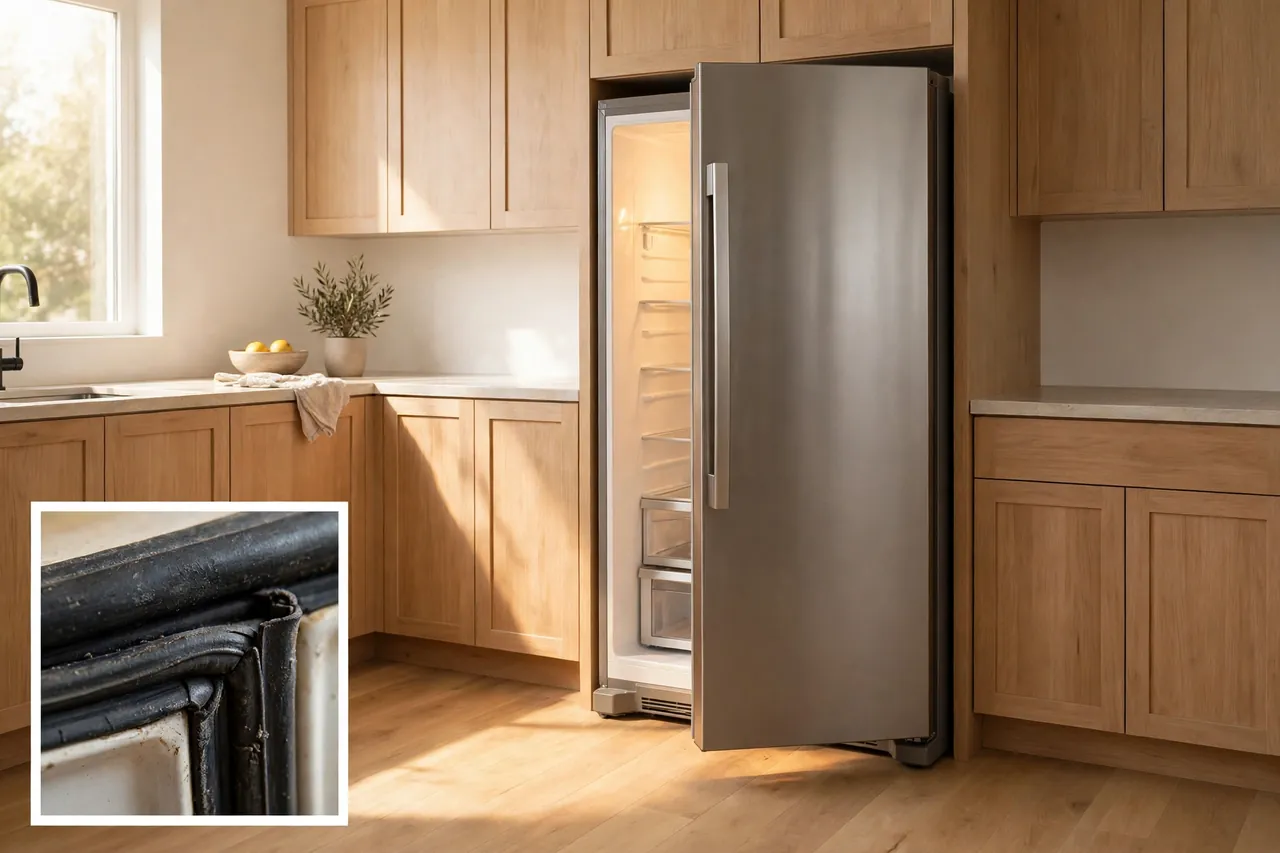
This is the classic cause of a high bill with no change in your habits. A refrigerator with a worn door seal or a failing compressor runs almost nonstop. A well pump with a leak cycles all day. A pool pump timer stuck on runs twice as long as it should. A sump pump, a dehumidifier in a damp basement, or a second fridge in a hot garage can all do the same.
What to do: listen and feel. A fridge that hums all the time, a pump that cycles every few minutes, or a water heater that never seems to rest all point to a failing device. Try the away test: write down your meter reading, leave the house for a few hours with everything off except the fridge, and read the meter again when you return. If it moved much more than a fridge alone should move, something is running that you do not know about.
6. Air Leaks and Thin Insulation Let Heat Escape
Your heating system can be fine and still lose the fight if warm air leaks out and cold air leaks in. Gaps around windows, doors, attic hatches, and outlets force the system to run longer for the same indoor temperature. Thin or missing attic insulation does the same from above, and it hurts most on the coldest nights.
What to do: on a cold day, hold your hand near window frames, door edges, and outlets on outside walls and feel for drafts. Seal the gaps you find with caulk or weatherstripping, and check the attic insulation depth. If you are not sure which type of insulation your home needs, our comparison of faced versus unfaced insulation explains the difference in plain terms. For the full seasonal routine, follow our guide on how to winterize a house, which covers sealing, insulation, and the other winter checks in one pass.
7. Standby Power Drains Money Around the Clock
Televisions, game consoles, cable boxes, chargers, printers, and smart speakers keep drawing power even when you switch them off. Researchers at Lawrence Berkeley National Laboratory put this standby power at 5 to 10 percent of home electricity use, and the U.S. Department of Energy says it can cost the average household as much as $100 a year. No single device explains a high bill, but fifty small ones together can.
What to do: plug your entertainment center and home office gear into power strips and switch the strips off at night or when you leave. Unplug chargers that feel warm when nothing is attached. When you replace a device, look for the ENERGY STAR label, which sets strict standby limits. This fix will not rescue a doubled bill, but it trims a real, permanent leak.
8. You Used Power at the Most Expensive Hours
Many utilities now charge different prices at different times of day. Under a time-of-use plan, a kilowatt-hour at 6 p.m. can cost far more than the same kilowatt-hour at 10 a.m. If your plan changed, or you started running the dryer, dishwasher, and car charger during the evening peak, your bill can rise even though your total kWh stayed the same.
What to do: check your bill or your utility’s website for the words “time of use” or “peak hours.” If you are on such a plan, shift the dryer, dishwasher, and car charging to off-peak hours, usually late at night or midday. If you never chose a time-of-use plan, ask your utility whether you are on one and whether a flat-rate plan would fit your routine better.
9. A Billing or Meter Mistake Inflated the Bill
Sometimes the problem sits on the paper, not in the house. A billing period can stretch from 30 days to 35 after a holiday or a schedule change, which adds five days of use to one bill. An estimated reading can undercount for months and then correct itself in one big catch-up bill. A misread meter or a faulty meter is rarer, but it happens, and it usually shows up as a sudden jump with no change in your home.
What to do: check the number of days in the billing period and compare it with last year’s bill. Read your own meter and compare it with the number printed on the bill. If the numbers do not line up, or the bill still says “estimated” after months, call your utility and ask for a re-read. Most utilities test a meter for free when you ask, so do not pay for a private test first.
How Much Each Big Load Really Costs
Use the formula kWh equals watts times hours divided by 1,000, then multiply by your rate. The table below does that math at the national average of about 18 cents per kWh, so you can see which loads can truly move a bill and which ones cannot. Swap in your own rate from your bill for an exact figure.
Monthly cost of common loads at about 18 cents per kWh.
| Load | Typical use | Monthly kWh | Monthly cost |
|---|---|---|---|
| Space heater, 1,500 watts | 8 hours a day | 360 | About $65 |
| Central air conditioner, 3,500 watts | 8 hours a day | 840 | About $151 |
| Electric water heater | About 3 hours a day | 405 | About $73 |
| Electric dryer, 3,000 watts | 1 hour a day | 90 | About $16 |
| Pool pump, 2,000 watts | 8 hours a day | 480 | About $86 |
| Electric car charging | About 1,000 miles a month | 300 | About $54 |
| Old refrigerator | Runs most of the day | 55 | About $10 |
| Standby power, 50 watts total | 24 hours a day | 36 | About $7 |
Two lessons hide in this table. First, heating and cooling dwarf everything else, which is why weather moves a bill more than light bulbs ever will. Second, turning off lights saves pennies while a single space heater can cost $65 a month, so always fix the big loads first.

What to Do About a High Bill: The Cheapest Fixes First
Work this list from the top. Each step costs little or nothing, and most homes find their answer before the list ends.
- Compare this bill with the same month last year, kWh and rate separately, so you know whether usage or price rose.
- Check for an “E” estimated reading and a longer billing period, and read your own meter if the numbers look wrong.
- Set the thermostat to 68°F to 70°F while you are awake in winter, and set it back 7 to 10 degrees for 8 hours a day while you sleep or are away. The U.S. Department of Energy says that setback alone can save as much as 10 percent a year on heating and cooling.
- Turn the water heater down to 120°F and fix any dripping hot-water tap.
- Stop running space heaters all day. Heat the room you use, then switch them off, and read the full cost breakdown in our space heater electricity guide before winter sets in.
- Seal the drafts you can feel around windows and doors, and check the attic insulation.
- Move the dryer, dishwasher, and car charging to off-peak hours if you are on a time-of-use plan.
- Put entertainment and office gear on switched power strips and turn them off at night.
- Check the fridge door seal with a dollar bill: if it slides out easily with the door closed, the seal is worn.
- Call your utility about your rate plan, a free meter test, or budget billing if the bill still makes no sense.
If your heating system is old, struggles to hold temperature, or runs on backup heat most of the winter, the honest fix may be a system decision rather than a habit change. Our guide to how to choose a heating and air conditioning system walks through the options, and our guide to how to buy a new HVAC system covers what to ask before you sign. If you heat with gas and the furnace itself is aging, check our guide to gas furnace replacement cost so you know the price range before a salesperson tells you.
When to Call Your Utility or a Professional
Call your utility first when the bill itself looks wrong: an estimated reading that never corrects, a meter number that does not match your own reading, or a rate that changed without notice. Ask for a re-read and a free meter test. Utilities handle these checks every day, and a confirmed meter error usually earns you a corrected bill.
Call an HVAC technician when the heating system runs constantly, blows lukewarm air, shows auxiliary heat for hours at a time, or makes new noises. Call an electrician when you smell burning, see scorched outlets, or find a breaker that trips again and again. Those are safety problems, not efficiency problems, and they are not do-it-yourself jobs.
A quick safety note: never open your electrical panel or meter box to investigate a high bill yourself. Read the meter from outside, write the numbers down, and let the utility or a licensed electrician handle anything behind a cover.
Quick Reference: Find Your Cause in 60 Seconds
Match your situation to the row below and start there.
| Your situation | Most likely cause | First step |
|---|---|---|
| Bill spiked in a cold month | Heating hours or backup heat | Check thermostat setting and aux heat |
| kWh flat, dollars up | Rate or fixed charge rise | Compare per-kWh rate with last year |
| Bill doubled overnight | Estimated read or meter error | Check for “E” and read your meter |
| New car, hot tub, or heater | A new big load | Match the start date to the bill jump |
| Bill high even when away | Standby loads and always-on devices | Try the away test with the meter |
| Bill creeps up every month | Aging appliance or leaky house | Check fridge seal, insulation, drafts |
Related Guides
If winter heating is behind your bill, our winterizing guide covers the full seasonal checklist, and our forced-air heating guide explains how the most common heating system moves warm air through your home. Holiday lights can add a smaller but real winter load, so check our LED Christmas decor guide for efficient lighting choices and our guide to how many strands of Christmas lights you can connect before you plug in a big display.
Frequently Asked Questions
Why did my electric bill double this month?
A doubled bill usually comes from one of four things: extreme weather that made heating or cooling run far longer, a failing heating or cooling system running constantly, a meter reading error such as an estimated bill catching up, or a rate increase after your plan expired. A new energy-hungry appliance like a space heater or pool pump can do it too. Compare your kWh with the same month last year to see whether usage or price caused the jump.
What uses the most electricity in a house?
Heating and cooling use the most electricity in most homes, often 40 to 60 percent of the bill in hot or cold weather. Water heating comes next, followed by the washer and dryer, lighting, the refrigerator, and the oven and stove. Space heaters, pool pumps, and electric car charging can each rival those big users when they run for many hours a day.
Why is my electricity bill so high when I’m not home?
Your power bill stays high when you are away because the refrigerator and water heater run all the time, standby power keeps flowing to televisions and chargers, heating or cooling holds the temperature, and pool pumps, security systems, and outdoor lights keep running on timers. Even an empty home typically uses 20 to 30 percent of its normal electricity, so set the thermostat back and switch off power strips before a trip.
How can I tell if my electric meter is wrong?
First check whether your bill shows an actual read or an estimate, and compare the meter number on the bill with your own reading. Then try a simple check: switch off everything except one known load, watch the meter, and see whether it moves when it should not. If the numbers do not line up, call your utility and ask for a re-read and a free meter test before you pay for any private check.
What’s a normal electricity bill amount?
The average American home paid about $142 a month for electricity in 2024, according to the U.S. Energy Information Administration, using 863 kWh a month. At the August 2026 average rate of 18.16 cents per kWh, that same use would cost about $157 a month. Apartments often run $75 to $100, small homes $100 to $130, and large homes $150 to $250 or more.
Why is my electric bill high in winter?
Winter bills spike because electric heating runs constantly in cold weather, space heaters add a large load, water heaters work harder with cold incoming water, shorter days mean more lighting, and holiday decorations add extra use. If you heat with gas, your electric bill should stay fairly steady, so a winter spike points to electric heat, a space heater, or a problem worth checking.
A high electric bill feels unfair, but it almost always has a findable cause. Start with the two-minute check, compare your kWh and your rate with the same month last year, and work the causes in order. Most homeowners find the answer in heating hours, a rate change, or one new load, and the fix costs little or nothing. If the numbers still make no sense after those checks, call your utility: a re-read or a free meter test costs you nothing and settles the question.