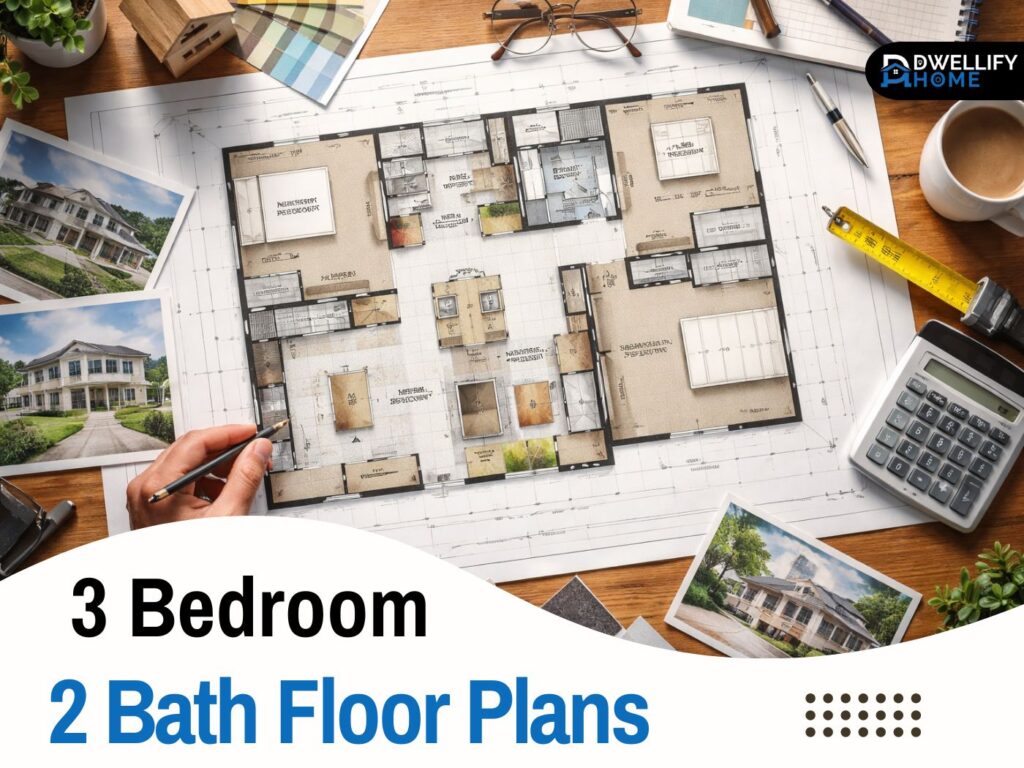
When clients ask me for a “safe” layout that works for everyday life, this is often where we land. A three-bedroom, two-bath home gives you enough space to breathe, without paying for rooms you rarely use.
Here’s the thing, the best plan isn’t the one with the fanciest rendering. It’s the one that fits how you actually live on a normal Tuesday. Morning routines, grocery drop-offs, kids doing homework, guests staying over, laundry piling up, and the way noise travels through the house, that’s the real test.
In this guide, I’ll walk you through layout choices, sizing, budgeting, and the small design decisions that make a home feel calm and functional for years.
Snippet-ready definition:
3 bedroom 2 bath floor plans are home layouts that balance privacy and everyday comfort, usually with a primary suite plus two extra bedrooms, and a second full bath for kids, guests, or busy mornings.
Mission Statement:
Dwellify Home helps homeowners make confident, practical home-layout decisions by translating floor plans into real-life living, with clear guidance on flow, comfort, storage, and budget-friendly design choices.
Why 3 Bedroom 2 Bath Floor Plans Are the “Sweet Spot”
This layout is popular for a reason. It balances privacy, flexibility, and resale appeal in a way that’s hard to beat. You’ve got space for a primary suite, a couple of secondary bedrooms, and enough bathroom coverage that everyone isn’t fighting for a sink at 7:30 a.m.
On top of that, the third bedroom is what makes the plan adaptable. I’ve designed homes where that room becomes a nursery, a guest room, a hobby space, or a quiet office. Life changes, and a good plan lets the house change with you.
One more bonus, you can usually keep the footprint efficient. That’s helpful if you want a comfortable home without creeping into oversized, expensive-to-build territory.
Quick Guide Comparison Table
| Plan Type | Best for | Watch-outs | Typical sweet spot |
| Single-story (one-floor / ranch) | Easy living, aging-in-place, simple daily flow | Wider footprint, long hallways if poorly planned | 1,400–2,000 sq ft |
| Split-bedroom layout | Privacy for primary suite, teens, guests, WFH | Can waste space if center zone is too big | Works well in 1-story or 2-story |
| Open-concept living | Entertaining, family connection, brighter feel | Noise travels, furniture placement can be tricky | Best with defined “zones” |
| 2.5 bath (one floor) | Hosting, busy households, extra convenience | Slightly higher cost, needs smart placement | Great upgrade under 2,000 sq ft |
Step-by-step: How to pick the right plan fast (no overwhelm)
- Start with your lot: confirm buildable width, depth, and setbacks.
- Choose your “must-haves”: privacy style (split vs grouped bedrooms), storage needs, and kitchen priorities.
- Shortlist 3 plans: don’t compare 15, you’ll get decision fatigue.
- Check dimensions first: overall footprint, bedroom sizes, living room shape, hallway length.
- Do a real-life walkthrough: imagine groceries, laundry, guests, morning routines, and where clutter lands.
- Sanity-check build cost: simpler rooflines and grouped plumbing usually cost less.
- Confirm locally: codes, climate loads, and site conditions can change what’s practical.
Floor Plan Basics (So You Don’t Get Misled by Pretty Pictures)
A floor plan is a map of your daily habits. So before you fall in love with a style, look at how you move through the house. Where do you enter with groceries? How far is the kitchen from the garage? Can someone take a shower while another person uses the sink?
When you’re reviewing 3 bedroom 2 bath floor plans with dimensions, start with the overall footprint. Note the plan width and depth, then check the room proportions. I’ve seen plans that look spacious in a drawing, but the living room is too narrow for a sofa layout that makes sense. Dimensions don’t lie.
Also, pay attention to total square footage versus livable space. Garages, porches, and sometimes unfinished areas can inflate a number. If your goal is a practical layout under 2,000 square feet, the interior efficiency matters more than the headline size.
Most Popular Layout Types (Pick the One That Fits Your Lifestyle)
The “right” layout type depends on your routines and your tolerance for noise, clutter, and shared spaces. Some families love open living. Others feel stressed when everything is in one big room. Both are valid, as long as you choose intentionally.
A helpful way to decide is to think in zones. You want a clear separation between social areas, quiet bedrooms, and messy utility zones like laundry and mudroom spaces. When a plan nails the zoning, it feels bigger and calmer than it really is.
3 Bedroom 2 Bath Floor Plans Single Story (Ranch, One-Floor Living)
Single-story layouts are easy to live in. No stairs, no hauling laundry up and down, and the flow tends to feel straightforward. For many homeowners, this is the best long-term choice because it supports aging-in-place without a future remodel.
The tradeoff is footprint. A one-story plan spreads out, so it often needs a wider lot or a smarter layout to avoid long hallways. My tip is to watch the hallway length. If you’re paying for a lot of corridor, you’re paying for space you can’t furnish.
Split-Bedroom Layouts (Privacy for the Primary Suite)
Split-bedroom designs place the primary suite on one side and the other bedrooms on the opposite side. Guess what, this one decision can make the whole home feel more peaceful.
It’s a strong choice for families with teens, homeowners who work from home, or anyone who wants guests to have their own quiet wing. Just make sure the split doesn’t create wasted space in the middle. A good split plan uses the living area as the “buffer” without turning the house into two disconnected ends.
Open-Concept vs Defined Rooms (Noise, Smells, Family Routines)
Open-concept layouts can feel bright and social, especially when the kitchen, dining, and living areas connect. They’re great for entertaining and keeping an eye on kids.
But I always warn clients about sound. TV noise, blender noise, and cooking smells travel fast. If you’re sensitive to that, a semi-open plan can be the best part of both worlds: open sightlines, but a little separation through partial walls, cased openings, or a tucked-away kitchen corner.
Common green flags I look for:
- Clear path from entry to kitchen
- Furniture-friendly living room shape
- Pantry near kitchen, not across the house
- Bathrooms that don’t open directly into dining spaces
Size Guide: Best Options Under 2,000 Sq Ft
Many of the most livable homes I’ve designed land between about 1,400 and 1,950 square feet. In that range, you can usually get a comfortable primary suite, two decent secondary bedrooms, a practical kitchen, and storage that won’t drive you crazy.
For 3 bedroom 2 bath house plans under 2,000 sq ft, the key is avoiding “false space.” That’s the oversized foyer, the extra-wide hallway, or the oddly shaped living room that wastes corners. A compact plan with smart storage often lives better than a larger plan with poor flow.
If you’re considering something smaller, like 1,200 to 1,500 square feet, focus on priorities. A slightly smaller bedroom is fine. A tiny kitchen pantry usually isn’t. In real life, storage and work surfaces matter every single day.
Single-Story vs Two-Story (What Actually Changes)
People assume single-story is always cheaper. Sometimes it is, but not always. A one-story home often needs a larger foundation and more roof area, which can push costs up depending on materials and local labor.
Two-story plans usually have a smaller footprint, which can be easier on narrow lots. They can also improve bedroom separation, especially if all bedrooms are upstairs. The downside is stairs and the way sound moves between floors. I’ve had clients surprised by how clearly they hear footsteps above the living room.
If you’re planning long-term, single-story wins for accessibility. If you’re working with a tight lot or want more yard space, a two-story layout can be a smart compromise.
Modern vs Simple (Style Choices That Don’t Blow the Budget)
Style is fun, but layout is what you live with. I always suggest choosing a plan that’s efficient first, then layering your style through finishes and details you can control.
Modern 3 bedroom 2 bath floor plans often feature open living areas, large windows, cleaner lines, and fewer fussy corners. Simple 3 bedroom 2 bath floor plans usually focus on straightforward shapes and practical room placement.
Modern 3 Bedroom 2 Bath Floor Plans (What Makes Them Modern)
Modern doesn’t have to mean expensive. What makes a plan feel modern is often the interior experience: open sightlines, a strong connection to outdoor living, and a kitchen that feels like part of the home, not a back room.
If you want that modern feel without a huge budget, prioritize a few items:
- Larger, well-placed windows where privacy allows
- A kitchen island or peninsula with seating
- Clean ceiling lines and consistent door heights
Simple 3 Bedroom 2 Bath Floor Plans (What to Simplify for Savings)
The cheapest square foot is the one you don’t build. Simple plans reduce corners, reduce roof complexity, and keep plumbing areas grouped. The best part is, simpler shapes often look timeless.
Low budget modern 3 bedroom house design usually works when you keep the structure simple and spend selectively. For example, a modest exterior with a great kitchen layout and strong storage can feel more “high-end” than a flashy facade with awkward rooms.
Bathroom Planning That Works in Real Life
Bathrooms can make or break daily comfort. Two baths sounds straightforward, but the placement matters more than people think. The goal is to keep the hall bath easy for bedrooms and guests, while making the primary bath feel private.
If you host often, house plans 3 bedroom 2.5 bath one floor can be a major upgrade. A small powder room near the living area keeps guests out of the family bath, and it reduces the “bathroom traffic jam” during gatherings.
Jack-and-Jill Bathrooms (Good Idea or Daily Annoyance?)
Jack-and-Jill baths can be brilliant for kids or shared sibling rooms. But they need the right setup. I recommend two sinks if space allows, plus locks and clear privacy cues. Without that, it becomes a daily argument over towels, clutter, and who walked in at the wrong time.
Also, don’t forget ventilation. A quiet exhaust fan and a window, when possible, are the unsung heroes of a bathroom that stays fresh.
Kitchen + Living Area (The Make-or-Break Zone)
This is where families spend most of their time, so it deserves extra attention. I always evaluate the kitchen in “work zones”: fridge zone, sink zone, cook zone, and landing space for groceries. If those zones are jammed into one corner, you’ll feel it every day.
A kitchen island is popular because it adds prep space and casual seating. But an island only works if you have enough clearance around it. If it’s tight, a peninsula can deliver the same function with better flow.
For the living room, check the wall space. Many open plans forget that you still need places for a TV, a sofa, and storage. A simple rule: if you can’t imagine where the couch goes without blocking a walkway, the plan may look better than it lives.
Storage, Laundry, and Everyday Practical Details (Most Plans Get This Wrong)
Storage isn’t glamorous, but it’s what keeps a home from feeling messy. A good plan includes a pantry, a linen closet, and at least one “catch-all” closet for cleaning supplies, bags, or seasonal items.
Laundry placement is another big one. When laundry is far from bedrooms, people stop using hampers and start making piles. If you can place laundry near bedrooms, do it. If it must be near the garage, add a folding counter and a place for baskets so it still feels functional.
I also like a small drop zone near the main entry. It doesn’t have to be a full mudroom. Even a bench, hooks, and a closed cabinet can prevent that constant “stuff explosion” near the door.
Outdoor Living + Garage Options (Lifestyle Boost)
Outdoor living adds real value because it expands how you use the home. A covered porch can be a breakfast spot, a place for kids to play in the shade, or a calm evening hangout. It doesn’t need to be huge to matter.
Garage choices are about priorities. A two-car garage is great for storage and weather protection, but it costs more and can dominate the front of the home if the design isn’t balanced. If your budget is tight, a one-car garage plus a small storage bay can be a smart middle ground.
Also, look at door placement. A door from garage to pantry or kitchen is a daily convenience you’ll appreciate more than a fancy foyer.
Lot Fit, Orientation, and “Buildability” Checks (Before You Buy Any Plan)
Even a perfect plan can fail on the wrong lot. Always check the plan width and depth against your buildable area, setbacks, and driveway approach. Narrow lots often require careful garage placement and compact footprints.
Orientation matters too. If you can, place main living windows toward the best light and views, and keep bedrooms away from the noisiest side. In hotter climates, window size and shading can noticeably impact comfort and energy use.
Buildability is the practical side of architecture. Local codes, wind or snow loads, soil conditions, and grading can change how a plan needs to be engineered. My advice is simple: verify local requirements early, before you get attached to a plan that needs expensive changes.
Cost-to-Build Reality Check (Budget-Proof Your Choice)
Cost isn’t just about square footage. It’s about complexity. Simple rooflines, fewer corners, and shorter plumbing runs can lower build cost and reduce construction risk.
Plumbing layout is a hidden budget driver. If the kitchen, laundry, and bathrooms are clustered, you typically get simpler plumbing and faster construction. When they’re scattered, you pay for longer lines, more labor, and more chances for problems.
Plan modifications can also surprise people. Moving a non-structural wall is often manageable. Relocating a staircase, changing roof pitch, or shifting plumbing stacks can get expensive fast. If you expect changes, choose a plan that’s already close to your needs.
3 Bedroom 2 Bath Floor Plans With Pictures: How to Judge Them Like a Pro
Pictures are helpful, but they can be misleading. Renderings often use oversized windows, minimal furniture, and wide camera angles to make rooms look bigger. So when you’re reviewing 3 bedroom 2 bath floor plans with pictures, treat them as inspiration, not proof.
Here’s a simple method I use with clients. Pick your top three plans and “walk” them in your head:
- Where do shoes and bags land after you enter?
- Can someone cook while another person crosses the kitchen to the fridge?
- Do guests have a clear bathroom that feels private?
- Can you place a bed, dresser, and nightstands without blocking doors?
If a plan passes that mental walkthrough, it’s usually a strong candidate.
Common Mistakes People Make (And How to Avoid Them)
The most common mistake is choosing openness without thinking about noise. Open living is great, but you still need places to retreat. If everyone is forced into one shared room all day, tensions rise.
Another frequent issue is underestimating storage. A beautiful plan with tiny closets becomes stressful fast. Add storage early, not as an afterthought.
Lot fit is another big one. People fall in love with a layout and forget the footprint. Always check setbacks, driveway, and how the garage meets the street. A plan that fights the lot often leads to compromises you won’t love.
Expert-Style Checklist (Fast Decision Tool)
When you’re narrowing down options, focus on a few non-negotiables. This keeps decisions simple and prevents regret.
Non-negotiables I recommend:
- Bedroom privacy and quiet
- Kitchen workflow that makes sense
- Storage that matches your habits
- A hall bath that works for guests and daily life
Nice-to-haves that improve daily comfort:
- Pantry you can actually use
- Laundry near bedrooms
- Covered outdoor space
- A small drop zone near the main entry
Before finalizing, ask your builder or designer:
- What changes would be needed for local code and climate?
- Are there any structural quirks that increase cost?
- Can the plan fit the lot without awkward grading or driveway issues?
FAQ
1) What’s a comfortable size for a 3 bed 2 bath home?
Most households feel good around 1,400 to 2,000 sq ft, especially if storage is planned well. Smaller can work, but layout efficiency matters more than the number.
2) Are single-story plans always better?
They’re easier day-to-day and great long-term, but they often need a wider lot and can cost more in roof and foundation area. The best choice depends on your lot and priorities.
3) Is a split-bedroom layout worth it?
If you value privacy, yes. It’s one of the most noticeable “quality of life” upgrades, especially with guests, teens, or a home office.
4) Should I choose 2 bath or 2.5 bath on one floor?
If you host often, a half bath can be a game-changer. It keeps guests out of the family bath and reduces morning congestion. If budget is tight, a smart 2-bath layout can still work great.
5) What should I check in “floor plans with dimensions” before buying?
Look at overall width and depth, hallway length, bedroom furniture fit, bathroom door locations, and kitchen clearances. A plan can look fine visually but feel tight once you measure it.
Conclusion: Picking the Best 3 Bedroom 2 Bath Floor Plans for Your Budget and Lifestyle
Choosing a 3 bedroom 2 bath floor plans setup is really about choosing a daily rhythm. You’re deciding where mornings happen, where quiet happens, where mess gets contained, and how comfortable the home will feel when life gets busy.
If you take one thing from my experience, let it be this: prioritize flow and storage over flashy features. A well-zoned plan with practical bathrooms, a functional kitchen, and smart closets will feel good for decades.
Start with your lot limits, pick your must-haves, and shortlist three plans. Then do the walkthrough test, check the dimensions, and confirm buildability with local pros. When the plan supports your real life, everything else becomes easier.
Disclaimer:
This article is for general home-planning education and doesn’t replace professional advice. Building codes, costs, and site conditions vary by location, so consult a licensed architect, engineer, or builder before finalizing a plan or starting construction.

I’m Bilal, the founder of Dwellify Home. With 6 years of practical experience in home remodeling, interior design, and décor consulting, I help people transform their spaces with simple, effective, and affordable ideas. I specialize in offering real-world tips, step-by-step guides, and product recommendations that make home improvement easier and more enjoyable. My mission is to empower homeowners and renters to create functional, beautiful spaces—one thoughtful update at a time.