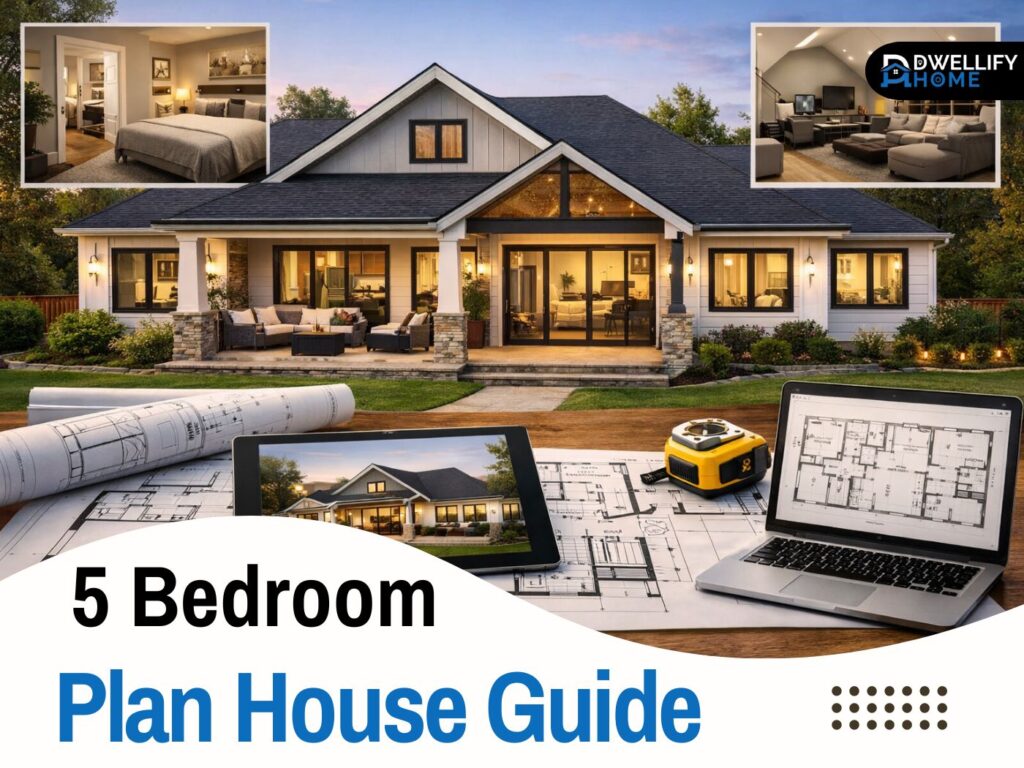
If you’re thinking about a home with five bedrooms, you’re probably juggling a real mix of needs. Kids who need their own space, a guest room that’s actually usable, maybe a home office, and enough breathing room so the house doesn’t feel loud and crowded.
A five-bedroom layout can feel calm and easy, or it can feel like a maze with constant noise and no privacy. The difference usually comes down to zoning, traffic flow, and a few “boring” planning choices that matter more than fancy features.
I’ve worked with families planning larger homes for years, and the patterns are always similar. When we plan it right, daily life gets smoother. Mornings run better, guests feel welcome, and everyone has a place to decompress.
Snippet-ready definition:
A 5 bedroom plan house is a floor plan designed for larger families or flexible living, with smart bedroom zoning, practical bathroom placement, and efficient circulation so the home feels private, organized, and comfortable every day.
Mission Statement:
Dwellify Home helps homeowners plan smart, livable spaces with clear guidance that fits real life, so every room earns its place and every layout choice feels confident.
Quick Guide Comparison Table
| Option | Best for | Typical size range | Lot fit | Watch-outs |
| Simple 5 bedroom plan house | Budget-friendly build, easy maintenance | 2,400–3,200 sq ft | Works on many lots | Too much hallway if the plan isn’t tight |
| Modern 5 bedroom plan house | Open living + flexible rooms | 2,600–3,600 sq ft | Needs good window planning | Noise travels if bedrooms aren’t buffered |
| 5 bedroom house plans single story | No stairs, aging-in-place, daily ease | 2,600–3,800 sq ft | Needs more width | Long walking distances if bedrooms are spread out |
| 5 bedroom plan house with loft | Extra hangout zone, homework, teens | 2,700–3,800 sq ft | Often easier with 2-story | Loft above living areas can amplify noise |
| Village-style 5 room house design | Climate-first comfort, durable living | Varies widely | Flexible if footprint is simple | Ventilation and shaded outdoor space must be planned early |
Step-by-step: Pick the right plan in 10 minutes
- Circle the bedroom zones and check if the primary suite feels protected from living-room noise.
- Trace the main walking paths (entry to kitchen, kitchen to backyard, bedrooms to baths). If paths cut through the living room, daily life gets messy.
- Count real storage: pantry, linen, entry drop zone, cleaning closet, seasonal storage.
- Bathroom reality check: can the busiest bedrooms reach a bath without crossing private rooms?
- Laundry placement: near bedrooms usually wins for long-term convenience.
- Lot fit: compare plan width/depth to your buildable area (setbacks matter).
- Loft or bonus space: only choose it if you know how you’ll use it (homework zone, quiet lounge, play area).
- PDF checklist: confirm dimensions, door swings, windows, closets, and fixture layouts before you commit.
What a “5 bedroom plan house” really means
A five-bedroom home isn’t automatically huge. I’ve seen compact plans that still feel generous, and I’ve seen large homes that feel awkward. What matters is how the space is used, not just the bedroom count.
In practical terms, a comfortable five-bedroom layout often lands somewhere around 2,400 to 3,600 square feet, depending on how many living spaces you want and whether you’re building single-story or two-story. You can go smaller with a very efficient plan, or larger if you add a loft, a bonus room, or a bigger primary suite.
One quick tip from real plan reviews: don’t assume a room labeled “bedroom” will work as one. Check the closet, window placement, and door swing. A room can technically be a bedroom, but still feel unusable if furniture can’t fit without blocking circulation.
Bedrooms vs flex rooms
A lot of families want five rooms, but they don’t need five full-time bedrooms. That’s where flex planning helps. You might set up one room as a guest bedroom, but use it as an office most of the year. Or you might want a hobby room that can convert later.
I often advise families to think in roles, not labels. One bedroom for sleeping, one for work, one for guests, one for kids, one for future needs. That mindset makes it easier to choose a plan you won’t outgrow too quickly.
How to read a floor plan fast
When I sit down with homeowners, I show them three things first. Flow, privacy, and storage.
- Flow: Can you walk from entry to kitchen to living without squeezing through tight corridors?
- Privacy: Are bedrooms protected from the noise of the main living areas?
- Storage: Is there a place for shoes, backpacks, linens, cleaning supplies, and seasonal items?
Guess what, if those three are right, the home usually feels good even if the finishes are simple.
Step 1: Define your family needs now and later
A five-bedroom home can support big life changes, but only if you plan for them on purpose. I always ask families to picture their busiest weekday, their busiest weekend, and one stressful moment. That’s where layout weaknesses show up.
For example, if you have kids, think about homework zones and bedtime noise. If you host often, think about where guests sleep and how they reach a bathroom without walking through private spaces. If you work from home, think about a room that feels quiet in the middle of the day.
On top of that, consider the next phase. Teens become adults. Parents may move in temporarily. A baby might arrive. A “forever home” isn’t about size. It’s about flexibility.
Step 2: Pick the layout style that fits your life
Different families thrive in different layouts. Some want simple and efficient. Others want a modern feel with open living. Both can work, as long as you avoid a few common planning traps.
Simple 5 bedroom plan house
A simple 5 bedroom plan house isn’t boring. It’s efficient, budget-friendly, and easier to build without surprises. These plans usually have a clean footprint, fewer corners, and a straightforward roofline.
The best part is that simple plans often age well. They’re easier to furnish, easier to maintain, and they usually provide better value per square foot. If you want a home that feels calm and practical, this route is hard to beat.
Here’s a planning detail many people miss: keep bathrooms and laundry close to bedrooms, and keep plumbing lines stacked where possible. When “wet areas” are grouped, construction becomes smoother and maintenance is easier later.
Modern 5 bedroom plan house
A modern 5 bedroom plan house often features open-concept living. That sounds great, and it can be, but it needs zoning. Without zoning, the living room turns into a hallway, and noise travels everywhere.
A better modern layout gives you openness with boundaries. Think partial separation, like a kitchen that flows into the family room, but still has a defined edge. Even a small pantry corridor or a change in ceiling height can create a subtle zone.
If you want modern, focus on the experience. Can someone cook while kids do homework nearby, without the whole space feeling chaotic? That’s the real test.
Single-story vs two-story: choose with confidence
This is one of the biggest decisions, and it affects everything from lot fit to daily comfort.
A lot of families love 5 bedroom house plans single story because everything is on one level. No stairs. Easier for little kids, easier as you age, and easier for moving furniture. But single-story homes spread out, so you need enough land width to make it work.
Two-story plans can fit on smaller footprints and can separate noisy zones from quiet zones more easily. The tradeoff is stairs and the need to plan bedroom clusters carefully.
If you’re unsure, here’s a simple way to decide. If daily routines involve a lot of movement between bedrooms and living areas, single-story makes life simpler. If your lot is tight or you want more backyard space, two-story may be the better match.
Bedroom zoning that feels private, not chaotic
In larger homes, privacy doesn’t happen by accident. It’s designed. A good plan creates bedroom zones, so people can sleep while others are active.
One approach I use often is a split-bedroom layout. That means the primary suite is separated from the secondary bedrooms. It’s especially helpful when you have kids, guests, or multigenerational living.
Primary suite placement
The primary suite should feel quiet. I usually place it away from the main living room wall. If the primary bedroom backs directly onto a TV wall, you’ll feel it every night.
Also, think about morning routines. A primary suite near the laundry or with a simple path to the kitchen can make mornings easier, especially in a busy household.
Guest suite and in-law setup
If you plan to host guests regularly, or if you want flexibility for an older parent, create a guest zone. The ideal guest bedroom is near a bathroom and has a bit of separation from kids’ rooms.
In some layouts, a guest room near the entry works well. It gives visitors privacy and keeps late-night bathroom trips from disturbing the rest of the home.
Bathrooms and laundry flow: the busy mornings test
Five bedrooms often means more people, and that means more bathroom traffic. I’ve seen families suffer in beautiful homes because the bathroom layout was an afterthought.
A practical rule is this: you want enough bathrooms so mornings don’t require negotiation. Many families do well with three bathrooms in a five-bedroom home. Some prefer three and a half, especially if guests visit often or if multiple teens share the home.
Laundry placement is just as important. If all bedrooms are upstairs but laundry is downstairs, it adds friction every day. If you can place laundry near the bedroom zone, it’s a huge quality-of-life improvement.
The living core: kitchen, dining, and family room that handle real life
The main living area needs to work like a hub, not a runway. In larger homes, circulation can accidentally cut straight through the family room, which makes it hard to relax.
I like to plan an obvious path from entry to kitchen, and another path from kitchen to backyard, without crossing the main seating zone. That keeps the living room calm even when the home is busy.
Storage-first kitchen planning
A five-bedroom household needs storage. A pantry that’s too small will frustrate you quickly. I’ve seen families with big kitchens, but no place for bulk items, snacks, or small appliances.
If you can, include a walk-in pantry or a large pantry wall. And add a landing zone near the kitchen for backpacks, mail, and charging devices. It keeps clutter from taking over your counters.
Seating and circulation
Island seating is great, but only if there’s enough clearance to walk behind chairs. If people have to squeeze by, you’ll feel it every day.
Try to keep the kitchen layout simple. Clear work zones, good lighting, and enough space for two people to move comfortably during meal prep. Fancy features matter less than function.
Bonus space that saves your sanity
This is where a lot of five-bedroom homes shine. That extra space can absorb noise and give people breathing room.
5 bedroom plan house with loft
A 5 bedroom plan house with loft can be a lifesaver. Loft spaces often become homework zones, gaming areas, or quiet reading lounges. They’re especially helpful for families with kids, because they create a second hangout space that’s not the main living room.
The key is placement. A loft near kids’ rooms works well. A loft directly above the living room can carry noise downward. If sound matters to you, look for a loft that’s buffered by halls or closets.
Storage and utility spaces people forget, but regret later
Storage isn’t exciting, but it’s one of the biggest drivers of day-to-day comfort. When storage is missing, the home feels messy no matter how well you decorate it.
Include a mudroom or at least a drop zone near the entry used most often. Add a linen closet near bedrooms, and a cleaning closet where you can grab supplies quickly.
Mechanical and utility spaces matter too. Make sure they’re accessible. Also, avoid placing noisy equipment directly against a bedroom wall if you can help it.
Light, ventilation, and comfort planning
Natural light can make a home feel bigger and happier. But too much direct sun can also create glare and heat.
A good strategy is balanced window placement, with attention to orientation. If you live in a hot climate, use shaded windows, overhangs, and ventilation paths. Cross-ventilation, where air can flow from one side of the home to the other, makes a difference in comfort.
On top of that, think about bedrooms. Windows should allow light, but also support sleep. Simple solutions like proper shading and smart window placement help a lot.
Using pictures, 3D, and PDFs the smart way
Visuals can help you understand a plan quickly, but they can also hide problems. I’ve reviewed many simple 5 bedroom house plans with pictures that looked perfect until we checked furniture fit and circulation.
Simple 5 bedroom house plans with pictures
Pictures show style and mood, but they don’t always show scale. A living room photo can look spacious, but the plan might not fit a full sofa, chairs, and circulation paths comfortably.
When you look at pictures, focus on room proportions. Ask yourself if the layout supports real furniture and real walking paths.
Simple 5 bedroom house plans 3D
Simple 5 bedroom house plans 3D can help you understand ceiling heights, sightlines, and how spaces connect. The best part is that 3D views make it easier to notice awkward corners or tight hallways.
A practical tip I use with clients is to imagine carrying laundry baskets, groceries, or a sleeping child through the space. If the circulation feels tight in your mind, it’ll feel tight in real life.
5 bedroom plan house PDF checklist
A 5 bedroom plan house PDF should include clear dimensions, door and window sizes, and enough detail to understand how rooms function. If the PDF is missing basics, don’t rush.
Look for these essentials:
- Overall dimensions and room sizes
- Door swings and window placement
- Bathroom layouts that fit real fixtures
- Closet sizes and storage locations
- Notes about ceiling heights where important
Lot fit and buildability: avoid expensive surprises
A plan that looks perfect can fail on your lot. Width and depth matter, along with setbacks and driveway placement. This is especially important for a single-story layout, since it spreads out more.
If your lot is narrow, you may need a narrower footprint, a different garage orientation, or a two-story option. Narrow-lot planning often works best when the main living space is open and the bedroom zones are stacked efficiently.
Before you commit, check the plan’s overall width and compare it to your buildable area. That one step can prevent a lot of heartbreak.
Budget-smart design moves
Most families want comfort without runaway costs. And honestly, smart planning helps more than expensive finishes.
Simple footprints usually cost less to build. Straightforward rooflines, stacked plumbing, and fewer structural surprises keep budgets steadier.
Where to spend, in my experience:
- Kitchen function and storage
- Bathroom quality where it matters most
- Windows and insulation for comfort
- A good mudroom or drop zone
Where you can often save:
- Overly complex exterior shapes
- Unused formal rooms
- Extra hallways that don’t add value
5 room house design in village: practical adaptations
If you’re considering a 5 room house design in village settings, comfort planning often looks a little different. Outdoor living spaces can be just as valuable as indoor ones. Shaded verandas, covered sitting areas, and breezeways can reduce heat and improve daily comfort.
Durability matters too. Floors, wall finishes, and windows should hold up to dust, weather shifts, and heavy use. And flexibility is key. A guest room can double as storage during certain seasons, or become an office when needed.
If airflow is important, plan windows and openings so air can move through main living areas. It’s one of the most practical upgrades you can make without spending a fortune.
Common mistakes to avoid in a five-bedroom layout
I’ve seen the same issues over and over, and they’re easy to miss if you only look at a plan for a few minutes.
One big mistake is too much hallway. Hallways eat square footage without adding real comfort. Another is placing bedrooms right next to noisy spaces like the living room or kitchen.
Other common problems:
- Not enough storage near bedrooms and entry
- Bathrooms placed awkwardly, causing long walks
- A living room that becomes a hallway to other rooms
- Oversized rooms that steal space from pantry, laundry, or closets
If you fix these early, the whole home feels better.
Quick decision checklist
When you’re comparing plans, keep it simple. Use a short checklist so you don’t get distracted by style.
- Do bedroom zones feel private?
- Is the living room protected from heavy traffic flow?
- Does the kitchen have real pantry storage?
- Is laundry close to bedrooms?
- Are bathrooms placed for busy mornings?
- Does the plan fit your lot width and setbacks?
- Is there space for flexible use, like a loft or bonus room?
FAQs
What’s the ideal layout for a simple 5 bedroom plan house?
An ideal simple layout minimizes hallway space, groups bathrooms and laundry near bedrooms, and keeps the main living area open but not exposed to constant traffic flow.
Are 5 bedroom house plans single story practical on a standard lot?
They can be, but you need enough width. If your lot is tight, look for efficient footprints, split-bedroom zoning, or consider a two-story plan to reduce the footprint.
What should I check first in a 5 bedroom plan house PDF?
Start with overall dimensions, room sizes, closet sizes, and door swings. Then review bathroom layouts and circulation paths, because those reveal daily comfort issues quickly.
Is a loft worth it in a 5 bedroom plan house with loft?
Often yes. A loft adds flexible living space that can reduce noise and crowding in the main living area, especially for families with kids or teens.
How do I make a modern five-bedroom layout feel private?
Use zoning. Keep bedroom areas buffered by halls, closets, or a small transition space, and avoid placing bedroom walls directly against noisy living areas.
Conclusion
Planning a home with five bedrooms is really about planning how people live together without stepping on each other’s toes. When the layout supports privacy, smart circulation, and storage, the home feels easier every day.
If you want my honest advice, focus less on how impressive the plan looks and more on how it functions at 7 a.m. on a weekday. Check bedroom zoning, bathroom access, laundry placement, and the way you move through the living core.
When those pieces are right, you don’t just end up with more rooms. You end up with a home that feels calm, flexible, and truly livable for the long run.
Disclaimer:
This article is for general planning information only. Final layouts, structure, and safety requirements vary by location. Always confirm your plan with a licensed architect or engineer and your local building authority before building or renovating.

I’m Bilal, the founder of Dwellify Home. With 6 years of practical experience in home remodeling, interior design, and décor consulting, I help people transform their spaces with simple, effective, and affordable ideas. I specialize in offering real-world tips, step-by-step guides, and product recommendations that make home improvement easier and more enjoyable. My mission is to empower homeowners and renters to create functional, beautiful spaces—one thoughtful update at a time.