A bedroom rug does more than “decorate.” It changes how the room feels the moment your feet hit the floor. It can soften noise, add warmth, and make the bed area look finished instead of floating in the middle of the space.
I’ve been designing bedrooms and specifying textile flooring for over 12 years, and I can tell you this: most rug regrets come from two things, the wrong size and the wrong placement. In this guide, I’ll walk you through both, plus materials, styling, and simple upkeep so your bedroom feels comfortable and balanced for the long run.
Snippet-ready definition:
A rug for bedroom spaces is a floor covering placed under or beside the bed to add warmth, comfort, and visual balance. People use it to soften noise, define the bed area, and make the room feel finished.
Mission Statement (short)
At Dwellify Home, our mission is to help you create comfortable, well-balanced rooms with practical design guidance that feels doable, not overwhelming.
How to Choose the Right Rug for Bedroom (Quick Checklist)
Before you get into measurements and layouts, decide what you need the rug to do. In real homes, function comes first, then style becomes much easier.
Start with these quick questions: Do you want a soft landing when you get out of bed? Do you want the rug to visually “anchor” the bed and nightstands? Are you dealing with pets, allergies, or a room that collects dust under the bed?
Here’s the shortlist I use with clients:
- Comfort level: fluffy and plush, or low pile and easy-care
- Placement goal: under bed, runners, or a small accent area
- Maintenance reality: vacuuming schedule, spot cleaning, shedding
- Door clearance: thicker piles can catch under doors
- Budget and lifespan: some rugs look great fast but wear out quickly
If you decide these first, your final pick feels obvious instead of stressful.
Quick Guide Table (Comparison)
| What you need | Best pick | Why it works |
| Soft landing in the morning | Plush or medium-pile rug + pad | Feels warm and cushioned underfoot |
| Easy cleaning, low fuss | Low-pile or flatweave | Vacuums easily, traps less dust |
| Tight or narrow bedroom | Two side runners | Comfort on both sides without a huge rug |
| Queen bed “safe choice” | Bedroom rugs 8×10 | Balanced coverage for many layouts |
| Rug on carpet | Low-pile rug + carpet-safe pad | Helps stop shifting and bunching |
Quick step-by-step sizing and placement checklist
- Measure bed width and how much “step zone” you want on both sides
- Pick your layout: all furniture on rug, two-thirds under bed, or foot-of-bed
- Check door swing and closet clearance for thicker piles
- Choose material based on your routine: wool for resilience, synthetic for easy care
- Add a non-slip rug pad to improve comfort and reduce sliding
Rug for Bedroom Size Guide (Simple Rules That Prevent Wrong Buys)
The “Right Amount Showing” Rule (the easiest sizing concept)
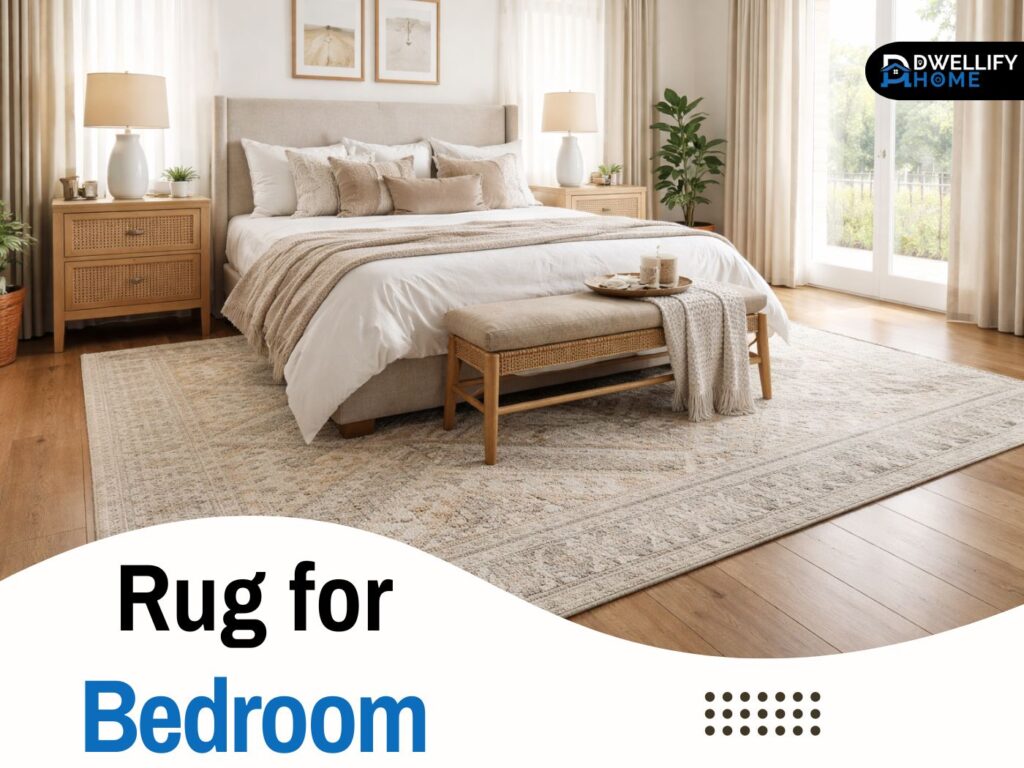
A rug usually looks best when it shows enough on the sides and foot of the bed to feel intentional. As a simple visual rule, aim for a visible border that feels generous, not a skinny strip that looks like an afterthought.
In practical terms, I like to see at least 18–24 inches of rug extending beyond the sides of the bed in most layouts, and a bit more at the foot if space allows. That extra “step zone” is what makes mornings feel nicer and the room feel more complete.
One more designer trick: keep a consistent gap from the rug edge to nearby walls or furniture legs. When the spacing is uneven, the whole room can feel slightly off even if the colors are perfect.
Rug for bedroom under bed (3 layouts that always work)
There are three placements that work in almost every bedroom. I’ve used all of them, and the best choice depends on room size, budget, and whether you want the nightstands sitting on the rug.
- All furniture on the rug (bed plus nightstands)
This is the most polished look. It makes the bed zone feel like one grounded “island.” It usually needs a larger rug, but it’s also the most forgiving visually. - Two-thirds under the bed
This is my most common recommendation because it balances cost and impact. The rug starts near the headboard and runs past the foot of the bed, leaving a comfortable step-off on both sides. - Rug at the foot of the bed
This works nicely in narrow rooms or when you want softness where you actually walk, without buying a very large rug. It also looks great layered over wall-to-wall carpet when done neatly.
If your main goal is warmth underfoot and a tidy look, the two-thirds layout is often the sweet spot.
Sizes by Bed Type (People-search-friendly)
Let’s keep this simple and realistic. Exact sizing varies by room, but these guidelines help you avoid the most common mistake, choosing too small.
Twin bed
A twin can look great with a medium rug under two-thirds of the bed, or with runners on both sides. In very small rooms, a single runner on the open side can still feel thoughtful.
Full bed
A full bed usually needs more width than people expect. If you go too narrow, you’ll step off the rug every morning. A wider rug under the lower two-thirds often looks balanced.
Queen bed
This is where “bedroom rugs 8×10” becomes a popular choice. For many rooms, an 8×10 gives a comfortable border on the sides and enough rug at the foot to feel intentional. If you have wider nightstands or you want everything on the rug, you may need to size up.
King bed
Kings tend to overwhelm smaller rugs. If you want a generous step zone on both sides, a larger size is often the better visual match. The goal is not just coverage, but proportion.
If you’re unsure, tape the rug outline on the floor with painter’s tape. In my experience, that one step prevents most returns and second-guessing.
Placement Options Beyond “Under the Bed”
Runners around the bed (smart for tight rooms)
Runners are an underrated solution, especially when the bedroom is narrow or has door swings and closets to consider. Two runners beside the bed can give you that soft landing on both sides without needing a massive rug.
For a clean look, keep both runners the same size and align them evenly with the bed. If your room only has walking space on one side, a single runner still works and doesn’t look odd if it’s placed with intention.
Rug for bedroom small (apartments plus minimal layouts)
In a compact bedroom, I’d rather see one well-placed small rug than an oversized piece crammed into corners. A rug for bedroom small spaces can do a lot when it’s placed where your feet actually go.
Try one of these:
- A bedside landing rug that sits where you step down most mornings
- A rug under a reading chair to create a calm corner
- A rug at a vanity area to soften the look and feel
In small rooms, leaving some floor visible can make the space feel bigger. The rug should support the layout, not fight it.
Material Matters (Comfort vs Cleanup)
Rug for bedroom fluffy (plush feel without regret)
A rug for bedroom fluffy comfort can feel wonderful, but it helps to understand what you’re signing up for. Higher pile rugs feel softer, but they can show footprints, trap more dust, and need more careful vacuuming.
If you love plush, choose a quality construction and be honest about maintenance. In homes with shedding pets or allergies, I often steer clients toward a plush that’s still fairly dense rather than a very loose shag.
Two practical tips that come from real life:
- Use a vacuum with adjustable height so you don’t “chew” the fibers
- Rotate the rug every few months so wear stays even, especially near the bed edge
Low-pile and flatweave options (easy-care choices)
Low-pile rugs and flatweaves are my go-to for people who want a tidy bedroom with less fuss. They’re easier to vacuum, they trap less dust, and they work well in rooms where doors swing over the rug.
Material-wise, here’s the quick breakdown I share with clients:
- Wool: comfortable, resilient, naturally insulating, can shed at first
- Cotton: lighter feel, often easier to wash in smaller sizes, wears faster
- Synthetics: usually budget-friendly, often stain-resistant, great for low maintenance
- Blends: can be a good middle ground for comfort and durability
If you want comfort without the heavy upkeep, a textured low pile can feel cozy while staying practical.
Color and Style That Works in Real Bedrooms (Not Just Pinterest)
The best bedroom rug is the one that supports the room’s mood. I like to start with the biggest surfaces: wall color, bedding, and your main furniture finish. Then the rug can either blend softly or add a controlled contrast.
If you’re considering a rug for bedroom pink, keep it grounded. Dusty rose, muted blush, and warm pink-beige tones tend to look calm and grown-up. Pair them with warm whites, light oak, or soft gray bedding so the rug feels like part of the palette, not a loud statement.
For a rug for bedroom men, I focus on depth and texture rather than bold graphics. Charcoal, navy, olive, and warm taupe work well, especially with simple patterns like subtle geometrics or vintage-inspired designs. A low-sheen texture often looks more sophisticated than something overly glossy.
One more styling note that saves rooms: match pattern scale to your space. In a small bedroom, a huge pattern can feel busy. In a large bedroom, tiny patterns can look noisy. When in doubt, choose a medium-scale pattern or a solid with texture.
Bedroom Rug on Carpet (Yes, You Can)
Layering a rug on carpet can look clean and intentional, but it needs the right combination. The biggest issue is slipping and bunching, especially if both the carpet and the rug are plush.
For the best result, use a low-pile rug over low-pile carpet whenever possible. If the carpet is thick, choose a flatter rug and add a rug pad designed for carpet-on-carpet grip. This keeps edges from curling and helps the rug stay centered.
I’ve done this in plenty of bedrooms where homeowners wanted a new look without replacing carpet. It can work beautifully, especially if the rug brings color and pattern that the carpet doesn’t.
Rug Pads, Slipping and Noise (The “Expert Detail” Most Guides Skip)
A rug pad is not an optional extra in a bedroom. It changes how the rug feels underfoot, how long it lasts, and how safe it is when you step down half-awake.
On hardwood or tile, a non-slip rug pad helps prevent shifting and protects the floor finish. In a bedroom, it also adds cushioning, which makes a noticeable difference near the bed edge where you stand daily.
Pads also help with sound. A rug plus pad absorbs a bit of echo and softens footfall noise, which matters more than people think, especially in apartments or homes with upstairs bedrooms.
Bedroom Rug Maintenance (Simple Routine)
Most bedroom rugs don’t face the same spills as a living room rug, but they do collect fine dust, and a surprising amount of it lives under the bed. A simple routine keeps the rug looking fresh without turning into a chore.
For low pile rugs, vacuum once a week or every other week depending on dust and pets. For plush or shag styles, vacuum gently and less aggressively, and consider shaking out smaller rugs outdoors occasionally.
Spot-cleaning is easiest when you act quickly. Blot, don’t rub, and test any cleaner in a hidden corner first. If you’re using a fluffy rug, avoid soaking it, moisture that sits in the pile can cause odors.
Common Mistakes to Avoid (Quick Fixes)
I see the same problems again and again, even in well-decorated homes.
- Choosing too small: The rug should support how you walk around the bed, not just fit under it.
- Placing it too far under the bed: You lose the step-off comfort that makes the rug worth having.
- Ignoring door clearance: Thick pile can snag doors and make the room feel awkward.
- Skipping a rug pad: This leads to slipping, curling corners, and faster wear.
- Picking a texture that doesn’t match your life: A high-maintenance rug in a busy home becomes annoying fast.
A quick tape outline on the floor and a realistic cleaning plan solves most of these issues.
FAQ
1) What type of rug is best for bedrooms?
Most bedrooms do well with wool (durable and cozy) or low-pile synthetics (easy to clean). If you want extra comfort, choose a dense plush rug and use a quality pad.
2) Is it better to have a dark or light rug in the bedroom?
Light rugs make rooms feel more open and airy, while dark rugs hide marks and add a cozy, grounded feel. Match it to your lighting and how often you want to clean.
3) What is the rule for a bedroom rug?
A reliable rule is to let the rug extend about 18–24 inches beyond the sides of the bed where you step down. This keeps the rug looking intentional and comfortable.
4) Is an 8×10 rug good for a bedroom?
Yes, an 8×10 is often a strong option, especially with a queen bed. It usually gives a comfortable border on the sides and looks balanced in many standard bedrooms.
5) Should a bedroom rug go under the nightstands?
It depends on the look you want. Keeping nightstands off the rug works fine if the rug is centered and symmetrical. Placing them on the rug looks more finished but needs a larger size.
Conclusion
A well-chosen bedroom rug should feel good first and look good second, then it ends up doing both. If you remember one thing from styling dozens of bedrooms, it’s this: size and placement matter more than the pattern.
Start by deciding your layout, then choose a rug that gives you a comfortable step zone and suits your daily routine. If you love plush comfort, pick a dense pile and plan gentle upkeep. If you want easy maintenance, go low pile and use a proper pad.
Once you match the rug to your bed size, room proportions, and real life, a rug for bedroom spaces stops being a tricky purchase and becomes one of the simplest ways to make the whole room feel warmer, calmer, and complete.
Disclaimer:
This article shares general interior design guidance based on real-world experience. Measurements and material performance can vary by room layout, brand, and flooring type, so always confirm sizes and care instructions before purchasing.

I’m Bilal, the founder of Dwellify Home. With 6 years of practical experience in home remodeling, interior design, and décor consulting, I help people transform their spaces with simple, effective, and affordable ideas. I specialize in offering real-world tips, step-by-step guides, and product recommendations that make home improvement easier and more enjoyable. My mission is to empower homeowners and renters to create functional, beautiful spaces—one thoughtful update at a time.